
Running a quick service restaurant with 15 employees puts you in an awkward spot when it comes to HR. You’re too big to wing it, but too small to justify a dedicated HR department. PEOs can genuinely solve that problem — handling payroll, workers’ comp, benefits, and compliance under one roof. But picking the wrong one costs you real money, especially at 15 employees where per-head pricing hits harder than it does at 50.
The QSR industry adds another layer of complexity: high turnover, tipped wage compliance, variable scheduling, and workers’ comp classifications that vary by role. Not every PEO handles that well — and most generic comparison tools don’t account for it either.
This guide covers the best tools to help you compare and select the right PEO for your restaurant. Not generic HR software, but resources built to help you evaluate providers side by side before you sign anything. We’ve kept this list short and honest, featuring only the tools that are genuinely worth your time at this headcount and in this industry.
1. PEO Metrics
Best for: QSR operators who want pricing transparency and unbiased side-by-side provider comparisons before entering sales conversations.
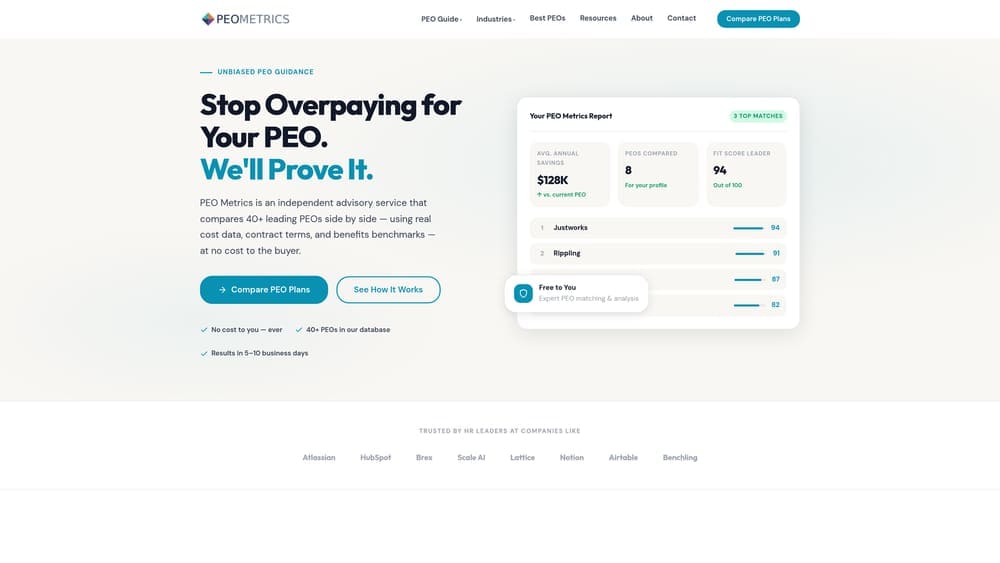
PEO Metrics is an unbiased PEO comparison service that helps businesses evaluate and select providers using detailed metrics and pricing analysis — built for operators who want real data before anyone tries to sell them something.
Where This Tool Shines
Most PEO selection processes start with a sales call. You describe your business, a rep pitches their product, and you’re left trying to compare apples to oranges across three different proposals with inconsistent pricing structures. PEO Metrics flips that sequence. You get the comparison data first, which changes the entire dynamic of any conversation that follows.
For a QSR operator at 15 employees, that matters more than it might at larger headcounts. You’re at a pricing tier where small differences in per-employee costs add up meaningfully across a full year. Having visibility into what providers actually charge — before you’re in a sales conversation — is a genuine operational advantage in a thin-margin business.
Key Features
Side-by-Side Provider Comparisons: Evaluate multiple PEO providers against each other using consistent criteria and pricing structures, rather than comparing disconnected sales proposals.
Pricing Transparency: Surfaces actual cost differences at specific headcount tiers, including small teams where per-employee economics are most sensitive.
Unbiased Guidance: PEO Metrics is not tied to any single provider, which means the comparison isn’t shaped by referral incentives or preferred partner arrangements.
Industry-Relevant Criteria: Helps QSR operators compare on factors that actually matter in their environment — not just generic HR service checklists.
Consultative Approach: The platform helps you understand what you’re evaluating, not just who — so you go into provider conversations with context, not just questions.
Best For
QSR operators who are actively evaluating PEO providers and want to understand pricing and service differences before committing to any sales process. Particularly useful for first-time PEO buyers who don’t have a benchmark for what a fair deal looks like at 15 employees.
Pricing
Free to use. There’s no cost to evaluate providers through the platform, which removes the barrier to getting real pricing context before you talk to anyone.
2. PEOcompare
Best for: Operators who prefer a broker-style intake process and want to receive multiple PEO quotes through a single form submission.
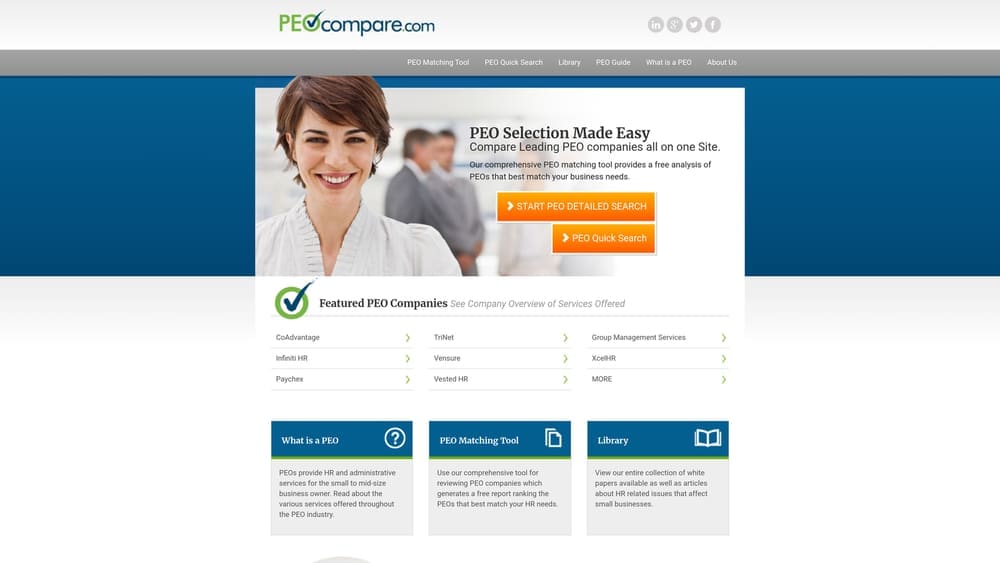
PEOcompare is a PEO matching platform that connects businesses with providers based on company inputs, allowing operators to receive multiple quotes through a single intake process rather than reaching out to providers individually.
Where This Tool Shines
The core value here is efficiency. If you’d rather describe your business once and have matched options come back to you, PEOcompare fits that workflow. You’re not doing the outreach yourself or managing multiple parallel conversations from scratch — the platform does the initial filtering based on your inputs.
For a 15-person QSR, this can be a reasonable starting point, particularly if you’re not sure which providers even serve businesses at your headcount. Some PEOs have minimum employee thresholds or don’t actively market to small teams, and a matching service can surface options you might not have found through a direct search. The tradeoff is that the matching model is referral-based, so the provider pool reflects who the platform has relationships with — not necessarily every option available in the market.
Key Features
Single Intake Process: Enter your business details once and receive matched PEO provider options rather than managing outreach to multiple vendors independently.
Multiple Quotes: Access quotes from more than one provider through a single process, giving you at least a starting point for comparison.
Small Headcount Coverage: Can surface providers that serve small teams, which is useful when you’re not sure which PEOs will work with a 15-person operation.
Broker-Style Experience: Suited for operators who prefer guided matching over self-directed research and comparison.
Best For
QSR operators who want to receive quotes quickly without doing independent provider outreach. Works best as a starting point for the process rather than a comprehensive evaluation tool — you’ll still need to compare what comes back carefully, since the proposals won’t arrive in a standardized format.
Pricing
Free for businesses to use. The platform’s revenue model is typically referral-based, meaning providers pay for matched leads — worth keeping in mind when evaluating how the matching is structured.
3. HR Guide
Best for: Operators who are still building foundational knowledge about PEO structures, co-employment, and HR compliance before engaging vendors.
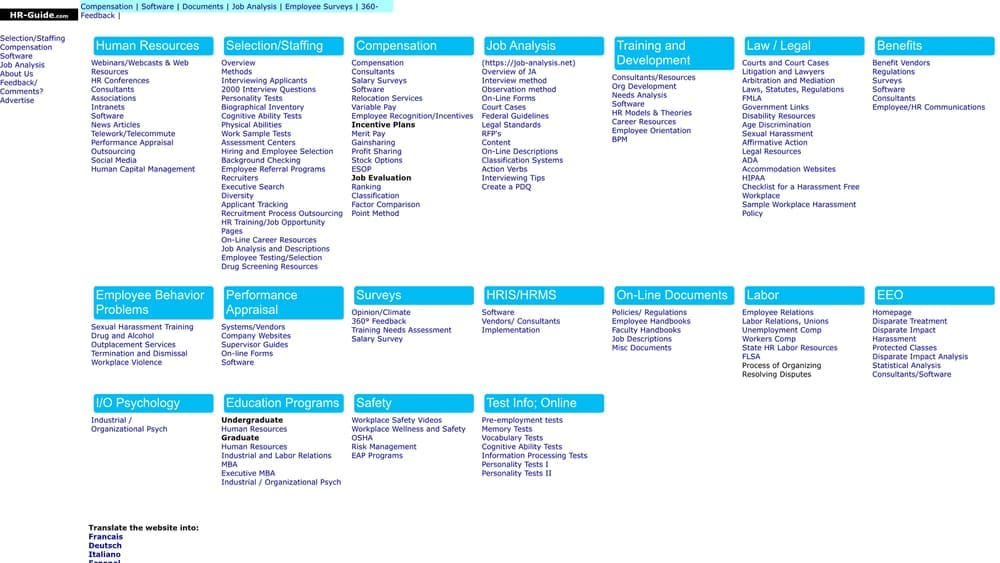
HR Guide is an HR information resource covering PEO structures, co-employment explanations, compliance topics, and general HR guidance — useful for operators who want to understand what they’re getting into before they start talking to providers.
Where This Tool Shines
There’s a version of the PEO selection process where you walk into a sales conversation without really understanding what co-employment means, how the liability structure works, or what you’re actually agreeing to in a client service agreement. That’s how operators end up locked into contracts they didn’t fully understand. HR Guide helps close that knowledge gap before you get there.
It’s not a comparison tool in the active sense — it won’t show you pricing or match you with providers. But for a QSR owner who’s new to the PEO space, spending an hour with HR Guide’s content on co-employment mechanics and contract terms puts you in a meaningfully better position when you do start evaluating specific vendors. Think of it as the research phase before the research phase.
Key Features
PEO Structure Education: Covers how PEOs work, what co-employment means in practice, and how liability is shared between the PEO and the client employer.
HR Compliance Guidance: Topics relevant to small employers including payroll basics, benefits structure, and employment law fundamentals.
Contract and Terms Reference: Useful for operators who want to understand what PEO contracts typically include before they’re reviewing an actual agreement under time pressure.
Broad HR Topic Coverage: Goes beyond PEOs into general HR topics — helpful if you’re also trying to understand your compliance baseline as a small employer.
Best For
QSR operators who are earlier in the research process and want to build enough foundational knowledge to evaluate PEO vendors intelligently. Less useful if you’re already familiar with how PEOs work and are ready to compare specific providers on pricing and service terms.
Pricing
Free to access. Content-based platform with no cost to use the guides and reference materials.
What QSR Operators at 15 Employees Actually Need to Compare
Before you dive into any of these tools, it’s worth understanding why PEO selection for a 15-person quick service restaurant is genuinely different from a generic small business comparison. The decision factors aren’t just about headcount — they’re about the specific operational realities of your industry.
Workers’ comp classification complexity: Quick service restaurants often employ people across multiple role types — kitchen staff, counter staff, shift managers, and sometimes delivery roles. Each can carry different workers’ comp classification codes under NCCI standards. A PEO that doesn’t handle multi-code classifications cleanly can create billing errors or coverage gaps that you won’t catch until there’s a problem. When you’re evaluating providers, ask directly how they handle multi-role workers’ comp in a restaurant environment.
Tipped wage compliance: Federal tip credit rules under the FLSA and state-level variations create payroll complexity that not all PEOs manage with equal competence. Some states don’t allow tip credits at all. At 15 employees, errors in tipped wage calculation carry real penalty exposure. The right PEO needs to demonstrate actual competency here — it’s not a nice-to-have, it’s a baseline requirement for any QSR operation.
Per-employee pricing at small headcount: PEO pricing — whether structured as a percentage of gross payroll or a per-employee-per-month fee — tends to be relatively more expensive at 15 employees than at 30 or 50. Smaller teams have less risk pooling and less administrative efficiency from the PEO’s perspective, and pricing reflects that. This means the comparison decision matters more at your headcount than it would at a larger operation. Even modest pricing differences per employee add up in a thin-margin QSR business.
Turnover volume relative to headcount: Quick service restaurants see above-average employee turnover relative to many industries. At 15 employees, that means a disproportionately high volume of onboarding and offboarding activity relative to your team size. PEOs that charge per-transaction fees or have clunky onboarding processes become expensive and operationally painful fast. This is a genuine differentiator when you’re comparing providers — ask specifically about onboarding workflows and whether there are per-hire fees.
Variable scheduling and ACA tracking: Part-time and variable-hour employees are common in QSR. This creates real complexity around ACA compliance — specifically tracking hours for coverage thresholds — as well as overtime calculations and benefits eligibility. Not all PEOs handle variable-schedule workforces equally well, and some platforms are better equipped for this than others.
Which Tool to Start With
For a QSR operator with 15 employees, the right starting point depends on where you are in the process. If you’re still learning what PEOs actually do and what co-employment means for your liability exposure, spend time with HR Guide first. It’ll save you from walking into a sales conversation without the context to evaluate what you’re hearing.
If you already understand the basics and you’re ready to compare specific providers, PEO Metrics is the stronger starting point. The pricing transparency and side-by-side comparison structure give you real data before any sales conversation — which is exactly the position you want to be in as a small operator who can’t afford to overpay on a per-employee basis.
PEOcompare works well if you want quotes to come to you rather than doing the outreach yourself. Just go in knowing that the provider pool reflects the platform’s referral relationships, and plan to compare what comes back carefully rather than treating the first match as a recommendation.
The honest answer is that most operators benefit from using more than one of these resources. Build your knowledge base, then use a comparison tool to evaluate specific providers with real pricing context before you sign anything.
If you’re ready to see what PEOs actually charge for a 15-person QSR and compare them side by side, Don’t auto-renew. Make an informed, confident decision. You’ll get real pricing context before you ever talk to a sales rep — which puts you in a fundamentally stronger position when those conversations do happen.
Before you sign that PEO renewal, make sure you’re not leaving money on the table.
Many businesses unknowingly overpay because of bundled fees, hidden administrative markups, and contracts designed to limit flexibility. We give you a clear, side-by-side breakdown of pricing, services, and contract terms—so you can see exactly what you’re paying for and choose the option that truly fits your business.
