
Running a dumpster rental operation means your workforce looks nothing like the average PEO buyer. Drivers hauling roll-off containers, yard workers loading and unloading heavy equipment, seasonal crews that swell during spring cleanouts and storm cleanup — these are high-risk classifications that make workers’ comp costs a central factor in any PEO evaluation, not an afterthought.
The problem is that most PEO sales processes aren’t designed to surface this complexity. You’ll get polished presentations and bundled pricing that obscures how your class codes are being handled and what you’re actually paying per risk category. That’s where dedicated comparison tools change the dynamic. Instead of relying on what a PEO rep volunteers, you can evaluate providers on the metrics that actually matter for a labor-intensive, high-risk business.
Only three tools are worth your time here. Here’s an honest look at each one, evaluated specifically for how well they serve dumpster rental and waste hauling operations.
1. PEO Metrics
Best for: Dumpster rental operators who want unbiased, data-driven PEO comparisons with real pricing transparency
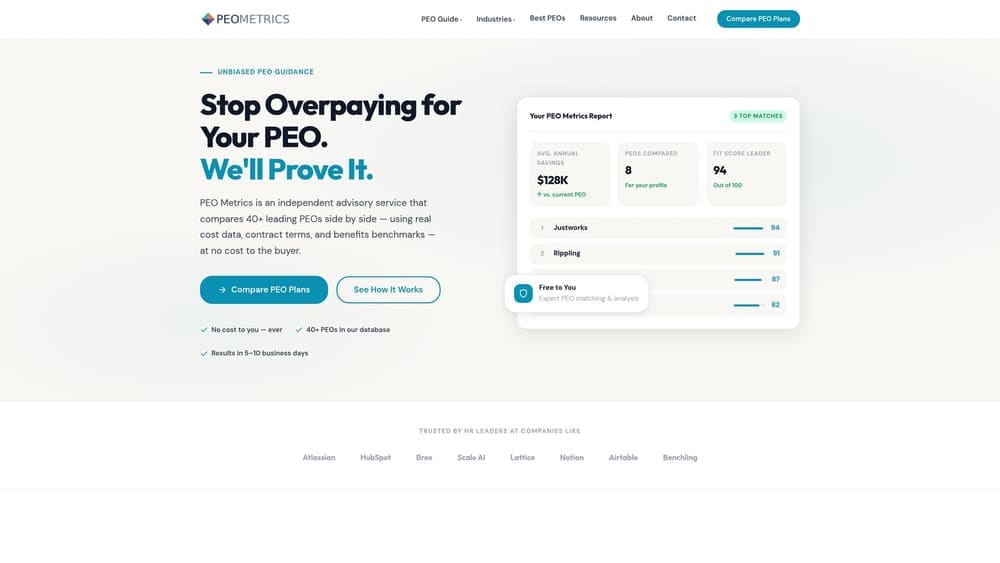
PEO Metrics is a PEO comparison service built around giving businesses actual cost and service data rather than a curated sales experience.
Where This Tool Shines
For dumpster rental companies, the most valuable thing PEO Metrics does is surface how different providers handle workers’ comp class codes and pricing structures. This is where operators in waste hauling consistently get burned — not because PEOs are necessarily dishonest, but because pricing is complex and most buyers don’t know what questions to ask. PEO Metrics is built to ask those questions on your behalf.
The comparison framework is designed to go beyond list rates. It surfaces actual cost structures, including how providers handle high-risk classifications and what the real per-employee math looks like across your specific workforce mix. For a roll-off operation with drivers, yard staff, and maybe a handful of clerical employees, that granularity matters more than it does for most industries.
Key Features
Side-by-Side Provider Comparisons: Evaluate multiple PEO providers on consistent metrics rather than comparing apples to oranges across separate sales pitches.
Pricing Analysis Beyond List Rates: Surfaces actual cost structures, including administrative markups and bundled fees that don’t always appear in initial proposals.
Workers’ Comp and Class Code Visibility: Shows how providers handle high-risk classifications — a critical factor for dumpster rental operations where class code assignment directly affects cost.
Unbiased Guidance: PEO Metrics isn’t tied to any single PEO provider, so the analysis isn’t shaped by referral incentives or preferred-partner arrangements.
Contract and Fee Transparency: Helps buyers understand exit terms and administrative fee structures before they’re locked in.
Best For
Dumpster rental operators who are past the early research phase and ready to compare actual proposals. Also useful for operators who’ve received PEO quotes and want a second opinion on whether the pricing is competitive given their risk profile. Particularly valuable if your workforce includes CDL drivers, which adds DOT compliance complexity that not all PEOs are equipped to handle.
Pricing
Consult PEO Metrics directly for service details and current pricing. Given the complexity of high-risk-classification comparisons, the direct consultation model makes sense for this use case.
2. PEOcompare
Best for: Early-stage PEO evaluation where you need broad market visibility across multiple providers before narrowing your shortlist
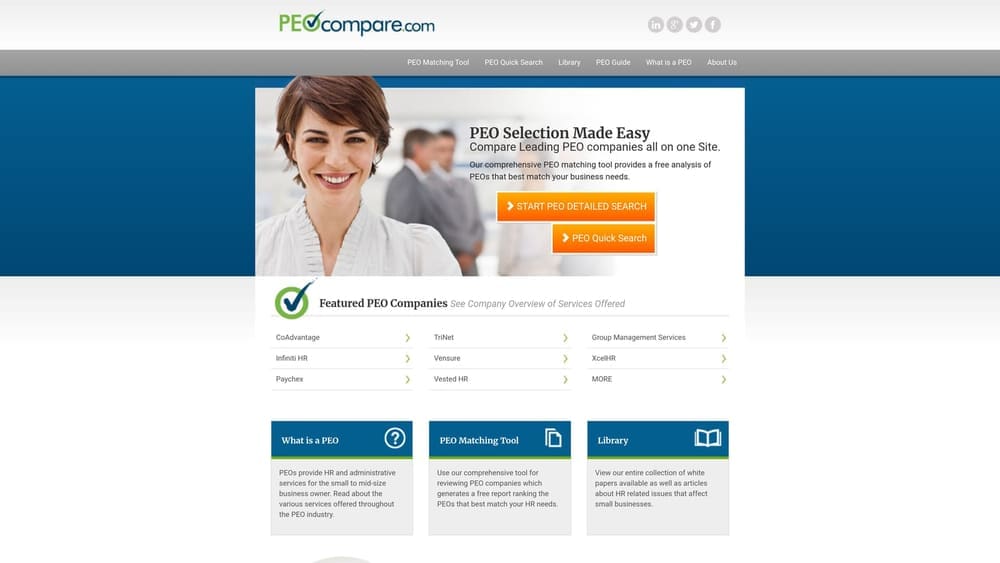
PEOcompare is a comparison platform that aggregates provider data to help businesses evaluate multiple PEO options side-by-side across key service and pricing categories.
Where This Tool Shines
If you’re at the beginning of the PEO evaluation process and don’t yet have a shortlist, PEOcompare gives you a structured way to survey the market. For dumpster rental operators who haven’t worked with a PEO before, the value here is in getting oriented — understanding which providers are even in the conversation before you start taking sales calls.
The platform’s structured evaluation framework helps ensure you’re comparing providers on consistent dimensions rather than letting each PEO define its own terms. That matters in an industry where pricing and service bundling vary significantly from one provider to the next.
Key Features
Multi-Provider Comparison: Evaluate a range of PEO providers across standardized service and pricing categories in one place.
Structured Evaluation Framework: Applies consistent criteria across providers so comparisons hold up rather than drifting based on how each PEO presents itself.
Broad Market Coverage: Surfaces provider options you might not encounter through organic search or referrals, which is useful when you’re building a shortlist from scratch.
Early-Stage Shortlisting Support: Designed to help buyers narrow from a broad field to a workable set of finalists before going deeper into pricing negotiations.
Best For
Dumpster rental operators who are new to PEO evaluation and need to understand the provider landscape before committing to a comparison process. Less suited for operators who already have proposals in hand and need granular cost analysis — that’s where a deeper tool like PEO Metrics becomes more relevant.
Pricing
Check peocompare.com directly for current access and pricing details.
3. HR Guide
Best for: Dumpster rental operators without dedicated HR staff who need to build foundational PEO knowledge before evaluating proposals
HR Guide is an HR resource platform that combines educational content with PEO evaluation guidance — useful when you need to understand what you’re comparing before you can compare it effectively.

Where This Tool Shines
Most dumpster rental businesses don’t have an HR director. The owner or office manager is handling compliance, payroll, and benefits alongside everything else. When a PEO salesperson starts talking about co-employment structures, EPLI coverage, and master workers’ comp policies, it can be hard to evaluate the proposal if you don’t have a baseline understanding of how these things work.
HR Guide fills that gap. It’s not primarily a comparison platform — it’s a knowledge resource that helps less experienced buyers understand PEO fundamentals well enough to ask the right questions. For a dumpster rental operator evaluating their first PEO, that foundational literacy can be the difference between a well-negotiated contract and one that locks you into terms you didn’t fully understand.
Key Features
HR Knowledge Base: Covers PEO basics, co-employment fundamentals, and evaluation criteria in accessible, non-technical language.
PEO Evaluation Guidance: Provides frameworks for understanding what PEO proposals actually include and how to assess whether they fit your business.
Content for Non-HR Buyers: Written for operators and business owners, not HR professionals — which matches the reality of most small dumpster rental operations.
Broader HR Resources: Covers employment topics beyond PEOs, which can be useful for operators managing compliance questions independently of any PEO relationship.
Best For
Operators who are new to PEO concepts and need to build enough knowledge to evaluate proposals intelligently. Also useful as a reference resource during contract review if you encounter terms or structures you haven’t seen before. Less useful for buyers who already understand PEO mechanics and need detailed pricing comparisons.
Pricing
Check hrguide.com directly for current access and pricing details.
Which Tool Actually Fits Where You Are
For dumpster rental companies, the PEO decision carries more financial weight than it does for most small businesses. Your workers’ comp exposure is real. Your class code mix is complex. And if you have CDL drivers on payroll, you’re adding DOT compliance requirements that many PEOs aren’t equipped to support well.
A PEO that prices your risk fairly can be a genuine cost lever. A PEO that bundles your high-risk classifications into a flat rate that doesn’t account for your actual workforce structure can end up costing more than managing payroll in-house. The difference often isn’t visible until you get into the actual numbers.
Here’s how to think about sequencing these tools. If you’re new to PEOs and need to understand what you’re buying before you evaluate anything, start with HR Guide. Once you have a working understanding of how PEOs operate, use PEOcompare to get a sense of the provider landscape and build your initial shortlist. Then use PEO Metrics to go deeper on actual pricing, workers’ comp handling, and contract terms before you commit to anything.
One thing worth flagging for dumpster rental operators specifically: watch exit terms carefully. This industry sees a fair amount of acquisition activity and rapid scaling. A PEO contract with a long term and steep early termination fees is a real risk if your business changes shape faster than expected. Comparison tools that surface contract structure — not just pricing — are worth the extra effort.
If you’re ready to move past the research phase and want a clear, side-by-side look at what different PEO providers would actually cost your operation, don’t auto-renew. Make an informed, confident decision. The goal isn’t to find the most popular PEO — it’s to find the one that prices your risk profile honestly, fits your workforce structure, and gives you a contract you can actually live with as your business grows.
Before you sign that PEO renewal, make sure you’re not leaving money on the table.
Many businesses unknowingly overpay because of bundled fees, hidden administrative markups, and contracts designed to limit flexibility. We give you a clear, side-by-side breakdown of pricing, services, and contract terms—so you can see exactly what you’re paying for and choose the option that truly fits your business.
