

Your renewal quote came back higher than last year. No one explained why. The workers’ comp audit flagged a class code issue you didn’t know existed. And the PEO you signed with three years ago just told you they can’t support your new terminal in Illinois without a six-month notice period buried in the contract you never re-read.
Logistics is one of the hardest industries to place with a PEO, and most generic comparison lists don’t tell you that. Transportation and warehouse class codes carry real premium weight. High-turnover driver and dock workforces make flat PEPM pricing punishing during peak season. Multi-state DOT compliance adds regulatory layers that most HR generalists at mid-market PEOs handle poorly, if they handle them at all.
This guide covers the PEOs best suited to logistics operations, ranked on the factors that actually matter in this industry: workers’ comp class code handling, multi-state payroll infrastructure, contract flexibility, and tolerance for higher-risk accounts. PEO Metrics leads the list because it’s a different kind of tool entirely. The seven vendors that follow are ranked on how they perform against logistics-specific criteria.
1. PEO Metrics
Best for: Any logistics company that wants to know what they should be paying before signing with anyone.
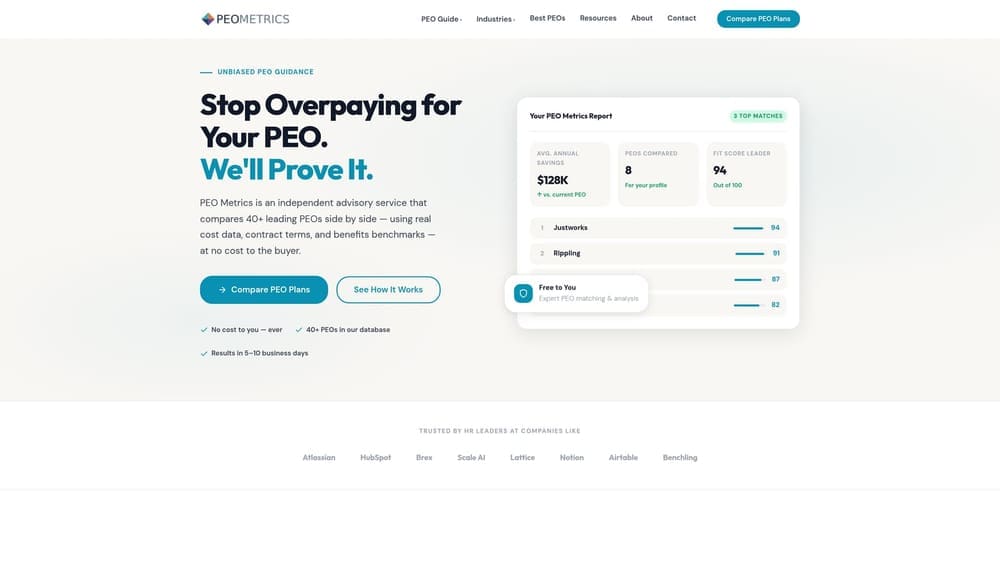
PEO Metrics is an independent PEO advisory service, not a PEO itself, that compares 40+ providers side by side on cost, contract terms, benefits, and compliance.
Where This Tool Shines
The core problem in logistics PEO selection isn’t finding a vendor willing to take your business. It’s knowing whether the quote you received is reasonable, whether the workers’ comp program will correctly segregate your class codes, and whether the exit clause will trap you if service deteriorates. PEO Metrics answers those questions before you sign anything.
The service has benchmarked $2.1B in PEO spend across 850+ company matches since 2019, which means the comparison data reflects real logistics, transportation, and distribution accounts, not just office-worker pricing norms. The intake takes roughly 8 minutes, and the comparison report is delivered in 5 to 10 business days. It’s 100% free to the buyer, with no vendor kickbacks or referral fees influencing the output. That independence matters when you’re trying to evaluate whether a PEO’s workers’ comp markup is competitive or padded.
Key Features
12-Dimension Methodology: Covers cost, contract terms, benefits quality, compliance depth, and more, giving logistics companies a structured basis for comparison rather than a sales pitch from each vendor.
$2.1B Benchmarked: Pricing comparisons draw from real PEO spend data across 850+ matched companies, including transportation and distribution accounts.
Workers’ Comp and Contract Analysis: Flags class code segregation practices, experience mod rate tolerance, and exit clause risk before you commit. See the workers’ comp class code restructuring guide for how this affects logistics premiums specifically.
40+ PEOs Tracked: Includes mainstream enterprise PEOs and specialty providers that accept higher-risk logistics accounts, so you’re not limited to the names that spend the most on advertising.
Free to the Buyer: No fee, no obligation, no vendor steering. Serves companies with 10 to 2,000 employees.
Best For
Any logistics company, from a small courier operation to a regional 3PL, that is buying a PEO for the first time, switching after a bad experience, or heading into renewal without knowing whether their current pricing is competitive. If you’re unsure which vendor on this list fits your specific mod rate, workforce mix, and state footprint, start here before you start the RFP process.
Pricing
Free to the buyer. PEO Metrics does not charge the companies it advises. Revenue comes from PEOs, but the methodology and output are structured to remain independent of vendor relationships.
2. ADP TotalSource
Best for: Mid-size to large logistics companies operating across multiple states that need enterprise-grade payroll infrastructure and a mature workers’ comp program.
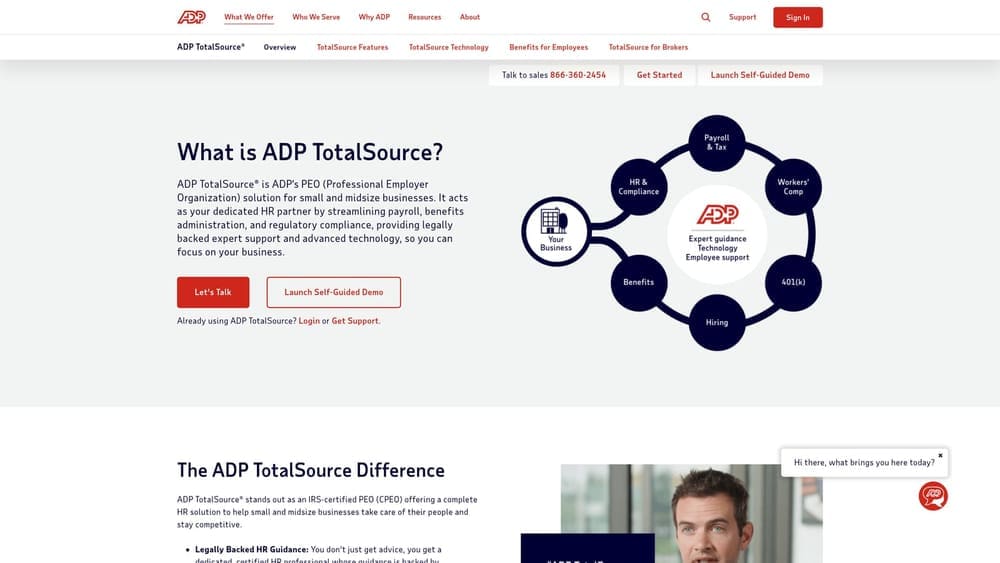
ADP TotalSource is the largest PEO in the US by revenue, with deep multi-state payroll infrastructure and a workers’ comp program that has handled transportation-adjacent class codes at scale.
Where This Tool Shines
Multi-state payroll is where ADP earns its place on this list. If you’re running terminals in five states and adding a sixth, ADP has registered employer entities and established tax filing relationships in all 50 states. That matters when a PEO without that infrastructure causes SUTA misallocations or late filings in a new state. ADP TotalSource is also CPEO-certified, meaning tax liabilities transfer to ADP under the co-employment arrangement, which reduces your exposure during an IRS audit.
The workers’ comp program is administered through a master policy with experience across transportation-adjacent class codes. For logistics companies with a relatively clean experience mod rate, ADP’s purchasing power on workers’ comp can translate to meaningful premium savings compared to going direct.
Key Features
All-50-State Payroll Infrastructure: Registered entities and tax filing capability across every state, critical for logistics companies with multi-terminal or multi-state driver operations.
CPEO Certification: IRS-certified PEO status means federal employment tax liability transfers to ADP, reducing audit exposure for the client company.
Workers’ Comp Master Policy: Administered program with claims management experience in transportation-adjacent class codes, including segregation support for mixed workforces.
HR Technology Platform: Time and attendance, onboarding, and reporting tools integrated into the ADP ecosystem, which many logistics companies already use for payroll.
Large-Group Benefits Access: Purchasing power across medical, dental, vision, and ancillary benefits that can help logistics employers compete for drivers in tight labor markets.
Best For
Regional and national trucking companies, distribution centers, and 3PLs with 50 or more employees operating across multiple states. Less suited to very small operations or companies with high experience mod rates, where ADP’s underwriting criteria may result in a decline or a restricted workers’ comp offer.
Pricing
Percentage-of-payroll or PEPM; pricing is not publicly disclosed and requires a quote. ADP TotalSource generally prices at the higher end of the market, and the account management model can feel impersonal for smaller logistics operators. Get a benchmark before you accept their first number.
3. Insperity
Best for: Logistics and distribution companies focused on reducing driver turnover through stronger benefits and HR support.
Insperity is a full-service PEO known for high-touch HR delivery and strong group benefits access, built for companies that want more than payroll processing from their PEO relationship.

Where This Tool Shines
Driver retention is one of the most expensive problems in logistics HR. Insperity’s benefits access, particularly its group health plan purchasing power, can help a regional trucking company or distribution center offer coverage that competes with larger carriers without carrying the administrative burden internally. The dedicated HR specialist model, where you get an assigned person rather than a call center queue, also makes a real difference when you’re handling a complex termination or a DOT-related HR issue that requires nuanced guidance.
Insperity is CPEO-certified and has multi-state payroll capability, so the compliance infrastructure is solid. Where it earns its premium price is on the service side, not the technology side.
Key Features
Dedicated HR Specialists: Assigned account contacts rather than a call-center model, useful when logistics HR situations require judgment and context, not just a ticket number.
Strong Group Benefits Access: Medical, dental, vision, and ancillary coverage at group rates that can help logistics employers compete in tight driver and warehouse labor markets.
Comprehensive HR Administration: Onboarding, performance management, and termination support, including documentation practices relevant to DOT-regulated workforces.
CPEO Certification: Federal employment tax liability transfers to Insperity under co-employment.
Workers’ Comp Administration: Claims management support included, though underwriting tolerance for high-mod-rate accounts is limited.
Best For
3PLs, freight brokerages, and distribution companies with a mixed workforce and a genuine focus on employee experience as a retention strategy. Less suited to pure trucking operations with high experience mod rates or very small companies; Insperity’s minimum headcount requirements and pricing structure make it less accessible at the low end. For a full picture of PEO compliance strategy in logistics, that companion piece is worth reading alongside this one.
Pricing
PEPM-based; not publicly disclosed. Insperity generally positions at the higher end of the market. The premium is real, and it’s worth knowing whether your workforce profile justifies it before you get deep into their sales process.
4. TriNet
Best for: Logistics and supply chain companies with a significant mix of salaried employees alongside their hourly workforce.
TriNet is a technology-forward PEO with a strong benefits marketplace and solid HR platform, built for companies that need self-service tools and multiple carrier options across a diverse workforce.
Where This Tool Shines
TriNet’s benefits marketplace is one of its strongest assets. If you’re running a freight brokerage or a 3PL with a mix of dispatchers, account managers, and warehouse staff, the ability to offer multiple plan options across carriers gives you flexibility that a single-carrier PEO can’t match. The HR technology platform is polished, with self-service tools for managers and employees that reduce administrative load on your internal HR team.
TriNet is CPEO-certified and handles multi-state payroll and compliance, so the infrastructure is there for companies operating across state lines. The limitation worth knowing: TriNet’s experience skews toward white-collar and mixed workforces. A predominantly hourly, high-turnover logistics operation with complex transportation class codes is not where TriNet is most differentiated, and the pricing can become expensive for workforces with significant hourly headcount churn.
Key Features
Benefits Marketplace: Multiple carrier options across medical, dental, and vision, giving logistics companies with diverse workforce segments more flexibility than a single-plan PEO.
HR Technology Platform: Self-service tools for managers and employees, time tracking, and reporting built for companies that want to reduce internal HR administrative load.
Industry-Specific HR Expertise: HR support for companies with mixed workforce compositions, including salaried and hourly employees across different functions.
Multi-State Payroll and Compliance: Payroll processing and tax filing across states, with CPEO certification for federal tax liability transfer.
Best For
Freight brokerages, 3PLs, and logistics tech companies where salaried or professional employees make up a meaningful share of the workforce. Less suited to pure trucking or warehouse operations where high-volume hourly workforce management and transportation-specific comp codes are the primary concern.
Pricing
PEPM-based; not publicly disclosed. Requires a quote. TriNet can be expensive for predominantly hourly workforces, so get a benchmark comparison before accepting their proposal at face value.
5. Rippling
Best for: Fast-scaling logistics and delivery companies that need payroll, compliance, and HR systems tightly integrated as they add headcount quickly.
Rippling is a software-first workforce management platform with a PEO offering layered on top, built for companies that prioritize automation and system integration over traditional HR advisory depth.
Where This Tool Shines
If you’re adding 30 employees a quarter and your onboarding process is still manual, Rippling’s automation is genuinely useful. New hire onboarding, state tax registration, benefits enrollment, and offboarding can all be triggered through workflows rather than handled one at a time by an HR coordinator. For logistics companies experiencing rapid headcount growth, particularly in last-mile delivery or logistics technology, that automation reduces the cost of scale.
Rippling handles multi-state payroll and automatically manages state registration when you hire in a new state, which removes one of the more tedious compliance tasks from your plate. The platform is CPEO-certified. The honest limitation: Rippling’s PEO offering is newer than its HR software roots, and the HR advisory depth is thinner than what you’d get from Insperity or ADP TotalSource. If your logistics operation needs hands-on HR guidance through complex situations, Rippling’s model may leave gaps.
Key Features
Unified Platform: Payroll, HR, IT, and finance connected in one system, reducing the number of point solutions a growing logistics company needs to manage separately.
Onboarding and Offboarding Automation: Workflow-driven processes useful for high-turnover logistics workforces where manual onboarding creates bottlenecks.
Automatic State Registration: Multi-state payroll and tax compliance with automatic state registration handling when you expand to new locations.
Time Tracking and Scheduling: Tools relevant to hourly logistics workers, integrated with payroll rather than bolted on as a separate system.
CPEO Certification: Federal employment tax liability transfers to Rippling under the co-employment arrangement.
Best For
Logistics technology companies, fast-growing last-mile delivery operations, and distribution companies scaling headcount quickly where system integration and automation matter more than deep HR advisory support. Less suited to established logistics companies with complex workers’ comp situations that need experienced claims management and class code expertise.
Pricing
Modular pricing starting at a per-employee-per-month base; full PEO pricing requires a quote. The modular model means you can add or remove features, but costs can accumulate as you add modules.
6. Justworks
Best for: Small logistics, courier, and last-mile delivery companies that want benefits access and payroll compliance without the complexity of enterprise PEO pricing.
Justworks is a straightforward PEO with transparent PEPM pricing and lower minimum headcount requirements, built for smaller companies that want large-group benefits access without a lengthy enterprise sales process.
Where This Tool Shines
Justworks publishes its pricing on their website, which is unusual in the PEO industry and genuinely useful for smaller logistics companies that don’t want to sit through three sales calls before knowing what they’ll pay. The transparent pricing model also makes it easier to benchmark against other options without waiting for a proposal cycle. For a courier company with 15 to 40 employees that needs benefits access and multi-state payroll compliance, Justworks is often the most accessible starting point.
The 24/7 support access is a real differentiator for logistics operations that don’t run on a Monday-through-Friday schedule. The honest limitation: Justworks’s HR advisory depth is limited for complex situations. If your logistics operation involves high-exposure workers’ comp class codes, a high experience mod rate, or significant DOT compliance complexity, Justworks may not have the specialized support you need.
Key Features
Transparent PEPM Pricing: Costs published on the Justworks website, allowing smaller logistics companies to evaluate fit without a full sales engagement first.
Large-Group Benefits Access: Medical, dental, vision, and ancillary benefits at group rates, meaningful for small courier and delivery operations competing for workers.
24/7 Support: Around-the-clock access for HR questions, relevant for logistics companies with non-standard operating hours.
Best For
Small courier operations, last-mile delivery companies, and logistics startups with 10 to 75 employees that want benefits access and payroll compliance without the pricing opacity of enterprise PEOs. Less suited to high-comp-exposure logistics operations or companies with complex workers’ comp situations that need experienced claims management.
Pricing
Published PEPM pricing by plan tier; check justworks.com for current rates, as pricing is updated periodically. One of the few PEOs where you can get a meaningful cost estimate before speaking with sales.
7. Oasis (a Paychex Company)
Best for: Logistics companies that want a large, stable PEO partner with strong payroll processing infrastructure and regional support coverage.
Oasis, backed by Paychex, offers multi-state payroll processing, workers’ comp administration, and HR support through one of the largest payroll processing organizations in the US.
Where This Tool Shines
Paychex’s payroll processing infrastructure is one of the most established in the country, and Oasis inherits that backbone. For logistics companies that already run payroll through Paychex and want to add co-employment benefits and workers’ comp administration without switching platforms entirely, Oasis is a natural path. Regional support coverage is also a genuine strength for distribution companies with multiple locations that need local HR support rather than a centralized call center.
The honest limitation: the integration of Oasis into Paychex has led to some service inconsistency during transition periods. Oasis is also less differentiated than dedicated PEOs for logistics-specific needs. If transportation class code expertise or high-mod-rate underwriting tolerance is your primary concern, Oasis is not where you’d start.
Key Features
Paychex Payroll Infrastructure: Backed by one of the largest payroll processors in the US, with established multi-state tax filing and compliance processes.
Multi-State HR Administration: Payroll, tax filing, and HR administration across states, with regional support coverage.
Workers’ Comp Administration: Claims management included, though underwriting tolerance for high-exposure logistics accounts varies.
Benefits Administration: Access to major carriers for medical, dental, and vision coverage.
Paychex Technology Platform: HR technology through the Paychex ecosystem, familiar to companies already using Paychex for payroll.
Best For
Regional distribution companies and logistics operators already in the Paychex ecosystem that want to add PEO co-employment benefits without a full platform migration. Less suited to companies seeking specialized logistics HR expertise or those with high experience mod rates that need broader underwriting tolerance.
Pricing
Not publicly disclosed; requires a quote. Pricing structure varies based on workforce size, state footprint, and benefits selections.
8. Vensure Employer Services
Best for: Trucking, warehousing, and logistics companies with higher workers’ comp risk profiles that larger PEOs decline to underwrite.
Vensure Employer Services is a PEO known for broader underwriting tolerance, often accepting transportation and warehouse operations with experience mod rates that push mainstream PEOs to decline.
Where This Tool Shines
This is the most logistics-specific differentiator on this list. A trucking company with a mod rate above 1.25 or 1.50 will often find that ADP TotalSource, Insperity, and Justworks decline to offer workers’ comp coverage under their master policy. That’s not a knock on those PEOs; it reflects their underwriting criteria. But it leaves a real logistics company without a path into a PEO unless they find a vendor with broader risk tolerance. Vensure fills that gap.
Vensure has experience with transportation and warehouse operations, including the class code complexity that comes with a mixed driver and dock workforce. For a logistics company that has been turned down by two or three mainstream PEOs, Vensure is often the first conversation worth having. The trade-off is real: Vensure has less name recognition than the enterprise players, fewer self-service technology features, and service quality that can vary by regional office. If you go this route, ask specifically about the regional team that will manage your account before you sign. You can also review why companies regret their PEO choice to understand what to watch for in the contract before committing.
Key Features
Broader Underwriting Tolerance: Accepts higher-risk workers’ comp profiles including transportation and warehouse operations with elevated experience mod rates that larger PEOs decline.
Transportation and Warehouse Experience: Familiarity with class codes relevant to logistics, including trucking and warehouse operations with mixed workforce compositions.
Multi-State Payroll and HR Administration: Payroll processing, tax filing, and HR compliance support across states.
Workers’ Comp Administration: Claims management with experience in high-mod-rate industries, which is the core reason logistics companies with risk profiles choose Vensure over mainstream alternatives.
Flexible Service Models: Accommodates companies with complex or non-standard workforces that don’t fit neatly into standard PEO underwriting boxes.
Best For
Trucking companies, warehouse operations, and regional logistics providers with experience mod rates above 1.25 that have been declined by mainstream PEOs. Also worth considering for logistics companies with genuinely complex class code situations where a vendor’s willingness to engage with the specifics matters more than brand recognition or technology features.
Pricing
Not publicly disclosed; requires a quote. Given the higher-risk profile of the typical Vensure logistics client, pricing will reflect the workers’ comp underwriting risk. Benchmark against other quotes before accepting the first offer.
Matching the Right PEO to Your Logistics Operation
The right PEO for a 20-truck regional carrier looks nothing like the right PEO for a 200-person 3PL with locations in six states. Here’s how to orient the decision by company profile.
Small courier or last-mile delivery (under 50 employees): Start with Justworks for its transparent pricing and accessible minimums, or run a PEO Metrics comparison first to understand what the market should cost before you engage any vendor.
Regional trucking or distribution with a clean mod rate: ADP TotalSource is the strongest infrastructure play. If your mod rate is elevated, go to Vensure before you waste time on RFPs with PEOs that will decline you at underwriting.
3PL or freight brokerage with a mixed workforce: TriNet or Insperity, depending on whether your priority is technology and benefits flexibility (TriNet) or high-touch HR support and retention-focused benefits (Insperity).
Fast-scaling logistics tech or last-mile platform: Rippling’s automation and unified platform are built for the headcount growth and system integration challenges that come with rapid scale.
Any company heading into renewal without a benchmark: Use PEO Metrics before you accept the renewal quote. The comparison covers 40+ PEOs across 12 dimensions, draws on $2.1B in benchmarked spend, and takes about 8 minutes to initiate. It’s free, and it gives you the data to negotiate or switch with confidence rather than guessing. If you’re also switching PEOs for the first time, the PEO transition guide is worth reading before you sign anything new.
Before you sign that PEO renewal, make sure you’re not leaving money on the table. Many logistics companies overpay because of bundled fees, hidden administrative markups, and contracts designed to limit flexibility. A side-by-side comparison of pricing, services, and contract terms shows you exactly what you’re paying for and whether it’s competitive for your workforce profile. Don’t auto-renew. Make an informed, confident decision.
Before you sign that PEO renewal, make sure you’re not leaving money on the table.
Many businesses unknowingly overpay because of bundled fees, hidden administrative markups, and contracts designed to limit flexibility. We give you a clear, side-by-side breakdown of pricing, services, and contract terms—so you can see exactly what you’re paying for and choose the option that truly fits your business.
