

Your California hire starts next month. Your payroll team just flagged that state daily overtime rules are different from what your current system calculates. And your PEO’s compliance hotline put you on hold for twenty minutes before telling you to “check the employee handbook.”
That’s the moment most HR leaders realize their PEO’s compliance coverage has gaps. California requires overtime after eight hours in a single workday, not just after forty hours in a week. Nevada applies daily overtime only to employees below a certain wage threshold. Colorado updates its overtime and minimum pay standards order periodically, and Alaska has its own daily threshold on top of federal rules. None of this is covered by FLSA alone, and not every PEO has the infrastructure to handle it.
The eight providers below are ranked on how well they actually handle state-specific overtime compliance, not just whether they claim to. The list starts with the independent advisory service that helps you compare all of them before you commit to anything.
1. PEO Metrics
Best for: HR and finance leaders who want an unbiased comparison before signing a PEO contract.
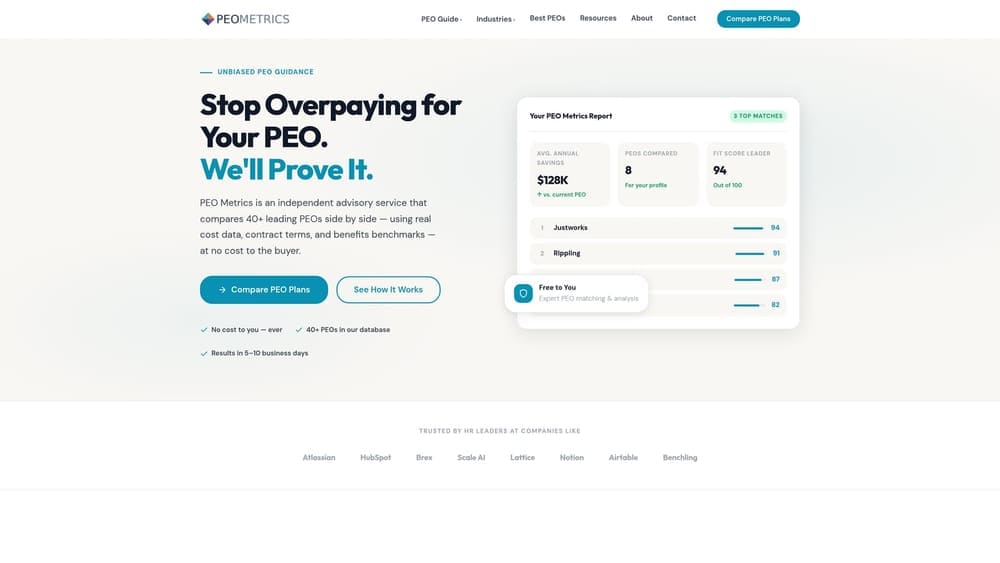
PEO Metrics is an independent advisory service that compares 40+ PEOs side by side on compliance depth, pricing, and contract terms, free to the buyer.
Where This Tool Shines
Most buyers approach PEO selection by collecting vendor quotes and comparing them against each other. The problem is that each vendor controls what they show you, and “we handle multi-state compliance” is something every sales deck says. PEO Metrics sits on your side of the table instead. The 12-dimension methodology specifically evaluates how each PEO handles state-specific overtime requirements, not just whether they have a compliance team listed on their website.
If your footprint includes California, Nevada, Colorado, or Alaska, the comparison report will surface which providers have genuine compliance infrastructure for those states and which ones are relying on generic payroll rules. That distinction matters enormously when a missed daily overtime calculation turns into a back-pay claim.
Key Features
12-Dimension Compliance Evaluation: Each PEO is assessed across a structured methodology that includes state-specific overtime handling, not just general compliance claims.
Side-by-Side Pricing Analysis: Surfaces fee escalators, PEPM versus percentage-of-payroll structures, and contract clauses that affect your cost over time.
Contract Term Review: Flags liability clauses in co-employment agreements that determine who bears responsibility when a state overtime rule is missed.
Fast Turnaround: Report delivered in 5-10 business days after an approximately 8-minute intake process.
850+ Companies Matched Since 2019: The matching database reflects real-world outcomes across a range of industries, states, and company sizes.
Best For
Any company operating in two or more states, preparing to hire in California for the first time, or entering a PEO renewal conversation where multi-state compliance is a factor. Also useful for PE-backed companies benchmarking their current PEO against the market. Serves companies with 10 to 2,000 employees.
Pricing
100% free to the buyer. PEO Metrics is compensated by PEO providers when a match is made, which means you get an independent comparison without paying for it.
2. ADP TotalSource
Best for: Mid-size and larger companies that need broad state coverage backed by enterprise payroll infrastructure.
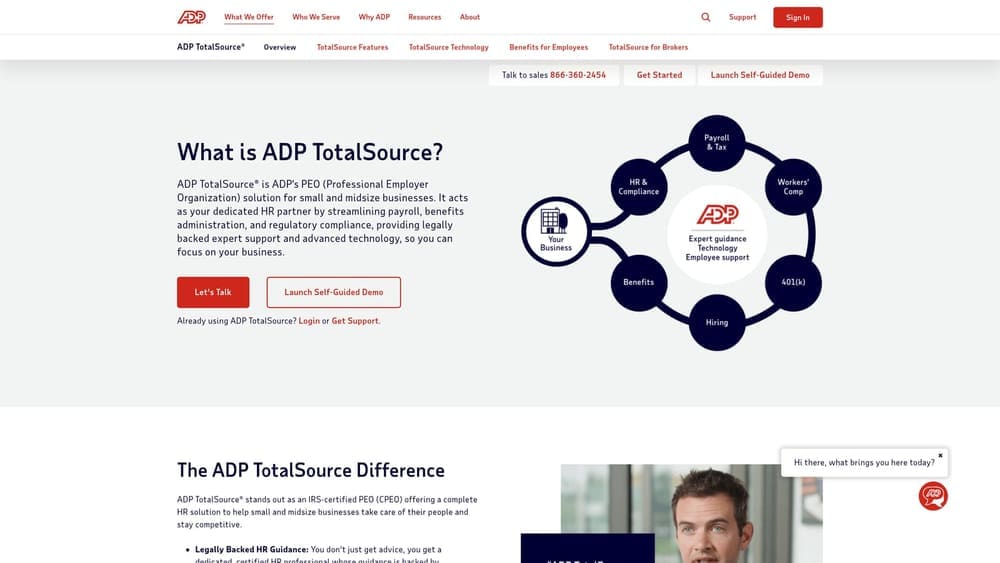
ADP TotalSource is one of the largest PEOs in the US, running on ADP’s national payroll engine with state-specific compliance rules built into the platform.
Where This Tool Shines
The depth of ADP’s payroll compliance database is a genuine advantage here. State-specific daily and weekly overtime thresholds are embedded in the payroll engine itself, which means California’s Labor Code Section 510 rules, Nevada’s wage-threshold-dependent daily overtime, and Colorado’s COMPS Order calculations are applied at the payroll-run level rather than relying on manual configuration. When state laws change, the platform updates accordingly.
For companies with employees in many states simultaneously, the breadth of coverage is hard to match. ADP TotalSource’s co-employment agreement also assigns compliance responsibility with legal backing, which is the clause you want to read carefully before signing.
Key Features
State-Specific Payroll Rules: Daily and weekly overtime thresholds configured for all 50 states, including California, Nevada, Alaska, and Colorado.
Automated Compliance Updates: Payroll rules update when state overtime statutes change, reducing the risk of applying outdated thresholds.
High-Complexity State Resources: Dedicated compliance resources for California, Colorado, Nevada, and other states with overtime rules that differ materially from FLSA.
Co-Employment Agreement: Defines compliance responsibilities with legal backing, clarifying who bears liability for a missed state overtime calculation.
Broad HR Platform: Benefits administration, risk management, and HR support bundled with payroll compliance.
Best For
Companies with 50 or more employees operating across multiple states who want enterprise-grade payroll compliance and are comfortable with a large-vendor service model. Less ideal for smaller clients who want a named HR contact for nuanced compliance questions rather than self-service tools.
Pricing
Custom pricing, typically structured as a percentage of payroll or a per-employee-per-month fee. Request a quote directly from ADP TotalSource.
3. Insperity
Best for: Companies that want a named human contact to interpret state overtime rules, not just run payroll calculations.
Insperity pairs dedicated HR specialists with a compliance platform, giving each client a named contact who can work through state overtime nuances that automated rules alone may not catch.
Where This Tool Shines
Automated payroll rules handle the standard cases well. Where they fall short is the edge case: the California commissioned salesperson whose overtime exemption status is unclear, or the Nevada employee whose hourly rate sits right at the daily overtime wage threshold. Insperity’s model puts a human in that conversation. Your assigned HR specialist can interpret the rule for your specific situation rather than applying a generic calculation.
The proactive compliance alert model is also worth noting. When a state overtime law changes, your HR contact communicates the change directly rather than leaving you to find it in a platform notification you may have missed.
Key Features
Named HR Specialists: Each client account is assigned a dedicated HR contact for direct compliance advisory, not a general support queue.
State-Specific Overtime Guidance: Advisory that goes beyond automated rule application to interpret state law for specific workforce situations.
Proactive Compliance Alerts: State law changes communicated by a human contact, not only through automated notifications.
Benefits Administration: Strong benefits platform paired with payroll compliance in the co-employment model.
Defined Liability Structure: Co-employment agreement clarifies compliance responsibility between Insperity and the client company.
Best For
Companies that value human advisory over platform self-service, particularly those with workforce situations that require interpretation rather than just calculation. Less suited to buyers who prioritize a software-first experience or are cost-sensitive, as Insperity tends to price at the higher end of the PEO market.
Pricing
Custom pricing, generally positioned at the higher end of the PEO market. Request a quote directly from Insperity.
4. TriNet
Best for: Tech, professional services, and other companies whose state footprint aligns with TriNet’s vertical focus.
TriNet organizes its service model by industry vertical, with compliance teams tuned to the state footprints most common in tech, professional services, and similar sectors.
Where This Tool Shines
A tech company with engineers in California and New York is a very different compliance challenge than a manufacturing firm with shift workers in Nevada. TriNet’s vertical structure means the compliance team assigned to your account has seen your industry’s state overtime issues before. California daily overtime, New York’s spread-of-hours rules, and the exemption questions common in tech roles are familiar territory for TriNet’s compliance specialists in those verticals.
Automated state overtime calculations are integrated into the payroll platform, and compliance specialists are available for questions that go beyond standard payroll processing.
Key Features
Industry-Vertical Compliance Teams: Compliance specialists organized by sector with deep familiarity in the state footprints common to each vertical.
Automated State Overtime Calculations: State-specific thresholds integrated into the payroll platform, including California and New York rules.
Compliance Specialists On Call: Available for state-specific overtime questions beyond what standard payroll processing covers.
Tech and Professional Services Track Record: Particularly strong experience with high-complexity states where these industries concentrate employees.
Bundled HR and Benefits Administration: Compliance support packaged with benefits and HR services in the co-employment model.
Best For
Tech companies, professional services firms, and nonprofits whose employees are concentrated in California, New York, or other high-complexity states. Less well-suited to industries outside TriNet’s vertical focus; smaller clients have historically reported concerns about pricing and contract flexibility.
Pricing
Custom pricing by industry vertical and headcount. Request a quote directly from TriNet.
Before you finalize any of these options, it’s worth running a side-by-side comparison first. Compare PEO Plans through PEO Metrics to see how these providers stack up on compliance depth, pricing, and contract terms for your specific state footprint.
5. Justworks
Best for: Growing companies expanding into new states who want transparent pricing alongside multi-state compliance handling.
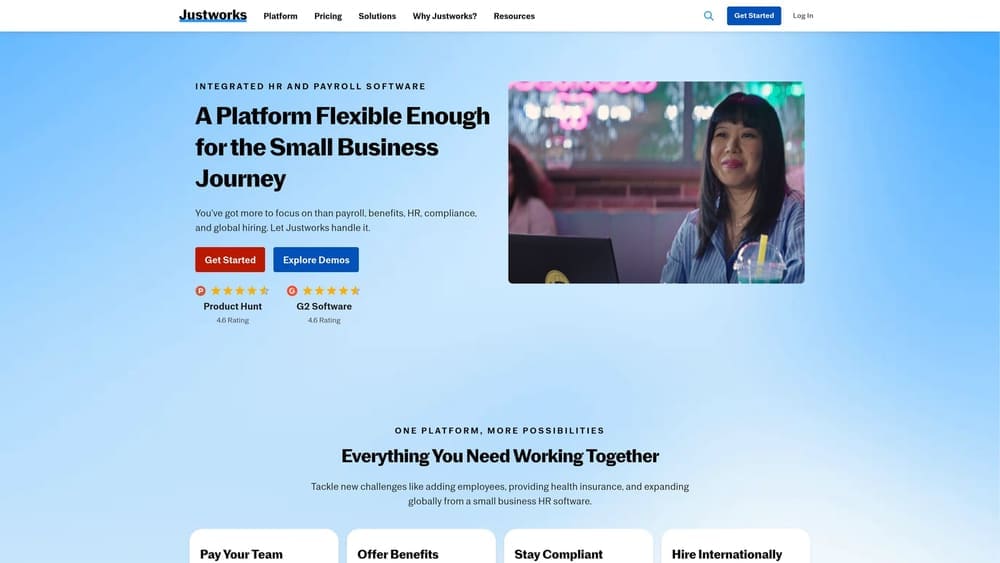
Justworks offers transparent flat-rate pricing and a clean platform with multi-state compliance handling designed for companies entering new states for the first time.
Where This Tool Shines
For a company that has been operating in one state and is now hiring in California or Colorado, the onboarding experience matters as much as the compliance depth. Justworks makes the process of adding a new state relatively straightforward, with real-time compliance updates applied at the payroll level and documentation accessible through the platform. The pricing transparency is also a genuine differentiator: published rate tiers mean you know what you’re paying before you sign.
The platform handles standard multi-state overtime calculations well. Where it requires more buyer involvement is in genuinely complex situations, such as California daily overtime combined with industry-specific exemptions, where some buyers may find themselves doing more self-service research than they anticipated.
Key Features
Real-Time State Compliance Updates: State overtime rule changes applied at the payroll level without requiring manual reconfiguration.
Transparent Pricing: Published tiered rates by employee count and plan level, unusual in a market where most PEOs require a quote call to get any number.
Multi-State Payroll Processing: State-specific overtime rule application across multiple operating states.
Compliance Documentation: Resources and documentation accessible through the platform for HR teams managing their own compliance research.
Straightforward State Expansion Onboarding: Designed for companies adding new states to their workforce footprint.
Best For
Companies with 10 to 200 employees that are expanding into new states and want pricing clarity upfront. Less suited to companies with very complex state overtime situations that require deep human advisory rather than platform-based compliance tools.
Pricing
Published tiered pricing by employee count and plan level. See justworks.com for current rates.
6. Rippling
Best for: Technology-forward companies that want automated state compliance rules embedded directly in their payroll workflow.
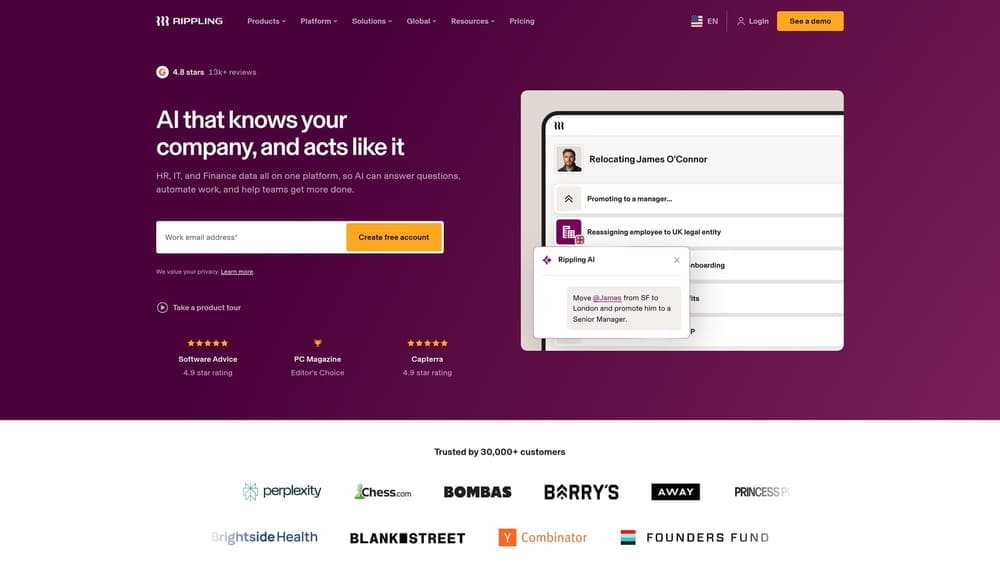
Rippling is a technology-first platform that automates state compliance rules, including overtime thresholds, at the payroll-run level with minimal manual intervention required.
Where This Tool Shines
Rippling’s compliance engine applies state-specific overtime thresholds, both daily and weekly, automatically at each payroll run. California’s eight-hour daily threshold, double-time after twelve hours, and seventh-consecutive-day rules are the kind of layered calculation that payroll software either handles correctly or doesn’t. Rippling’s architecture is built to handle that layering, and the audit trail it generates for overtime calculations by state is useful if you ever face a wage claim.
The modular platform also means you can add compliance features as your state footprint grows rather than paying for capabilities you don’t yet need.
Key Features
Automated Overtime Rule Engine: State-specific daily and weekly thresholds applied at each payroll run, including California’s multi-tier overtime structure.
Unified HR, Payroll, and IT Platform: Compliance rules embedded in the workflow rather than managed as a separate module.
State Law Monitoring: Automated rule updates when state overtime statutes change.
Audit Trail and Reporting: Detailed overtime calculation records by state, useful for wage claim defense and internal compliance review.
Modular Expansion: Add compliance features and states as your workforce footprint grows.
Best For
Tech-forward companies that want automated compliance with strong reporting and are comfortable with a platform-first service model. Less suited to buyers who need a dedicated human advisor for complex state overtime interpretation; Rippling’s model is lighter on that side than Insperity or Engage PEO.
Pricing
Modular pricing with a core platform fee plus per-module costs. Request a quote for PEO co-employment pricing specifically.
7. Oasis (a Paychex Company)
Best for: Small and mid-size businesses that want access to Paychex’s compliance infrastructure through a co-employment model.
Oasis delivers PEO co-employment services backed by Paychex’s payroll compliance infrastructure, giving smaller companies access to enterprise-grade state overtime handling.
Where This Tool Shines
Paychex has built state-specific payroll compliance rules into its engine over decades of operating across all fifty states. Oasis clients access that infrastructure through the co-employment model, which means state overtime thresholds, including daily rules in California, Nevada, Alaska, and Colorado, are handled at the payroll level by the same system large enterprises rely on. For a company that has outgrown its current payroll setup and wants compliance depth without building it in-house, that’s a meaningful upgrade.
The integrated workers’ comp, benefits, and payroll compliance relationship also simplifies vendor management for smaller HR teams.
Key Features
Paychex Payroll Engine: State-specific overtime rules across all operating states, backed by Paychex’s compliance infrastructure.
Co-Employment Agreement: Defined compliance responsibilities between Oasis and the client company.
HR Support Team: Available for state-specific compliance questions beyond standard payroll processing.
Integrated Compliance Package: Workers’ comp, benefits, and payroll compliance managed through a single co-employment relationship.
Paychex Familiarity: Suitable for companies already operating within the Paychex ecosystem.
Best For
Small and mid-size companies, roughly 10 to 150 employees, that want enterprise-grade state overtime compliance without enterprise pricing. Worth noting that some clients report friction around which team, Oasis or Paychex, owns specific compliance questions; clarify that in the co-employment agreement before signing.
Pricing
Custom pricing. Contact Oasis directly for a quote.
8. Engage PEO
Best for: Companies in high-litigation-risk states or industries that want employment attorneys, not software rules, driving compliance decisions.
Engage PEO is a smaller PEO with an attorney-led compliance model, where in-house employment lawyers monitor state overtime law changes and apply them directly rather than relying solely on automated payroll rules.
Where This Tool Shines
Most PEOs update their payroll rules when a state statute changes. Engage PEO’s in-house employment attorneys are monitoring not just the statutes but the case law, agency guidance, and enforcement trends that shape how those statutes actually get applied. For a California employer in a high-wage-claim-frequency industry, or a company operating in states where overtime litigation is active, that distinction matters. The compliance update you receive isn’t just a payroll reconfiguration; it’s a legal interpretation.
Direct access to HR compliance specialists for state-specific questions also means you’re not waiting on a general support queue when a nuanced overtime situation comes up.
Key Features
In-House Employment Attorneys: Actively monitor state overtime legislation and case law, not only statutory changes.
Legal-Review-Driven Compliance Updates: Updates reflect attorney interpretation, not only automated payroll rule changes.
Direct Compliance Access: HR compliance specialists available for state-specific overtime questions without a general support queue.
Attorney-Reviewed Co-Employment Framework: The co-employment agreement and compliance model are built with legal oversight from the start.
High-Litigation-Risk Focus: Particularly strong for companies in California and other states with active wage-and-hour enforcement.
Best For
Companies in California, New York, or other high-enforcement states, particularly in industries with wage claim exposure. Engage PEO’s technology platform is smaller than enterprise PEOs, so buyers who prioritize platform features alongside compliance depth should weigh that tradeoff carefully.
Pricing
Custom pricing. Contact Engage PEO directly for a quote.
Which PEO Is Right for Your State Footprint?
There is no single right answer here, and any PEO that tells you otherwise is selling, not advising. The right choice depends on which states you operate in, how complex your overtime situations are, and whether you need a human advisor or an automated engine to handle them.
If your primary concern is California, Engage PEO’s attorney-led model or Insperity’s dedicated HR specialist approach will serve you better than a platform that applies payroll rules without legal interpretation. If you’re expanding into multiple states quickly and want pricing clarity from day one, Justworks is worth a close look. If you’re a tech company concentrated in California and New York, TriNet’s vertical focus is relevant. If you want the broadest state coverage backed by enterprise infrastructure, ADP TotalSource and Oasis both deliver that through different service models. If automation and audit trail depth matter most, Rippling’s compliance engine is built for that.
The five questions worth asking every PEO before you sign: Does your co-employment agreement specify that you bear liability for missed state overtime compliance? How do you monitor state law changes, and how quickly do payroll rules update after a statutory change? Do you have in-house employment attorneys or do you rely on outside counsel? Which states do you have the most clients in, and which do you decline to operate in? Can you show us a sample compliance alert from the last twelve months?
Those questions separate the PEOs that genuinely handle state-specific overtime from those that claim to. Before you sign a new contract or auto-renew your current one, run an independent comparison first. PEO Metrics has benchmarked $2.1 billion in PEO spend across 850+ companies and compares 40+ providers on compliance depth, pricing, and contract terms at no cost to you.
Don’t auto-renew. Make an informed, confident decision.
Before you sign that PEO renewal, make sure you’re not leaving money on the table.
Many businesses unknowingly overpay because of bundled fees, hidden administrative markups, and contracts designed to limit flexibility. We give you a clear, side-by-side breakdown of pricing, services, and contract terms—so you can see exactly what you’re paying for and choose the option that truly fits your business.
