
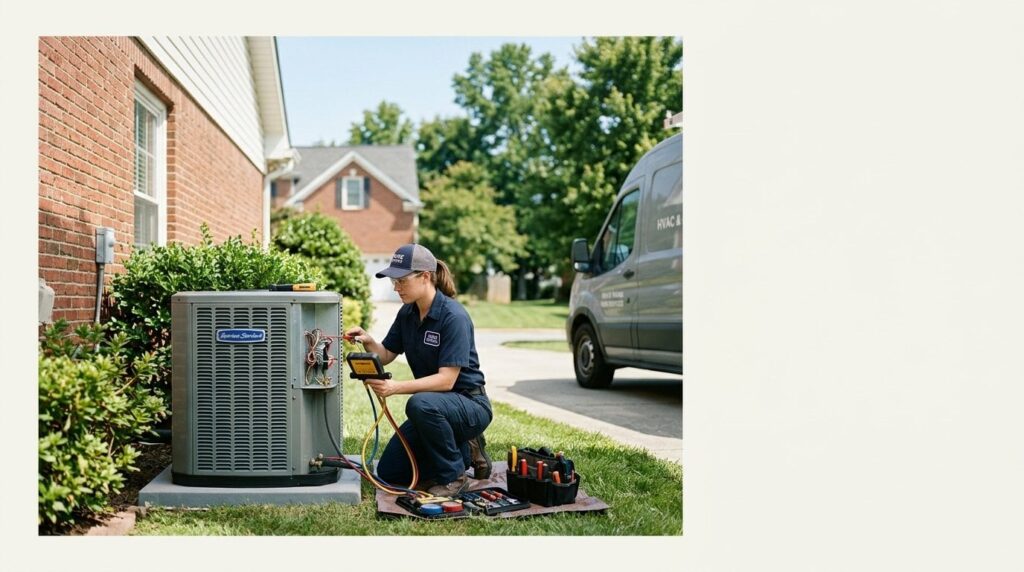
Machine shops don’t fit neatly into the HR software categories most vendors design around. High workers’ compensation class codes, hourly production workers with variable overtime, potential OSHA recordkeeping obligations, and sometimes prevailing wage requirements for government contracts — these are not problems a generic payroll platform was built to solve.
The real question for most shop owners isn’t whether to outsource payroll. It’s whether a Professional Employer Organization (PEO) or a standalone payroll company is the right structural choice for a business where workers’ comp costs and compliance exposure are genuine financial risks, not afterthoughts.
This guide compares providers across both categories: full-service PEOs that enter a co-employment relationship with your business, and payroll platforms that process wages and file taxes without assuming any employer-of-record responsibilities. Understanding that structural difference matters before you start evaluating pricing. If you’re new to it, the foundational explainer on what a PEO is is worth a few minutes before reading further.
One important note before we begin: PEOMetrics may receive placement fees from some providers listed here. All descriptions are informational only and do not constitute individualized legal, tax, or benefits advice.
1. PEO Metrics
Best for: Machine shops comparing PEO and payroll options before signing any contract
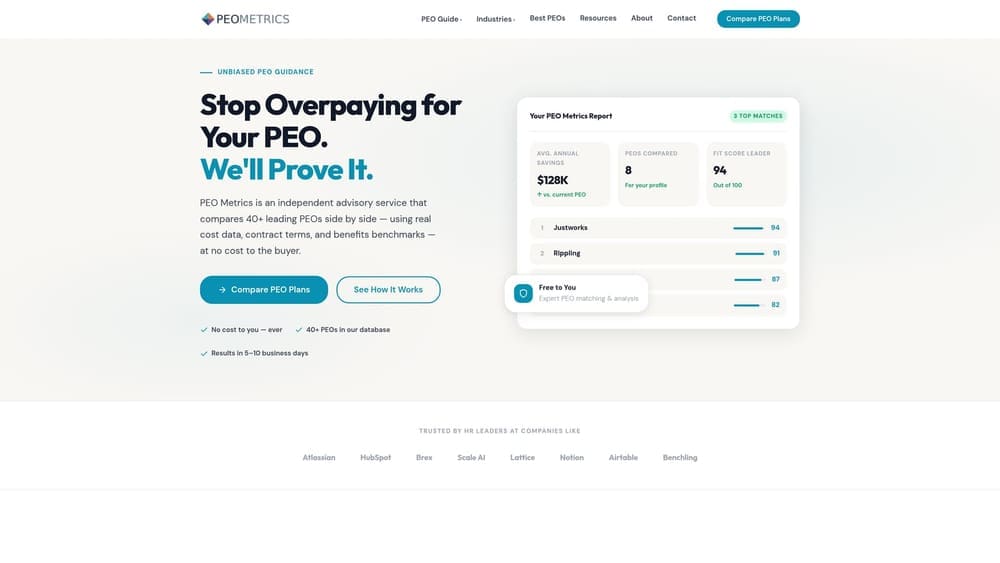
PEO Metrics is a structured comparison service that helps businesses evaluate PEO and payroll providers side by side, with service detail and pricing analysis that vendor sales teams typically don’t volunteer.
Where This Tool Shines
Most machine shop owners reach out to two or three PEO vendors, get proposals in different formats, and then try to compare apples to oranges on their own. PEO Metrics addresses that problem directly. The service puts multiple providers’ pricing structures and service terms into a comparable format so you can see what you’re actually paying for across options.
This is particularly useful in manufacturing contexts where workers’ comp handling, OSHA support, and benefits access vary considerably between providers. Knowing which PEO manages workers’ comp through a master policy versus which one simply brokers coverage can change the financial picture significantly, and that’s the kind of detail this service is designed to surface.
Key Features
Side-by-Side Provider Comparisons: Structured comparisons of PEO and payroll-only providers using consistent service and pricing data rather than each vendor’s own marketing format.
Cross-Category Coverage: Covers both co-employment PEOs and payroll-only platforms, so you’re not forced to pre-decide which category you want before you understand the cost difference.
Pre-Contract Cost Analysis: Designed to help businesses identify fee differences and contract terms before signing, not after the renewal window has passed.
Consultative Process: Suited to business owners and HR leads who haven’t been through a PEO evaluation before and don’t know which questions to ask.
Disclosure: PEOMetrics may receive vendor placement fees. It does not operate as a commission-free or fee-free service.
Best For
Machine shops in the early evaluation stage who want an organized way to compare providers before committing. Also useful for shops approaching a PEO renewal who want to verify they’re not overpaying relative to current market options.
Pricing
Contact PEO Metrics directly for details. No published fee schedule is available on the site.
2. Insperity
Best for: Small-to-mid-size machine shops wanting a full-service PEO with dedicated HR support
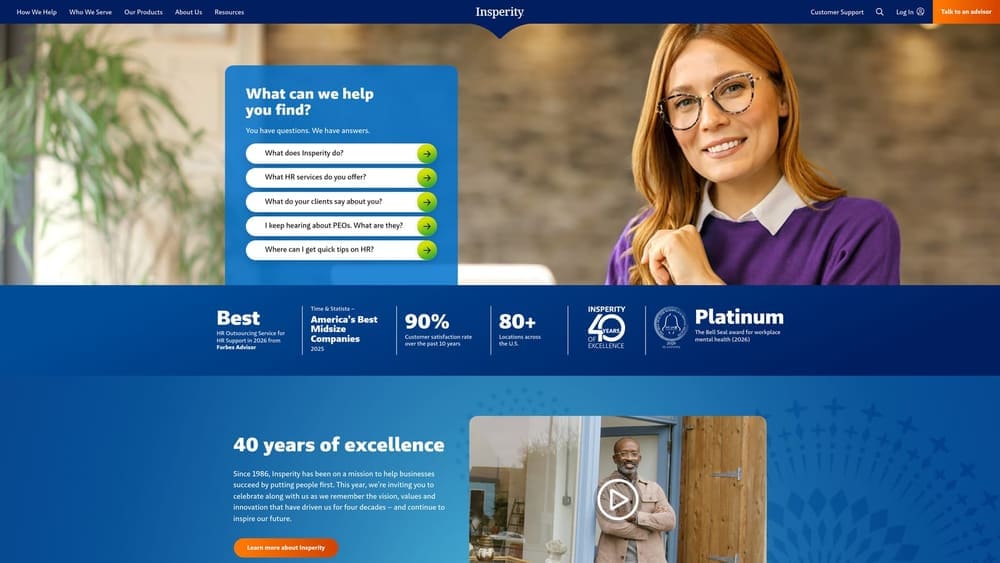
Insperity is a CPEO-certified, full-service PEO serving businesses across a range of industries, including manufacturing, with co-employment, benefits administration, HR support, and workers’ compensation management.
Where This Tool Shines
Insperity’s CPEO certification means it assumes sole liability for federal employment taxes on wages it pays — a meaningful compliance distinction for machine shops that want clean tax handling without managing that exposure internally. The dedicated HR specialist model, rather than a rotating call-center approach, tends to work well for shops that have specific questions about OSHA recordkeeping or workers’ comp class code management.
Access to large-group benefits is another practical advantage. A machine shop with 15 or 20 employees typically can’t negotiate competitive health insurance on its own. Insperity’s master policy structure can change that, which affects both cost and your ability to attract skilled machinists and CNC operators in a competitive labor market.
Key Features
CPEO Certification: IRS-certified employer of record for federal employment taxes, providing a defined liability structure for tax compliance.
Large-Group Benefits Access: Health, dental, vision, and other benefits through the PEO’s master plan, often at rates small shops can’t access independently.
Dedicated HR Specialist: Named HR support rather than a general service queue, relevant when you’re dealing with a specific OSHA incident or workers’ comp claim.
Workers’ Compensation Coverage: Managed through the PEO’s master policy, which can be significant for shops with elevated class codes.
Multi-State Payroll and Tax Filing: Handles payroll processing and state tax compliance, including multi-state scenarios.
Best For
Machine shops with roughly 5 to several hundred employees that want a full-service PEO relationship with consistent HR support. Particularly relevant for shops where workers’ comp costs are a significant budget line.
Pricing
Verify current pricing directly at insperity.com. No specific figures are published here without a dated primary source.
3. TriNet
Best for: Machine shops that want industry-segmented HR packages under a co-employment structure
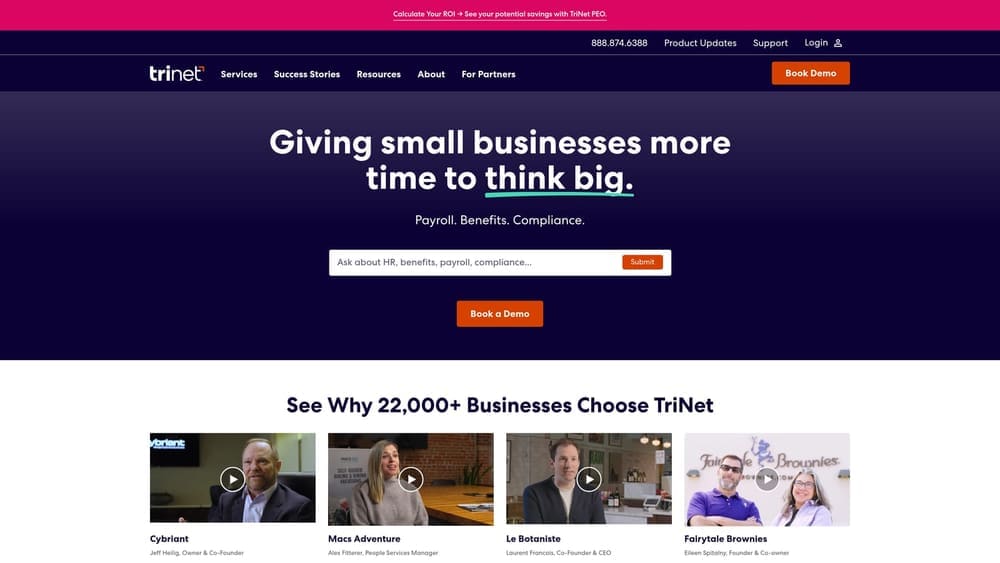
TriNet is a CPEO-certified PEO that markets industry-specific HR packages, offering benefits, payroll, risk management, and compliance support under a co-employment arrangement.
Where This Tool Shines
TriNet’s approach to packaging HR services by workforce type is worth noting for manufacturing businesses. Rather than a one-size approach, the platform organizes benefits and HR tools around the kind of workforce you’re managing. For a machine shop with a mix of hourly production workers and salaried technical staff, that differentiation can simplify benefits enrollment and policy management.
The online HR platform and employee self-service tools are reasonably well-regarded for day-to-day administration. If your shop doesn’t have a dedicated HR person and you’re managing onboarding, time-off requests, and compliance documentation yourself, a self-service platform reduces the administrative burden on ownership.
Key Features
CPEO-Certified Co-Employment: IRS-certified structure with defined federal tax liability, consistent with what Insperity and ADP TotalSource offer.
Industry-Segmented HR Packages: Benefits and HR tools organized by workforce type rather than a single generic configuration.
Payroll and Multi-State Tax Compliance: Handles payroll processing and state-level filing obligations.
Risk and Compliance Tools: Includes employee handbook support and compliance resources relevant to regulated work environments.
Employee Self-Service Platform: Online access for employees to manage their own HR tasks, reducing administrative overhead for shop management.
Best For
Small-to-mid-size machine shops looking for a PEO with structured industry packaging and a technology-forward HR platform. Shops without in-house HR staff may find the self-service tools particularly useful.
Pricing
Verify current pricing and product tiers at trinet.com. No specific figures are published here without a dated primary source.
4. Paychex PEO
Best for: Machine shops already using Paychex payroll that want to move to a full co-employment PEO structure
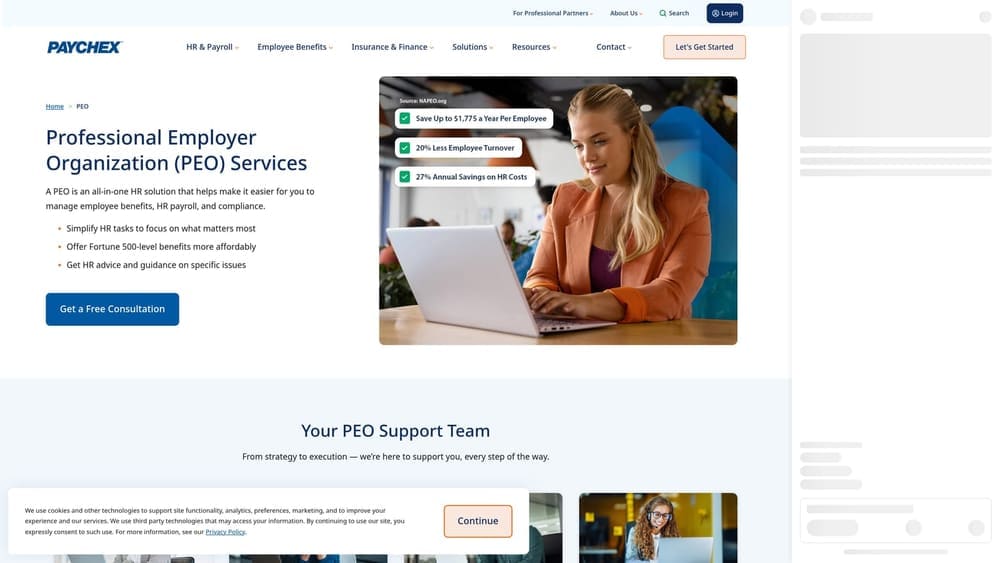
Paychex PEO is Paychex’s co-employment offering, distinct from its standalone Paychex Flex payroll platform, and is CPEO-certified.
Where This Tool Shines
The clearest case for Paychex PEO is an existing Paychex client. If your shop is already running payroll through Paychex Flex, migrating to their PEO product avoids a platform change entirely. You keep the payroll infrastructure you know while adding co-employment, benefits, and workers’ comp management. That continuity has real operational value, particularly for smaller shops where a platform migration creates disruption.
The dedicated HR business partner model is a notable feature. Rather than routing every question through a general support line, Paychex PEO assigns a specific HR contact. For a machine shop navigating a workers’ comp claim or an OSHA inspection, having a named person to call matters more than it might seem on paper.
Key Features
CPEO-Certified Co-Employment: IRS-certified PEO structure with defined federal tax liability assumptions.
Integrated Paychex Infrastructure: Built on the same payroll backbone as Paychex Flex, reducing migration friction for existing Paychex clients.
HR Administration and Benefits: Full PEO benefits package and HR administration under the co-employment structure.
Dedicated HR Business Partner: Named HR support rather than a general queue, relevant for shops dealing with specific compliance events.
Compliance and Regulatory Resources: Access to Paychex’s compliance update library and regulatory guidance tools.
Best For
Machine shops currently using Paychex Flex for payroll who want to expand into a full PEO relationship without changing platforms. Also a reasonable option for shops that prefer working with a large, established provider with broad geographic coverage.
Pricing
Verify current pricing at paychex.com. No specific figures are published here without a dated primary source.
5. ADP TotalSource
Best for: Machine shops with multi-location or multi-state complexity needing a large-scale PEO infrastructure
ADP TotalSource is ADP’s full-service PEO product, CPEO-certified, and built on ADP’s payroll and compliance infrastructure. It is a separate product from ADP Run and ADP Workforce Now.
Where This Tool Shines
ADP TotalSource’s strength is infrastructure depth. For machine shops operating across multiple states, or shops with enough employees that payroll complexity starts to compound, ADP’s compliance and tax filing capability is well-established. The multi-state payroll handling and federal tax compliance infrastructure are backed by ADP’s scale, which is meaningful when you’re dealing with multiple state withholding requirements simultaneously.
The risk and safety resources are worth noting specifically for manufacturing. ADP TotalSource offers safety-related resources that are more relevant to a machining environment than what you’d find in a platform designed primarily for white-collar workforces. That doesn’t replace a dedicated safety consultant, but it’s a practical addition for a shop trying to manage OSHA recordkeeping and incident documentation.
Key Features
CPEO-Certified Infrastructure: Strong federal and state tax compliance capability backed by ADP’s scale and established compliance operations.
Large-Group Benefits and Workers’ Comp: Access to ADP’s master benefits and workers’ compensation programs.
Multi-State Payroll and Tax Filing: Handles complex multi-state payroll scenarios, including local tax jurisdictions.
HR Technology Platform: Employee self-service and HR management tools with ADP’s established technology layer.
Risk and Safety Resources: Safety management tools and resources relevant to manufacturing and higher-risk work environments.
Best For
Machine shops with multi-location operations, multi-state employees, or enough workforce complexity that a large-scale PEO infrastructure is worth the investment. Also relevant for shops that anticipate significant growth and want a provider that scales without a platform change.
6. Gusto
Best for: Small machine shops with simpler payroll needs and an existing in-house HR function
Gusto is a payroll and benefits platform, not a PEO. It does not offer co-employment. The employer retains full legal employer-of-record status under Gusto.
Where This Tool Shines
Gusto is worth including here specifically because it represents the payroll-only path in its clearest form. If your machine shop already has someone managing HR internally, your workers’ comp situation is relatively straightforward, and you primarily need reliable payroll processing with automated tax filing, Gusto delivers that without the cost structure of a full PEO relationship.
The onboarding and document management tools are well-designed for smaller teams. For a shop with 10 to 25 employees where the owner or office manager is handling HR tasks, Gusto’s self-service employee tools reduce the administrative back-and-forth around new hire paperwork, benefits enrollment, and time-off tracking.
Key Features
Payroll Processing with Automated Tax Filing: Handles federal, state, and local payroll tax filing without co-employment.
Benefits Administration Add-Ons: Optional health, dental, vision, and 401(k) administration, though without the large-group buying power of a PEO.
No Co-Employment: The employer retains full legal responsibility as the sole employer of record. This is a structural distinction, not a flaw — it’s the right fit for some shops.
Employee Self-Service Onboarding: Digital onboarding, document management, and employee self-service tools.
Straightforward Pricing: Published pricing tiers make cost comparison easier than with most PEOs, which typically require a custom quote.
Best For
Small machine shops with in-house HR capacity, manageable workers’ comp class codes, and no need for the co-employment structure. Shops where cost simplicity and payroll reliability are the primary requirements, not workers’ comp pooling or benefits buying power.
Pricing
Verify current plan pricing and tiers at gusto.com. No specific figures are published here without a dated primary source.
7. Paychex Flex (Payroll Only)
Best for: Machine shops with established HR staff that need reliable payroll infrastructure without co-employment
Paychex Flex is Paychex’s standalone payroll platform, entirely separate from the Paychex PEO product. It handles payroll processing, tax filing, and optional HR add-ons without any co-employment relationship.
Where This Tool Shines
Paychex Flex has a long track record with small-to-mid-size businesses, including manufacturing operations. The platform handles federal, state, and local tax filing, and it scales reasonably well from a small shop with a handful of employees to a larger operation with more complex payroll runs. For shops that have already built out their HR function and simply need payroll infrastructure they can rely on, Flex is a practical choice.
The optional add-ons are worth noting. Time and attendance tracking, benefits administration, and HR tools can be layered onto the base payroll service. This modular approach lets a machine shop start with payroll and add functionality as the business grows, without committing to the full cost structure of a PEO from day one.
Key Features
Payroll Processing with Full Tax Filing: Federal, state, and local tax filing without co-employment, with the employer remaining the sole employer of record.
No Co-Employment: The client business retains all employer-of-record responsibilities. This is distinct from the Paychex PEO product in a meaningful structural way.
Optional HR and Benefits Add-Ons: Time tracking, benefits administration, and HR tools available as modular additions.
Mobile Access: Time and attendance management accessible via mobile, relevant for shops tracking hourly production workers across shifts.
Scalable Structure: Suitable for small shops through larger multi-location operations without a platform change.
Best For
Machine shops with an internal HR function that handles compliance, benefits, and employee relations independently. Shops that want reliable payroll processing and tax filing without the cost or structural commitment of a co-employment arrangement.
Making the Right Call for Your Shop
For most machine shops, the PEO-versus-payroll decision comes down to two practical factors: workers’ compensation exposure and the size of your internal HR function.
If your shop runs high-risk class codes, employs fewer than 100 people, and doesn’t have a dedicated HR team, a CPEO-certified PEO typically offers more financial and compliance value than a payroll platform alone. Co-employment gives you access to a master workers’ comp policy, which can be the difference between competitive market rates and an assigned risk pool. If you’re not sure how that works in practice, the article on transitioning from an assigned risk pool to a PEO master policy covers the mechanics in detail.
If you already have HR staff managing compliance, benefits, and employee relations, and your workers’ comp situation is relatively stable, a payroll platform may be the more cost-effective path. Gusto and Paychex Flex both serve that use case well without the overhead of a full co-employment structure.
Among the PEO options, Insperity, TriNet, Paychex PEO, and ADP TotalSource are all CPEO-certified, which matters for federal tax liability handling. The differences between them show up in service model, technology platform, and pricing — none of which is visible from a marketing page. That’s where side-by-side comparison becomes genuinely useful rather than just a nice idea.
It’s also worth reading about why PEOs sometimes fail businesses before you commit. The arrangement works well when the fit is right, and poorly when it isn’t — and the contract terms that limit your flexibility tend to be buried in the details.
Before you sign a multi-year agreement with any provider, compare actual quotes in a consistent format. Many shops unknowingly overpay because of bundled fees, administrative markups, and contract structures that weren’t explained clearly upfront. Don’t auto-renew. Make an informed, confident decision.
Before you sign that PEO renewal, make sure you’re not leaving money on the table.
Many businesses unknowingly overpay because of bundled fees, hidden administrative markups, and contracts designed to limit flexibility. We give you a clear, side-by-side breakdown of pricing, services, and contract terms, so you can see exactly what you’re paying for and choose the option that truly fits your business.
