
Technology companies face a unique compliance minefield. You’re juggling equity compensation rules, multi-state remote workers, contractor misclassification risks, and data privacy regulations that other industries barely think about. A standard PEO might handle basic payroll compliance, but tech-specific challenges require providers who actually understand your world.
This list focuses on PEOs that can handle the compliance complexity technology companies actually deal with—not just generic HR outsourcing dressed up with tech buzzwords. We’ve prioritized providers with demonstrated expertise in equity administration, remote workforce compliance, and the regulatory nuances that trip up growing tech companies.
1. PEO Metrics
Best for: Technology companies that want unbiased, data-driven PEO comparisons before committing to a provider.
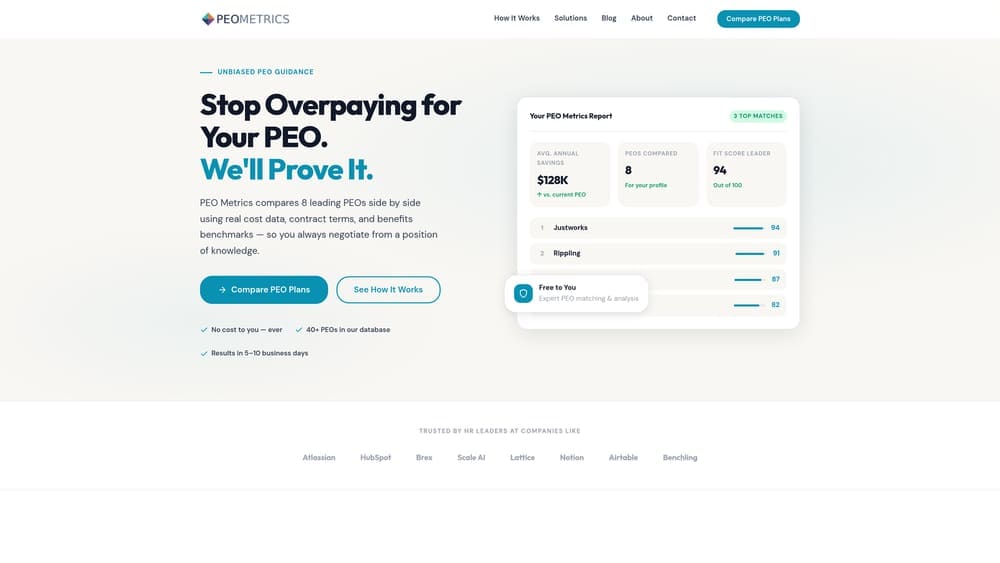
PEO Metrics is a comparison platform that helps technology companies evaluate PEO providers based on compliance capabilities, pricing transparency, and industry fit.
Where This Tool Shines
Most tech companies pick a PEO based on whoever showed up in their inbox first or what their investor recommended. That’s a problem when you’re dealing with equity compensation complexity and multi-state compliance exposure.
PEO Metrics cuts through the sales pitches with side-by-side comparisons of what providers actually offer for compliance support. You can see which PEOs have real experience with equity plan administration versus those who just say they do. The platform operates without provider kickbacks, which matters when you need honest guidance on whether a PEO can actually handle RSU taxation or contractor classification reviews.
Key Features
Side-by-Side Compliance Comparisons: Compare how different PEOs handle tech-specific compliance challenges like equity compensation and multi-state employment.
Tech Industry Evaluation Criteria: Assessment framework built around the compliance risks technology companies actually face, not generic HR metrics.
Transparent Pricing Analysis: See what you’ll actually pay across providers, including hidden fees that often surprise tech companies at renewal time.
Unbiased Recommendations: No affiliate relationships with PEO providers means guidance focused on your compliance needs, not commission structures.
Contract Term Breakdown: Understand what you’re signing before you’re locked into a multi-year agreement with expensive exit clauses.
Best For
Technology companies in the 15-200 employee range who need to make an informed PEO decision without relying solely on sales presentations. Particularly valuable if you’re evaluating your first PEO or questioning whether your current provider is actually worth what you’re paying.
Pricing
Free comparison service. No cost to evaluate providers or get guidance on which PEO fits your compliance profile.
2. Justworks
Best for: Startups and scaling tech companies with distributed teams needing straightforward multi-state compliance.
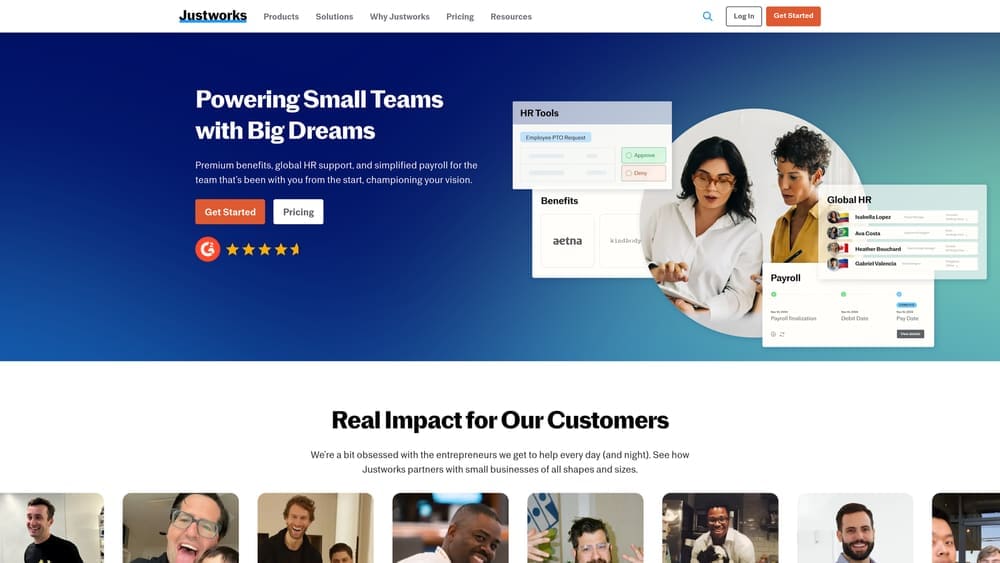
Justworks is a PEO platform built for startups and scaling companies, with strong equity compensation integrations and transparent pricing that appeals to tech founders.
Where This Tool Shines
Justworks understands that tech companies don’t want to spend three months implementing an enterprise HR system. Their platform is designed for companies that need to onboard a remote engineer in Colorado tomorrow while staying compliant with state-specific employment laws.
The equity compensation integrations are genuinely useful. If you’re using Carta or Pulley for cap table management, Justworks connects directly so you’re not manually reconciling RSU grants between systems. The pricing model is also refreshingly simple, which matters when you’re trying to budget HR costs as headcount scales.
Key Features
Equity Platform Integrations: Direct connections with Carta and Pulley for automated equity compensation administration and tax reporting.
50-State Compliance Coverage: Handle remote workforce compliance across all states without setting up separate entities or worrying about nexus issues.
Transparent Per-Employee Pricing: Flat monthly rate per employee instead of percentage-of-payroll models that penalize you for paying competitive tech salaries.
Contractor Payment Management: Integrated 1099 contractor payments and classification guidance to reduce misclassification risk.
Fast Implementation: Get up and running in days rather than months, which matters when you’re moving quickly.
Best For
Tech startups and companies in the 10-100 employee range with distributed remote teams. Works well if you prioritize speed, simplicity, and equity compensation integration over white-glove HR consulting.
Pricing
PEO services start at $59 per employee per month. Straightforward pricing structure without hidden administrative fees or percentage-of-payroll markups.
3. TriNet
Best for: Software and SaaS companies needing dedicated industry expertise and comprehensive risk management.
TriNet is an enterprise PEO with a dedicated technology industry vertical, offering specialized compliance support for companies with complex workforce structures.
Where This Tool Shines
TriNet’s technology vertical isn’t just a marketing label. They assign HR consultants who actually understand the difference between ISOs and NSOs, and why that matters for your compliance obligations. This becomes valuable when you’re dealing with equity plan administration or explaining to your board why you need employment practices liability coverage.
The international contractor compliance support is stronger than most PEOs. If you’re hiring developers in Eastern Europe or designers in Latin America, TriNet can help navigate the worker classification questions and tax withholding requirements that trip up many tech companies. Their risk management approach is comprehensive, which matters if you’re preparing for due diligence or dealing with increased regulatory scrutiny.
Key Features
Technology Industry Vertical: Dedicated HR consultants with actual experience in software, SaaS, and hardware company compliance challenges.
International Contractor Support: Guidance on global contractor compliance, classification, and payment structures across multiple countries.
Employment Practices Liability Coverage: Comprehensive EPLI protection that covers the employment-related risks tech companies actually face.
Equity Plan Administration: Support for complex equity structures including RSUs, stock options, and performance-based grants.
Audit and Documentation Support: Detailed compliance documentation useful for VC due diligence and regulatory audits.
Best For
Software and SaaS companies in the 50-500 employee range with complex equity structures, international contractors, or significant compliance exposure requiring specialized expertise.
Pricing
Custom pricing based on headcount and service level. Typically structured as a percentage of payroll, which can become expensive with high tech salaries but includes comprehensive risk management coverage.
4. Rippling PEO
Best for: Tech companies wanting unified IT and HR compliance management in a single platform.
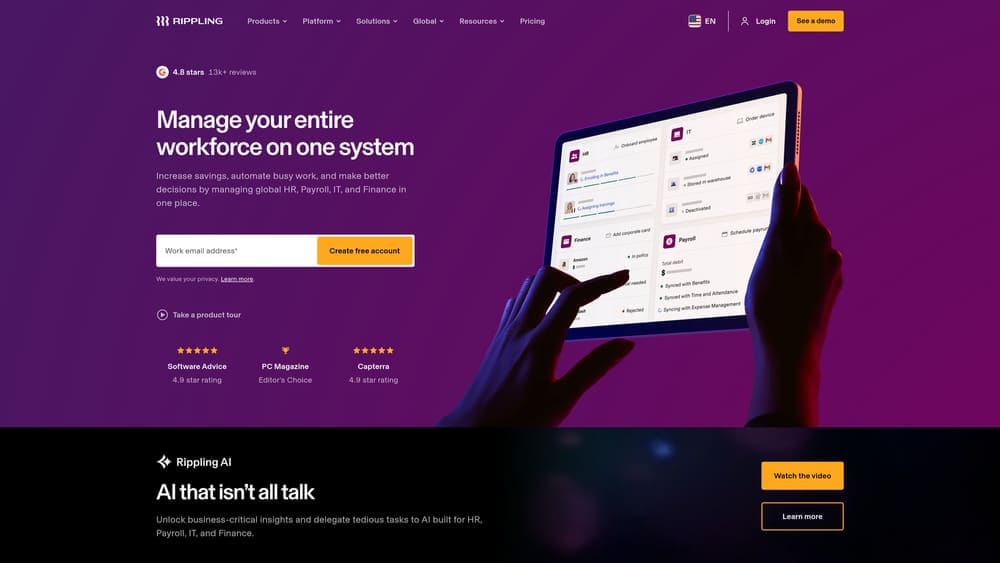
Rippling PEO combines workforce platform capabilities with PEO services, particularly strong for companies that want device management and HR compliance integrated.
Where This Tool Shines
Rippling’s core insight is that IT and HR compliance shouldn’t live in separate systems. When you onboard a remote engineer, you need to provision their laptop, grant system access, enroll them in benefits, and ensure state tax compliance simultaneously. Rippling handles all of that in connected workflows.
The automated compliance enforcement is genuinely useful for tech companies. You can set policies around security training, background checks, or equipment return that automatically trigger based on employee status changes. The API integrations are strong, which matters when you’re connecting to your existing tech stack rather than forcing everyone into yet another disconnected system.
Key Features
Unified IT and HR Management: Single platform handling device provisioning, access control, benefits administration, and PEO compliance.
Automated Compliance Workflows: Policy enforcement that triggers automatically based on employee lifecycle events and regulatory requirements.
Device Management Integration: Handle laptop provisioning, software licensing, and security compliance alongside HR processes.
Strong API Ecosystem: Connect to existing tools in your tech stack rather than replacing everything with proprietary systems.
Scalable Infrastructure: Platform built to handle rapid headcount growth without breaking workflows or requiring re-implementation.
Best For
Technology companies that value operational efficiency and want to consolidate IT and HR compliance management. Works well for companies in the 20-300 employee range with distributed teams and complex tech stacks.
Pricing
PEO services start around $35 per employee per month, plus base platform fees for the core Rippling system. Total cost depends on which modules you need beyond basic PEO compliance.
5. Insperity
Best for: Established software companies in the 50-150 employee range prioritizing comprehensive compliance and risk management.
Insperity is a mature PEO with deep experience serving technology companies, offering dedicated HR business partner support and robust compliance infrastructure.
Where This Tool Shines
Insperity takes a high-touch approach that appeals to tech companies who want strategic HR guidance, not just compliance administration. You get a dedicated HR business partner who learns your company and can advise on complex situations like equity compensation disputes or employment practices risk.
The employment practices liability coverage is comprehensive, which matters when you’re dealing with the elevated risk that comes from rapid hiring, remote teams, and contractor relationships. Their compliance training programs are thorough, and the audit support is valuable if you’re preparing for due diligence or dealing with regulatory inquiries. The documentation is detailed enough to satisfy investor requirements without drowning you in paperwork.
Key Features
Dedicated HR Business Partner: Assigned consultant who understands your business and provides strategic guidance beyond basic compliance administration.
Comprehensive EPLI Coverage: Employment practices liability insurance that covers the elevated risks technology companies face with rapid growth.
Compliance Training Programs: Regular training on harassment prevention, data privacy, and employment law compliance tailored to tech company needs.
Audit Support and Documentation: Detailed compliance records and support for VC due diligence, regulatory audits, and investor reviews.
Scalable Service Model: Support structure that grows with you from 50 to 500+ employees without requiring platform migration.
Best For
Software and technology companies in the 50-150 employee range that value strategic HR partnership and comprehensive risk management over self-service platforms. Works well if you’re preparing for significant growth or dealing with complex compliance exposure.
Pricing
Custom pricing typically ranging from $150-$250 per employee per month all-in. Higher than platform-based PEOs but includes dedicated business partner support and comprehensive coverage.
6. Sequoia One
Best for: Growth-stage tech companies wanting premium benefits competitive with large tech employers.
Sequoia One emerged from Sequoia Consulting Group’s Silicon Valley roots, designed to give growing tech companies access to benefits typically reserved for tech giants.
Where This Tool Shines
Sequoia One’s core value proposition is benefits arbitrage. They leverage scale to offer health insurance, wellness programs, and mental health benefits that a 75-person startup couldn’t negotiate independently. This matters when you’re competing for engineering talent against companies offering comprehensive benefits packages.
The equity compensation consulting goes beyond basic administration. They can advise on grant strategies, tax implications of different equity structures, and how to communicate equity value to employees. The Silicon Valley expertise is real, not just geographic proximity. They understand the competitive dynamics, compensation expectations, and regulatory environment that tech companies navigate.
Key Features
Premium Benefits Packages: Access to health insurance, wellness programs, and mental health benefits competitive with large tech employers.
Equity Compensation Consulting: Strategic guidance on equity grant strategies, tax optimization, and employee communication beyond basic administration.
Silicon Valley Expertise: Deep understanding of tech company compensation dynamics, competitive benchmarking, and regulatory environment.
Wellness Program Integration: Comprehensive mental health, fitness, and wellness benefits that appeal to tech talent expectations.
Strategic HR Guidance: Consulting on people strategy, not just compliance administration and payroll processing.
Best For
Growth-stage technology companies in the 50-200 employee range where benefits quality is a competitive differentiator for talent acquisition. Works well if you’re competing against well-funded competitors for the same engineering talent.
Pricing
Premium pricing model with custom quotes based on headcount and service level. Positioned above mid-market PEOs but below fully outsourced HR consulting arrangements.
7. Velocity Global
Best for: Tech companies hiring internationally or managing compliance across multiple countries.
Velocity Global offers global employment platform services including PEO and Employer of Record capabilities for companies with international workforce needs.
Where This Tool Shines
Velocity Global solves the problem of hiring a developer in Poland or a designer in Brazil without setting up legal entities in those countries. They act as the Employer of Record, handling local employment law compliance, tax withholding, and benefits administration while you manage the actual work.
The coverage is genuinely global with operations in 185+ countries. This matters when you’re building distributed teams and can’t wait six months to establish a subsidiary just to hire one engineer. The international contractor compliance support helps navigate the classification questions that vary significantly by country. Immigration and work authorization support is valuable if you’re relocating employees or dealing with visa requirements.
Key Features
Employer of Record in 185+ Countries: Hire internationally without establishing legal entities or navigating local employment law independently.
International Contractor Compliance: Classification guidance and payment infrastructure for contractors across multiple countries with varying regulations.
Global Benefits Administration: Local benefits packages that meet country-specific requirements and competitive standards.
Immigration Support: Work authorization and visa guidance for relocating employees or hiring foreign nationals.
Multi-Currency Payroll: Handle compensation in local currencies while maintaining centralized reporting and compliance oversight.
Best For
Technology companies building international distributed teams or expanding into new markets without the overhead of establishing foreign subsidiaries. Works well for companies in the 30-500 employee range with significant international hiring needs.
Pricing
Employer of Record services typically range from $500-$700 per employee per month, varying by country and local compliance complexity. Higher than domestic PEO costs but significantly cheaper than establishing foreign entities.
8. Paychex PEO
Best for: Tech companies prioritizing regulatory documentation, audit support, and scalable compliance infrastructure.
Paychex PEO is a large-scale PEO with comprehensive compliance reporting and IRS certification, suitable for companies that need detailed paper trails.
Where This Tool Shines
Paychex’s strength is infrastructure and documentation. They’re an IRS-certified CPEO, which provides additional liability protection that matters when you’re dealing with payroll tax obligations across multiple states. The compliance reporting is thorough enough to satisfy auditors, investors, and regulatory agencies without requiring extensive manual work from your team.
The audit support is valuable during due diligence. When potential acquirers or investors start asking detailed questions about employment practices, wage and hour compliance, or contractor classification, Paychex can produce the documentation quickly. The platform scales from small teams to 1000+ employees without requiring migration to different systems, which matters if you’re planning for significant growth.
Key Features
IRS-Certified CPEO Status: Additional liability protection for payroll tax obligations that provides extra security for technology companies.
Comprehensive Compliance Reporting: Detailed documentation and reporting that satisfies auditor, investor, and regulatory requirements.
Strong Audit Support: Rapid document production and compliance verification for due diligence, regulatory inquiries, or investor reviews.
Scalable Infrastructure: Platform that handles growth from 5 to 1000+ employees without requiring system migration or re-implementation.
Multi-State Compliance Management: Infrastructure for handling complex state tax obligations, employment law variations, and regulatory reporting.
Best For
Technology companies in the 25-500 employee range that prioritize compliance documentation, audit preparedness, and regulatory liability protection. Works well if you’re preparing for acquisition, dealing with regulatory scrutiny, or need detailed compliance paper trails.
Pricing
Custom pricing based on services and headcount. Typically competitive with mid-market PEOs, structured around per-employee fees rather than percentage-of-payroll models that penalize high tech salaries.
Making the Right Choice
The right PEO depends on your specific compliance profile and growth stage.
If you’re a startup in the 10-50 employee range with distributed teams and equity compensation, Justworks or Rippling PEO offer the speed and integration you need without enterprise complexity. Both handle multi-state compliance well and connect to the equity platforms you’re likely already using.
For software companies in the 50-200 employee range dealing with complex equity structures or international contractors, TriNet’s industry vertical expertise becomes valuable. The specialized HR consultants understand the compliance nuances you’re navigating, and the international contractor support matters if you’re building global teams.
If benefits quality is a competitive differentiator for talent acquisition, Sequoia One’s premium packages give you access to benefits typically reserved for much larger tech employers. This matters when you’re competing for the same engineering talent as well-funded competitors.
Companies with significant international hiring needs should evaluate Velocity Global’s Employer of Record services. The ability to hire in 185+ countries without establishing foreign entities solves a real operational problem for distributed tech teams.
For established companies prioritizing audit preparedness and regulatory documentation, Paychex PEO’s infrastructure and CPEO certification provide the compliance paper trail that satisfies investors and auditors.
Before you commit to any provider, understand exactly what compliance support you’re getting beyond basic payroll processing. Can they actually handle equity plan administration, or do they just say they can? Do they have experience with the specific state employment laws affecting your remote team? What happens when you need audit support during due diligence?
Before you sign that PEO renewal, make sure you’re not leaving money on the table. Many businesses unknowingly overpay because of bundled fees, hidden administrative markups, and contracts designed to limit flexibility. We give you a clear, side-by-side breakdown of pricing, services, and contract terms so you can see exactly what you’re paying for and choose the option that truly fits your business. Contact us
