

Property management companies carry an HR burden that most industries don’t have to think about. You’re managing leasing agents in the front office, maintenance technicians on ladders and in crawl spaces, on-call staff across multiple properties, and sometimes employees in several different states. Each of those worker categories comes with its own payroll classification, workers’ compensation code, and compliance exposure.
Two types of service providers claim to solve this complexity: Professional Employer Organizations (PEOs) and payroll companies. They are genuinely different products, and the wrong choice can create gaps in coverage, cost you more than you’d expect, or leave your company holding compliance risk you thought someone else was managing.
This guide walks through the key distinction between PEOs and payroll-only platforms, then compares providers worth evaluating for property management operations. Pricing and fit depend heavily on your headcount, your state footprint, and how your workforce is classified. Everything here is informational, not legal or tax advice.
1. PEO Metrics
Best for: Property management companies that want unbiased, side-by-side comparisons before committing to a PEO or payroll provider.
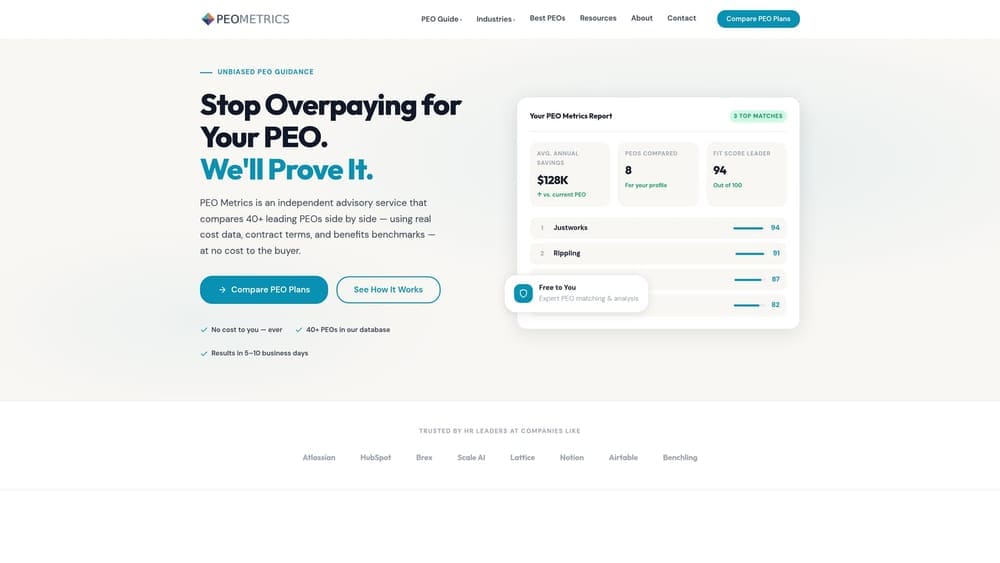
PEO Metrics is an independent comparison service that helps businesses evaluate PEO and payroll providers without having to piece together pricing and service details from a dozen separate sales conversations.
Where This Tool Shines
Most property management operators don’t have a dedicated HR director with PEO procurement experience. That means they often end up choosing a provider based on name recognition or a referral, rather than a structured comparison of what each option actually costs and covers. PEO Metrics is built to close that gap.
The service covers both PEO and payroll-only options in one place, which matters when you’re genuinely unsure whether co-employment is the right structure for your business. You can compare providers on pricing, service scope, and contract terms before you’re sitting across from a vendor’s sales team.
Key Features
Side-by-Side Provider Comparisons: Detailed metrics across multiple providers so you can evaluate apples to apples rather than relying on each vendor’s self-reported positioning.
Pricing Analysis: Helps you identify administrative markups, bundled fees, and contract terms that can quietly inflate your total cost.
PEO and Payroll Coverage: Unlike vendor-specific resources, this service covers both categories in one place, which is useful when you haven’t yet decided which model fits your operation.
Consultative Guidance: Tailored to your industry, headcount, and state footprint rather than generic recommendations.
Co-Employment Education: Helps buyers understand the practical difference between co-employment and payroll-only before signing anything.
Best For
Property management companies at any size that are evaluating a new PEO, considering switching providers, or approaching a contract renewal and want to verify they’re not overpaying. Particularly useful for operators without in-house HR expertise who need a structured way to compare options.
Pricing
Contact PEO Metrics directly for details on comparison service access. No pricing is listed publicly, so reach out to discuss your specific situation.
2. Insperity
Best for: Small and mid-size property management companies that want full-service co-employment with dedicated HR support.
Insperity is a well-established full-service PEO offering co-employment, benefits administration, payroll, and assigned HR specialists for small and mid-size businesses.

Where This Tool Shines
Insperity’s model centers on dedicated HR support, meaning you get an assigned specialist rather than a general call center. For property management companies that don’t have an internal HR team, that relationship can function as an outsourced HR department handling day-to-day questions alongside the administrative infrastructure.
The co-employment structure means Insperity files payroll taxes under its own FEIN and sponsors benefits plans, which can give smaller employers access to health insurance options typically reserved for larger groups. For property management firms competing for leasing agents and experienced maintenance staff, that benefits access can matter in recruiting.
Key Features
Co-Employment Structure: Insperity becomes the employer of record for tax and benefits purposes, filing payroll taxes under its FEIN.
Large-Group Benefits Access: Health, dental, and vision plans through the PEO’s master benefits arrangement, potentially at rates smaller employers couldn’t access independently.
Dedicated HR Specialists: Assigned HR professionals who work directly with client accounts rather than a rotating support queue.
Workers’ Compensation Coverage: Coverage provided through the PEO’s master workers’ comp policy, which is relevant for mixed-classification workforces in property management.
Multi-State Compliance Support: Assistance navigating varying state employment laws for companies operating across multiple markets.
Best For
Property management operators with enough headcount to meet Insperity’s minimums who want a full-service PEO relationship with hands-on HR support. Best suited to companies that want to outsource HR administration rather than just payroll processing.
Pricing
Custom pricing based on headcount and services selected. Contact Insperity directly for current rates and any applicable minimums.
3. TriNet
Best for: Small and mid-size companies that want industry-tailored HR packages and multi-state PEO coverage.
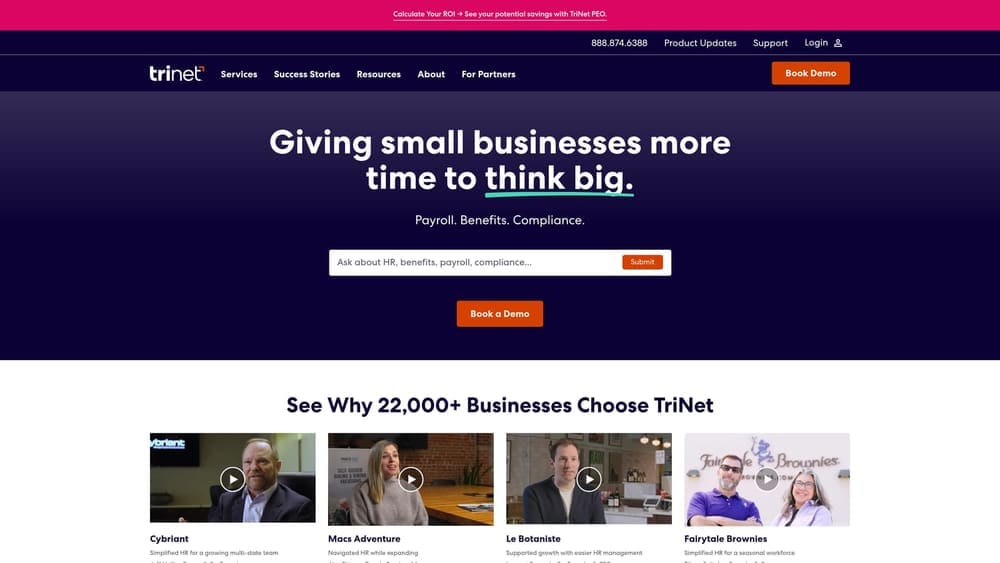
TriNet is a PEO offering co-employment services with industry-specific HR packages and a focus on benefits, compliance, and multi-state operations.
Where This Tool Shines
TriNet structures its HR offerings around industry verticals, which means the benefits packages and compliance resources are designed with specific workforce profiles in mind rather than a one-size approach. For property management companies with employees in multiple states, TriNet’s multi-state compliance infrastructure can reduce the administrative burden of tracking varying paid leave requirements and wage-and-hour rules.
The HR technology platform includes employee self-service tools, which can reduce the volume of routine questions hitting your management team across distributed properties.
Key Features
Co-Employment with Multi-State Support: Payroll filed under TriNet’s FEIN with compliance support across state lines, relevant for property management companies operating in multiple markets.
Industry-Tailored Packages: HR and benefits offerings structured around specific industry needs rather than generic plans.
PEO FEIN Payroll Processing: Tax filings handled under the PEO’s employer identification number as part of the co-employment arrangement.
Risk Mitigation and Workers’ Compensation: Workers’ comp administration through the PEO structure, including support for mixed-classification workforces.
Employee Self-Service Platform: Technology tools that let employees access pay stubs, benefits information, and HR documents without routing through a manager.
Best For
Property management companies with operations across multiple states that want a PEO with strong compliance infrastructure and industry-specific benefits packaging. Particularly useful for companies that have outgrown a basic payroll setup but aren’t yet large enough to build a full internal HR function.
Pricing
Custom pricing based on company size and selected services. Contact TriNet directly for current rates and minimums.
4. Oasis by Paychex
Best for: Property management companies already in the Paychex ecosystem that want to add co-employment without switching platforms.
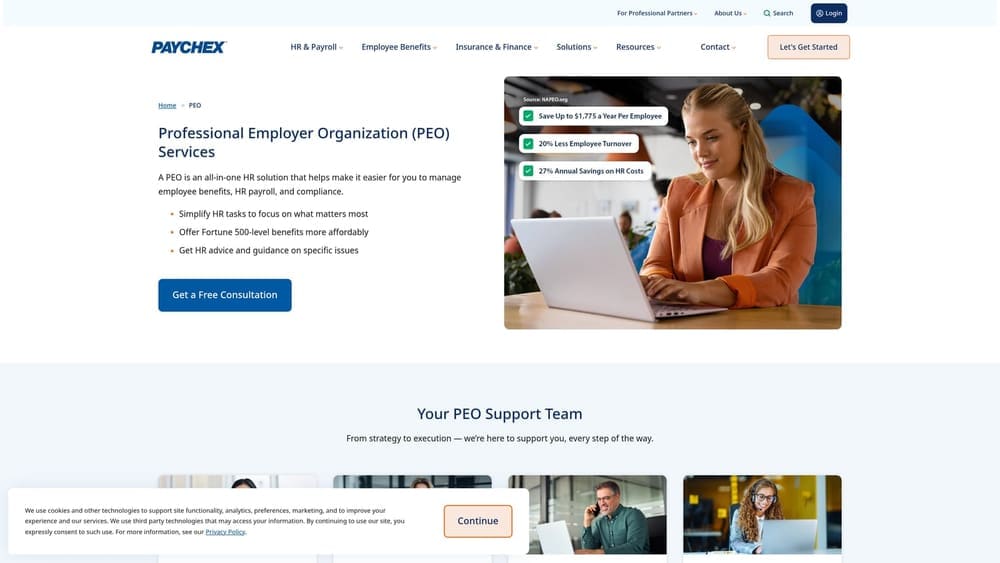
Oasis by Paychex is the PEO division of Paychex, combining co-employment services with Paychex’s established payroll technology and compliance infrastructure.
Where This Tool Shines
Paychex acquired Oasis in 2018, and the integration means clients get co-employment benefits layered on top of Paychex’s payroll processing backbone. For property management companies already using Paychex for payroll, moving into Oasis can be a lower-friction path to full PEO services than switching vendors entirely.
The combination of an established payroll platform with a PEO structure can be appealing for operators who want the liability and benefits advantages of co-employment without rebuilding their HR technology stack from scratch.
Key Features
Co-Employment Backed by Paychex Payroll Technology: The PEO structure sits on top of Paychex’s payroll processing infrastructure, offering continuity for existing Paychex clients.
Benefits Administration: Health insurance and retirement plan options administered through the co-employment arrangement.
Workers’ Compensation Coverage: Coverage provided through the PEO’s master workers’ comp policy, relevant for maintenance and grounds staff classifications.
HR Compliance Support: Assistance with employee handbook development and compliance documentation.
Scalability Within the Paychex Ecosystem: Ability to scale services up or down within a familiar platform environment.
Best For
Property management companies currently using Paychex for payroll that want to transition into a co-employment arrangement without changing vendors. Also suitable for companies that prefer working with a large, established provider with broad compliance resources.
Pricing
Custom pricing. Contact Paychex directly for current rates and minimums. Verify the current Oasis product structure directly with the vendor before committing.
5. ADP TotalSource
Best for: Property management companies that prioritize IRS-certified PEO status and want the federal tax liability protections that come with it.
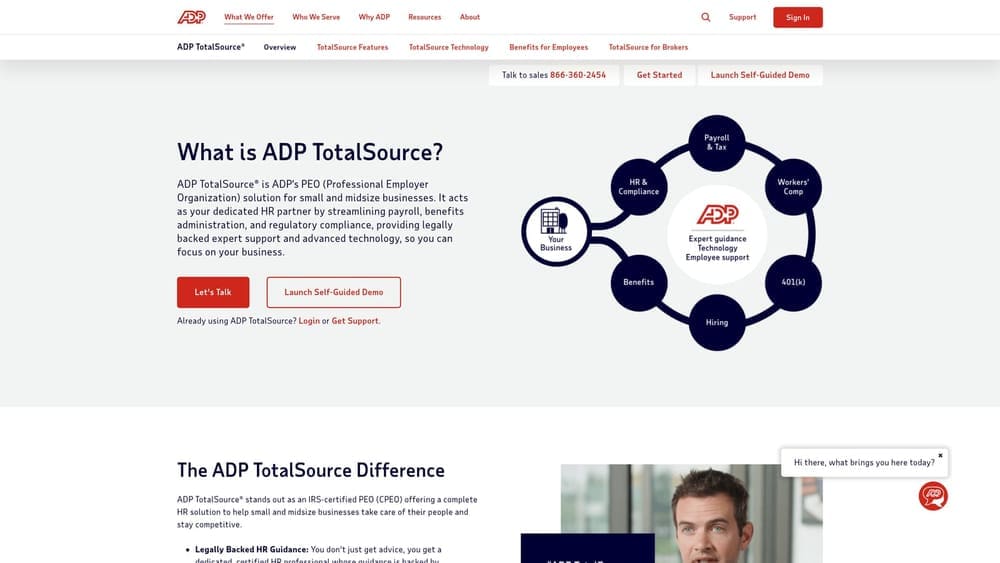
ADP TotalSource is ADP’s Certified PEO (CPEO) offering, providing co-employment, payroll, benefits, and compliance services with IRS CPEO certification.
Where This Tool Shines
The CPEO designation is a meaningful distinction. IRS certification provides specific federal tax liability protections for the client company, which matters for property management operators concerned about payroll tax compliance risk across multiple properties and employee classifications. ADP TotalSource is one of the larger CPEOs in the market, backed by ADP’s compliance infrastructure and broad state coverage.
For property management companies with more complex operations, the integration with ADP’s broader HR technology suite means there’s room to expand reporting, analytics, and HR tools as the business grows.
Key Features
IRS CPEO Certification: Provides federal tax liability protections for the client, a distinction not all PEOs carry and worth understanding before choosing a provider.
Full Co-Employment with FEIN Payroll Filing: Payroll taxes filed under the PEO’s FEIN as part of the co-employment structure.
Large-Group Benefits Access: Health and benefits plans through ADP’s master arrangement, potentially offering more competitive options than smaller employers could access independently.
Compliance and Risk Management Tools: Resources for navigating employment law changes, multi-state requirements, and HR compliance documentation.
ADP Technology Integration: Access to ADP’s broader HR technology platform for reporting, analytics, and workforce management.
Best For
Property management companies that want the added assurance of CPEO certification, particularly those with multi-state operations or complex payroll tax situations. Also a strong fit for companies that already use ADP products and want to consolidate within one vendor relationship.
Pricing
Custom pricing. Contact ADP directly for current rates and minimums applicable to your headcount and service needs.
6. Gusto
Best for: Smaller property management operations that want straightforward payroll processing with transparent pricing and no co-employment relationship.
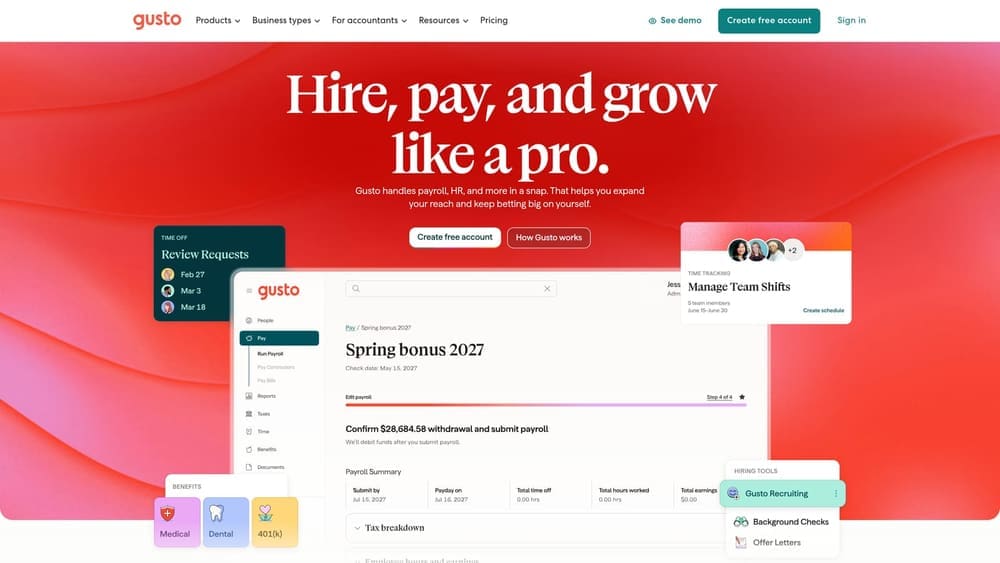
Gusto is a payroll-first software platform offering payroll processing, tax filing, and HR tools for small businesses. It is not a PEO and does not form a co-employment relationship with clients.
Where This Tool Shines
Gusto’s appeal is its clarity. Pricing is tiered and publicly listed, which is a genuine contrast to the custom-quote model most PEOs use. For small property management companies with a simpler workforce structure, that transparency makes budgeting straightforward. Setup is designed to be accessible without a dedicated HR team managing the implementation.
Because Gusto is payroll-only, the client company remains the sole employer of record. That means full control over hiring, benefits decisions, and HR policy, but also full responsibility for compliance and workers’ compensation sourcing.
Key Features
Automated Payroll and Tax Filing: Payroll processed and taxes filed under the client’s own FEIN, not a PEO’s.
Benefits Administration Add-Ons: Health insurance brokerage and benefits options available as add-ons, though not through a PEO master policy arrangement.
HR Document Management: Onboarding tools, offer letters, and HR document storage within the platform.
Time Tracking Integration: Time and attendance tools that connect to payroll processing.
Transparent Tiered Pricing: Subscription-based pricing published publicly, making it easier to estimate costs before speaking with sales.
Best For
Small property management companies with a relatively simple workforce, limited multi-state exposure, and no immediate need for co-employment benefits or PEO-sponsored workers’ comp. Well-suited to operators who want to handle HR and compliance in-house and just need reliable payroll software.
Pricing
Tiered subscription plans. Verify current pricing and plan details at gusto.com before making decisions based on any third-party figures.
7. Paychex Flex
Best for: Property management companies that want scalable, modular payroll services without entering a co-employment arrangement.
Paychex Flex is Paychex’s modular payroll and HR platform for businesses that want payroll-only services with optional HR add-ons, separate from the Oasis PEO offering.
Where This Tool Shines
Paychex Flex is a well-established payroll platform with a large support network and compliance resources. The modular structure means you can start with core payroll and add time tracking, hiring tools, or HR modules as your needs grow, without committing to a full-service PEO arrangement.
For property management companies that already have HR infrastructure in place and primarily need reliable payroll processing with compliance support, Flex offers a familiar, scalable option. The mobile app gives employees and managers access to pay information and time tools without requiring a desktop login, which is practical for maintenance staff in the field.
Key Features
Scalable Payroll Processing: Tax filing under the client’s own FEIN with options to add modules as the business grows.
Optional HR Modules: Time and attendance, hiring tools, and HR resources available as add-ons without requiring a full PEO transition.
No Co-Employment: The client remains the sole employer of record, retaining full control over employment decisions and compliance responsibility.
Mobile Employee Self-Service: App-based access to pay stubs, time tracking, and HR tools, useful for distributed property management workforces.
Compliance Resources: Access to Paychex’s compliance support network for navigating payroll tax and employment law questions.
Best For
Property management companies that have existing HR capabilities and want a reliable payroll platform with room to add modules over time. Also appropriate for operators who want Paychex’s infrastructure without the co-employment structure that Oasis provides.
Pricing
Custom and tiered pricing depending on services selected. Verify current rates directly at paychex.com before making comparisons.
8. Rippling
Best for: Property management companies that want a unified platform connecting payroll, HR, and IT management, with the option to add PEO services.
Rippling is a workforce platform combining payroll, HR, and IT device management, with both a payroll-only product and a PEO option available.
Where This Tool Shines
Rippling’s differentiator is the breadth of its platform. Most payroll and PEO tools stop at HR. Rippling extends into IT management, meaning employee onboarding can include device provisioning and software access in the same workflow as payroll setup. For property management companies adding leasing agents or office staff who need immediate system access, that integration reduces the manual handoffs between HR and IT.
The automated compliance workflows across states are worth noting for multi-market operators. Rippling also offers integrations with property management and accounting software, which can reduce duplicate data entry between your HR system and your property management platform.
Key Features
Unified Payroll, HR, and IT Platform: A single system connecting workforce administration with IT device and software management, reducing siloed workflows.
PEO Option Available: Rippling offers a PEO product in addition to its standard payroll-only service, giving companies flexibility to choose their employment structure.
Automated Multi-State Compliance: Compliance workflows that adjust to state-specific requirements automatically as you add employees in new locations.
Property Management and Accounting Integrations: Connections to third-party software commonly used in property management operations.
Onboarding and Offboarding Automation: End-to-end employee lifecycle workflows that reduce manual setup and termination tasks across systems.
Best For
Property management companies with a more tech-forward approach to operations, particularly those managing employees across multiple states who need automated compliance support and integrations with existing software. Also suitable for companies that want the flexibility to choose between payroll-only and PEO structures within a single platform.
Pricing
Modular pricing based on features selected. Verify current rates and confirm PEO product availability directly at rippling.com before making decisions.
Which Option Actually Fits Your Operation
The core question isn’t which provider has the best marketing. It’s whether your property management company needs co-employment or payroll processing, and that depends on three things: your headcount, your risk exposure, and how much HR infrastructure you already have.
If you’re a smaller operator with a straightforward workforce and no immediate need for PEO-sponsored benefits or workers’ comp, a payroll platform like Gusto or Paychex Flex may be the more appropriate fit. You stay in control, you keep costs predictable, and you’re not paying for co-employment services you don’t need.
If you’re managing maintenance staff across multiple properties or states, competing for talent with larger operators, or carrying workers’ comp exposure that a PEO master policy might address more efficiently, a full-service PEO like Insperity, TriNet, ADP TotalSource, or Oasis by Paychex deserves serious evaluation. The CPEO certification that ADP TotalSource holds is a specific distinction worth understanding if federal tax liability protection is a priority for your company.
Rippling sits in its own category as a unified platform with both options available. It’s worth considering if you want flexibility and software integration alongside workforce administration.
One practical note: PEO pricing varies significantly based on headcount, benefits selections, and state footprint. The only way to know what you’d actually pay is to compare specific quotes against your current costs, line by line.
Before you sign that PEO renewal, make sure you’re not leaving money on the table. Many businesses unknowingly overpay because of bundled fees, hidden administrative markups, and contracts designed to limit flexibility. PEO Metrics provides a clear, side-by-side breakdown of pricing, services, and contract terms so you can see exactly what you’re paying for. Don’t auto-renew. Make an informed, confident decision.
Before you sign that PEO renewal, make sure you’re not leaving money on the table.
Many businesses unknowingly overpay because of bundled fees, hidden administrative markups, and contracts designed to limit flexibility. We give you a clear, side-by-side breakdown of pricing, services, and contract terms, so you can see exactly what you’re paying for and choose the option that truly fits your business.
