

Most PEOs handle payroll, benefits enrollment, and compliance well, but they were never built to tell you whether your remote sales team feels disconnected or whether your warehouse crew is close to walking out the door. That gap is where dedicated engagement tools come in. HR leaders at PEO client companies increasingly layer a pulse survey, recognition platform, or full engagement suite on top of their existing PEO HRIS rather than expecting the PEO to cover it.
The tools below were selected for how well they plug into common PEO and HRIS setups, the depth of their survey or recognition features, and how realistically they fit the headcounts and budgets typical of small and midsize PEO clients. Pricing for every platform on this list is set by the vendor and changes often, so treat the notes here as a starting point and confirm current figures directly with each provider as of 2026.
Quick comparison
- 15Five: best for PEO clients who want engagement tied to formal performance reviews; pricing available on request from the vendor; combines continuous check-ins with structured review cycles in one place.
- Culture Amp: best for larger client rosters wanting benchmarked survey data; pricing available on request from the vendor; brings a large cross-industry benchmark database to compare results against.
- Lattice: best for linking engagement scores to pay and promotion decisions; pricing available on request from the vendor; connects survey data directly to compensation planning.
- Officevibe (Workleap): best for small teams wanting simple weekly pulse checks; pricing available on request from the vendor; keeps the survey format short enough for managers to act on weekly.
- Bonusly: best for cultures built around peer recognition; pricing available on request from the vendor; makes point-based peer recognition the core daily habit rather than an add-on.
- Motivosity: best for distributed teams wanting to see recognition patterns visually; pricing available on request from the vendor; maps appreciation onto the org chart itself.
- Nectar: best for cost-conscious small employers; pricing available on request from the vendor; positions itself specifically toward SMB budgets rather than enterprise buyers.
- Reward Gateway: best for pairing recognition with an employee discounts benefit; pricing available on request from the vendor; bundles recognition with a discounts marketplace and wellbeing content.
- Gallup Access: best for a research-backed survey methodology; pricing available on request from the vendor; built on Gallup’s long-standing Q12 engagement framework rather than a proprietary model.
1. 15Five
15Five is a continuous performance and engagement platform aimed at HR teams who want more than a once-a-year survey. It combines weekly check-ins, pulse engagement surveys, and formal review cycles, which makes it a good fit for a PEO client company that wants engagement data to actually inform performance conversations rather than sit in a separate report.
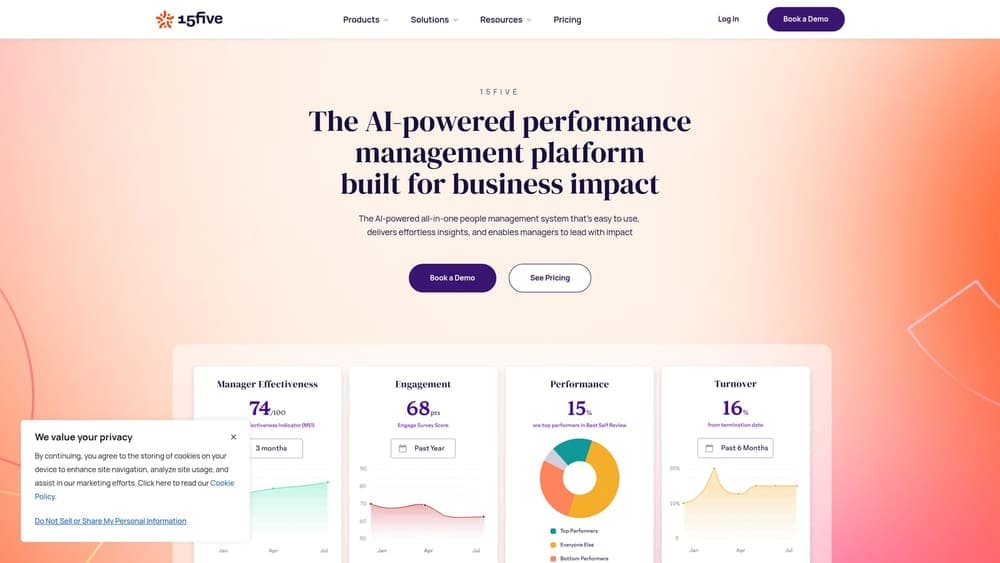
What sets 15Five apart on this list is that it doesn’t force a choice between “engagement tool” and “performance tool.” Weekly check-ins feed into the same system as quarterly or annual reviews, so managers see engagement trends alongside goal progress in one dashboard.
- Weekly check-ins give managers a lightweight way to surface blockers and morale shifts before they show up in turnover numbers.
- Pulse engagement surveys track sentiment over time without the overhead of a full annual survey cycle.
- Performance review cycles tie engagement data to the same workflow HR already uses for evaluations.
- Manager coaching prompts nudge people leaders toward specific conversations based on what the data shows.
15Five integrates with Slack, Microsoft Teams, and common HRIS platforms, so it typically slots in alongside whatever system your PEO already uses for payroll and benefits records. Setup involves configuring review cycles and survey cadence, which usually falls to an HR manager or People Ops lead rather than IT. The tradeoff is that 15Five is closer to a full performance suite than a lightweight pulse tool, which may be more infrastructure than a very small employer actually needs. Pricing is not published with fixed tiers; check the vendor site for current plans.
Best for: PEO clients who want engagement data directly tied to performance review cycles.
2. Culture Amp
Culture Amp is an engagement and people analytics platform built around survey benchmarking and DEI reporting. It’s designed for HR teams that want to know not just how their employees feel, but how that compares to companies of similar size and industry.
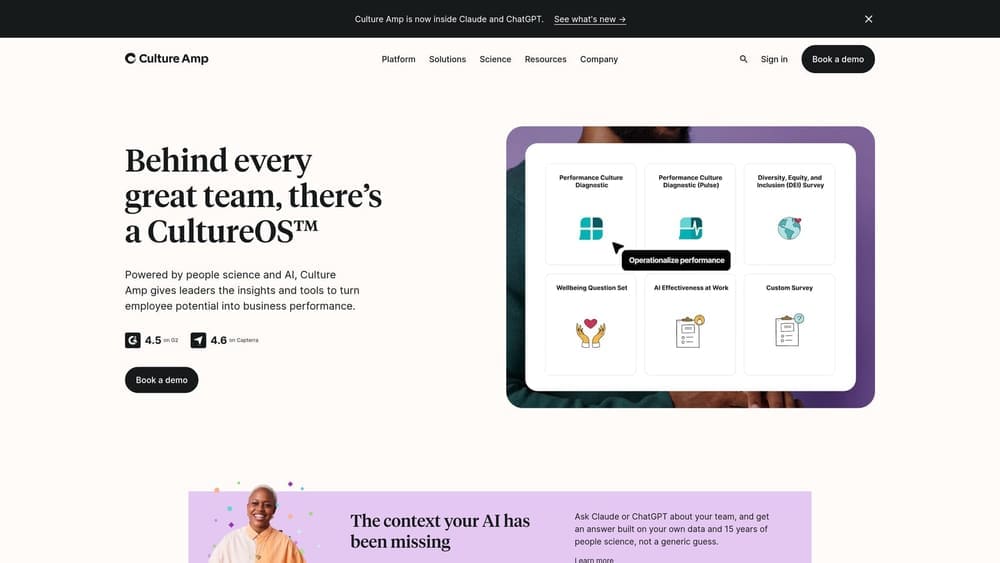
The standout feature here is scale of comparison. Culture Amp’s benchmark database lets you see whether your engagement scores are actually strong or weak relative to peers, rather than judging them in isolation.
- Engagement surveys capture structured feedback across standard categories like manager effectiveness and belonging.
- Cross-industry benchmarking shows how your scores stack up against similar organizations.
- People analytics dashboards surface trends across departments, tenure, and location.
- DEI reporting tools help track representation and inclusion metrics over time.
Culture Amp connects with Slack, Microsoft Teams, and various HRIS platforms. Day-to-day administration usually sits with an HR or People Analytics function, and initial setup can take real time given the depth of reporting available. That depth is also the catch: the reporting complexity and setup effort tend to reward larger client rosters more than a 25-person shop, where a simpler pulse tool might get more actual use. Pricing is quote-based; confirm current terms on the vendor’s site.
Best for: Mid-size to larger PEO client companies wanting detailed survey benchmarking.
3. Lattice
Lattice is a broader HR platform that links engagement surveys with goal tracking, performance reviews, and compensation planning. It’s built for HR teams that want engagement data to influence real decisions about pay and advancement, not just sit in a slide deck.
Where Lattice differs from the other tools here is the direct line it draws between survey results and compensation. Engagement and performance data feed into the same module used to plan raises and promotions, which is unusual among the platforms on this list.
- Engagement surveys give a regular read on sentiment across teams and departments.
- Goal and OKR tracking connects individual objectives to broader company priorities.
- Performance reviews use the same data set as engagement surveys, reducing duplicate data entry.
- A compensation planning module lets HR model pay decisions against performance and engagement signals.
Lattice integrates with Slack, Microsoft Teams, and payroll and HRIS systems, which matters if your PEO’s HRIS needs to stay the system of record for compensation data. Setup and ongoing administration typically involve both HR and finance, given the compensation planning component. That breadth is the tradeoff: a company that just wants a simple engagement survey may find Lattice’s full HR suite scope more than it needs. Pricing is not published in fixed tiers; check with the vendor directly.
Best for: PEO clients who want engagement data feeding directly into pay and promotion decisions.
4. Officevibe (Workleap)
Officevibe, now part of Workleap, is a lightweight weekly pulse survey and recognition tool built for fast manager visibility rather than annual reporting cycles. It suits HR teams at smaller PEO client companies who want a straightforward read on team sentiment without a heavy rollout.
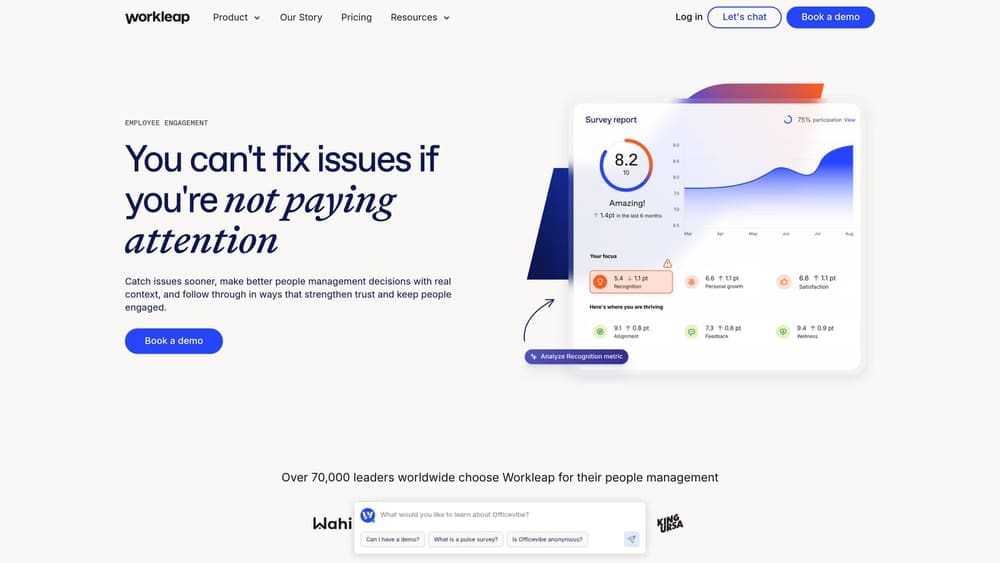
Its main advantage on this list is speed of use. The weekly pulse format is short by design, meant to be answered in a minute or two, which keeps response rates up in smaller teams where survey fatigue kills participation fast.
- Weekly pulse surveys give managers a running read on morale without waiting for an annual cycle.
- Anonymous feedback channels let employees flag concerns they might not raise directly.
- One-on-one meeting templates help managers turn survey signals into actual conversations.
- A recognition feed lets peers and managers acknowledge good work in the same place they check pulse results.
Officevibe connects with Slack and Microsoft Teams, and it’s typically run day-to-day by a single HR generalist or even a team lead, since the setup is minimal compared to enterprise survey platforms. The limitation is depth: it doesn’t offer the benchmarking or analytics layers that Culture Amp or Gallup Access provide, so it’s a weaker fit if your leadership wants to compare scores against industry norms. Pricing is available on the vendor’s site and typically scales with headcount.
Best for: Smaller PEO client teams wanting simple, low-friction weekly engagement check-ins.
5. Bonusly
Bonusly takes a different approach than the survey-first tools above. It’s a peer-to-peer recognition platform where employees give each other points, redeemable for rewards, making daily appreciation the primary engagement mechanism rather than a periodic survey.
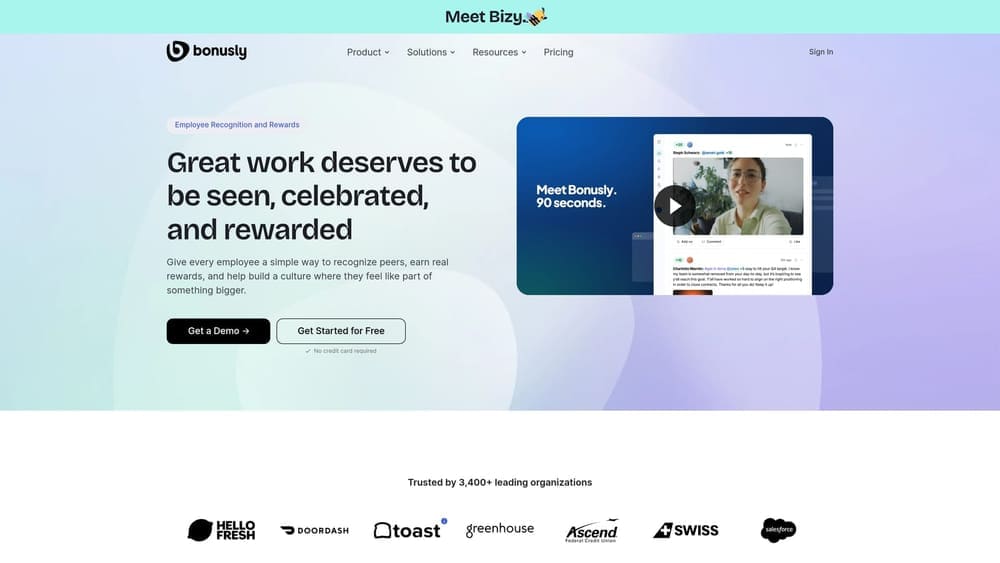
The distinctive element is that recognition, not measurement, drives the platform. Instead of asking employees how they feel through a survey, Bonusly creates a habit loop where coworkers actively call out good work in real time.
- Peer-to-peer recognition lets any employee, not just managers, publicly acknowledge a colleague’s contribution.
- Points-based rewards give recognition a tangible payoff employees can redeem.
- Custom recognition criteria let HR align what gets celebrated with company values.
- Team activity reporting shows which departments or individuals are giving and receiving recognition most.
Bonusly integrates with Slack, Microsoft Teams, and various HRIS platforms, and it’s usually managed by HR with minimal ongoing administrative burden once the reward catalog and budget are set. The clear limitation is that Bonusly doesn’t include deep survey or benchmarking analytics on its own, so a company wanting structured sentiment tracking will need to pair it with another tool or accept that recognition data is a proxy for engagement, not a direct measure of it. Pricing is quote-based depending on headcount and reward budget.
Best for: PEO clients prioritizing peer recognition culture over structured survey tracking.
6. Motivosity
Motivosity is a recognition and rewards platform built around visualizing how appreciation moves through an organization. It’s aimed at HR teams managing distributed or multi-department workforces who want to see recognition patterns, not just individual shoutouts.
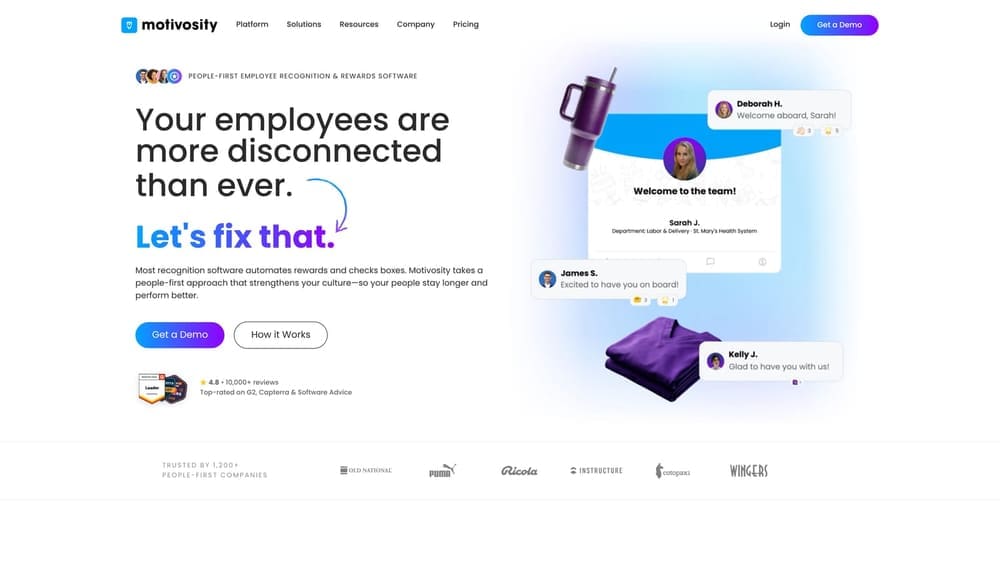
Its standout feature is the org-chart-based view of recognition. Rather than a flat activity feed, Motivosity shows how appreciation flows between teams and departments, which can highlight silos or departments that consistently under-recognize each other.
- Org-chart-based recognition shows where appreciation is flowing and where it isn’t across the company structure.
- A rewards marketplace lets employees redeem recognition points for actual items or experiences.
- Manager insight dashboards flag teams with low recognition activity before morale issues surface elsewhere.
- Peer shoutouts keep day-to-day recognition visible company-wide.
Motivosity connects with Slack, Microsoft Teams, and common HRIS systems, and it’s typically administered by an HR or People Ops team once the org structure is mapped into the platform. Because it’s built around recognition and rewards rather than structured pulse surveys, it doesn’t replace a dedicated engagement survey tool if your leadership wants formal sentiment data with benchmarks. Pricing is quote-based; confirm current terms with the vendor.
Best for: Distributed teams wanting visibility into peer recognition patterns across departments.
7. Nectar
Nectar is a recognition and rewards platform positioned specifically for smaller company budgets, which makes it worth a look for PEO clients that find enterprise recognition tools priced out of reach.
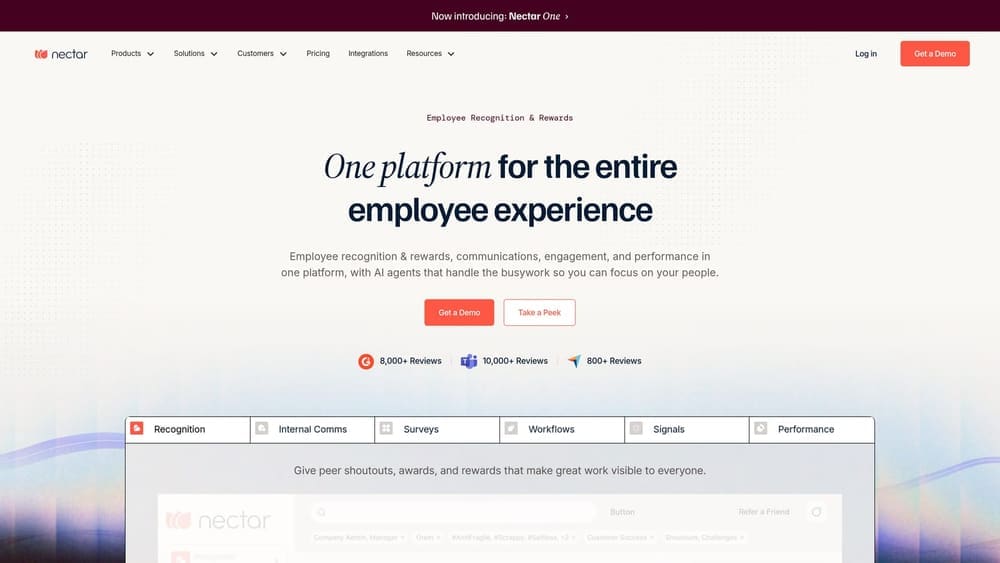
Its main differentiator versus Motivosity or Reward Gateway on this list is cost positioning. Nectar markets itself toward SMB buyers rather than large enterprise accounts, which tends to show up in simpler onboarding and a more accessible starting price point.
- A recognition feed gives employees a running, visible stream of peer and manager shoutouts.
- A rewards catalog lets points convert into gift cards, merchandise, or other redeemable items.
- Culture-based awards let HR tie recognition to specific company values or milestones.
- HRIS and chat integrations connect recognition activity to systems already in use.
Nectar integrates with Slack, Microsoft Teams, and common HRIS platforms, and day-to-day use generally falls to an HR generalist with no dedicated administrator needed. The tradeoff for the lower cost positioning is a smaller benchmark and analytics library compared to more established platforms like Culture Amp or Gallup Access, so it’s better suited to companies that want recognition without heavy reporting requirements. Pricing is published on the vendor’s site and scales with headcount; confirm current rates as of 2026.
Best for: Cost-conscious small PEO clients wanting a straightforward recognition tool.
8. Reward Gateway
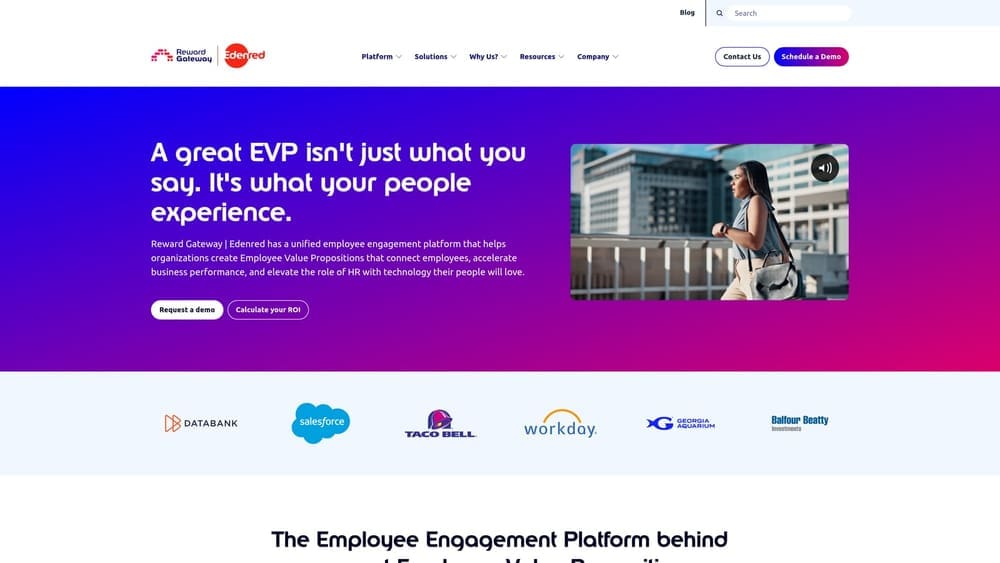
Reward Gateway combines employee recognition with an employee discounts marketplace and internal communications tools, making it a different kind of engagement play than the pure recognition or survey tools on this list.
What it adds beyond recognition
Recognition programs sit alongside a discounts marketplace and a wellbeing content library, so employees get both social recognition and a tangible benefit they can use for everyday purchases. That combination is fairly unusual among the peer-to-peer recognition tools covered above.
- Recognition programs let managers and peers acknowledge contributions in a structured, trackable way.
- An employee discounts marketplace gives staff ongoing savings on everyday purchases, functioning as a passive benefit.
- A wellbeing content library supports broader engagement efforts beyond recognition alone.
- An internal communications hub centralizes company announcements alongside recognition activity.
Fit and cost considerations
Reward Gateway integrates with HRIS platforms and SSO providers, which matters for larger client companies managing single sign-on across multiple tools. It’s typically administered by HR or benefits teams. Scope and cost here are built more for larger workforces than very small employers, so a 20-person PEO client may find the discounts marketplace and communications hub more infrastructure than it needs. Pricing is quote-based and depends on headcount and selected modules.
Best for: PEO clients wanting to pair recognition with an employee discounts benefit.
9. Gallup Access
Gallup Access is an engagement survey platform built on Gallup’s Q12 framework, a set of twelve questions Gallup has used in its long-running engagement research. It suits HR leaders who want a survey grounded in an established research methodology rather than a vendor’s proprietary question set.
What sets it apart from every other tool on this list is that foundation. Instead of a custom-built survey model, Gallup Access applies the same Q12 framework used across Gallup’s broader engagement research base, and benchmarking is tied to that same research history.
- The Q12 engagement survey measures sentiment using Gallup’s standardized twelve-question framework.
- Manager development resources help translate survey results into specific coaching actions.
- Benchmarking against Gallup’s research base lets you compare results to a well-established external reference point.
- Action-planning tools guide teams through turning survey findings into concrete next steps.
Gallup Access integrates with HRIS platforms, and because Gallup often delivers the product alongside consulting support, day-to-day administration can involve more back-and-forth with Gallup’s team than a self-service SaaS tool would. That consulting-style delivery is also the main limitation: pricing and complexity can exceed the budget or needs of a small employer that just wants a quick pulse check. Pricing is quote-based and tied to the scope of survey and consulting services selected.
Best for: PEO clients wanting a research-grounded engagement survey methodology.
Matching the tool to your headcount and goals
If you’re running a small team and just want a quick, low-friction read on morale, Officevibe or Nectar fit better than the heavier survey suites, since both are built for fast setup and minimal ongoing administration. If your company has grown past that stage and wants engagement data connected to formal performance and pay decisions, 15Five and Lattice do that job directly, while Culture Amp and Gallup Access serve companies that want their survey results benchmarked against outside research or industry data. For employers focused on building a recognition-first culture rather than measuring sentiment through surveys, Bonusly, Motivosity, and Reward Gateway each offer a different flavor of peer or company-driven appreciation.
None of this solves a separate problem worth flagging: your PEO itself may or may not make it easy to connect any of these tools to your payroll and HRIS data, and PEO contracts vary widely in flexibility, integration support, and cost. PEO Metrics compares PEO providers side by side on pricing, contract terms, and platform fit, so you can see which providers actually support the engagement stack you want before you sign or renew. Don’t auto-renew. Make an informed, confident decision.
Before you sign that PEO renewal, make sure you’re not leaving money on the table.
Many businesses unknowingly overpay because of bundled fees, hidden administrative markups, and contracts designed to limit flexibility. We give you a clear, side-by-side breakdown of pricing, services, and contract terms, so you can see exactly what you’re paying for and choose the option that truly fits your business.
