
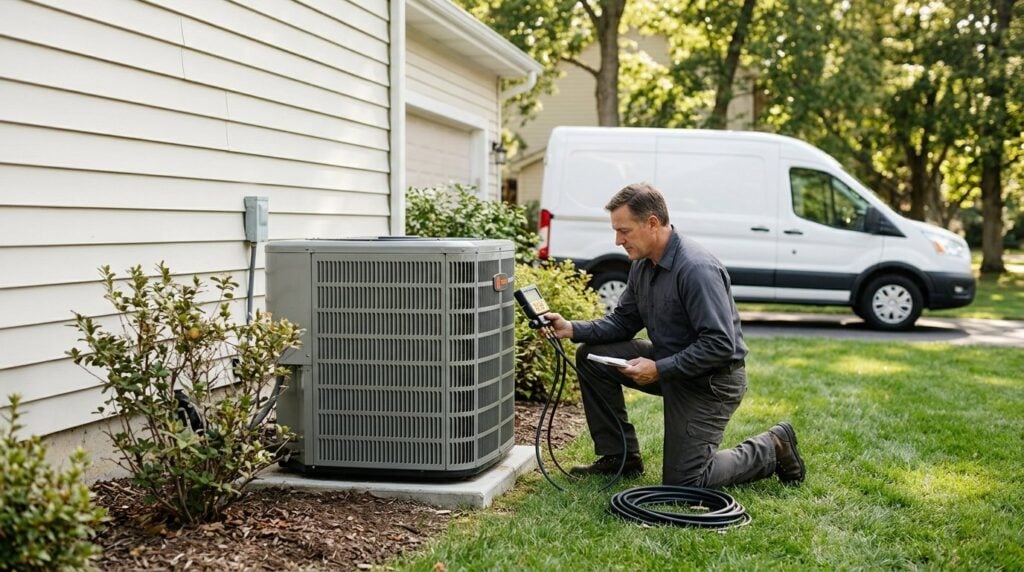
If a technician gets hurt on a lift or your shop fails an OSHA hazard communication check, the compliance gap usually traces back to how payroll, safety, and classification were set up in the first place. This article explains what auto repair PEO compliance support actually includes, where repair shops most often get exposed, and how to evaluate whether a PEO’s support matches the risks specific to automotive service work.
Why Auto Repair Shops Carry Different Compliance Risk Than a Typical Small Business
Most small businesses that sign with a PEO run office-based operations: retail counters, professional services, small clinics. Auto repair shops don’t fit that mold. You’re managing OSHA general industry hazards like vehicle lifts, compressed air lines, and welding equipment, alongside hazardous materials like used oil, coolant, and refrigerants that a marketing agency or accounting firm never has to think about. A generic PEO safety packet built around slip-and-fall prevention or ergonomic desk setups misses nearly all of this.
Pay structure adds another layer. Technicians are frequently paid on flat-rate schedules, commission, or some blend of hourly and incentive pay tied to labor hours billed rather than hours worked. That structure creates wage and hour exposure that standard HR templates simply aren’t designed to handle. A PEO’s boilerplate overtime language, built for hourly retail or office staff, often doesn’t map cleanly onto how a service writer or technician actually gets paid.
Shops with multiple bays or dealer groups operating across several locations face a third layer: overlapping OSHA, EPA, and state labor rules that vary by jurisdiction. A multi-location group might need different hazard communication training documentation in one state and different refrigerant handling certifications tracked across technicians in another. Shops weighing how a provider scales as headcount grows should look at how larger repair operations evaluate PEO fit, since a one-size-fits-all compliance packet built for a single-location retail client tends to miss these overlaps entirely.
None of this means a PEO is the wrong choice for a repair shop. It means the compliance support you’re buying needs to be evaluated against the actual risks your shop carries, not against a generic small-business checklist. The rest of this article breaks down what’s typically included, what’s usually missing, and what questions expose the difference before you sign.
What Compliance Support Actually Includes in a PEO Agreement
Under a co-employment arrangement, the PEO takes on specific employer obligations: payroll tax filing, workers’ compensation coverage and claims administration, and certain OSHA recordkeeping functions. That shift is real and it matters. But co-employment does not transfer responsibility for day-to-day safety conditions, supervision, or how work is actually performed in your bays. If a lift isn’t inspected or a technician isn’t trained on a chemical he’s handling, that exposure sits with the shop, regardless of what your PEO agreement says about shared employer status.
Standard PEO packages typically bundle payroll compliance, workers’ comp administration, and access to a general HR advisor line. That baseline is fairly consistent across providers, and it’s worth comparing against how shops weigh a PEO against a standalone payroll company before assuming the bundle covers everything. What varies widely is everything beyond it: on-site safety consulting, industry-specific handbook language, and hands-on help with recordkeeping tied to hazardous materials. These are frequently sold as add-ons, and the marketing materials don’t always make that distinction obvious.
Before you sign, get specific answers on a few line items:
- Is OSHA 300 log support included, or do you maintain injury and illness recordkeeping yourself with the PEO only providing a template?
- Does the PEO provide a hazard communication plan template built for automotive chemicals, or a generic version meant for any small business?
- Is guidance on EPA-related recordkeeping, such as documentation for refrigerant handling, part of the package or billed as a separate consulting service?
The answers tell you whether you’re buying compliance support that fits a repair shop or compliance support that happens to be sold to one. Those are not the same thing, and the gap tends to surface only after an inspection or a claim, when it’s too late to renegotiate.
Where Auto Repair Shops Most Often Get Exposed
The most consequential wage and hour issue in this industry involves the Fair Labor Standards Act’s Section 13(b)(10) exemption, which covers salesmen, partsmen, and mechanics primarily engaged in selling or servicing vehicles at dealerships. The U.S. Supreme Court addressed this exemption directly in Encino Motorcars v. Navarro (2018), ruling on how broadly it applies. The exemption is real, but it’s role-specific and fact-specific, not a blanket pass for every position in a shop. Service advisors, for instance, have been the subject of litigation over whether they qualify. Shops that assume every technician or service employee falls under 13(b)(10) without confirming role-by-role eligibility are taking on risk that a generic PEO onboarding packet won’t flag.
Hazardous waste handling is a second blind spot. Used oil, antifreeze, and refrigerants fall under EPA regulation, including Clean Air Act Section 609, which governs the servicing of motor vehicle air conditioning systems and refrigerant handling. This is environmental compliance, not HR compliance, and it sits outside what most PEOs are staffed or licensed to advise on. A PEO can help you administer payroll and workers’ comp for the technician who handles refrigerant, and reviewing how workers’ comp coverage typically applies to auto repair roles can clarify where that support starts and stops; it generally cannot tell you whether your recovery equipment and certification recordkeeping meet EPA requirements.
Third, OSHA’s Hazard Communication Standard, 29 CFR 1910.1200, requires safety data sheets and employee training for every hazardous chemical present in the shop, from brake cleaner to battery acid. This standard applies to any workplace using these chemicals, but the training and documentation requirements are detailed and shop-specific. Generic PEO onboarding materials, built to satisfy hazard communication requirements for a broad range of small businesses, often stop at a boilerplate policy statement rather than the chemical-specific SDS library and training log an inspector will actually want to see.
Each of these gaps sits at the intersection of what a PEO’s standard package covers and what a repair shop actually needs. That’s the space where shop owners get caught off guard, usually not because they ignored compliance, but because they assumed their PEO’s general assurances covered ground it never touched.
What Strong Compliance Support Looks Like for a Shop Owner
The clearest signal of a PEO built to serve automotive clients is a dedicated safety or risk consultant who understands how workers’ compensation classification works for shop roles. Classification codes differ meaningfully by industry and by state workers’ comp bureau practice, and a technician working on lifts and with power tools is not classified the same way as a retail cashier or an office assistant. Misclassification, even unintentional, affects premium accuracy and can create friction at audit or renewal, which is why some shops pursue class code restructuring under a PEO framework to correct it before it compounds. A PEO with automotive experience should be able to speak fluently about how it classifies technician, service advisor, and parts counter roles, without you having to explain your own business to them.
State-specific employee handbooks and required workplace postings matter more for repair shops than owners sometimes expect, particularly for multi-location groups or shops considering expansion across state lines. Wage and hour rules, meal and rest break requirements, and posting obligations vary by state, and a handbook written for your home state won’t automatically satisfy requirements in a new one. A PEO that treats handbook updates as a template swap rather than a jurisdiction-by-jurisdiction review is setting you up for a gap you won’t notice until an employee complaint or a state labor audit.
Perhaps the most practical test of compliance support is what happens when something actually goes wrong. If OSHA opens an inspection or a former employee files a wage complaint, do you have a named compliance contact who understands your business, or do you get routed through a general call center that has to look up your account before it can help? During an active inspection, the difference between those two experiences can shape how the process unfolds. Ask providers directly how escalation works and how quickly you’d reach someone with actual authority to advise you, not just someone reading from a script.
Questions to Ask Before You Sign With a PEO
Once you’ve narrowed your options, the conversation should shift from marketing claims to specifics. A few questions tend to separate providers that understand automotive risk from those that don’t.
- How does the PEO support FLSA classification reviews for flat-rate and commissioned technicians? A vague assurance that “we handle compliance” isn’t an answer. Ask for the actual process: does someone review your pay plans against Section 13(b)(10) criteria, or are you left to interpret the exemption yourself?
- Does the PEO have documented experience with automotive or dealership clients? Ask whether they can speak to the workers’ comp class codes typically used for technician, service writer, and parts roles. A provider that serves shops regularly should be able to answer this without hesitation. Shops around the 25-employee mark often find it useful to review evaluation strategies built for that headcount before comparing quotes.
- What happens if OSHA or the Department of Labor opens an inquiry? Ask both contractually and practically: who handles the response, who bears the cost of defending a misclassification claim, and what level of support is included versus billed separately. It’s also worth understanding what your cancellation terms actually allow if the provider’s support falls short during an active inquiry.
These questions matter more than a list of bundled features, because they reveal how a PEO behaves when something goes wrong, not just what it promises when things are going smoothly.
Comparing Providers Before You Renew
Compliance support means something different for a repair shop than it does for a typical office, and the gap between generic and industry-specific support rarely shows up in a sales pitch. It shows up during an inspection, a wage complaint, or a premium audit, when it’s too late to switch providers without cost. The right next step is comparing PEO providers side by side on the specific protections and expertise that matter for automotive work, including how each handles technician classification, hazard communication documentation, and escalation during a compliance inquiry.
Before you sign that PEO renewal, make sure you’re not leaving money on the table. Many businesses unknowingly overpay because of bundled fees, hidden administrative markups, and contracts designed to limit flexibility. We give you a clear, side-by-side breakdown of pricing, services, and contract terms, so you can see exactly what you’re paying for and choose the option that truly fits your business.
