
Choosing a PEO is one of the more consequential decisions a growing business makes—it affects your payroll, benefits costs, compliance exposure, and how much time you spend on HR instead of running your company. The problem? There are hundreds of PEOs, and most comparison sites are pay-to-play.
This list is different. We’ve evaluated PEOs based on real pricing structures, service models, technology platforms, and the specific business scenarios where each excels. Whether you have 5 employees or 300, operate in one state or twelve, here’s what actually matters when comparing providers.
1. PEO Metrics
Best for: Businesses evaluating multiple PEO options or renegotiating existing contracts
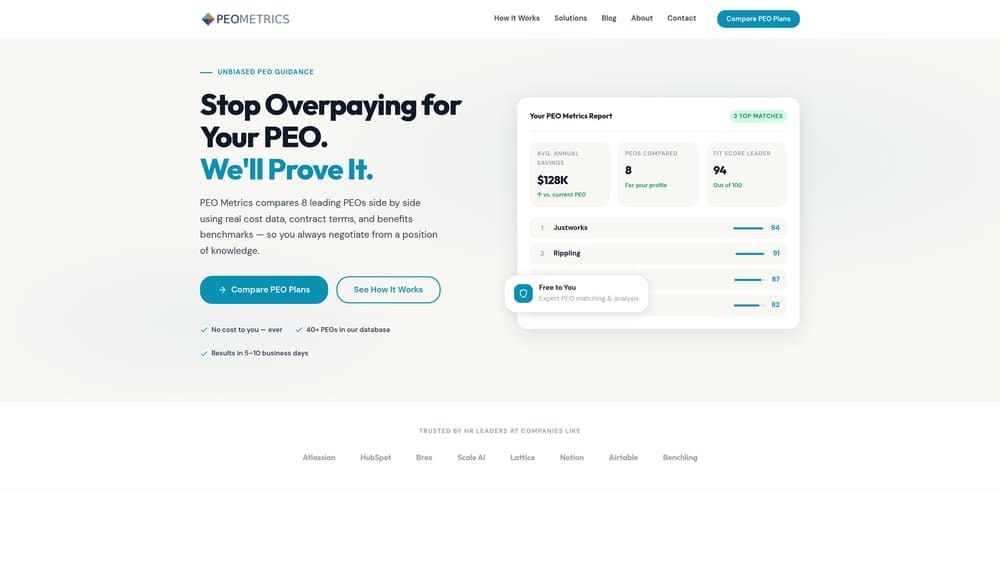
PEO Metrics is an independent comparison platform that helps businesses evaluate and select PEO providers using detailed side-by-side pricing and service analysis.
Where This Tool Shines
Most PEO comparison sites operate on referral commissions, which creates obvious conflicts of interest. PEO Metrics takes a different approach—it provides unbiased guidance without earning commissions from the providers it evaluates.
The platform excels at transparency. You get actual pricing data, not vague ranges or “request a quote” dead ends. This matters because PEO pricing varies wildly—from flat per-employee fees to percentage-of-payroll models that can differ by 5-8 percentage points between providers for similar service levels.
Key Features
Side-by-Side Provider Comparisons: Compare actual pricing structures, service inclusions, and contract terms across multiple PEOs simultaneously.
Unbiased Guidance: Analysis not influenced by PEO commissions or referral fees, focusing purely on fit for your business scenario.
Detailed Service Metrics: Breakdown of what’s actually included—benefits access, HR support levels, technology platforms, and compliance coverage.
Contract Renegotiation Support: Helps existing PEO clients understand if they’re overpaying and provides leverage for better terms.
Switching Assistance: Guidance on exit terms, transition timelines, and avoiding common pitfalls when changing providers.
Best For
Businesses shopping for their first PEO, companies approaching renewal who want to verify they’re getting competitive pricing, and organizations that need to compare specific scenarios like multi-state expansion or high-risk industry coverage. Particularly valuable if you’re tired of sales calls and want to see real data first.
Pricing
Free comparison service. No cost to evaluate providers or get guidance on contract terms and pricing analysis.
2. Justworks
Best for: Small to mid-sized companies wanting transparent, predictable pricing and modern self-service tools
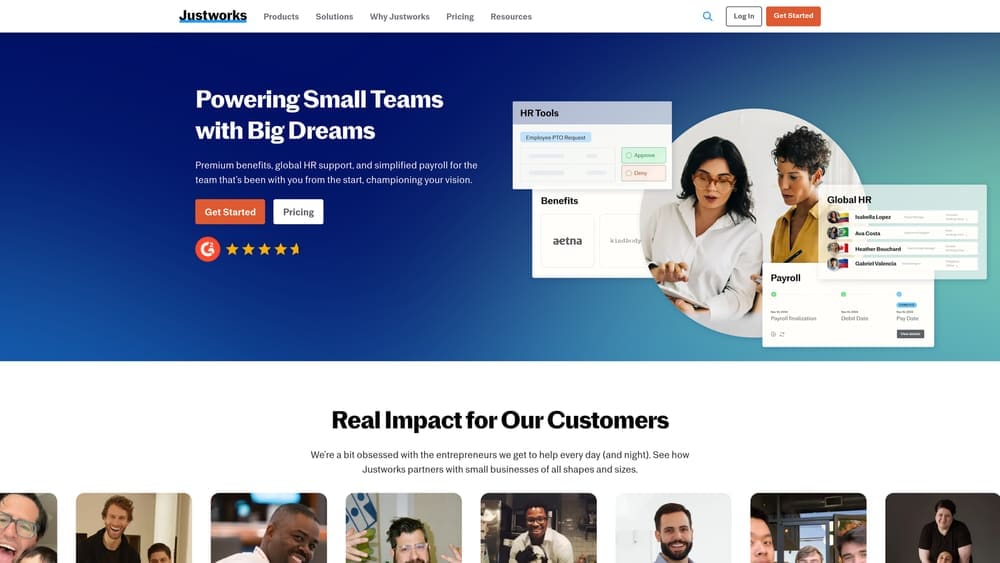
Justworks is a modern PEO platform offering flat per-employee pricing with strong benefits access for growing companies.
Where This Tool Shines
Justworks built its reputation on pricing transparency—a rarity in the PEO world. You know exactly what you’ll pay per employee each month, with no percentage-of-payroll calculations or hidden administrative fees.
The platform gives smaller companies access to large-group health insurance rates, which can mean significantly better benefits options than you’d get shopping on your own. The self-service interface is genuinely intuitive, which matters when you don’t have a dedicated HR person managing everything.
Key Features
Flat Monthly Pricing: Pay a fixed amount per employee regardless of salary levels, making budgeting straightforward.
Large-Group Benefits Access: Leverage Justworks’ scale to offer employees Fortune 500-caliber health, dental, and vision plans.
Self-Service Platform: Modern interface that employees and managers can navigate without constant support tickets.
24/7 HR Support: Access to certified HR professionals whenever questions arise, not just during business hours.
Compliance Automation: Handles multi-state payroll tax filings, new hire reporting, and employment law updates automatically.
Best For
Companies with 5-150 employees that value pricing predictability and want a modern, tech-forward experience. Works well for businesses with relatively straightforward HR needs and employees comfortable with self-service tools.
Pricing
Starts at $59 per employee per month for the Basic plan, or $99 per employee per month for the Plus plan with benefits administration included.
3. TriNet
Best for: Industry-specific HR needs in tech, nonprofit, financial services, or other specialized verticals
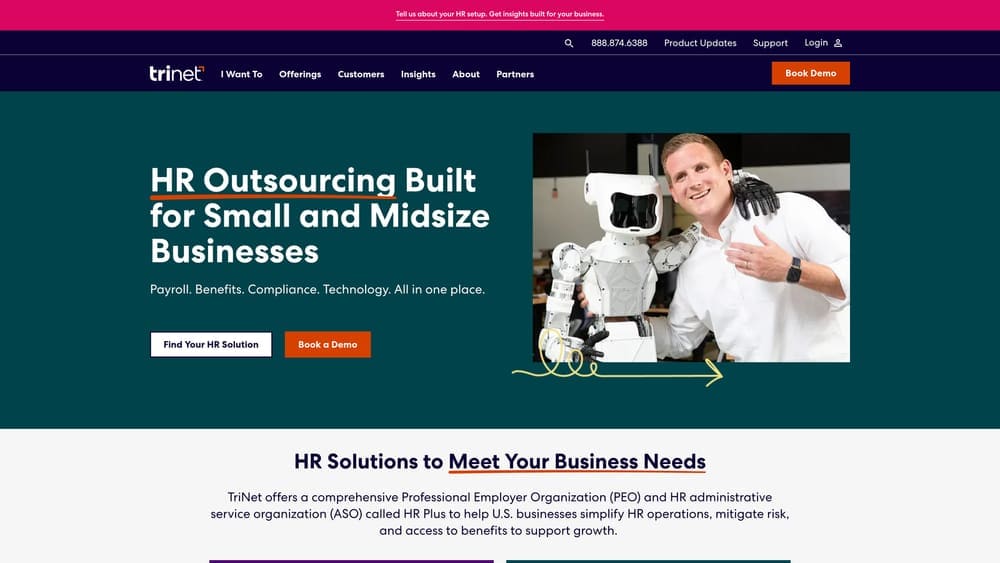
TriNet is an industry-specialized PEO offering tailored HR solutions and compliance expertise for specific business sectors.
Where This Tool Shines
TriNet doesn’t try to be everything to everyone. Instead, it focuses on deep expertise in specific industries where HR and compliance requirements get complicated fast.
If you’re running a tech startup navigating equity compensation, a nonprofit dealing with UBIT issues, or a financial services firm managing licensing requirements, TriNet’s specialized teams understand your specific challenges. That industry knowledge translates to better guidance and fewer compliance surprises.
Key Features
Industry-Specific Expertise: Dedicated teams for tech, financial services, nonprofit, professional services, and other verticals with unique HR requirements.
Comprehensive Benefits Packages: Curated benefits options designed around what matters in your industry, not generic one-size-fits-all plans.
Risk Mitigation Services: Workers’ compensation management, employment practices liability coverage, and safety program development.
Strategic HR Consulting: Access to HR professionals who understand industry-specific challenges like equity compensation, contractor classification, or grant compliance.
Scalable Technology Platform: HR system that grows with you from startup to mid-market without requiring platform changes.
Best For
Companies in specialized industries that need more than generic HR support. Particularly strong for tech companies dealing with equity and rapid growth, nonprofits managing complex compliance, and professional services firms with multi-state licensing requirements.
Pricing
Custom pricing based on company size, industry, and services needed. Typically structured as a percentage of payroll rather than flat per-employee fees.
4. ADP TotalSource
Best for: Mid-sized companies wanting enterprise-grade infrastructure and Fortune 500-level benefits
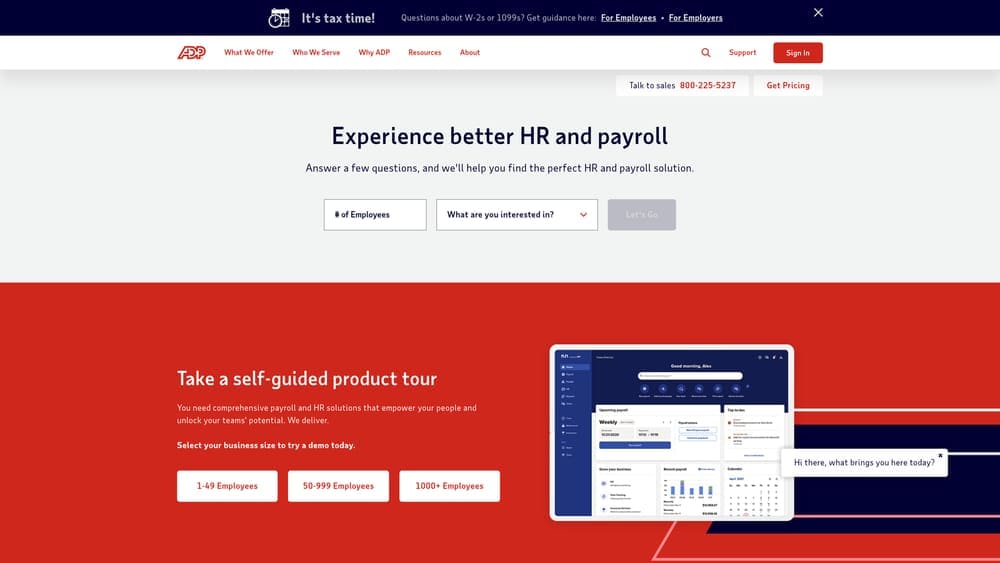
ADP TotalSource is an enterprise-grade PEO solution backed by ADP’s infrastructure, offering comprehensive HR technology and benefits access.
Where This Tool Shines
ADP TotalSource leverages the full weight of ADP’s infrastructure—one of the largest payroll and HR technology providers globally. That scale translates to benefits negotiating power that smaller PEOs can’t match.
The integration with ADP’s broader product ecosystem means you’re not dealing with disconnected systems. Payroll, time tracking, benefits administration, and talent management all work together without the integration headaches common with smaller providers.
Key Features
ADP Ecosystem Integration: Seamless connection with ADP’s full suite of HR, payroll, time tracking, and talent management tools.
Fortune 500-Level Benefits: Access to benefits packages typically reserved for much larger companies, including premium health plans and retirement options.
Dedicated HR Business Partner: Assigned specialist who learns your business and provides strategic guidance, not just transactional support.
Advanced Analytics: Robust reporting and workforce analytics capabilities that help you make data-driven HR decisions.
Compliance Infrastructure: ADP’s compliance team monitors federal, state, and local employment law changes and updates your policies automatically.
Best For
Companies with 50+ employees that need enterprise-level capabilities without enterprise-level complexity. Works well for businesses planning significant growth or operating in multiple states with complex compliance requirements.
Pricing
Custom pricing based on company size and service requirements. Generally positioned for companies with at least 50 employees where the pricing model becomes more competitive.
5. Paychex PEO
Best for: Businesses wanting personalized service with strong local and regional support
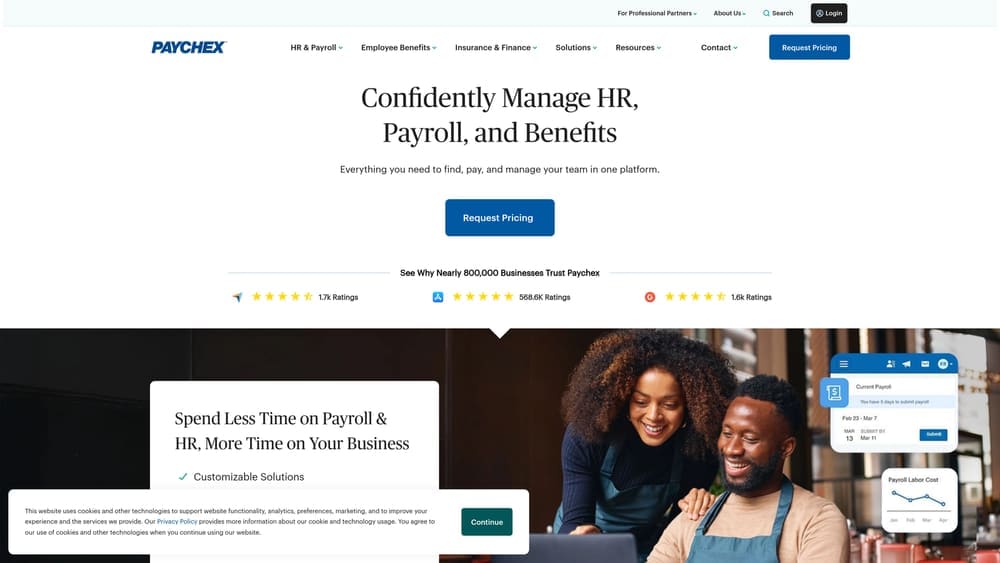
Paychex PEO is a flexible PEO solution with dedicated HR specialists and extensive regional presence for businesses prioritizing hands-on support.
Where This Tool Shines
Paychex built its business on local relationships and personalized service. You’re not just a ticket number—you get a dedicated HR specialist who knows your business and is available when you need them.
The regional support network matters more than you might think. When you’re dealing with state-specific compliance issues or need someone who understands local employment dynamics, having specialists with real regional expertise makes a difference.
Key Features
Dedicated HR Specialist: Assigned professional who serves as your primary contact and learns the specifics of your business over time.
Flexible Service Levels: Choose the level of HR support you need rather than paying for a one-size-fits-all package.
Regional Support Network: Local and regional specialists who understand state-specific employment laws and market dynamics.
Integrated Technology: Unified payroll, HR, benefits, and time tracking platform that connects your core HR functions.
Scalable Solutions: Service model that adjusts as your company grows without requiring platform changes or migrations.
Best For
Companies that value relationship-based service over purely self-service platforms. Works well for businesses with 10-200 employees that want the flexibility to scale HR support up or down based on current needs.
Pricing
Custom pricing based on company size and selected service levels. The modular approach means you can control costs by choosing only the services you actually need.
6. Insperity
Best for: Mid-market companies wanting high-touch strategic HR consulting and white-glove service
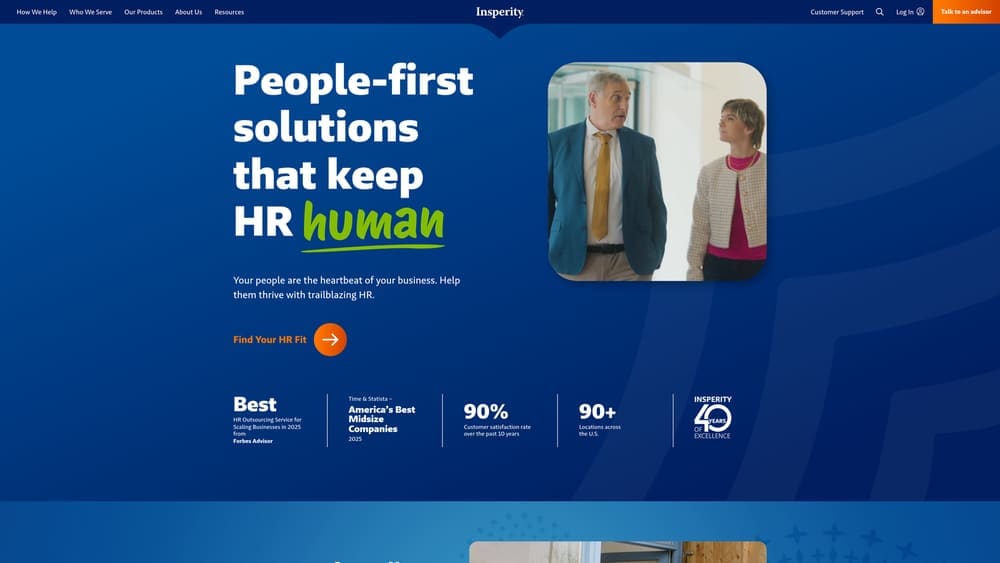
Insperity is a high-touch PEO provider known for experienced HR consultants and comprehensive service for established mid-market companies.
Where This Tool Shines
Insperity positions itself at the premium end of the PEO market, and the service quality reflects that positioning. You’re working with experienced HR professionals who provide strategic guidance, not just transactional support.
The company has built a strong reputation for service consistency—something that matters when you’re relying on your PEO for critical HR functions. Their HR specialists tend to have deeper experience than what you’ll find at lower-cost providers.
Key Features
Experienced HR Specialists: Work with seasoned professionals who provide strategic guidance on workforce planning, not just compliance checklists.
Comprehensive Benefits Programs: Access to premium health, dental, vision, and retirement plans with strong carrier relationships.
Performance Management Tools: Systems for goal setting, performance reviews, and employee development that go beyond basic HR administration.
Service Quality Focus: Consistently high ratings for responsiveness and problem resolution across their client base.
Strategic Business Consulting: HR guidance that connects to broader business objectives, not just administrative tasks.
Best For
Established companies with 50-150 employees that want strategic HR partnership and are willing to pay for premium service. Works well for businesses where HR plays a strategic role in growth plans and competitive advantage.
Pricing
Custom pricing typically positioned at the higher end of the PEO market. Best fit for companies with 50-150 employees where the service value justifies premium pricing.
7. Rippling PEO
Best for: Tech-forward companies with distributed teams needing unified IT and HR management
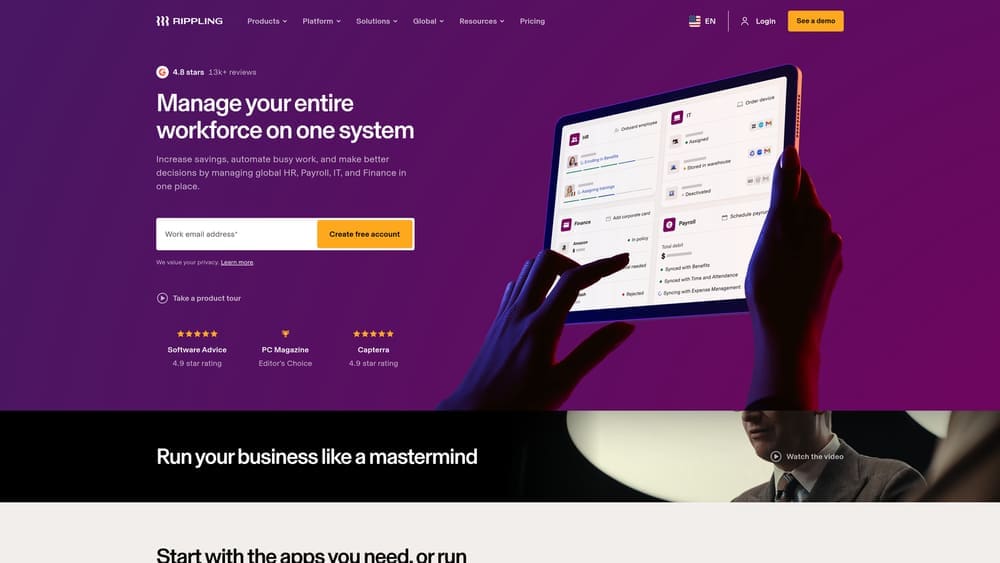
Rippling PEO is a tech-forward PEO that unifies IT, HR, and device management in a single platform for modern distributed teams.
Where This Tool Shines
Rippling approaches the PEO model differently by integrating IT management directly into the HR platform. That means when you hire someone, you can provision their laptop, grant app access, and set up payroll in one workflow.
For companies with remote or distributed teams, this integration eliminates the usual friction of coordinating across multiple systems. The automation capabilities are genuinely strong—you can set up workflows that handle routine tasks without manual intervention.
Key Features
Unified IT and HR Management: Single platform for managing devices, app access, payroll, benefits, and HR administration.
Automated Device Provisioning: Ship pre-configured laptops to new hires with all necessary software and access already set up.
Modern Interface: Intuitive design that requires minimal training for employees and managers to use effectively.
Workflow Automation: Build custom automations for onboarding, offboarding, and routine HR tasks that eliminate manual work.
App Integration Ecosystem: Connect hundreds of business apps and manage access through a single control panel.
Best For
Tech companies and distributed teams that need tight integration between IT and HR functions. Particularly strong for businesses hiring remote employees frequently where automated onboarding saves significant time.
Pricing
Starts at $35 per employee per month, plus costs for additional modules and services you select. The modular pricing means costs can add up as you enable more features.
8. Amplify PEO
Best for: High-risk industries including construction, staffing, and manufacturing with complex workers’ comp needs
Amplify PEO is a specialized PEO for high-risk industries with strong workers’ compensation solutions and safety program expertise.
Where This Tool Shines
Most PEOs either avoid high-risk industries entirely or price them prohibitively. Amplify specializes in exactly those businesses—construction, staffing agencies, manufacturing, and other sectors where workers’ comp costs can make or break profitability.
The company’s expertise in experience modification rates (EMR) matters significantly. Effective safety programs and claims management can reduce your EMR over time, which directly impacts your workers’ comp premiums. Amplify knows how to work that system.
Key Features
High-Risk Industry Specialization: Deep expertise in construction, staffing, manufacturing, and other sectors with elevated risk profiles.
Workers’ Compensation Management: Proactive claims handling, return-to-work programs, and strategies to minimize premium costs.
EMR Optimization: Focus on reducing your experience modification rate through effective safety programs and claims management.
Safety Program Development: Customized safety training, documentation, and compliance programs designed for your specific industry risks.
Industry-Specific Compliance: Understanding of OSHA requirements, licensing, and regulations unique to high-risk sectors.
Best For
Construction companies, staffing agencies, manufacturers, and other businesses in high-risk industries where workers’ comp costs are a major concern. Most valuable for companies that have struggled to find affordable PEO coverage elsewhere.
Pricing
Custom pricing based on industry, risk profile, and claims history. Typically structured to account for workers’ comp costs, which are a major component for high-risk businesses.
9. CoAdvantage
Best for: Companies wanting customizable PEO services without full co-employment requirements
CoAdvantage is a customizable PEO offering modular service selection for businesses that want specific PEO benefits without comprehensive co-employment arrangements.
Where This Tool Shines
CoAdvantage recognizes that not every business needs or wants a full PEO relationship. Maybe you just need better benefits access, or workers’ comp management, or compliance support—but not the entire package.
The modular approach means you can start with specific services and add more over time as your needs evolve. This flexibility matters for growing companies that aren’t ready for a comprehensive PEO relationship but need more than basic payroll services.
Key Features
Modular Service Packages: Select only the HR services you need rather than paying for comprehensive co-employment.
Flexible Co-Employment: Choose the level of PEO involvement that makes sense for your business model and growth stage.
Scalable Solutions: Add services as your company grows without switching providers or renegotiating entire contracts.
Cost Control: Pay only for services you actually use instead of bundled packages with features you don’t need.
Growth-Oriented Approach: Service model designed for companies in transition that need flexibility as they scale.
Best For
Companies with 20-200 employees that want specific PEO services but aren’t ready for full co-employment. Works well for businesses with existing HR infrastructure that need to supplement specific capabilities without replacing everything.
Pricing
Custom pricing based on which services you select and company size. The modular approach typically offers better cost control than all-inclusive PEO packages for businesses with selective needs.
Making the Right Choice
The right PEO depends entirely on your specific situation. There’s no universal best option.
If you’re a 15-person tech startup that values transparency and modern tools, Justworks or Rippling likely makes more sense than Insperity’s premium service model. If you’re running a 75-person construction company, Amplify’s workers’ comp expertise matters more than Rippling’s IT integration.
Start by identifying your primary pain point. Is it benefits costs? Compliance risk in multiple states? Workers’ comp premiums? Time spent on HR administration? The answer determines which providers you should evaluate seriously.
Then look at pricing models. Flat per-employee fees work well when you have salary variation across your team. Percentage-of-payroll pricing can be better if most employees earn similar amounts. Run the actual numbers for your payroll—don’t rely on hypothetical examples.
Pay attention to contract terms. Many PEOs lock you into multi-year agreements with expensive exit clauses. Understand what you’re committing to before you sign.
Before you sign that PEO renewal, make sure you’re not leaving money on the table. Many businesses unknowingly overpay because of bundled fees, hidden administrative markups, and contracts designed to limit flexibility. We give you a clear, side-by-side breakdown of pricing, services, and contract terms—so you can see exactly what you’re paying for and choose the option that truly fits your business.
References & Sources
Government and industry sources referenced throughout this guide:
- IRS — Professional Employer Organization Overview ↗IRS authoritative landing page for PEO definition, classification, and certification.
- NAPEO — Industry Statistics ↗PEO industry size, growth, employment, and average client outcomes.
- NAPEO — What Is a PEO ↗Industry-association overview of how the PEO model works.
- DOL — Wage and Hour Division ↗Federal labor standards that apply under co-employment.
- IRS — Employer Tax Responsibilities ↗Federal employment tax obligations that flow through co-employment.
