

Law firms run on billable hours, partner equity structures, and state bar rules that most generalist HR vendors never encounter. That makes PEO selection different for legal employers than for a typical small business. A firm with associates licensed in three states, paralegals on hourly schedules, and partners who need executive-level benefits needs a provider that understands those layers, not just a payroll processor with an HR add-on.
The providers below were chosen for their experience with professional services employers, the breadth of their HR and compliance support, and how their service model fits firms of different sizes. None of the pricing here is guessed. Every provider on this list works on a quote basis, so treat the notes below as a starting point for your own conversations, not a final number.
Quick Comparison of Top Law PEO Providers
- TriNet: best for firms wanting a professional-services-specific HR vertical; pricing is quote-based; its dedicated professional services industry team is unique on this list.
- Insperity: best for mid-size firms with layered staff roles; pricing is quote-based; its team-based HR service model stands apart from single-rep providers.
- ADP TotalSource: best for firms already on ADP payroll systems; pricing is quote-based; it runs on ADP’s own multi-state payroll infrastructure.
- Justworks: best for small firms without a dedicated HR administrator; pricing is quote-based; it uses flat per-employee pricing instead of percentage-of-payroll billing.
- Engage PEO: best for small to mid-size firms wanting personalized service; pricing is quote-based; it pairs core PEO services with dedicated workers’ comp and risk management support.
- G&A Partners: best for firms in G&A’s core regions wanting compliance consulting; pricing is quote-based; its approach leans toward advisory consulting rather than pure administration.
- Group Management Services (GMS): best for smaller practices wanting one contract; pricing is quote-based; it bundles payroll, benefits, and workers’ comp under a single agreement.
- Sequoia One: best for firms competing for associate talent on benefits; pricing is quote-based; its benefits administration is built around total compensation strategy, not just plan enrollment.
1. TriNet
TriNet operates as a national PEO with named industry verticals, and professional services is one of them. For a law firm, that matters because the HR guidance, benefits plan design, and compliance alerts you receive are shaped around firms like yours rather than generic small-business advice. TriNet supports payroll, tax administration, and benefits access for employers with staff spread across multiple states, which fits firms with associates or remote paralegals licensed or working outside the home office.
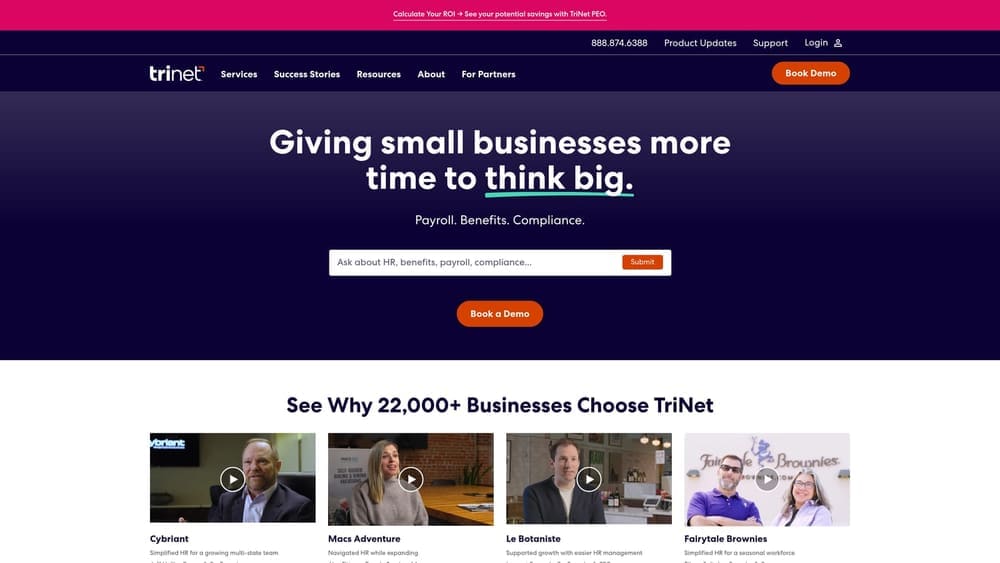
What sets TriNet apart on this list is that professional services vertical itself. Rather than treating a law firm the same as a retail chain or a construction company, TriNet’s account teams are meant to understand things like billable-hour staffing patterns and partner-level benefit expectations.
- Industry-specific HR guidance built around professional services employers rather than one-size-fits-all templates
- National benefits plan access that can matter for firms recruiting associates across state lines
- Payroll and tax administration handled centrally, reducing the burden on internal staff
- Risk and compliance support to help track multi-state employment law changes
TriNet lists accounting and applicant tracking integrations on its site, but you should confirm the current list before signing anything, since vendor integration partners shift over time. Setup typically involves an implementation team on TriNet’s side working with whoever manages HR internally, whether that’s an office manager, a firm administrator, or a managing partner wearing multiple hats.
The tradeoff is scale. TriNet’s service model is built for structure, and a very small solo or two-partner practice may find it more infrastructure than they actually need, both in terms of process and cost. Firms that size might get more value from a leaner, flat-fee option elsewhere on this list. Pricing is not published; you’ll need to request a quote to see how it compares to a firm your size and headcount.
Best for: Firms wanting an established PEO with professional-services-specific support.
2. Insperity
Insperity is built around a dedicated HR service team model rather than a single point-of-contact representative. For a law firm with partners, associates, paralegals, and administrative staff all operating under different expectations and pay structures, having a team rather than one person can mean faster answers when questions span payroll, benefits, and performance management at the same time.
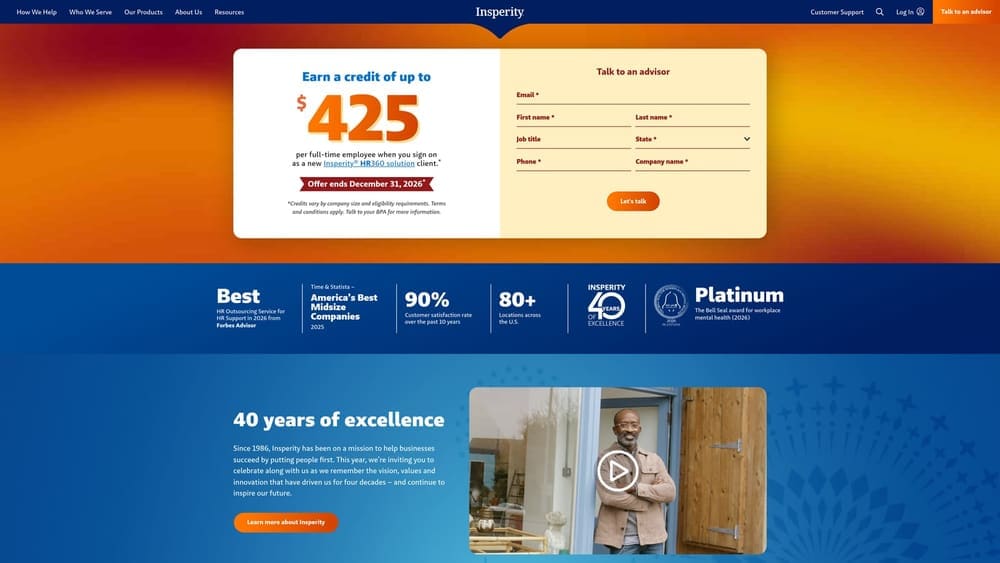
Insperity’s standout feature for this list is that layered team structure. Instead of one generalist handling everything, different specialists within Insperity’s service model can address different HR functions, which tends to suit firms that have outgrown a single HR hire but aren’t large enough for a full internal HR department.
- Dedicated HR service team structure so questions get routed to the right specialist
- Performance management tools that can support associate reviews and partner-track evaluations
- Organizational planning support as firms add practice groups or open new offices
- Benefits administration covering enrollment, compliance, and ongoing plan management
You should confirm Insperity’s current integration partners directly on their site, as these details are subject to change. Day-to-day management typically falls to an office administrator or HR lead who coordinates with the assigned Insperity team.
Insperity’s service model tends to fit mid-size firms better than very small practices. A firm with two attorneys and a paralegal may find the team-based structure more than they need, both operationally and in terms of expected cost. As with the other providers here, pricing is quote-based, so you’ll want a proposal specific to your headcount and benefit selections before comparing it against alternatives.
Best for: Mid-size firms wanting layered HR support across staff roles.
3. ADP TotalSource
ADP TotalSource is ADP’s PEO product, and it runs on the same payroll and tax infrastructure that powers ADP’s broader suite of HR products. For a law firm already using ADP for payroll or time tracking, TotalSource can mean one vendor relationship instead of two, with data flowing between systems that were built to work together in the first place.
The reason to consider TotalSource over the others here comes down to that infrastructure. ADP has been processing payroll and tax filings at scale for decades, and TotalSource inherits that multi-state payroll engine, which matters for firms with associates admitted and working in more than one jurisdiction.
- Multi-state payroll infrastructure built to handle varying state tax and wage requirements
- HR technology and reporting tools for tracking headcount, turnover, and compliance metrics
- Benefits administration integrated with the same platform used for payroll
- Compliance support drawing on ADP’s broader regulatory tracking resources
TotalSource integrates with other ADP payroll and HR products, and you should confirm the current integration list on ADP’s site since product bundling changes. Because ADP is a large, corporate organization, some firms find the account management less individualized than what a boutique PEO offers. If your firm values a tight-knit relationship with a single account rep who knows your partners by name, that’s worth weighing against ADP’s scale advantages.
Pricing is quote-based and depends on headcount, benefit selections, and services included. Firms already paying for standalone ADP payroll should ask specifically how TotalSource pricing compares to keeping payroll and PEO services separate.
Best for: Firms already using ADP products that want unified HR and payroll systems.
4. Justworks
The main reason law firms look at Justworks is pricing structure, not industry specialization. Justworks is known for flat monthly per-employee pricing rather than the percentage-of-payroll model that some PEOs use. For a law firm, where associate and partner salaries can run well above the national average, a percentage-of-payroll fee structure can get expensive fast. A flat per-employee fee keeps costs predictable regardless of how high individual salaries climb.
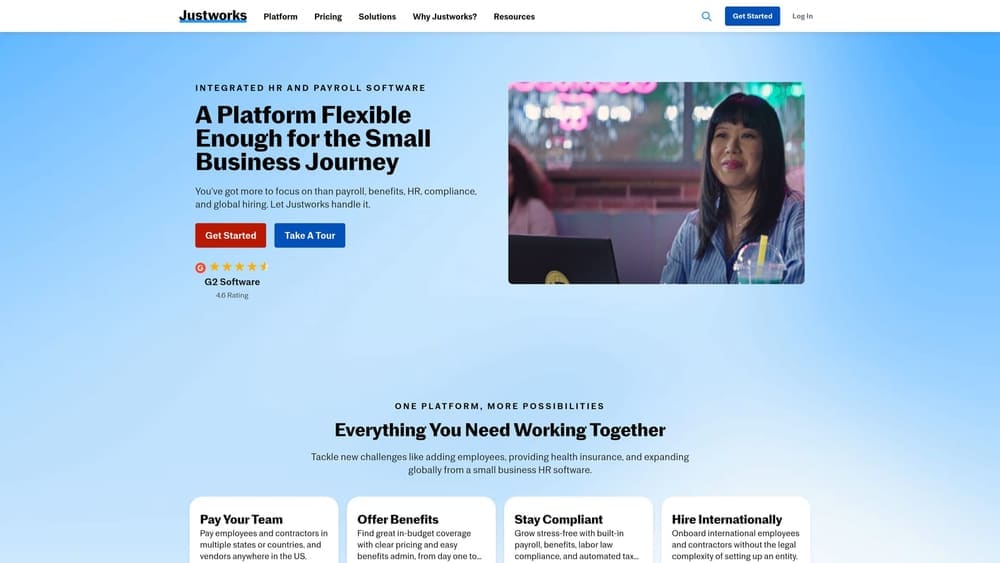
That pricing model is Justworks’ standout feature on this list. Every other provider here prices by quote, and depending on how that quote is structured, high-earning attorneys can end up costing significantly more in PEO fees under a percentage model than a flat one. Firms should ask each vendor directly whether their model is flat-fee or percentage-based, since this detail materially affects law firm budgets.
- Flat per-employee pricing model designed to stay predictable even as salaries rise
- Self-service HR platform that lets employees manage their own benefits enrollment and updates
- Benefits and payroll administration handled through a single online dashboard
- Compliance support tools aimed at reducing manual tracking for a small internal team
Setup is generally light, and the platform is built for firms without a dedicated HR administrator on staff, meaning an office manager or managing partner can often run it without deep HR expertise. You should confirm Justworks’ current integration partners on their site before committing.
What Justworks does not offer, compared with providers like TriNet or Insperity, is deep industry-specific consulting. If your firm wants a PEO that proactively advises on legal-industry benefit trends or partner compensation structuring, Justworks’ self-service model may feel thinner. It’s built more for administrative efficiency than high-touch advisory work.
Best for: Smaller law firms without a dedicated HR administrator that want predictable monthly costs.
5. Engage PEO
Engage PEO targets small and mid-size businesses with a client-service-team approach, and it puts particular emphasis on workers’ compensation and risk management alongside the standard PEO service set. For a law firm, workers’ comp may seem like a lesser concern compared with a construction company, but firms with in-office staff, filing rooms, and client-facing space still carry exposure worth managing properly.
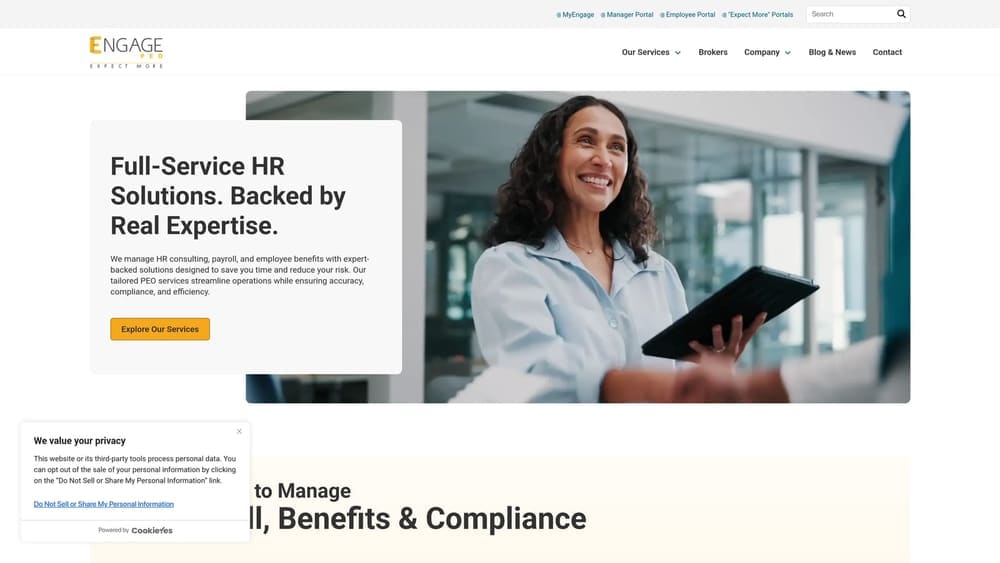
Engage’s standout quality on this list is that combination of personalized account service with a genuine risk management practice built in, rather than treating workers’ comp as an afterthought bolted onto payroll and benefits.
- Client service team model intended to give firms a more personal point of contact than large national providers
- Workers’ compensation and risk management support built into the core service
- Payroll and benefits administration covering standard PEO functions
- HR compliance guidance to help track changing state and federal requirements
You should confirm Engage’s current integration options directly with the vendor, as these are subject to change. Firms interested in Engage typically have an internal office manager or HR contact who works directly with an assigned Engage service team rather than managing HR functions independently.
Engage PEO has historically focused on small and mid-market employers with a regional presence, so firms should verify current state coverage before assuming Engage supports every jurisdiction your attorneys are licensed or working in. That verification step matters more for firms with associates spread across several states.
As with the rest of this list, pricing is not published and depends on a custom quote based on headcount and services selected.
Best for: Small to mid-size firms wanting more personalized account management than large national providers.
6. G&A Partners
G&A Partners positions itself as a full-service PEO with an HR consulting bent, geared toward compliance-heavy industries. Law firms fit that description well, given state bar requirements, confidentiality obligations, and the employment law complexity that comes with multi-state staffing.
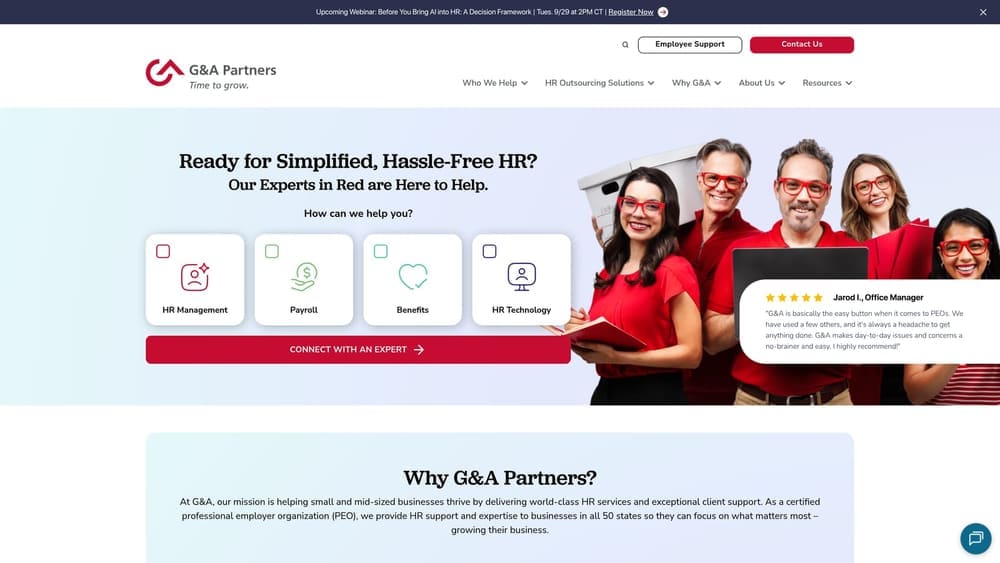
What separates G&A from more transactional PEOs on this list is its consulting orientation. Instead of simply processing payroll and administering benefits, G&A’s dedicated account managers are positioned to advise on compliance questions as they come up, which can be useful for a managing partner without in-house HR legal expertise.
- Dedicated account management meant to provide continuity rather than a rotating support queue
- HR compliance consulting aimed specifically at regulated and compliance-heavy industries
- Payroll and benefits administration covering the standard PEO service set
- Risk management support to help identify and reduce workplace exposure
Confirm G&A’s current integration partners on its site before signing, since these details change over time. Day-to-day administration usually runs through an assigned account manager working with the firm’s internal administrator or managing partner.
G&A Partners primarily serves established regional markets, so firms outside its core operating areas should confirm current state coverage directly with the vendor before assuming full multi-state support. A firm with attorneys practicing across many states should ask this question early in the sales process, not after signing.
Pricing is quote-based, shaped by headcount, benefit selections, and the scope of consulting services included.
Best for: Firms in G&A Partners’ core regions wanting compliance-focused consulting.
7. Group Management Services (GMS)
Group Management Services, known as GMS, builds its service around personalized attention for small and mid-size businesses. It bundles payroll, benefits, and workers’ compensation under a single contract, which can simplify vendor management for a firm that would rather deal with one agreement than juggle separate providers for each function.
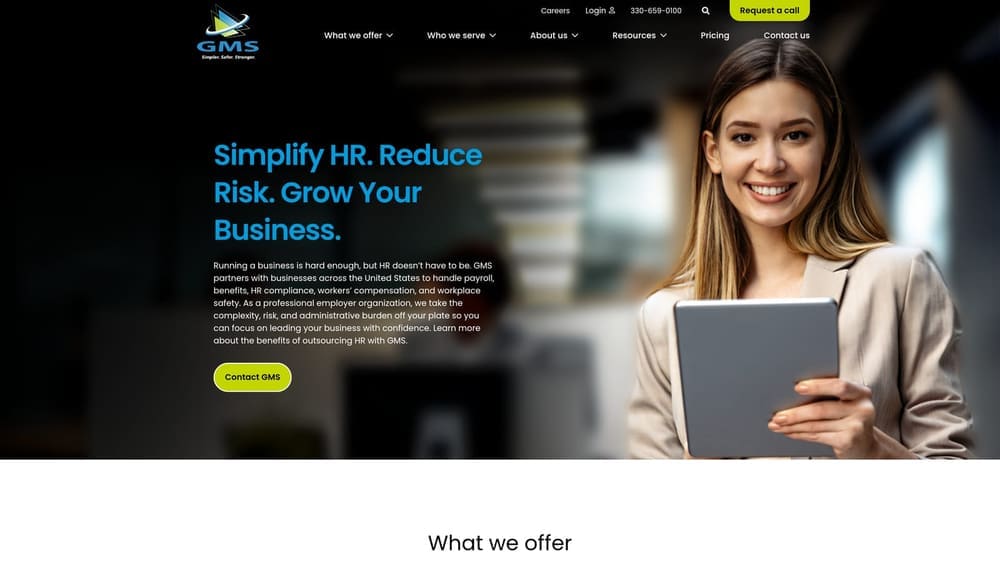
That single-contract bundling is GMS’s distinguishing trait here. Rather than layering multiple vendor relationships, a firm signs one agreement covering the core HR functions most small practices need, which can reduce administrative back-and-forth for a firm without a dedicated HR staffer.
- Personalized account service intended to feel less like a call center and more like a direct relationship
- Combined payroll, benefits, and workers’ comp administration under one contract
- HR compliance support to help track changing employment law requirements
- Single-contract administration that can simplify renewal and billing processes
You should confirm GMS’s current integration partners directly with the vendor before assuming compatibility with your existing systems. Setup and ongoing administration are generally designed to be manageable by an office administrator without a dedicated HR department.
GMS’s scale fits smaller firms better than large multi-office practices. A firm with several locations and a few hundred employees may find that GMS’s service model was built with a smaller client in mind, so larger firms should ask directly how GMS handles multi-office, multi-state complexity before committing.
Pricing is quote-based, and as with every provider on this list, the actual proposal will depend on headcount and the specific benefits package selected.
Best for: Smaller law practices wanting one contract covering core HR functions.
8. Sequoia One
Sequoia One takes a benefits-first approach to the PEO model, built around a tech-forward administration experience. For law firms competing to recruit associates in a tight legal talent market, the strength of a benefits package can matter as much as base salary, and Sequoia One is designed around that reality rather than treating benefits as a checkbox item.
Its standout feature on this list is a benefits administration experience explicitly built around total compensation strategy. Rather than just enrolling employees in plans, Sequoia One’s platform and advisory approach are oriented toward helping employers think about benefits as a recruiting and retention tool, which fits firms trying to compete with larger practices for the same associate candidates.
- Benefits-first service design that treats plan strategy as a core offering, not an add-on
- Tech-forward benefits administration platform for enrollment and ongoing management
- Payroll and compliance support covering the standard PEO functions
- Total compensation planning tools to help frame benefits alongside salary in recruiting conversations
Confirm Sequoia One’s current integration list directly on its site, since these partnerships shift. The benefits-first structure typically works best when a firm’s HR lead or managing partner is actively involved in benefit strategy decisions rather than treating the PEO relationship as purely administrative.
Sequoia One has historically concentrated in specific markets, so firms should verify its current focus areas and state coverage before assuming nationwide support matches your firm’s footprint. Firms mainly looking for the lowest-cost administrative option, rather than a benefits strategy partner, may find other providers on this list a better fit.
Pricing is quote-based, driven by headcount, benefit plan selections, and the scope of services included.
Best for: Firms prioritizing competitive benefits packages to recruit associates.
Matching Firm Size and Priorities to the Right Provider
If your firm has multi-state associates and wants the backing of an established payroll infrastructure, TriNet and ADP TotalSource stand out for their scale and compliance depth. If your priority is predictable, flat monthly costs given how high average attorney salaries run, Justworks is worth a close look before committing to a percentage-of-payroll model. And if recruiting and retaining associates through a stronger benefits package is your main driver, Sequoia One’s benefits-first design fits that goal directly.
Smaller practices without dedicated HR staff tend to gravitate toward GMS or Engage PEO for their more personal service model, while mid-size firms with layered staff roles, from partners to paralegals, often find Insperity’s team-based structure or G&A Partners’ consulting approach a closer match. None of these categories are absolute. A firm’s actual fit depends on its state footprint, headcount, and how much it values administrative bundling versus a la carte flexibility.
Every provider above prices on a quote basis, and quotes vary based on how each vendor structures its fees, whether flat, tiered, or tied to a percentage of payroll. That difference alone can shift your total cost by a meaningful margin once you account for attorney-level salaries. Before you sign that PEO renewal, make sure you’re not leaving money on the table. Many businesses unknowingly overpay because of bundled fees, hidden administrative markups, and contracts designed to limit flexibility. PEO Metrics gives you a clear, side-by-side breakdown of pricing, services, and contract terms, so you can see exactly what you’re paying for and choose the option that truly fits your business. Don’t auto-renew. Make an informed, confident decision.
Before you sign that PEO renewal, make sure you’re not leaving money on the table.
Many businesses unknowingly overpay because of bundled fees, hidden administrative markups, and contracts designed to limit flexibility. We give you a clear, side-by-side breakdown of pricing, services, and contract terms, so you can see exactly what you’re paying for and choose the option that truly fits your business.
