

If you run a bar, taproom, or brewery, the choice between a PEO and a payroll company usually comes down to who carries the HR burden when you have tipped staff, seasonal swings, alcohol-service risk, and no full-time HR person. The options below cover advisory, payroll-only, POS-linked payroll, and PEO models. They were chosen for tip handling, multi-location fit, workers’ comp support, and pricing transparency. Vendor details change, so confirm current pricing and features on each vendor’s site before you decide.
Quick Comparison of the Options
- PEO Metrics: owners comparing PEO quotes before committing; pricing on its website; the only option here that helps you decide between a PEO and payroll model without selling you either.
- Gusto: single-location taprooms wanting simple payroll; pricing on its website; payroll with tip reporting and no co-employment.
- OnPay: cost-conscious owners wanting predictable fees; pricing on its website; the simplest pricing structure on the list.
- Toast Payroll and Team Management: bars already on Toast; quote-based; tips and hours flow straight from the POS into payroll.
- Justworks: small owners wanting bundled benefits and HR; pricing on its website; employee-facing benefits administration in a transparent plan structure.
- TriNet: multi-location bar and restaurant groups; quote-based; scale and industry-focused compliance infrastructure.
- Insperity: owners with no in-house HR who want hands-on advice; quote-based; a dedicated HR advisor for employee relations issues.
- ADP TotalSource: growing operators wanting a large payroll brand behind a PEO; quote-based; payroll-vendor scale inside a PEO model.
1. PEO Metrics
PEO Metrics is our own service, so weigh this entry with that in mind. It is a PEO comparison and consulting service, not a PEO, not a payroll provider, and not an employer of your staff. It exists for owners who want to see PEO providers compared side by side before they sign anything.
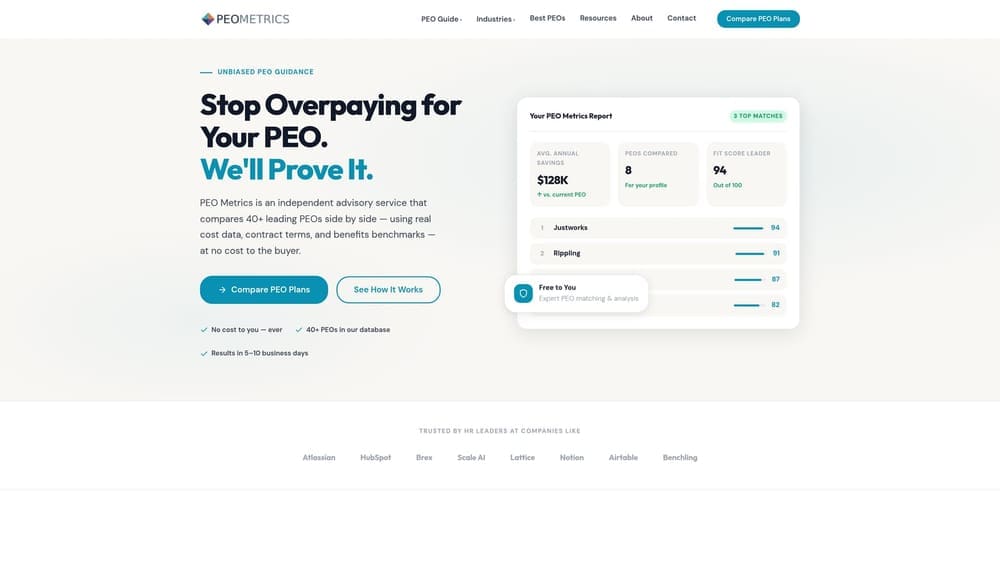
Its distinctive value on this list is the front-end decision. Most other entries sell you one model. PEO Metrics helps you work out whether co-employment makes sense for your bar or brewery at all, then compares quotes so you can see what each provider charges and what is bundled in.
- Side-by-side PEO comparisons show how providers differ on services and terms, so you are not reading five separate proposals.
- Pricing analysis shows what you would pay and where administrative markups or bundled fees sit.
- Provider metrics give you data to weigh rather than sales claims.
- Consultative guidance on PEO versus payroll helps you test the choice against your tipped payroll, workers’ comp exposure, and benefits needs.
Integrations do not apply, since this is an advisory service. Setup is a conversation and a quote review, and the owner or whoever handles HR usually runs it. There is nothing to install.
The limits are plain. It does not process payroll, file taxes, or act as an employer, so you still need a vendor afterward. PEO Metrics may receive vendor placement fees, which you should factor into how you weigh any recommendation. Pricing details are on the website.
Best for: Owners who want to compare PEO quotes before committing.
2. Gusto
Gusto is a cloud payroll platform aimed at small employers, with tip reporting, time tracking, and benefits and workers’ comp add-ons. It is payroll software, not a PEO, so you remain the sole employer of record for your staff.
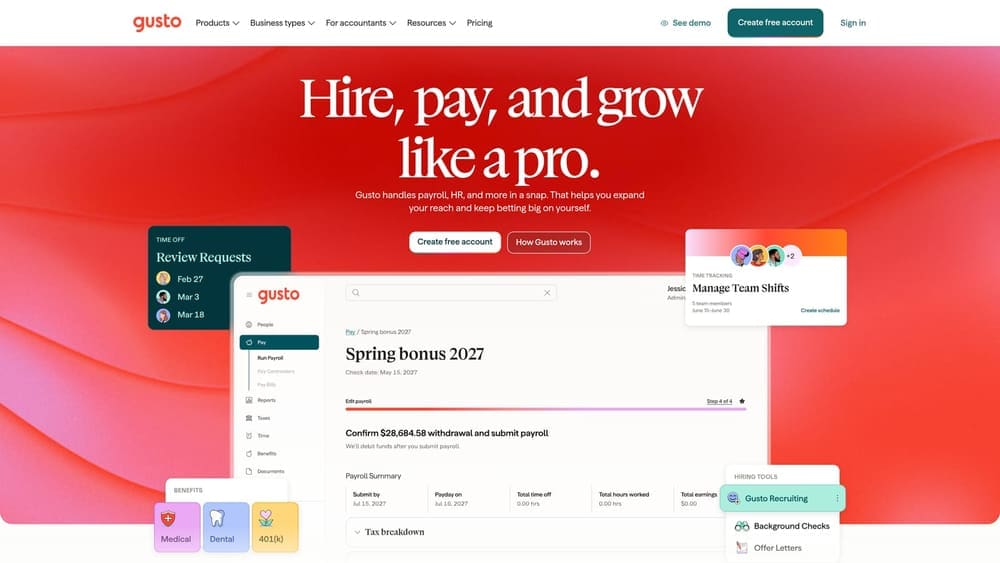
What it does well here is adoption. A single-location taproom with a handful of bartenders and servers can get payroll, tax filing, and tip entry running without a co-employment agreement or a long contract review. That keeps your control over HR policy intact, which some owners prefer.
- Payroll and tax filing handle the run itself and the filings that follow.
- Tip reporting lets you capture cash and card tips on paychecks, though you should confirm how it handles pooling in your state.
- Time tracking ties hours to pay so overtime is less likely to be missed.
- Benefits and workers’ comp add-ons let you buy coverage through the platform, though without the pooled buying power a PEO brings.
It connects with accounting and time-tracking apps; confirm the current list on its website. Setup is light and usually handled by the owner or a bookkeeper.
The trade-off is responsibility. You keep HR and compliance liability, including scheduling rules, tip pooling, and minimum wage and tip credit compliance. Group buying power is limited, which matters if part-time benefits are a priority. Starting price and what moves it are listed on its website.
Best for: Single-location taprooms wanting simple payroll.
3. OnPay
OnPay is a payroll service with HR tools for small businesses. Its pitch to a bar or brewery owner is predictability: a simple pricing structure that makes monthly payroll cost easy to forecast, which helps when seasonal hiring pushes headcount around.
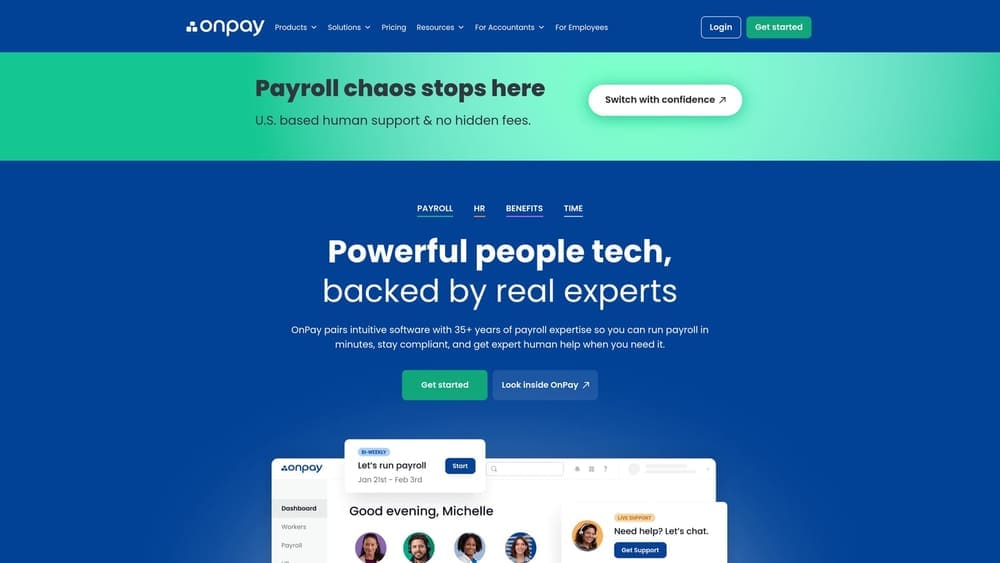
That predictability is the main thing separating it from the rest of this list. PEO quotes tend to vary with headcount, payroll, and plan choices, and OnPay is a counterweight if you want to know the bill before the run.
- Payroll and tax filing cover the core processing so you are not filing by hand.
- Benefits administration lets you offer coverage and manage enrollment from one place.
- Time tracking integrations bring hours into payroll from scheduling tools you may already use.
- PTO tracking keeps accruals visible for staff who work irregular shifts.
It works with accounting and time-tracking tools; confirm the current list on its website. A bookkeeper or the owner can typically run it day to day.
It gives you lighter HR compliance support than a PEO. If you want someone to advise on terminations, handbook policy, or employee relations, you will need to find that elsewhere. As with any payroll-only vendor, the employer keeps the liability. Pricing is on its website, and cost generally scales with the number of people paid.
Best for: Cost-conscious owners wanting predictable payroll fees.
4. Toast Payroll and Team Management
Toast Payroll and Team Management is a payroll product connected to the Toast restaurant point-of-sale. Its defining advantage is that hours and tips recorded at the register can flow straight into payroll, cutting the re-keying that causes tip errors in busy bars.
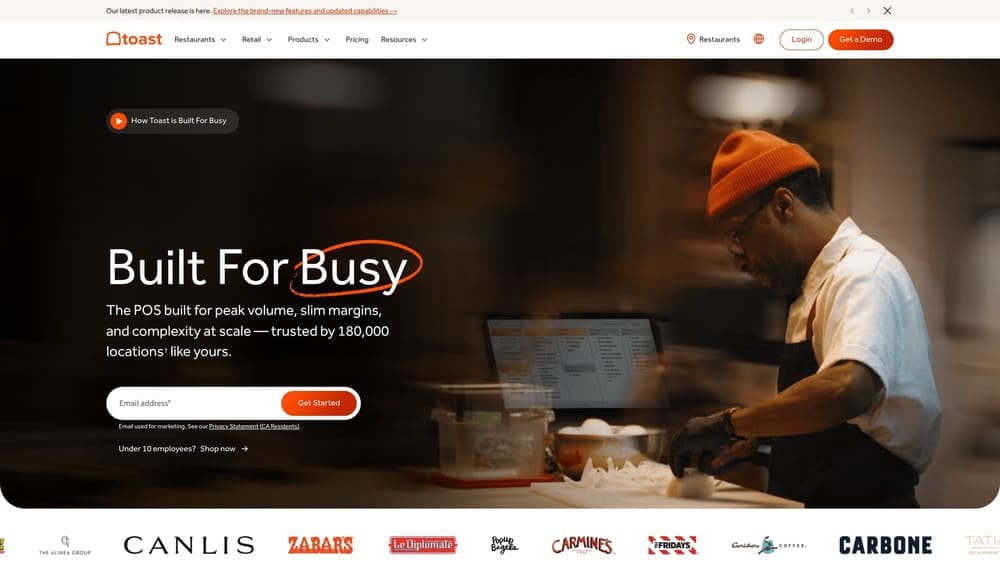
For a tipped workforce, that matters more than almost any other feature. If your tips are already captured accurately in the POS, payroll can pick them up without a manager reconciling spreadsheets after close.
- POS-linked hours and tips reduce manual entry and the mistakes that come with it.
- Payroll processing pays staff from data that is already in your system.
- Team scheduling tools help managers build shifts in the same platform.
- Tax filing covers the filings that follow each payroll.
The integration is with Toast POS, and setup is easiest when Toast is already your register system. Managers or the owner typically run it day to day.
The limitation is fit. It is best for Toast customers, so it makes little sense if you run a different POS. It is also less useful for brewery production or wholesale work, where the staff are not ringing up tabs. Like other payroll products, it leaves HR liability with you. Pricing is quote-based.
Best for: Bars already running on Toast.
5. Justworks
Justworks is a PEO that bundles payroll, benefits, and HR compliance support for small businesses. Under a PEO, you share employer responsibilities with the provider through co-employment, which is different from an employer of record arrangement and different from a payroll-only service.
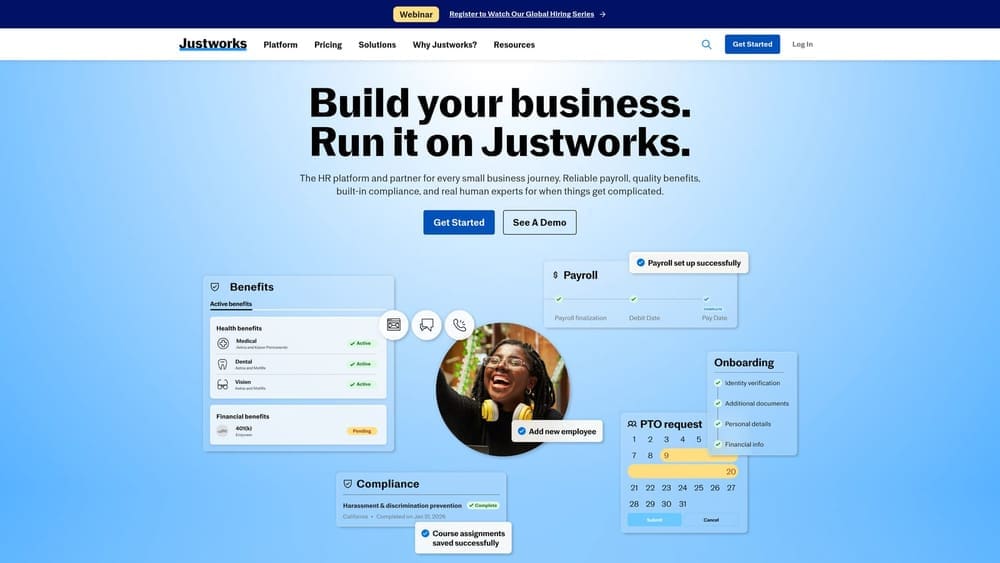
It stands out on this list for employee-facing benefits administration inside a transparent plan structure. For owners who want part-timers and full-timers to see their benefits clearly, that clarity has real value.
- Payroll runs through the same platform as benefits and HR, so records stay together.
- Group benefits access gives a small employer options that are hard to get alone.
- HR compliance support gives you guidance on employment rules you would otherwise research yourself.
- A workers’ comp program matters for bars and breweries, where bartending and production work carry different risk profiles.
It connects to accounting and time-tracking apps; confirm the list on its website. Setup involves onboarding employees and the co-employment paperwork, and an owner or office manager usually runs it.
The caveats: co-employment and fit for high-turnover hourly staff need review before you sign. A PEO also does not remove your responsibility for scheduling, tip pooling, or alcohol service rules, and it does not handle TTB or state licensing. Pricing is on its website; ask what moves it, such as headcount and plan choices.
Best for: Small owners wanting bundled benefits and HR.
6. TriNet
TriNet is a PEO with industry-oriented offerings for small and midsize employers. Its scale and compliance infrastructure are the draw, especially if you run several locations across more than one state and need consistent HR processes.
Where it differs from the smaller names here is depth. Risk and compliance support is built for employers with more moving parts than one bar and a kitchen.
- PEO services shift certain employer administration to the provider through co-employment.
- Benefits give multi-location staff access to group plans under one program.
- Payroll consolidates pay across sites so you are not running separate systems.
- Risk and compliance support helps you manage rules that differ from state to state.
It offers HR and accounting integrations; confirm the current list on its website. Implementation is larger than a payroll switch, and it typically needs an operations lead or HR manager to run it.
It may exceed the needs of a single-site brewery, and minimums need confirmation with the vendor. A PEO also leaves you responsible for tip-credit and tip-pooling compliance, which varies by state under FLSA and state law, so check the U.S. Department of Labor at dol.gov. Pricing is quote-based.
Best for: Multi-location bar and restaurant groups.
7. Insperity
Insperity is a PEO known for dedicated HR advisor support alongside payroll and benefits. If nobody on your team owns HR, the advisor model is the point: you have a named person to call when an employee issue comes up.
That is what it does differently from the rest of the list. Platforms give you tools; Insperity pairs the tools with a person who can talk through a difficult situation, such as a discipline problem on a late-night shift.
- HR advisor support gives you someone to consult on employee relations before a problem escalates.
- Payroll is handled within the same service as benefits and HR.
- Benefits give your staff group coverage options a lone employer may not reach.
- Workers’ comp and risk services help address the injury exposure common in bars and production floors.
It supports time and attendance tools; confirm the current list on its website. Setup involves onboarding under co-employment, and it is designed so the owner leans on the advisor rather than building an HR function.
Pricing is quote-based, so you will not see a number until you ask. There may also be fit limits for very small operators, so confirm minimums before investing time. As with every PEO here, alcohol service rules, scheduling, and tip pooling remain your responsibility.
Best for: Owners with no in-house HR who want hands-on advice.
8. ADP TotalSource
ADP TotalSource is ADP’s PEO offering, combining payroll technology, benefits, and compliance support. It is the PEO product, distinct from ADP’s payroll-only services, so confirm which product you are being quoted.
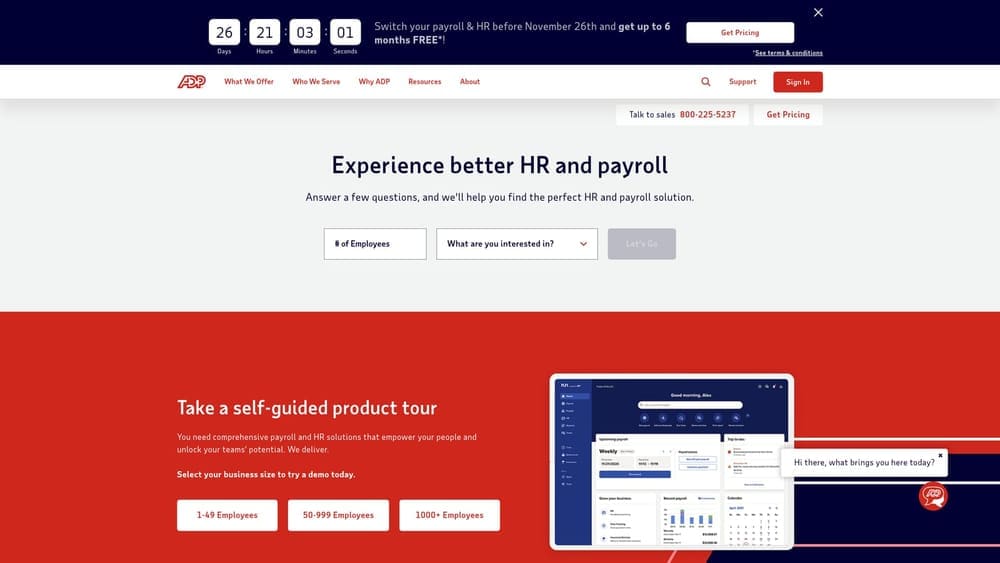
The distinctive point is payroll-vendor scale inside a PEO model. If you want a large, established payroll brand behind the co-employment arrangement, this is the entry built around that idea.
- PEO services provide shared employer administration through co-employment.
- Payroll runs on ADP technology, which suits operators who value an established system.
- Benefits access gives staff group plans under the PEO.
- Workers’ comp programs address the cost and administration of coverage for bar and production roles.
It sits within the ADP ecosystem; confirm integration details on its website. Implementation is a full PEO onboarding, usually run by an owner, controller, or HR lead.
Pricing is quote-based and the service may suit larger headcounts, so a one-room taproom may find it more than it needs. Review the contract and exit terms carefully, since PEO agreements can limit flexibility. Like the other PEOs, it does not take over TTB or state licensing, nor your accountability for tip rules.
Best for: Growing operators that want a large payroll brand behind a PEO.
Matching the Right Model to Your Taproom, Bar Group, or Brewery
The PEO versus payroll decision depends on four things: how much of your payroll is tipped, what workers’ comp costs for bar and production work, whether part-timers need benefits, and how comfortable you are with co-employment.
- Single-location taproom: Gusto or OnPay, if you can handle HR yourself and want simple payroll.
- Multi-location bar group: TriNet, or ADP TotalSource if you want a large payroll brand behind the PEO.
- Brewery with distribution: a PEO such as Justworks or Insperity, since production and wholesale work add comp and HR complexity that POS-linked payroll will not cover.
- Owners already on a POS: Toast Payroll if you run Toast, because tips and hours flow straight into pay.
No vendor handles TTB or state licensing, and tip credit and pooling rules vary by state under FLSA and state law, so verify against dol.gov before you rely on any provider’s claims.
Before you sign that PEO renewal, make sure you’re not leaving money on the table.
Many businesses unknowingly overpay because of bundled fees, hidden administrative markups, and contracts designed to limit flexibility. We give you a clear, side-by-side breakdown of pricing, services, and contract terms, so you can see exactly what you’re paying for and choose the option that truly fits your business. PEO Metrics may receive vendor placement fees.
