

If you run quick service restaurants, or handle HR for someone who does, you already know a generic PEO shortlist rarely fits. Your workforce is hourly, part-time, and constantly turning over, and your payroll rules change at the state line. The options below were picked for restaurant or hourly-workforce relevance, for how clearly each provider publishes what it offers, and for how it handles payroll, part-time benefits, workers’ comp, and exit terms. Details are as publicly described as of 2026; confirm everything in writing before you sign.
Quick Comparison of the PEO Options for Hourly Restaurant Teams
- PEO Metrics: best for operators comparing several PEOs before requesting quotes; see website for pricing; compares providers side by side on pricing and fit instead of selling you one.
- Justworks: best for single-unit or small multi-unit owners; see website for pricing; a simple small-business platform and pricing presentation.
- TriNet: best for growing operators wanting an industry-structured package; quote-based; industry-tailored PEO packages.
- Insperity: best for multi-location operators without in-house HR; quote-based; a hands-on HR advisor model.
- ADP TotalSource: best for franchisees already on ADP systems; quote-based; a native tie-in to ADP time and attendance.
- Paychex PEO: best for operators wanting one vendor for payroll, retirement, and PEO; quote-based; a single bundle across payroll, retirement, and HR.
- Oasis Outsourcing: best for independent franchisees wanting flexible benefit design; quote-based; benefit design aimed at small and mid-sized employers.
- Vensure Employer Services: best for multi-location operators with high headcount churn; quote-based; a workers’ comp and risk program focus for hourly-heavy industries.
1. PEO Metrics
PEO Metrics is the odd entry on this list, because it is not a PEO. It’s a comparison and consulting service that helps you line up PEO providers side by side, with pricing structure and fit metrics, before you ask anyone for a quote. It doesn’t employ your workers, run payroll, or provide coverage. In the interest of transparency: PEO Metrics may receive vendor placement fees from providers.
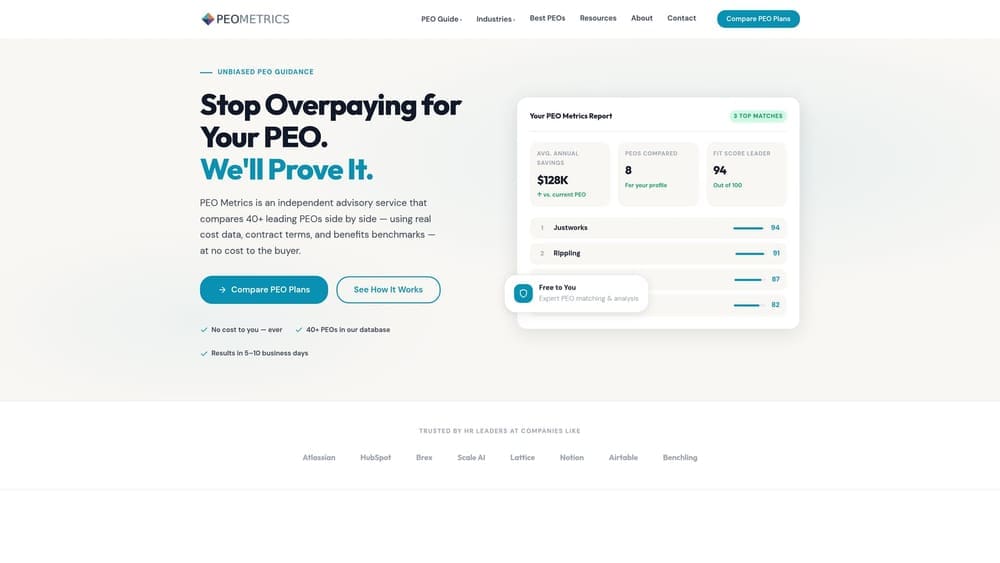
Its distinctive value for a restaurant operator is that it looks at several providers at once. Most QSR owners compare headline fees, which is the classic mistake. A side-by-side view can show how fees, workers’ comp pricing, benefits eligibility for part-timers, and contract terms differ, so the cheapest-looking quote isn’t automatically the cheapest in practice.
- Side-by-side provider comparison, so you can weigh multiple PEOs against the same criteria.
- Pricing structure analysis, which helps you see how fees are built rather than just the headline number.
- Guidance with disclosed vendor placement fees, so you know how the service is funded.
- Metrics on provider fit by business size and workforce type, useful when your staff is hourly and part-time.
There’s nothing to integrate, since it’s an advisory service. Setup is a conversation and a data exchange, and whoever owns HR or finance at your company would typically run it. The limit is plain: it can’t replace a PEO, and final quotes still have to come from the providers themselves. If you’ve already decided on a vendor, it adds little. Pricing: see the PEO Metrics website for current details.
Best for: Operators comparing several PEOs who want a data-led shortlist before requesting quotes.
2. Justworks
Justworks is a PEO aimed at small businesses, with one platform covering payroll, benefits, and compliance support. What sets it apart on this list is its simplicity: it’s built for owners who don’t have an HR department and want to run people operations without learning a complicated system.
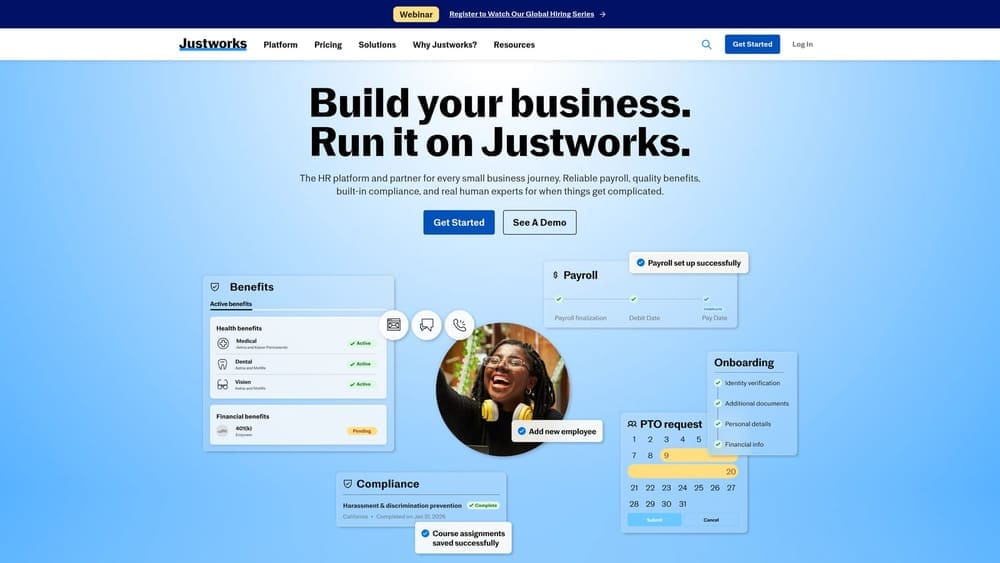
- Payroll processing, so hourly wages and overtime run from one place.
- Benefits administration, which keeps enrollment and changes in the same system as payroll.
- Compliance support, which helps a small team keep up with employer obligations.
- An employee mobile app, handy for crew members who live on their phones rather than at a desk.
Integrations and setup details should be verified on Justworks’ official site, since they change. In practice, a small operator’s owner or office manager would typically administer it day to day.
The limits are about scale and specialization. Check whether it suits a large multi-state franchise group, and ask specifically how workers’ comp is handled for restaurant classifications, because that line item can swing your total cost. Also confirm how benefits eligibility works for part-time staff. Pricing: see the Justworks website for current plans; what moves cost is typically headcount and the benefits you choose, so request a written quote.
Best for: Single-unit or small multi-unit QSR owners wanting an easy-to-use platform.
3. TriNet
TriNet offers HR, payroll, benefits, and risk and compliance services, with packages organized around particular industries. That industry structure is its differentiator here: instead of one generic bundle, you can ask how its approach is tailored to your sector.
The question to put to TriNet directly is whether hospitality and hourly-heavy restaurant work is a core fit. Don’t assume the industry packaging covers QSR; verify current restaurant relevance and ask who in the company handles accounts like yours.
What you get
- Payroll and benefits under one roof, which reduces vendor juggling.
- Risk and compliance services, relevant given tip and overtime rules that vary by state.
- Industry-specific solutions, which may shorten the setup work if your sector is covered.
Where to be careful
Verify minimums, since PEOs often set headcount or premium thresholds that a small franchisee might not meet. Integrations should be checked on TriNet’s official site. Expect a fuller onboarding than a lightweight platform, with HR or ownership involved in the rollout. Pricing is quote-based, and the final figure will depend on headcount, benefits selected, and workers’ comp classification.
Best for: Growing operators wanting an industry-structured PEO package.
4. Insperity
Insperity is known for pairing payroll, benefits, and compliance support with a dedicated HR advisor. That hands-on model is what separates it from the more platform-driven options above, and it matters if nobody in your company is trained in HR.
For a multi-location QSR operator, an assigned advisor can be the difference between fielding every discipline, leave, or wage question yourself and having someone to call. Confirm the current service model, because how advisors are assigned and how much access you get can change.
- A dedicated HR advisor, so managers have a person to ask about employee issues.
- Payroll, which covers hourly wage runs across locations.
- Benefits, to be checked for how part-time crew eligibility is handled.
- Compliance support, helpful where state tip and overtime rules differ.
The trade-off is likely higher touch and, possibly, higher cost, so confirm minimums and fit before investing time. A very small single-unit operator may find the model more than needed. Verify integrations on Insperity’s official site. Pricing is quote-based and typically moves with headcount, benefits, and risk classification, so compare the all-in figure with others.
Best for: Multi-location operators without in-house HR.
5. ADP TotalSource
ADP TotalSource is ADP’s PEO offering, tied into the company’s payroll and workforce tools. Its edge for restaurants is the connection to ADP time and attendance, which matters when scheduling, clock-ins, and overtime are daily concerns for an hourly team.
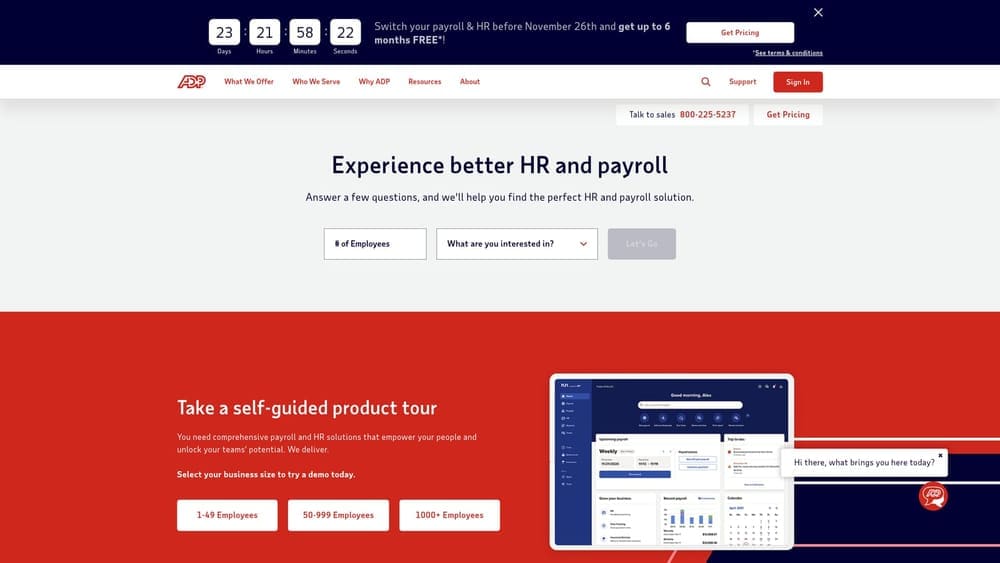
Check its current CPEO status and minimums on ADP’s official materials. A CPEO (Certified Professional Employer Organization) is a PEO certified by the IRS, and it’s a separate status from simply being a PEO, so ask rather than assume.
- Payroll, directly connected to the rest of the ADP environment.
- Benefits, where you should ask how part-time eligibility is set.
- Time and attendance integration, which cuts re-keying hours into payroll.
- Compliance support for wage and hour obligations.
Franchisees already using ADP systems will likely face the shortest setup, since the data is already in the family. Others take on a bigger migration. Limits: pricing is quote-based, and contract friction is possible, so read renewal and termination language closely and verify terms before signing. Costs generally depend on headcount, benefits, and workers’ comp.
Best for: Franchisees already using ADP systems.
6. Paychex PEO
Paychex PEO bundles payroll, HR, benefits, and retirement services from a single vendor. The bundle is the point: if you’d rather have one relationship for payroll, a 401(k)-style retirement offering, and co-employment, this is built that way.
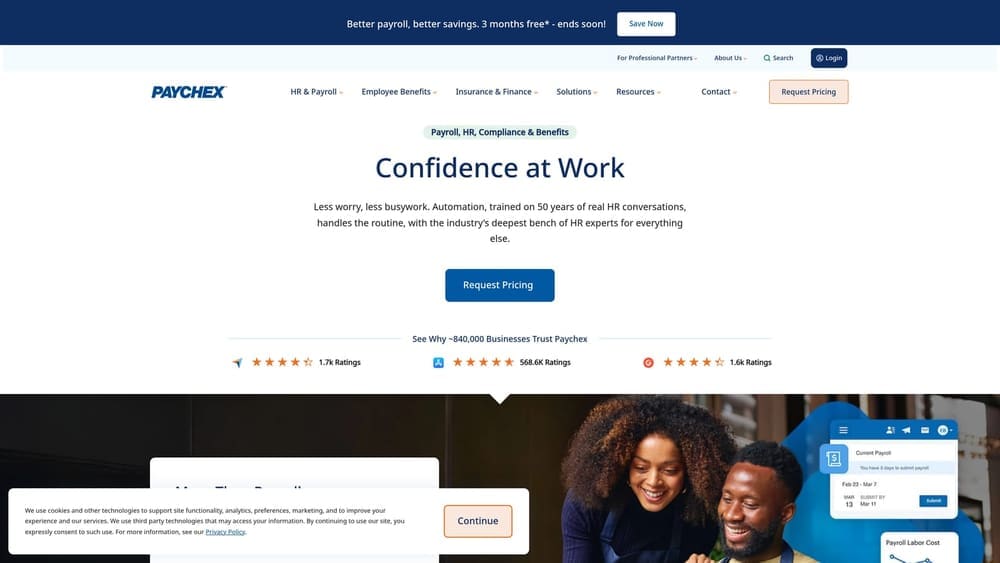
The operational draw is the Paychex Flex platform, which would be the day-to-day interface for owners and managers. Confirm the current PEO structure and how it connects to the payroll product you may already use.
- Payroll on one platform, covering hourly staff across locations.
- Benefits, with the question of how flexible they are for high-turnover staff still to be verified.
- Retirement services, useful if you want to offer savings to longer-tenured crew and managers.
- HR support for common employee-relations questions.
The caution is flexibility. Verify whether the benefit design works for part-time and rapid-turnover staff, since rich plans that few of your people can enroll in or afford don’t help. Pricing is quote-based, and it varies with headcount, benefit choices, and risk class. Ask what the exit terms look like if you later split payroll and benefits across vendors.
Best for: Operators wanting one vendor for payroll, retirement, and PEO.
7. Oasis Outsourcing
Oasis Outsourcing serves small and mid-sized employers with HR, payroll, and benefits. Its pitch, which you should verify, is flexible benefit design, a useful attribute when your workforce spans managers who want full coverage and crew who may want something lighter.
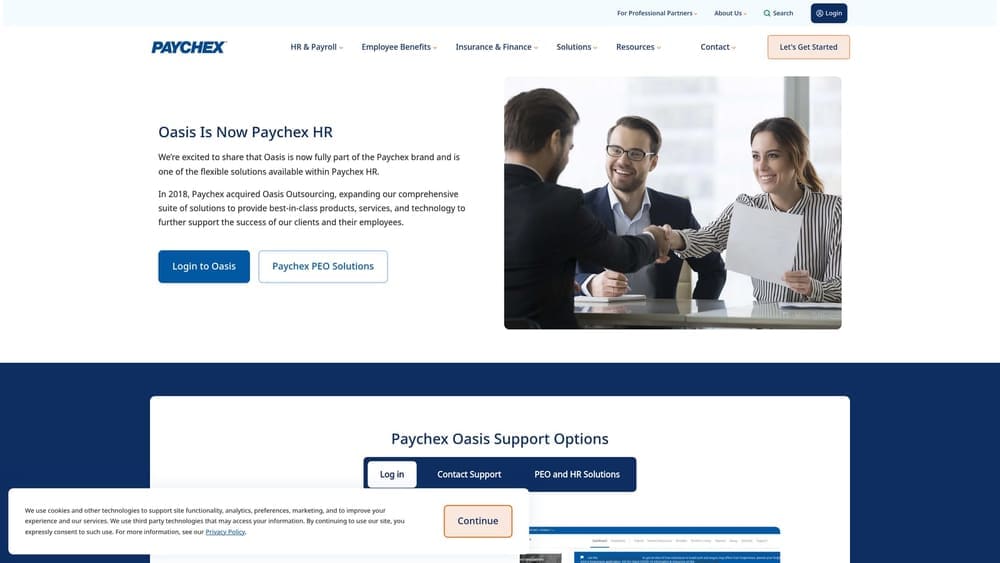
Because restaurant employers differ so much in who qualifies for benefits, the practical question is how many plan tiers you can offer and what eligibility rules you can set for part-timers. Get those answers in writing rather than relying on a sales summary.
- Payroll, to handle hourly wages and overtime.
- Benefits with flexible design, which can help you match offerings to different roles.
- HR support for day-to-day employee questions.
- Risk management, relevant to workers’ comp and claims in a kitchen environment.
Limits to check: size minimums and state coverage, since a franchise group spread across states needs every location served. Integrations should be verified on Oasis’s official site. An owner or HR lead would typically run the account. Pricing is quote-based and moves with headcount, plan selections, and workers’ comp class.
Best for: Independent franchisees wanting flexible benefit design.
8. Vensure Employer Services
Vensure Employer Services is a PEO serving a range of industries, including employers with a large hourly workforce. Verify its current industry focus. What stands out is an emphasis on workers’ comp programs and risk management, which is where restaurant total cost often lives.
If your claims history or class code is driving costs, ask Vensure how its workers’ comp program is priced and how claims are handled, and compare that with other quotes, not just the administrative fee.
- Payroll for hourly teams across locations.
- Workers’ comp programs, which may matter more to your bottom line than the admin fee.
- Benefits, to be checked against part-time eligibility needs.
- HR compliance support for wage, hour, and tip rules.
Where to push: verify pricing transparency and exit terms. Restaurants with high churn can find that a contract is easier to enter than leave, so ask about notice periods and any termination fees up front. Verify integrations on the official site. Pricing is quote-based and typically moves with headcount, payroll size, and workers’ comp classification.
Best for: Multi-location operators with high headcount churn.
Matching a Provider to Your Restaurant Situation
A few terms first, since they’re often blurred. A PEO enters a co-employment relationship and typically handles payroll, benefits, and workers’ comp under shared responsibility. A CPEO is an IRS-certified PEO. An ASO provides HR services without co-employment, and payroll-only vendors just run pay.
- Single-unit franchisee: Justworks is a reasonable first quote for its simplicity, and comparing it against one or two others keeps you honest on workers’ comp pricing.
- Multi-state franchise group: Insperity, Vensure, or TriNet merit quotes, with state coverage, minimums, and exit terms checked first.
- Already on a payroll vendor: ADP TotalSource or Paychex PEO may shorten migration if you’re on that vendor’s tools.
- Unsure a PEO beats payroll-only or ASO: start with the comparison, since a PEO makes sense only if its bundled benefits and workers’ comp pricing beat your alternatives.
Whichever you choose, get written quotes, and check franchisor requirements before you commit.
Before you sign that PEO renewal, make sure you’re not leaving money on the table.
Many businesses unknowingly overpay because of bundled fees, hidden administrative markups, and contracts designed to limit flexibility. We give you a clear, side-by-side breakdown of pricing, services, and contract terms, so you can see exactly what you’re paying for and choose the option that truly fits your business.
