

If you pay temporary workers across several client sites, states and pay rates, the first question is which model fits: a PEO, a payroll platform, or staffing-specific back-office software. The same question applies if you’re an employer sourcing temps and trying to understand what your staffing partner should be handling. The tools below were chosen for how they handle temp-worker realities such as assignment-based pay, multi-state tax, workers’ comp class codes and billing, and for how clearly each vendor documents its model. PEO, ASO and payroll-only services are kept distinct throughout. Check eligibility, states and pricing with each vendor directly; details here reflect public positioning as of November 2026 and can change. Related reading: [LINK CHECK: PEO comparison hub] and [LINK CHECK: PEO vs payroll guide].
Quick Comparison of Temp Payroll and PEO Options
- PEO Metrics: staffing firms and HR teams shortlisting PEOs; pricing on request via the website; compares multiple PEOs on one set of metrics before you sign a co-employment contract.
- ADP TotalSource: established small and midsize firms wanting a full-service PEO; quote-based; a path into the wider ADP payroll family.
- TriNet: firms wanting industry-tailored PEO service; quote-based; sector-oriented packaging that makes fit easier to compare.
- Insperity: firms wanting hands-on HR support for core staff; quote-based; assigned-advisor service model.
- Paychex PEO and Paychex Flex: firms unsure whether they need co-employment; see website for pricing; both PEO and payroll-only from one vendor.
- Bullhorn Back Office: agencies already on Bullhorn; quote-based; pay-and-bill tied to the placement workflow.
- TempWorks: small and midsize agencies leaving spreadsheets; quote-based; built for staffing agencies rather than general employers.
- ADP Workforce Now: larger agencies staying sole employer; quote-based; configurable multi-state payroll without co-employment.
1. PEO Metrics
PEO Metrics is our own service, so read this entry with that in mind. It is a PEO comparison and consulting service, not a payroll processor and not a PEO. Its job is to help a business compare PEO providers side by side, using detailed metrics and pricing analysis, before committing to a co-employment contract.
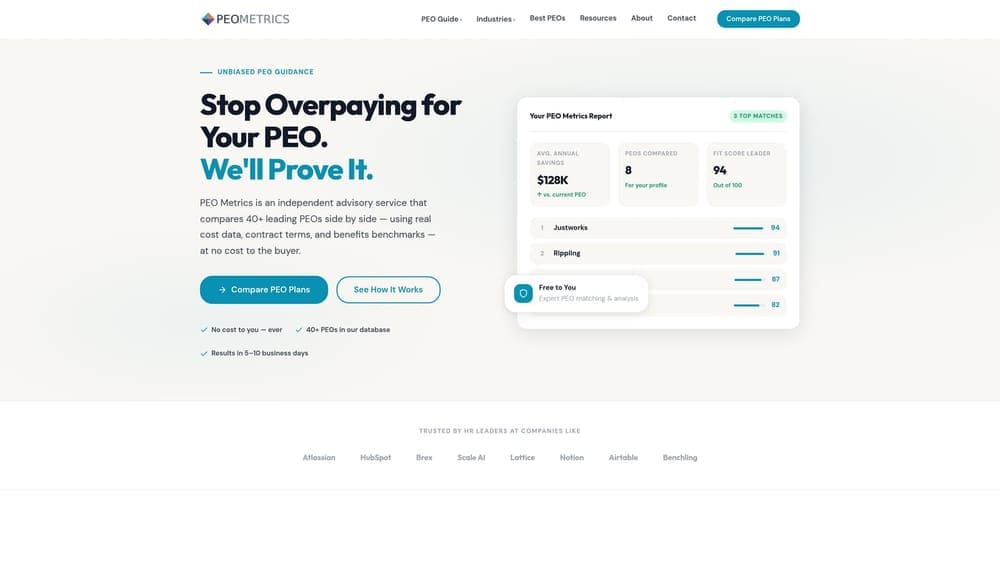
That matters for staffing because the model matters more than the brand. A staffing firm has to separate its own corporate employees from its temp pool, and PEO eligibility and underwriting vary. Comparing providers on one consistent set of data helps you see which ones are worth a conversation.
- Side-by-side PEO comparisons put different providers on the same metrics, so quotes are easier to weigh.
- Pricing analysis helps you spot where you may be overpaying.
- Detailed provider metrics show what each provider includes rather than relying on sales summaries.
- Consultative guidance supports the selection decision itself.
There are no integrations to set up, since it is an advisory service rather than a software platform. A business owner or HR lead can run the process without IT involvement.
The limits are plain. PEO Metrics will not run your payroll, bill your clients or take on workers’ comp liability. It may receive vendor placement fees, and it fits the shortlisting stage only. If you have already decided to stay payroll-only or use staffing software, it adds little. Pricing and details are on the website.
Best for: Staffing firms and HR teams shortlisting PEOs for temp-worker payroll.
2. ADP TotalSource
ADP TotalSource is ADP’s PEO service, bundling payroll, benefits, workers’ comp and HR support under a co-employment model. In a co-employment arrangement, the PEO shares certain employer responsibilities for worksite employees, which is different from payroll-only service.
Its distinguishing point on this list is scale: a large vendor with a path into the wider ADP payroll product family, which can help if you later outgrow the PEO model.
- Payroll and tax filing takes recurring filings off your team.
- Benefits administration gives smaller employers access to a managed program.
- Workers’ comp coverage is handled within the PEO arrangement.
- HR compliance support gives you a resource for employment questions.
Integrations sit mainly within the ADP payroll and HCM ecosystem, which suits firms already using ADP tools. Setup is typically run by an HR or finance lead working with an implementation team.
The main caution for staffing buyers: eligibility for staffing-industry clients and state availability must be confirmed with ADP directly. Do not assume your temp pool will be accepted. Nothing here is a statement about ADP’s current underwriting. Pricing is quote-based and generally moves with headcount, payroll and the services chosen.
Best for: Established small and midsize firms wanting a full-service PEO from a large provider.
3. TriNet
TriNet is a PEO that provides payroll, benefits, risk and compliance services, with offerings organized around industries. For a buyer, the sector packaging is the point: you can compare how a PEO positions itself for businesses like yours rather than starting from a generic bundle.
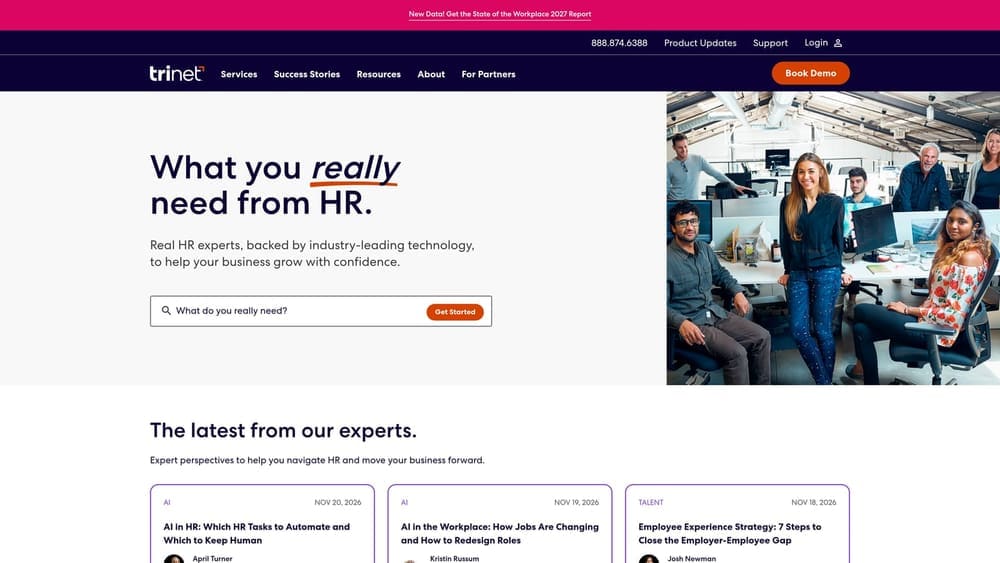
Start with the limitation. Whether TriNet accepts temporary or staffing classes, and whether any minimums apply, has to be verified directly with the vendor. That check should come before any deeper evaluation.
- Payroll and tax administration covers pay runs and filings.
- Benefits programs give worksite employees access to pooled plans.
- Risk and compliance support helps with employment obligations.
- HR advisory gives managers a point of contact for people issues.
Check the vendor site for current integrations with your time-tracking or applicant tracking tools; don’t assume a connection exists. Day-to-day, an HR or operations lead typically manages the relationship, with implementation support from the vendor.
It will not suit firms whose temp classes are not accepted, or those that want a staffing-specific pay-and-bill system, since a PEO is not built around client invoicing. Pricing is quote-based and typically depends on headcount, payroll and the benefits selected.
Best for: Firms that want industry-tailored PEO service and have confirmed eligibility.
4. Insperity
Insperity is a PEO known for assigned HR support alongside payroll, benefits and workers’ comp. Its service model leans high-touch: you work with an assigned advisor rather than a general help desk.
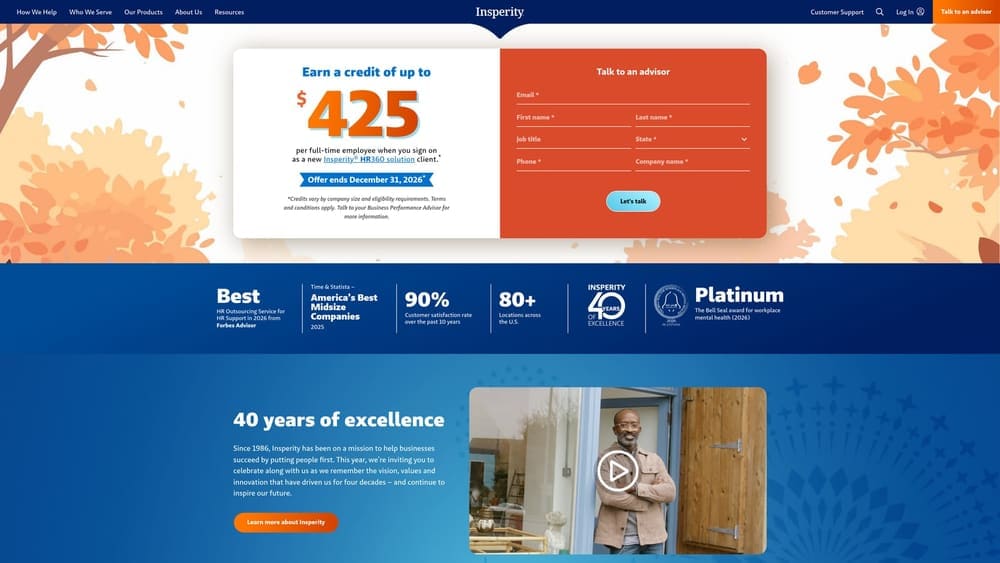
That is a real advantage for the people you employ long term, such as internal recruiters, account managers and long-term placed employees. It is a weaker fit for a pool of short-assignment workers who turn over constantly, so confirm eligibility and any size minimums before investing time.
- Payroll and tax filing handles recurring pay and filings.
- Benefits administration covers plan enrollment and management.
- Workers’ comp is provided within the co-employment arrangement.
- Dedicated HR advisory support gives you a named contact for employee relations and compliance questions.
Verify current integrations on the vendor site, especially if you need timesheet data to flow into payroll. Setup and ongoing management usually sit with an HR lead.
It may not suit high-turnover temp pools, and it does not replace staffing software for bill rates and invoicing. Pricing is quote-based, usually shaped by headcount, payroll and selected services.
Best for: Staffing firms wanting hands-on HR support for core and long-term placed employees.
5. Paychex PEO and Paychex Flex
Paychex sells both a PEO and a separate payroll platform, Paychex Flex. That gives you a choice between co-employment and payroll-only from a single vendor, with a possible step-up path if your needs change.
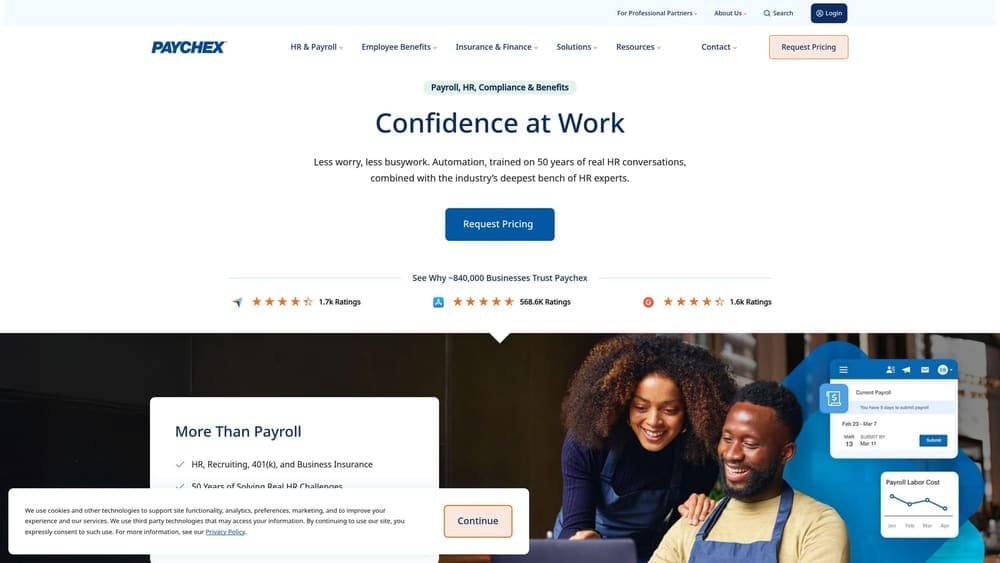
The distinction has consequences. With payroll-only, your firm remains the sole employer, so liability, workers’ comp and filings stay with you. With the PEO, some of those responsibilities are shared under co-employment. Knowing which one you are buying matters more than the logo.
- Payroll processing handles pay runs for hourly and salaried workers.
- A PEO co-employment option is available if you want to share employer responsibilities.
- Benefits administration supports plan management.
- Time and attendance options help capture hours before payroll.
Verify current integrations on the vendor site. Payroll-only setup is often manageable by a finance or HR lead; PEO onboarding is a larger project.
It is not a staffing-specific pay-and-bill tool, so client invoicing may need another system, and PEO eligibility for staffing firms should be confirmed. Pricing details are on the vendor’s website; cost generally depends on employee count and chosen modules.
Best for: Firms unsure whether they need co-employment or just payroll.
6. Bullhorn Back Office
Bullhorn Back Office is staffing-specific back-office software that connects timesheets, pay and billing to the Bullhorn platform. It is built around the placement-to-invoice workflow, which is the part generic payroll tools handle least naturally.
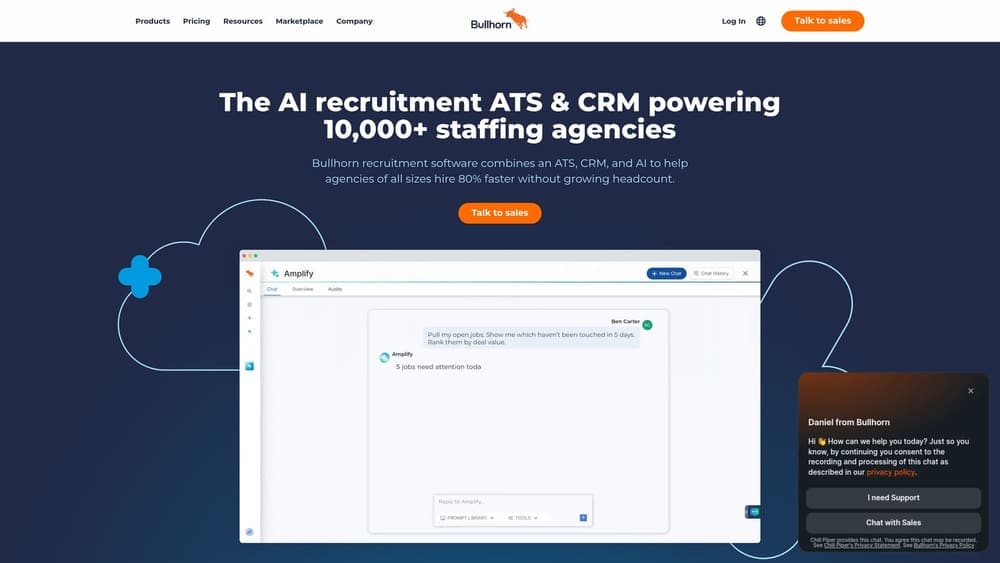
Software is the key word. Bullhorn is not a co-employer, so workers’ comp and tax liability stay with the agency. If risk transfer is what you want, this is not the product for it.
- Timesheet processing captures hours submitted for each assignment.
- Pay and bill calculation applies pay rates and bill rates to the same hours.
- Invoicing produces client bills from approved time.
- A link to Bullhorn ATS and CRM keeps placement records and back-office data in one place.
Integration is centered on Bullhorn’s own ATS and CRM, so the value is highest for agencies already using them. Implementation usually involves an operations or finance lead working with the vendor.
It is a poor fit for agencies on other recruiting systems or for those wanting benefits and compliance support. Pricing is quote-based and commonly varies with the scale of your operation.
Best for: Agencies already using Bullhorn that want integrated pay-and-bill.
7. TempWorks
TempWorks is staffing software covering back-office payroll, billing and onboarding for staffing agencies. Its distinguishing trait is focus: it is purpose-built for agencies rather than general employers, so assignment-based work is the default case, not an add-on.
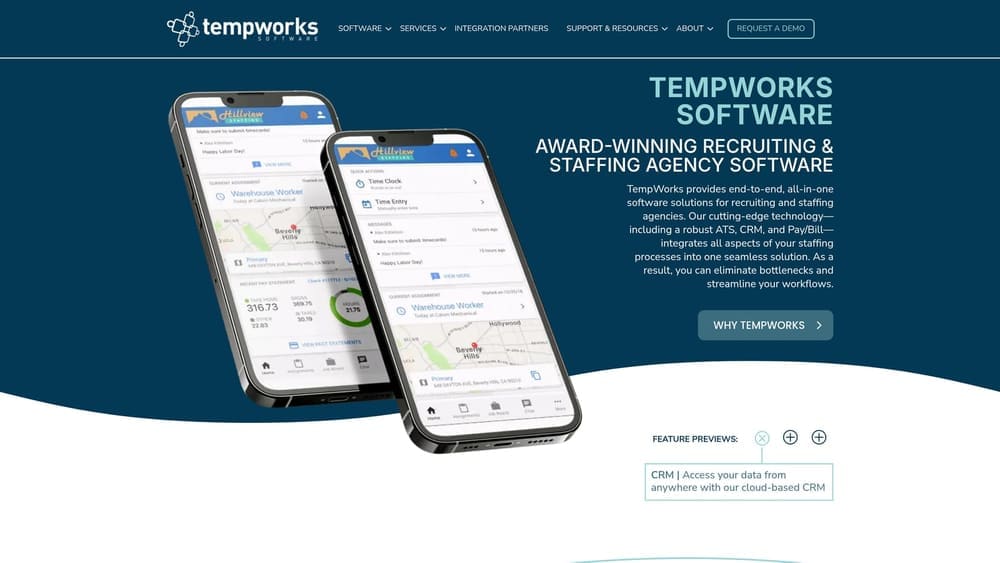
It is not a PEO. There is no risk transfer and no pooled benefits, so the agency retains employer obligations, including workers’ comp and tax compliance.
- Payroll and billing run from the same assignment data.
- Onboarding collects new-hire paperwork for incoming temps.
- Assignment tracking shows who is working where and at what rate.
- Staffing-focused reporting speaks the language of agency operations.
Verify current integrations on the vendor site, particularly for applicant tracking, background checks or time capture you already use. A small agency’s operations or payroll lead usually runs it day to day, after vendor-assisted setup.
If your goal is to hand off employer responsibilities or buy group benefits, it won’t deliver that. Pricing is quote-based and generally depends on size and modules.
Best for: Small and midsize agencies replacing spreadsheets with a staffing-specific system.
8. ADP Workforce Now
ADP Workforce Now is a payroll and HCM platform for midsize employers that remain the sole employer of their workers. It differs from TotalSource, ADP’s PEO, because there is no co-employment here.
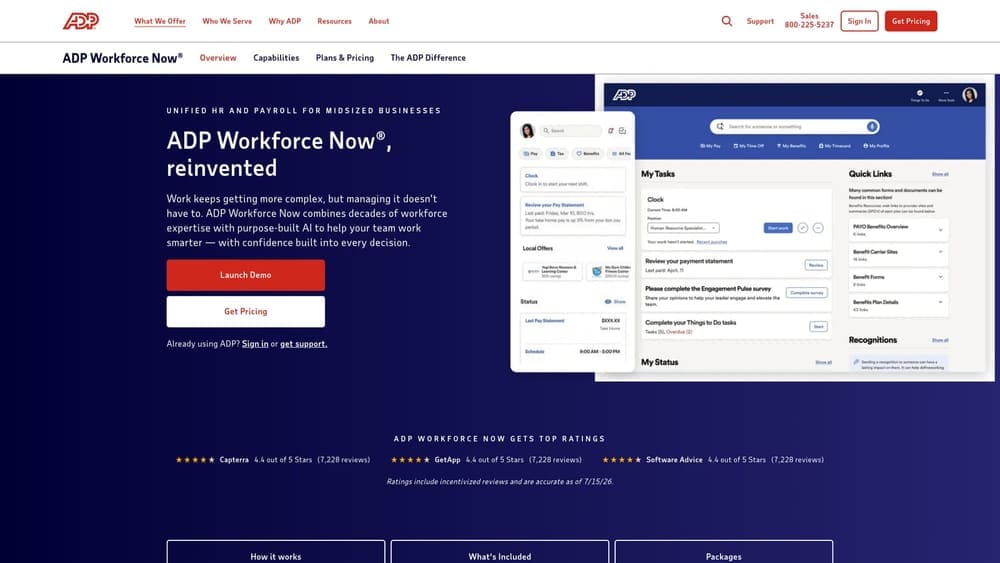
Its strength is configurable payroll for complex, multi-state pay groups. For a larger agency with many pay rules and jurisdictions, that control can matter more than shared liability.
- Multi-state payroll supports workers paid in different jurisdictions.
- HR management keeps employee records and workflows together.
- Time and attendance options help capture hours for pay.
- Reporting and analytics give finance teams visibility into labor costs.
Integrations run through the ADP Marketplace, so check whether your staffing or timekeeping tools are listed. Implementation typically needs a dedicated payroll or HR administrator, and larger deployments may need more.
It does not transfer risk, and staffing billing may require an additional system. Smaller agencies may find it more than they need. Pricing is quote-based and typically moves with headcount and the modules selected.
Best for: Larger agencies that want control as sole employer with enterprise-level payroll.
Matching the Tool to Your Staffing Situation
Three picks stand out depending on where you are. If you’re still deciding whether co-employment makes sense, start by comparing PEO options before you commit; that is where PEO Metrics fits, with the disclosure that it may receive vendor placement fees. If your pain is timesheets, pay rates and client invoices, staffing-specific software such as Bullhorn Back Office or TempWorks addresses that directly. If you want to remain the sole employer and need configurable multi-state payroll, ADP Workforce Now or Paychex Flex’s payroll-only option fits.
Whatever you choose, verify staffing eligibility with each vendor before going far. PEO acceptance, state availability, minimums and pricing vary and change, and a PEO that works for your corporate staff may not cover your temp pool. Treat this article as informational rather than legal, tax or benefits advice.
Before you sign that PEO renewal, make sure you’re not leaving money on the table.
Many businesses unknowingly overpay because of bundled fees, hidden administrative markups, and contracts designed to limit flexibility. We give you a clear, side-by-side breakdown of pricing, services, and contract terms, so you can see exactly what you’re paying for and choose the option that truly fits your business.
