

Flooring contractors face HR challenges that office-based businesses never encounter: crews working across multiple job sites, seasonal installation spikes, workers’ comp exposure from heavy lifting and power tool injuries, and the constant juggle of subcontractors versus W-2 employees. A PEO built for construction trades can absorb these headaches, but most flooring business owners don’t know which providers actually understand their world.
This guide breaks down seven PEO options that handle the specific demands of flooring installation, retail showrooms, and distribution operations. We’ll cover what matters most: workers’ comp rates for flooring-specific class codes, job costing integration, and whether these providers can actually support crews spread across residential and commercial sites.
1. PEO Metrics
Best for: Flooring companies comparing multiple PEO providers before committing to a contract
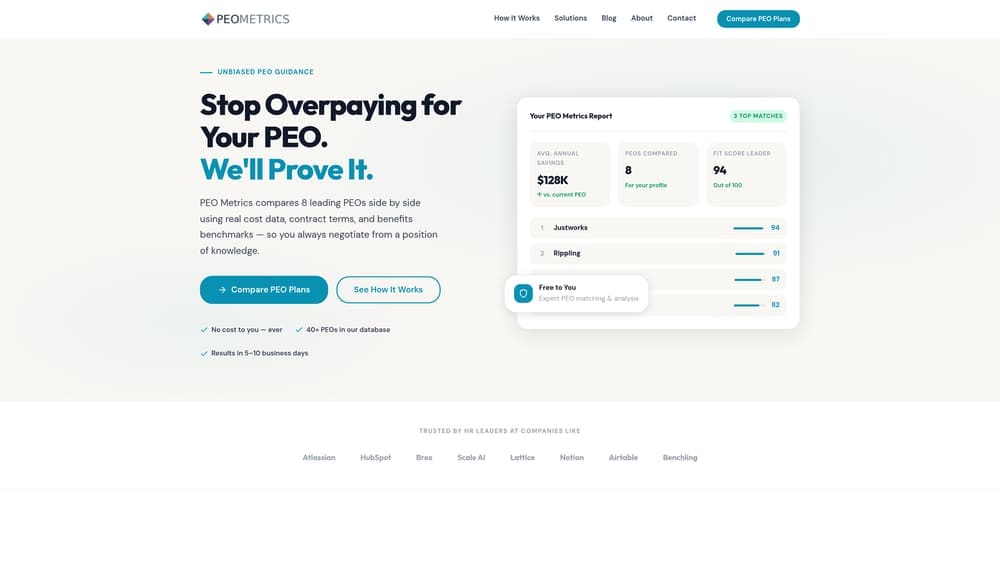
PEO Metrics is a comparison platform that provides side-by-side PEO analysis with industry-specific pricing benchmarks and detailed provider data.
Where This Tool Shines
Most flooring contractors sign with the first PEO that calls them back. That’s expensive. PEO Metrics gives you the data to compare providers on apples-to-apples terms before you’re locked into a three-year contract.
The platform focuses specifically on construction trades, meaning you get pricing benchmarks that reflect flooring-specific class codes like 5437 and 5478—not generic office worker rates. You can see how different providers handle workers’ comp for installation crews versus showroom staff, and what their actual administrative fees look like once you strip away the marketing language.
Key Features
Side-by-Side PEO Comparison: Compare multiple providers with flooring industry data in one view instead of juggling separate sales calls.
Transparent Pricing Benchmarks: See what construction trades actually pay for PEO services, broken down by employee count and risk profile.
Unbiased Provider Analysis: Get detailed metrics on workers’ comp handling, contract terms, and service quality without sales pressure.
Construction-Specific Data: Access information relevant to flooring operations—not generic small business guidance that doesn’t account for field crews.
Best For
Flooring contractors who want to make an informed decision before signing a PEO contract. Particularly valuable if you’re evaluating multiple providers or trying to understand whether your current PEO is overcharging you. Works well for operations with 10-100 employees managing both retail and installation operations.
Pricing
Free comparison service. No cost to access provider data and pricing benchmarks.
2. Insperity
Best for: Mid-sized flooring companies managing both retail showrooms and field installation crews
Insperity is a full-service PEO with strong HR infrastructure suited for businesses with complex operational structures.
Where This Tool Shines
Insperity works well when you’ve outgrown basic payroll but still need hands-on HR support. Their dedicated business partner model means you get a consistent contact who understands your operation—helpful when you’re juggling showroom managers, installation supervisors, and field crews across different locations.
The benefits packages are competitive enough to help with installer retention, which matters in a tight labor market. You’re not just offering basic health insurance. You’re providing benefits that look like what larger commercial contractors offer, which helps when you’re competing for experienced flooring installers.
Key Features
Dedicated HR Business Partners: Assigned contact who learns your business instead of rotating through call center representatives.
Robust Benefits Packages: Access to Fortune 500-level health, dental, and retirement benefits that help retain skilled installers.
Performance Management Resources: Training and development tools useful for onboarding new installation crew members.
Multi-Location Payroll Support: Handles crews working across different job sites and jurisdictions without manual workarounds.
Best For
Flooring companies with 30-150 employees who need structured HR support across retail and field operations. Works particularly well if you have multiple showroom locations or run both residential and commercial installation divisions that require different management approaches.
Pricing
Typically $150-$250 per employee per month. Minimum employee requirements apply, usually around 25-30 employees depending on your location and industry risk profile.
3. Paychex PEO
Best for: Flooring contractors handling prevailing wage projects and needing certified payroll capabilities
Paychex PEO is built on Paychex’s payroll infrastructure with construction-oriented features including job costing integration.
Where This Tool Shines
If you’re bidding on commercial or government flooring projects, certified payroll isn’t optional. Paychex handles this without requiring you to run parallel systems. The job costing integration means you can track labor costs by project, which matters when you’re trying to figure out whether that big commercial job actually made money or just kept crews busy.
The platform scales reasonably well. You can start when you have eight employees and grow to 100 without completely outgrowing the system. That flexibility matters in an industry where you might add ten installers for a busy season and scale back during winter slowdowns.
Key Features
Certified Payroll: Built-in support for prevailing wage requirements on government and union projects.
Job Costing Integration: Track labor costs by project to understand actual profitability on each installation.
Mobile Time Tracking: Field crews can clock in and out from job sites using mobile apps instead of manual timesheets.
Scalable Platform: Works for small contractors and mid-market operations without forcing system migrations as you grow.
Best For
Flooring contractors working on commercial projects, schools, hospitals, or government buildings where prevailing wage compliance is required. Also useful for operations that need detailed job costing to manage profitability across multiple simultaneous projects.
Pricing
Custom pricing based on employee count and services selected. Generally competitive for construction trades, though pricing can vary significantly based on your workers’ comp risk profile and geographic footprint.
4. TriNet
Best for: Flooring companies working across multiple states with complex compliance requirements
TriNet is a national PEO with strong multi-state compliance capabilities for contractors operating across geographic boundaries.
Where This Tool Shines
TriNet handles the jurisdictional complexity that comes with running crews in multiple states. If you’re installing flooring in commercial buildings across a region—say, covering Virginia, Maryland, and DC—you’re dealing with three different sets of tax rules, workers’ comp requirements, and labor regulations. TriNet manages this without requiring you to become a multi-state compliance expert.
The risk management consulting can be valuable if you’re trying to improve your experience modification rate. They’ll help you implement safety programs and claims management processes that actually reduce your workers’ comp costs over time, not just shift administrative burden.
Key Features
Multi-State Tax and Compliance: Handles payroll tax, unemployment insurance, and regulatory filing across state lines automatically.
Industry-Specific HR Guidance: Access to HR advisors who understand construction trade challenges beyond generic small business issues.
Comprehensive Benefits Access: National benefits networks that work across your entire geographic footprint.
Risk Management Consulting: Proactive support for reducing workers’ comp claims and improving safety programs.
Best For
Flooring contractors operating in multiple states, particularly those handling commercial projects across a region. Most valuable when you have at least 25-30 employees and work regularly in three or more states where compliance complexity justifies the investment.
Pricing
Percentage of payroll model, typically 10-16% depending on services selected and your risk profile. Higher-risk operations with elevated workers’ comp exposure will see pricing toward the upper end of that range.
5. Justworks
Best for: Smaller flooring operations prioritizing straightforward pricing and ease of use
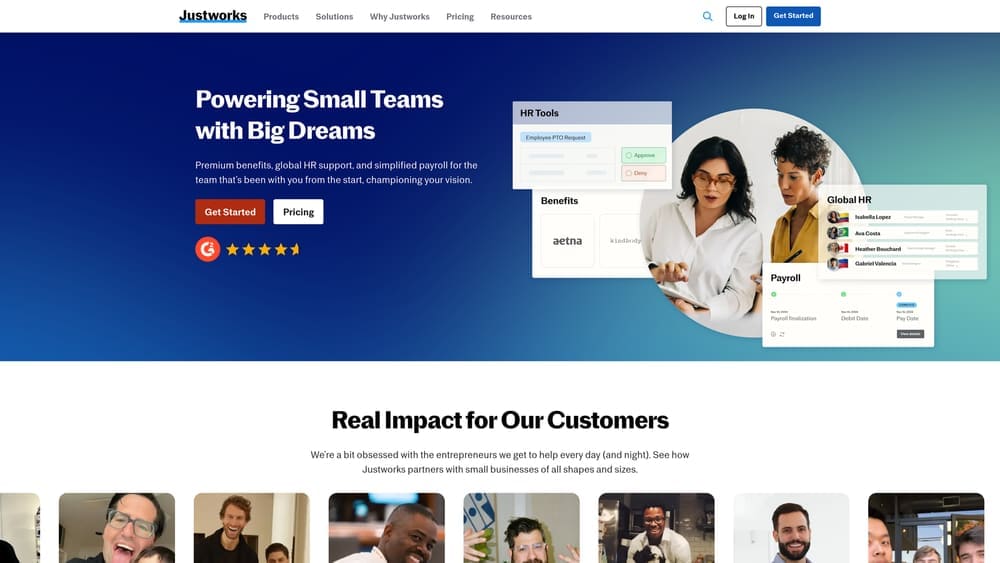
Justworks is a simplified PEO platform with transparent flat-rate pricing designed for businesses that value simplicity.
Where This Tool Shines
Justworks cuts through the complexity. You pay a flat monthly rate per employee. No percentage of payroll calculations, no hidden administrative fees, no surprise charges when you add seasonal workers. That predictability matters when you’re managing cash flow around project schedules.
The platform itself is clean and modern. Your showroom manager can handle benefits enrollment without calling support. Installation supervisors can access pay stubs and tax forms from their phones. It’s not built specifically for construction, but it works well enough for straightforward flooring operations that don’t need specialized features like certified payroll or complex job costing.
Key Features
Flat Per-Employee Pricing: Predictable monthly costs without percentage-of-payroll calculations or variable administrative fees.
Clean Platform Interface: Modern, intuitive system that doesn’t require extensive training for managers or employees.
Straightforward Benefits Enrollment: Simple process for employees to select health insurance and other benefits without HR hand-holding.
No Hidden Fees: Transparent pricing structure without surprise charges for common administrative tasks.
Best For
Flooring contractors with 5-30 employees who want simple, predictable HR administration. Works well for residential-focused operations or single-location businesses that don’t need multi-state compliance or specialized construction features.
Pricing
Basic plan starts at $59 per employee per month. Plus plan at $109 per employee per month adds more comprehensive benefits and HR support. No minimum employee requirements.
6. CoAdvantage
Best for: Flooring companies focused on workers’ compensation cost management and claims reduction
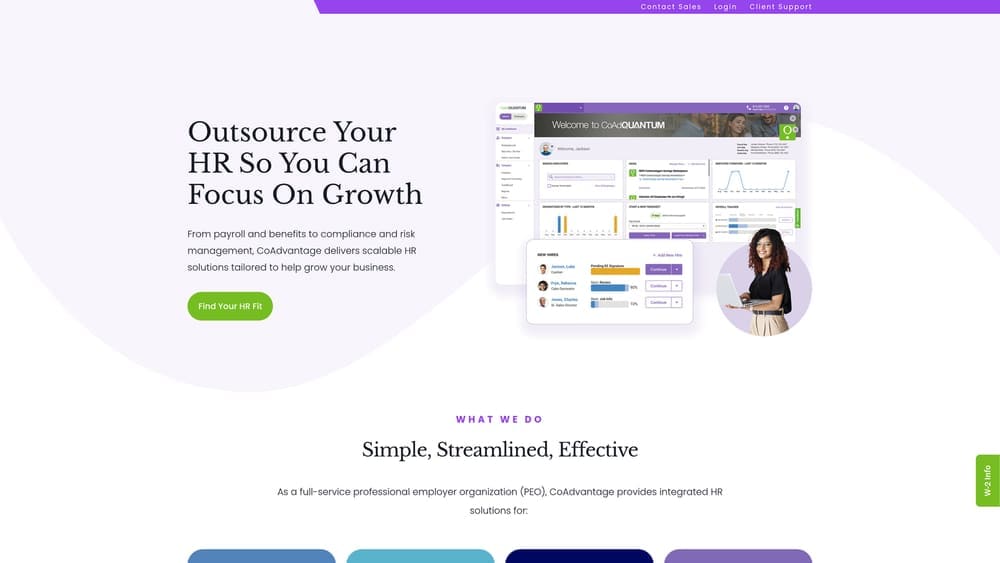
CoAdvantage is a PEO with significant construction trade experience and deep focus on workers’ comp program management.
Where This Tool Shines
CoAdvantage understands high-risk class codes. When you’re running crews under 5437 or 5478 classifications, your workers’ comp rates drive a huge portion of your labor costs. CoAdvantage focuses specifically on managing those costs through proactive claims management and safety program implementation.
They’re also more flexible on contract terms than some larger PEOs. If you’re seasonal and need to scale down during slow months, they’ll work with you instead of holding you to rigid minimum employee counts. That flexibility matters in an industry where winter can be dead and spring brings more work than you can handle.
Key Features
Construction Class Code Experience: Deep familiarity with flooring-specific workers’ comp classifications and rate management.
Workers’ Comp Program Management: Proactive approach to reducing claims frequency and severity through safety programs.
Claims Management Support: Hands-on assistance with workers’ comp claims to minimize impact on your experience mod.
Flexible Contract Terms: More accommodating of seasonal fluctuations and business changes than some enterprise PEOs.
Best For
Flooring contractors with elevated workers’ comp costs who need focused attention on reducing claims and improving safety performance. Particularly valuable if you’ve had recent claims that have driven up your experience modification rate.
Pricing
Custom pricing based on your employee count, risk profile, and workers’ comp history. Often competitive for higher-risk industries because they specialize in managing those exposures rather than avoiding them.
7. BBSI
Best for: Flooring businesses wanting hands-on business consulting beyond basic HR administration
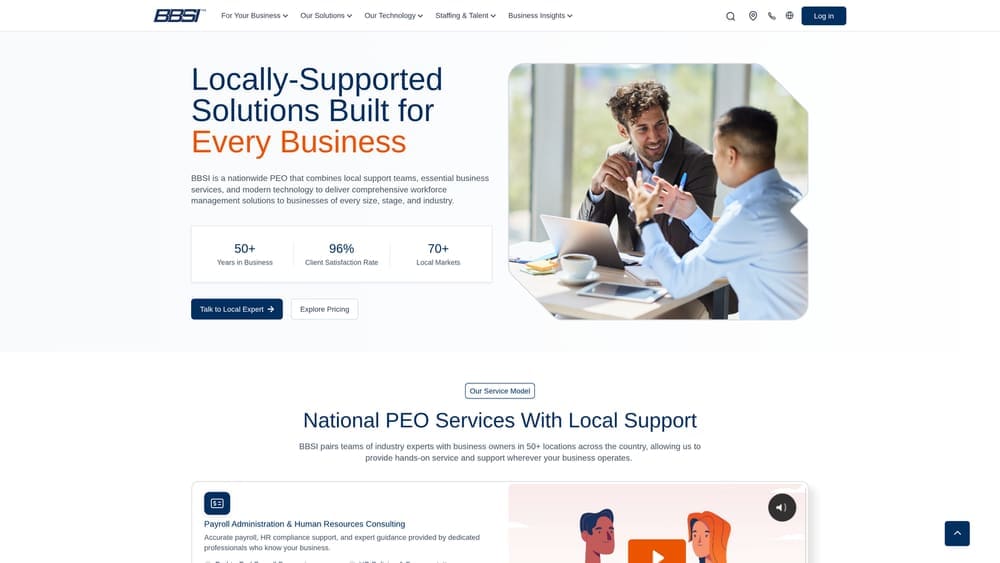
BBSI is a relationship-focused PEO providing business consulting and risk management with dedicated local representatives.
Where This Tool Shines
BBSI assigns you a dedicated business consultant who actually visits your operation. They’ll walk your job sites, review your installation processes, and help you build safety programs that fit how flooring work actually happens—not generic construction safety templates that don’t account for the specific risks of flooring installation.
The business consulting goes beyond HR. They’ll help you think through operational challenges like crew scheduling, subcontractor management, and scaling issues. It’s more hands-on than most PEOs, which can be valuable if you’re growing quickly or dealing with operational problems that affect your HR and risk management.
Key Features
Dedicated Local Business Consultants: Assigned representatives who visit your operation and understand your specific business challenges.
On-Site Safety Assessments: Physical job site reviews with practical recommendations for reducing injury risk in flooring operations.
Proactive Claims Management: Hands-on approach to managing workers’ comp claims from first report through resolution.
Business Consulting Beyond HR: Operational guidance on crew management, growth planning, and business development.
Best For
Flooring companies with 15-75 employees who value relationship-based service and want consulting support beyond basic HR administration. Most valuable if you’re in a growth phase or dealing with operational challenges that affect workforce management.
Pricing
Custom pricing with consultative approach, typically structured as a percentage of payroll. Pricing reflects the hands-on service model and dedicated local support rather than call center administration.
Making the Right Choice
Here’s how to think about these options based on your operation type.
If you’re running installation crews without retail operations and need straightforward administration, start with Justworks or PEO Metrics to compare your options. The flat pricing makes budgeting simple, and you’re not paying for enterprise features you don’t need.
For operations managing both showrooms and field crews across multiple locations, Insperity or TriNet make more sense. You need the infrastructure to handle different employee classifications, multi-location payroll, and benefits administration that works across your entire operation.
If you’re bidding commercial projects that require prevailing wage compliance, Paychex PEO should be on your list. The certified payroll capabilities and job costing integration are built for exactly this scenario.
When workers’ comp costs are crushing your margins, look at CoAdvantage or BBSI. Both specialize in construction trades and focus specifically on reducing claims and managing high-risk classifications. BBSI adds the business consulting layer if you want more hands-on operational support.
The biggest mistake is accepting the first quote you receive. PEO pricing varies dramatically based on how providers assess your risk profile and what they include in their administrative fees. Get at least three quotes, and use comparison data to understand what you should actually be paying for your employee count and risk classification.
Before you sign that PEO renewal, make sure you’re not leaving money on the table. Many businesses unknowingly overpay because of bundled fees, hidden administrative markups, and contracts designed to limit flexibility. We give you a clear, side-by-side breakdown of pricing, services, and contract terms so you can see exactly what you’re paying for and choose the option that truly fits your business.
