
When a SaaS company closes an acquisition in 2026, the workforce integration clock starts the moment the deal is announced — and it runs faster than most finance teams expect. You’re suddenly responsible for two payroll systems, mismatched benefits packages, equity comp complexity, and compliance gaps in states where you’ve never had employees before. The deal looked clean on paper. The workforce integration rarely is.
That pressure has intensified recently. With SaaS consolidation continuing at a steady pace, integration timelines have compressed. Acquirers are pushing for 60-day payroll transitions that previously took 120 days, and regulators in key states — California, New York, Illinois — have tightened worker classification rules that can catch merged workforces mid-transition.
A PEO can absorb a significant portion of that operational chaos, but the fit matters a lot here. Not every PEO handles mid-cycle transitions well, and most aren’t built with SaaS-specific complexity in mind: stock option administration, contractor reclassification, distributed remote teams, and aggressive integration timelines. The wrong PEO choice under M&A pressure doesn’t just create administrative headaches — it creates retention risk for the exact talent you just paid to acquire.
Below are the top PEO providers (and one comparison platform) worth evaluating when you’re merging two SaaS workforces and need to get it right, fast.
1. PEO Metrics
Best for: SaaS companies that need to identify the right PEO quickly under deal pressure, without defaulting to whoever their broker recommends.
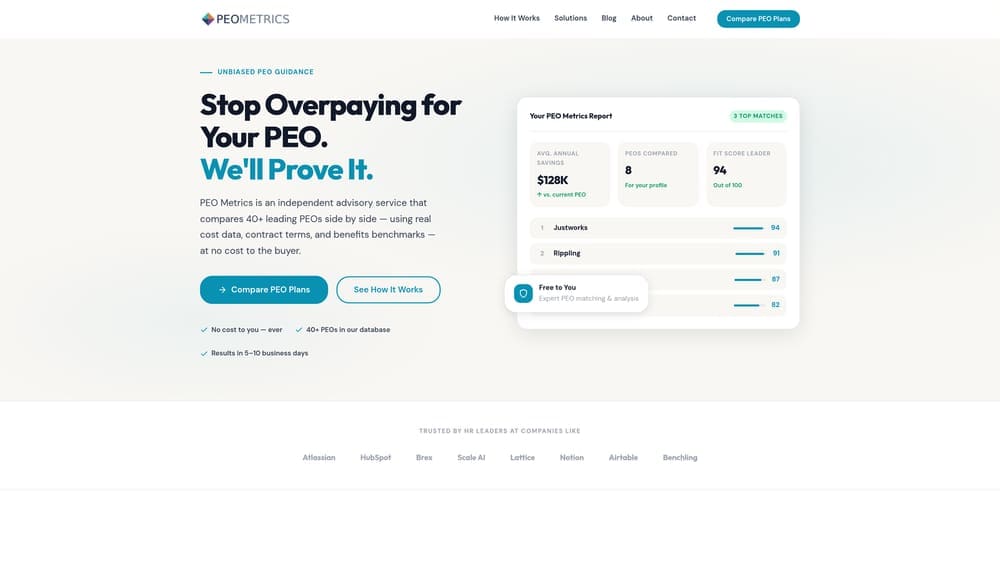
PEO Metrics is an unbiased PEO comparison platform that helps SaaS companies evaluate providers side-by-side using detailed metrics and pricing data.
Where This Tool Shines
One of the most common mistakes SaaS acquirers make is defaulting to their existing PEO or broker’s preferred vendor without asking whether that provider can actually handle the integration scenario in front of them. PEO Metrics exists to break that pattern. It gives you a structured, data-driven way to compare providers across the factors that matter most in M&A: onboarding speed, multi-state capabilities, benefits harmonization experience, and pricing transparency.
For companies under acquisition timelines, this kind of upfront clarity is genuinely valuable. Signing with the wrong PEO and discovering mid-integration that they can’t support a mid-cycle benefits transition or don’t have payroll infrastructure in your acquired company’s states is an expensive lesson. PEO Metrics helps you surface those gaps before you commit.
Key Features
Side-by-Side Provider Comparisons: Detailed pricing breakdowns and capability comparisons across multiple PEO providers in one view.
Unbiased Guidance: Not affiliated with or incentivized by any single PEO provider, which matters when broker recommendations often carry hidden conflicts of interest.
M&A Fit Assessment: Helps identify which PEOs have documented M&A transition experience and multi-state coverage relevant to your specific scenario.
Benefits and Compliance Data: Analysis covering benefits quality, compliance infrastructure, and service model differences across providers.
Best For
SaaS companies that are actively evaluating PEO providers during or ahead of an acquisition and want to make a well-informed decision rather than a rushed one. Also useful for companies approaching a PEO renewal who want to know whether they’re overpaying or underserved.
Pricing
Contact for pricing. PEO Metrics is a comparison and advisory service, not a PEO itself, so pricing reflects the consulting and platform access model.
2. Justworks
Best for: SaaS companies that need to onboard acquired employees onto payroll and benefits fast, without a complicated implementation process.
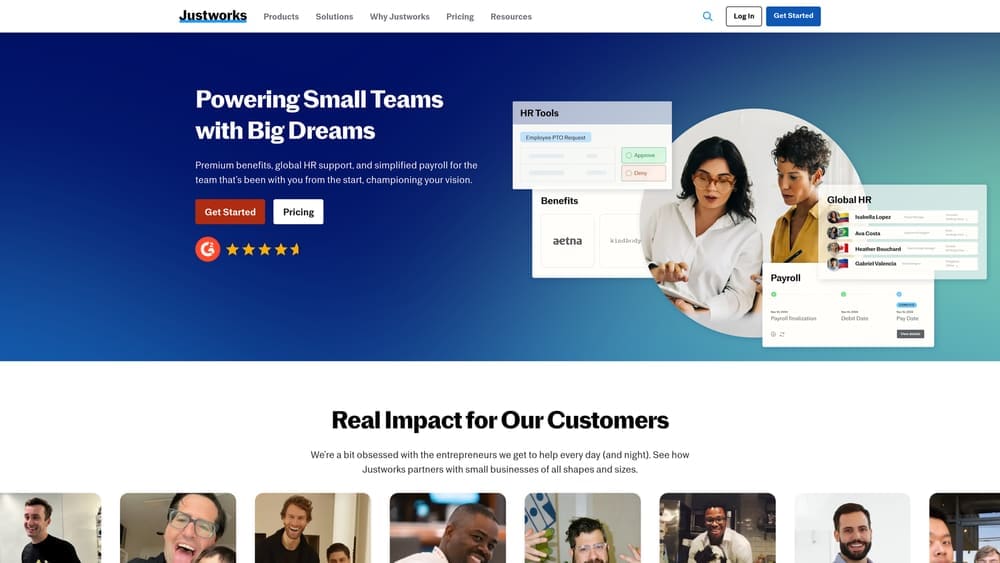
Justworks is a tech-forward PEO with transparent per-employee pricing and one of the faster onboarding timelines in the market.
Where This Tool Shines
Speed is one of Justworks’ genuine advantages. For SaaS companies with aggressive integration timelines, the ability to get acquired employees onto payroll and benefits in days rather than weeks reduces both compliance exposure and retention risk. The platform is also clean and intuitive enough that employees from an acquired company can self-onboard without heavy IT support or extensive HR hand-holding.
The transparent pricing model is worth calling out specifically. In M&A situations, finance teams are already managing significant complexity. Flat per-employee-per-month pricing with no hidden fees makes budget forecasting cleaner and avoids the surprise invoice problem that plagues some PEO relationships.
Key Features
Flat Per-Employee Pricing: No hidden fees or percentage-of-payroll structures that become expensive as headcount scales post-acquisition.
Fast Employee Onboarding: New employees can typically be set up within days, which matters when integration timelines are tight.
Multi-State Payroll and Compliance: Covers all 50 states, including automated tax registration when you’re entering new states through an acquisition.
Modern Self-Service Platform: SaaS teams tend to adopt it quickly — low friction for employees coming from a tech-forward acquired company.
Best For
Early- to mid-stage SaaS companies acquiring smaller teams (under 200 employees) who need a fast, low-friction onboarding path. Less suited for complex enterprise acquisitions with deep equity administration needs.
Pricing
Starts at $59/employee/month (Basic) or $109/employee/month (Plus, which includes benefits access). Transparent and predictable.
3. Rippling PEO
Best for: SaaS acquirers who need to simultaneously onboard employees onto payroll, benefits, software, and devices from day one of integration.
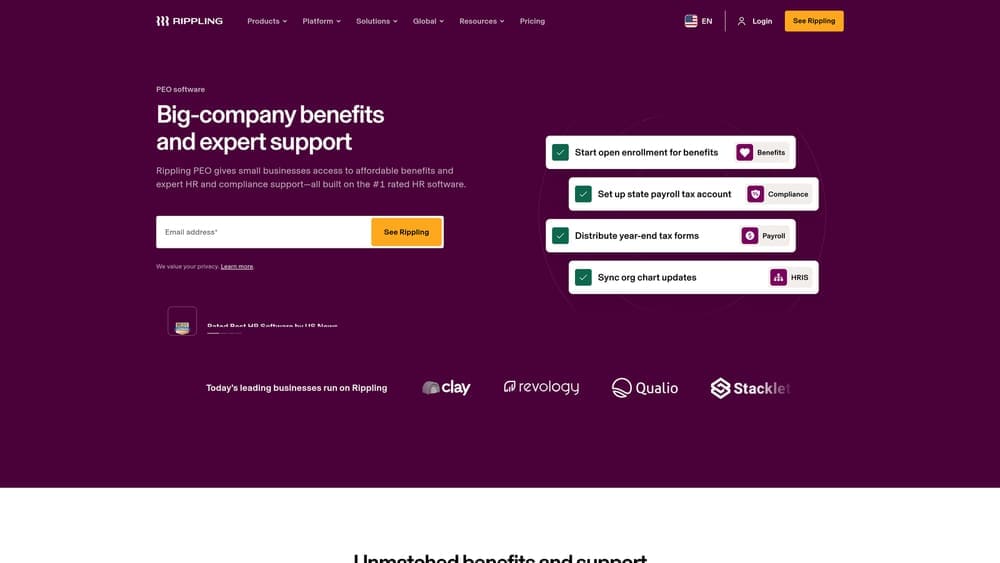
Rippling PEO is a unified IT, HR, and payroll platform that handles workforce and systems onboarding in a single workflow.
Where This Tool Shines
Most PEOs handle HR and payroll. Rippling handles HR, payroll, devices, and software access simultaneously. For SaaS companies, that last part is significant. When you acquire a team, you’re not just adding them to payroll — you’re provisioning laptops, granting access to your SaaS stack, and revoking access to the acquired company’s tools. Rippling automates all of that in parallel, which is genuinely differentiated for tech-forward acquisitions.
The API ecosystem is also worth noting. SaaS companies often have existing HRIS or payroll tools they’re not ready to abandon. Rippling’s integration capabilities mean you can connect it to your existing stack rather than ripping everything out, which reduces implementation risk during an already complex transition.
Key Features
Combined IT and HR Management: Payroll, benefits, device provisioning, and app access managed in one platform — unique in the PEO space.
Automated Onboarding Workflows: Custom workflows for bringing acquired employees into your systems without manual coordination across IT and HR.
Strong API Ecosystem: Integrates with existing SaaS tools, reducing the need to overhaul your tech stack during integration.
Multi-State and International Payroll: Covers domestic multi-state complexity and has international payroll capabilities for cross-border acquisitions.
Automated Deprovisioning: Handles access removal for departing employees during workforce consolidation, reducing security exposure.
Best For
Tech-forward SaaS companies where IT and HR integration are deeply intertwined. Particularly strong when the acquired team has significant software access needs that need to be managed from day one.
Pricing
Core platform starts around $35/employee/month; PEO pricing is custom and varies by headcount and services selected. Contact for a specific quote.
4. Insperity
Best for: Mid-market SaaS companies (50-500 employees) navigating workforce transitions that require hands-on HR support, not just a software platform.
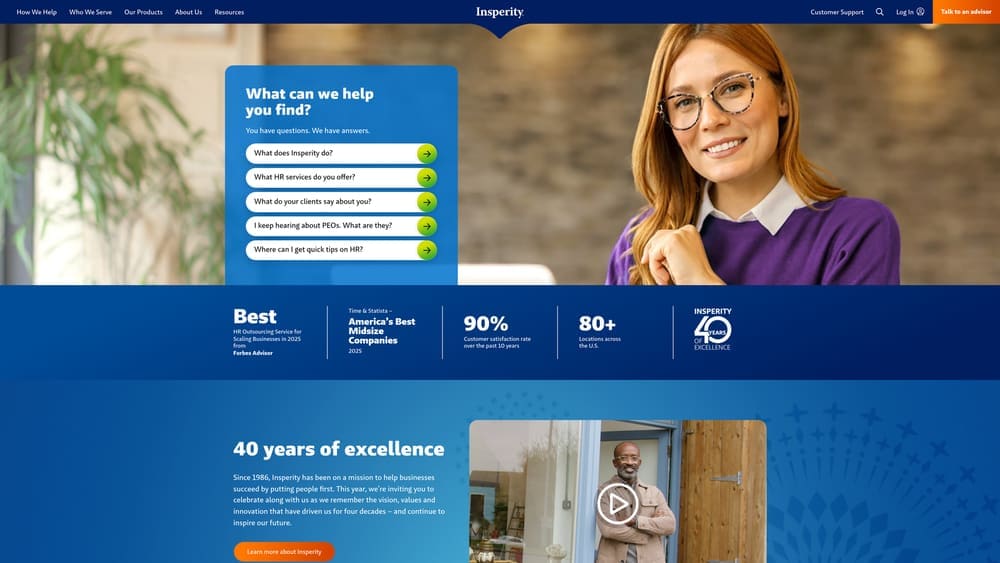
Insperity is a full-service PEO known for dedicated HR business partners and strong benefits administration at the mid-market level.
Where This Tool Shines
Where Insperity differentiates is in the human support layer. M&A workforce integrations often surface edge cases that software alone can’t resolve: a benefits question from an acquired employee, a compliance issue in a state you’ve never operated in, a sensitive organizational change that needs HR judgment. Insperity assigns dedicated HR specialists who can handle those situations directly rather than routing everything through a help desk.
Benefits harmonization is also a genuine strength. In SaaS acquisitions, the acquired company’s employees often have strong benefits expectations. Insperity’s comprehensive benefits packages are competitive enough to retain tech talent through the transition, which reduces the attrition risk that can quietly undermine an acquisition’s value.
Key Features
Dedicated HR Specialist: A named HR professional assigned to your account for hands-on transition support — not a ticketing system.
Competitive Benefits Packages: Health, dental, vision, and retirement options competitive enough for SaaS talent retention through an uncertain transition period.
Performance and Org Development Tools: Useful during post-acquisition organizational restructuring and role consolidation.
Multi-State Compliance Infrastructure: Strong compliance support when an acquisition drops you into new state jurisdictions unexpectedly.
Best For
Mid-market SaaS companies where the acquisition is large enough to require real HR expertise and not just software. Companies where talent retention post-acquisition is a primary concern will benefit most from Insperity’s benefits quality and human support model.
Pricing
Custom pricing based on headcount and services. Typically quoted per employee per month — contact Insperity directly for a tailored estimate.
5. ADP TotalSource
Best for: Larger SaaS companies handling complex acquisitions across many states and jurisdictions, where compliance depth and reporting infrastructure are non-negotiable.
ADP TotalSource is an enterprise-grade PEO with extensive multi-jurisdiction payroll compliance and large-scale benefits administration.
Where This Tool Shines
When the acquisition is large and the compliance footprint is complex — multiple states, significant headcount, intricate reporting requirements — ADP TotalSource’s infrastructure is hard to match. The carrier network breadth means benefits harmonization at scale is feasible without the limitations you’d hit with smaller PEOs. The dedicated implementation teams are also meaningful when you’re moving hundreds of employees onto a new system under a defined timeline.
ADP’s broader ecosystem is also relevant for SaaS companies that are already using ADP tools elsewhere in the business. Integration across ADP’s product suite reduces the data fragmentation that often plagues large workforce integrations.
Key Features
Extensive Multi-Jurisdiction Compliance: Deep payroll and tax compliance infrastructure across all 50 states and complex multi-jurisdiction scenarios.
Large-Scale Benefits Administration: Broad carrier networks that support enterprise-level benefits harmonization across a merged workforce.
Dedicated Implementation Teams: Structured implementation support for large transitions, not just a platform login and a help center.
Robust Reporting and Analytics: Workforce integration tracking and reporting that satisfies finance and leadership visibility requirements during a deal.
Best For
SaaS companies with 300+ employees managing acquisitions that involve significant multi-state complexity, large headcount transitions, or enterprise reporting requirements. Less suited for early-stage companies that need speed and simplicity over depth.
Pricing
Custom enterprise pricing based on headcount and complexity. Contact ADP directly for a quote — pricing at this scale is always negotiated.
6. TriNet
Best for: SaaS companies that need tech-industry-specific benefits packages to retain acquired talent through an uncertain transition period.
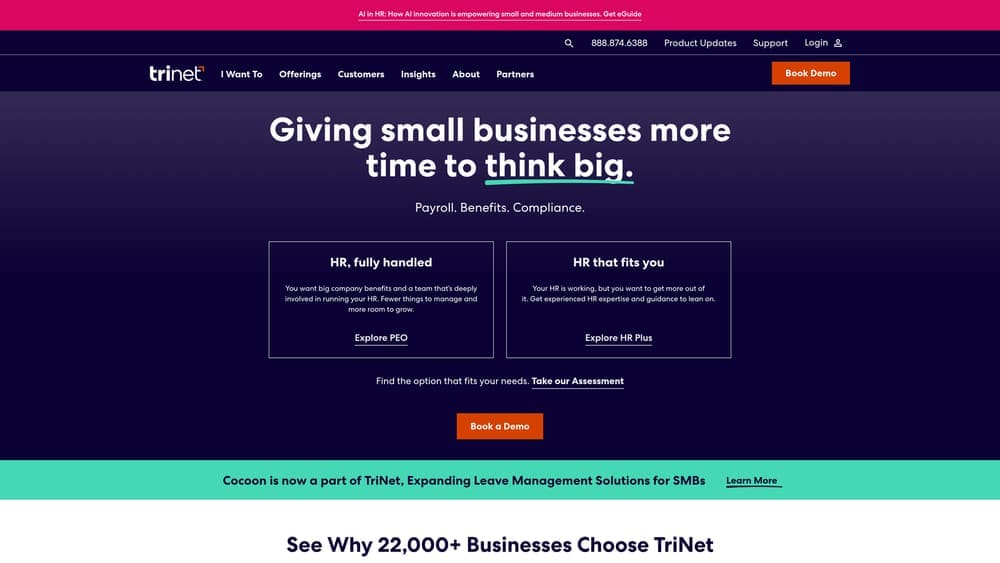
TriNet is a PEO with technology sector vertical expertise and benefits bundles designed specifically for tech company talent profiles.
Where This Tool Shines
TriNet’s strongest card in the SaaS M&A context is its vertical focus on technology companies. The benefits packages are designed for tech talent expectations, not generic workforce profiles. When you’re acquiring a SaaS team, those employees are evaluating whether their new employer’s benefits are comparable to what they had. A generic PEO benefits package can feel like a downgrade and accelerate attrition. TriNet’s tech-aligned offerings reduce that risk.
The risk mitigation and compliance support is also worth noting for SaaS companies entering new states through acquisition. TriNet has experience navigating the multi-state compliance complexity that distributed SaaS workforces generate.
Key Features
Tech-Industry Benefits Bundles: Benefits packages calibrated for technology sector talent expectations, not one-size-fits-all offerings.
Competitive Health and Retirement Plans: Health, dental, vision, and 401(k) options that help retain acquired SaaS employees during the transition window.
Multi-State Compliance Support: Risk mitigation and compliance guidance when acquisitions expand your state footprint.
Technology Sector HR Consulting: HR advisors with experience in tech industry dynamics, including the nuances of post-acquisition workforce management.
Employee Self-Service Platform: Online tools for employee-facing benefits management during transitions, reducing HR team burden.
Best For
SaaS companies where talent retention is the primary acquisition risk and benefits quality is the primary retention lever. TriNet’s vertical expertise is most valuable when the acquired team has strong tech-market benefits expectations.
Pricing
Custom pricing — typically structured as a percentage of payroll or per-employee-per-month depending on company size and services. Contact TriNet for a quote.
7. Multiplier
Best for: SaaS companies acquiring internationally distributed teams who need compliant cross-border employment infrastructure fast.
Multiplier is a global employment platform offering employer-of-record and PEO-like services across 150+ countries.
Where This Tool Shines
Most PEOs on this list are fundamentally domestic solutions. If your SaaS acquisition includes employees in the UK, India, Canada, or across the EU, you need something different. Multiplier fills that gap with compliant employer-of-record services that let you legally employ international team members without setting up legal entities in each country — which is often impractical on an M&A timeline.
The contractor-to-employee conversion capability is particularly relevant for SaaS acquisitions. Many SaaS companies rely heavily on 1099 contractors, and M&A often triggers reclassification analysis. Multiplier has structured processes for converting contractors to compliant employees across jurisdictions, which removes a significant compliance risk from the integration checklist.
Key Features
Employer-of-Record in 150+ Countries: Compliant international employment infrastructure without requiring legal entity setup in each country.
Contractor-to-Employee Conversion: Structured reclassification support for SaaS companies with contractor-heavy acquired workforces.
Localized Employment Contracts: Jurisdiction-specific contracts and statutory compliance across international markets.
Multi-Currency Payroll: Payroll processing in local currencies, reducing friction for internationally distributed acquired teams.
Compliant Benefits Administration: Statutory and supplemental benefits administration aligned to local requirements in each country.
Best For
SaaS companies whose acquisitions include international employees or contractors. If the acquired team is entirely US-based, a domestic PEO will serve you better. Multiplier’s value is specifically in cross-border employment complexity.
Pricing
Employer-of-record services start at $400/employee/month. Pricing varies by country and service scope.
8. Paychex PEO
Best for: SaaS acquirers absorbing smaller teams that previously had little or no formal HR infrastructure in place.
Paychex PEO is a scalable PEO with strong compliance support and structured onboarding workflows for teams new to formal HR administration.
Where This Tool Shines
Not every acquisition target is a well-structured company with clean HR records, documented policies, and compliant payroll history. Many SaaS acquisitions involve smaller startups where HR was an afterthought — founders running payroll manually, no formal benefits, independent contractors misclassified, and employment records scattered across spreadsheets. Paychex PEO is well-suited for absorbing that kind of messy baseline and bringing it into compliance without requiring the acquired company to have done everything right beforehand.
The dedicated payroll specialist model also adds a human touchpoint that helps during transitions where the acquired team has questions and the acquiring company’s HR team is already stretched thin managing the integration.
Key Features
Scalable Payroll and HR Administration: Handles small acquired teams effectively without minimum headcount requirements that price out smaller acquisitions.
New-State Compliance Support: Helps SaaS acquirers establish payroll compliance in states they’re entering for the first time through the deal.
Workers’ Compensation and Risk Management: Administration support that’s often missing from startup HR setups being absorbed in an acquisition.
Structured Onboarding Workflows: Defined processes for bringing acquired employees into the system, even when starting from a disorganized baseline.
Dedicated Payroll Specialist: A named contact for transition support rather than routing everything through a general support queue.
Best For
SaaS companies acquiring smaller startups or early-stage companies where the acquired team has minimal existing HR infrastructure. Also useful when the acquiring company’s internal HR team is small and needs hands-on PEO support during the integration period.
Pricing
Custom pricing based on headcount and service tier. Contact Paychex for a quote specific to your integration scenario.
Matching the Right PEO to Your M&A Situation
There’s no single right answer here because SaaS M&A integrations vary significantly in what makes them complicated. The right PEO depends on where your specific friction points are.
If your acquisition is domestic and speed is the primary constraint, Justworks is worth a serious look. If you’re integrating a team where IT access and HR onboarding need to happen simultaneously, Rippling’s combined platform is genuinely differentiated. For mid-market companies where talent retention is the real risk, Insperity’s dedicated HR support and benefits quality make a difference. If the deal involves international employees or contractor reclassification, Multiplier is the only option on this list built for that complexity.
For larger, compliance-heavy acquisitions, ADP TotalSource has the infrastructure depth. TriNet is the strongest fit when tech-sector benefits alignment is the primary retention lever. Paychex PEO is worth considering when you’re absorbing a startup that had essentially no formal HR in place.
The honest challenge is that most SaaS companies under acquisition pressure default to whoever their broker or legal team recommends, which may or may not be the best fit for the specific scenario. That’s exactly where a structured comparison helps.
Before you sign with any PEO — or auto-renew with your current one — it’s worth verifying that you’re actually getting the right fit at a fair price. Bundled fees, hidden administrative markups, and contracts that limit flexibility are common in this space. Don’t auto-renew. Make an informed, confident decision. A side-by-side comparison of what each provider actually offers for your specific integration scenario can surface gaps — and savings — that aren’t visible from a single vendor conversation.
