
PEO service failures rarely happen overnight. They build slowly: missed payroll tax deposits, surprise rate hikes, compliance gaps nobody catches until an audit letter arrives. If you’re researching PEO failure case studies, you’re already thinking the right way. Understanding what goes wrong is how you avoid it.
The common threads in most PEO disasters are poor vetting upfront, no ongoing monitoring, and zero leverage when things start sliding. This list covers the tools and resources that directly address those failure points. Each one maps to a specific failure pattern that shows up repeatedly when PEO relationships go sideways.
This isn’t a traditional software roundup. Think of it as a due-diligence toolkit built around the actual ways PEOs fail their clients.
1. PEO Metrics
Best for: Businesses evaluating or re-evaluating PEO providers who want unbiased, data-driven comparisons before committing.
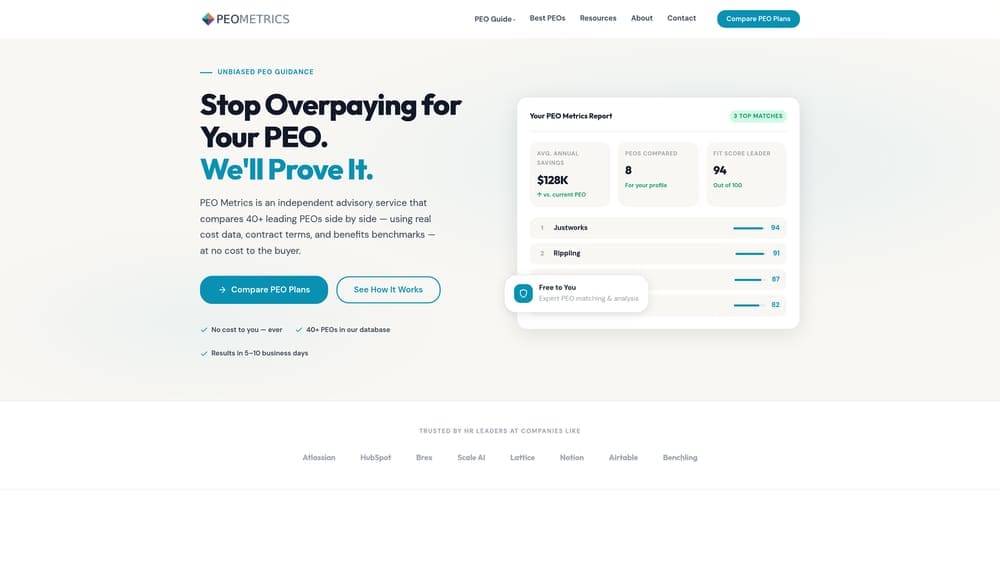
PEO Metrics is an independent PEO comparison platform that gives businesses side-by-side provider analysis with granular pricing and service data.
Where This Tool Shines
The most common root cause of PEO service failures is choosing the wrong provider in the first place. Businesses often select a PEO based on a sales pitch, a referral, or name recognition — without ever seeing how that provider’s pricing, contract terms, or service model actually compares to alternatives. By the time problems surface, you’re locked in.
PEO Metrics addresses this directly. Because it’s not affiliated with any single PEO, the guidance isn’t shaped by commission incentives or referral arrangements. You get a clearer picture of what you’re actually buying before you sign anything.
Key Features
Side-by-Side Provider Comparisons: Compare multiple PEOs on pricing structure, service scope, and contract terms in one place rather than juggling separate sales decks.
Transparent Pricing Analysis: Surfaces hidden cost structures and administrative markups that often don’t show up until the second year of a contract.
Unbiased Guidance: Not affiliated with any PEO provider, which matters when the advice you’re getting will influence a multi-year financial commitment.
Detailed Service Metrics: Goes beyond price to cover service quality indicators, coverage depth, and operational track record factors that affect day-to-day experience.
Best For
Businesses signing their first PEO agreement, companies approaching a renewal who want to pressure-test whether they’re still getting fair value, and HR leaders who suspect they’re overpaying but need data to back that up.
Pricing
Contact for consultation. The comparison service is designed to be accessible without a large upfront commitment — reach out directly to discuss your situation.
2. ESAC Accreditation Verification
Best for: Verifying a PEO’s financial stability and operational standards before handing over payroll responsibilities.
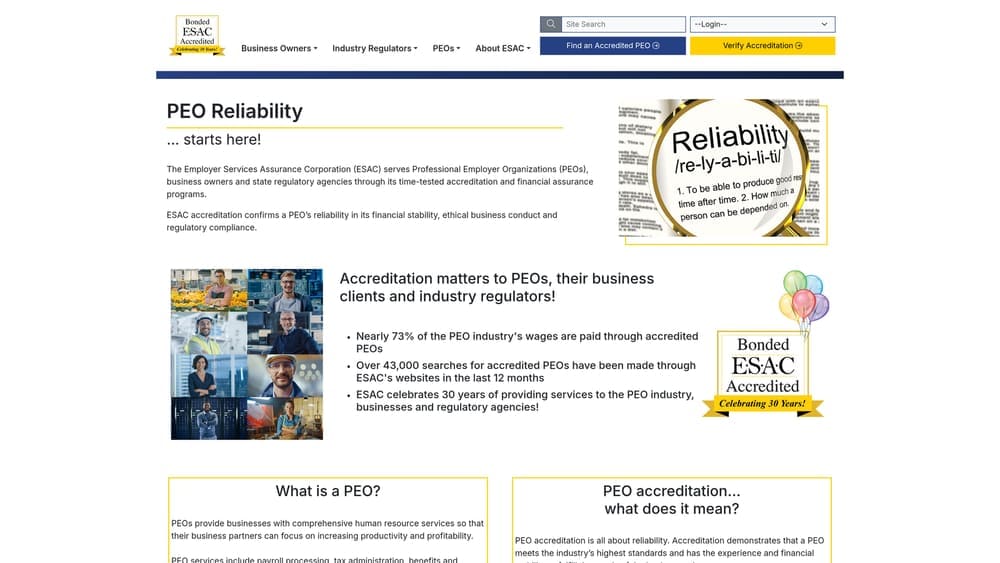
ESAC (Employer Services Assurance Corporation) is an independent accreditation body that verifies PEOs meet rigorous financial and operational standards, including a surety bond requirement.
Where This Tool Shines
PEO insolvency is one of the most damaging failure scenarios a business can face. When a PEO collects payroll taxes from clients but fails to remit them to the IRS, the client business can be held liable for those unpaid taxes. ESAC accreditation exists specifically to reduce this risk. Accredited PEOs must maintain a surety bond, submit to independent financial audits, and meet ongoing operational standards — not just pass a one-time review.
Checking ESAC status takes about two minutes. It’s one of the highest-signal due diligence steps you can take, and most businesses skip it entirely.
Key Features
Financial Assurance Program: Accredited PEOs maintain a surety bond, providing a layer of financial protection for client businesses.
Independent Financial Auditing: PEO financial statements are reviewed by independent auditors — not self-reported.
Searchable Accredited PEO Database: Quickly verify whether a PEO holds current ESAC accreditation before advancing discussions.
Ongoing Monitoring: Accreditation isn’t a one-time certification. ESAC monitors member PEOs continuously, which matters more than a snapshot credential.
Best For
Any business evaluating a PEO, but especially smaller companies where a payroll tax remittance failure would be financially catastrophic. Also valuable when reviewing a PEO you’re already using but haven’t fully vetted.
Pricing
Free to search. The accreditation costs are borne by the PEOs themselves, so checking status costs you nothing.
3. IRS CPEO Public Listing
Best for: Confirming federal tax compliance status and understanding which PEOs carry formal IRS certification.
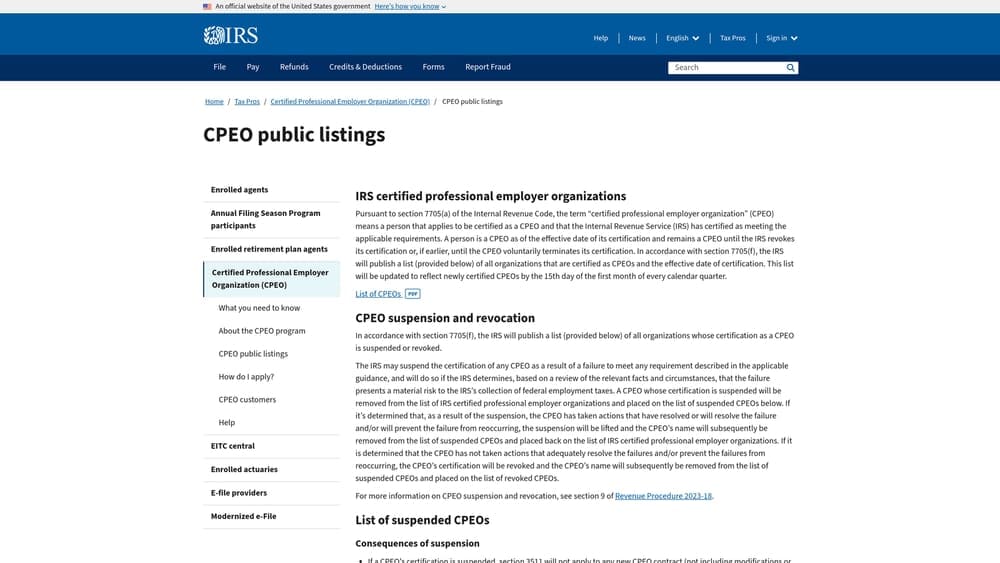
The IRS CPEO Public Listing is the official federal registry of Certified Professional Employer Organizations that have met IRS requirements for tax compliance and financial responsibility.
Where This Tool Shines
The IRS created the CPEO program partly in direct response to tax remittance failures in the PEO industry. When a PEO holds CPEO certification, it assumes sole liability for federal employment taxes on wages it pays to covered employees. That’s a meaningful legal protection for your business. Without it, you may share liability if your PEO fails to remit what it collected.
CPEO status also requires annual financial audits and ongoing compliance reporting, which means the IRS has visibility into the PEO’s operations. That’s a different level of accountability than an uncertified provider.
Key Features
Official IRS Certification: Confirms the PEO has met federal requirements for tax compliance, financial responsibility, and operational standards.
Sole Tax Liability Assumption: CPEO status means the PEO — not you — bears sole responsibility for federal employment taxes on covered wages.
Annual Financial Audits Required: Certified PEOs must submit audited financials annually, providing a consistent compliance check.
Regularly Updated Public Listing: The database is updated as certifications are granted, suspended, or revoked — so you can check current status, not just historical.
Best For
Businesses where federal employment tax liability is a significant concern, and any company that wants the strongest available protection against PEO tax remittance failures.
Pricing
Free. This is a public government resource maintained by the IRS.
4. NAPEO Member Directory
Best for: Quick baseline check on whether a PEO participates in the industry’s primary trade association and adheres to its code of ethics.
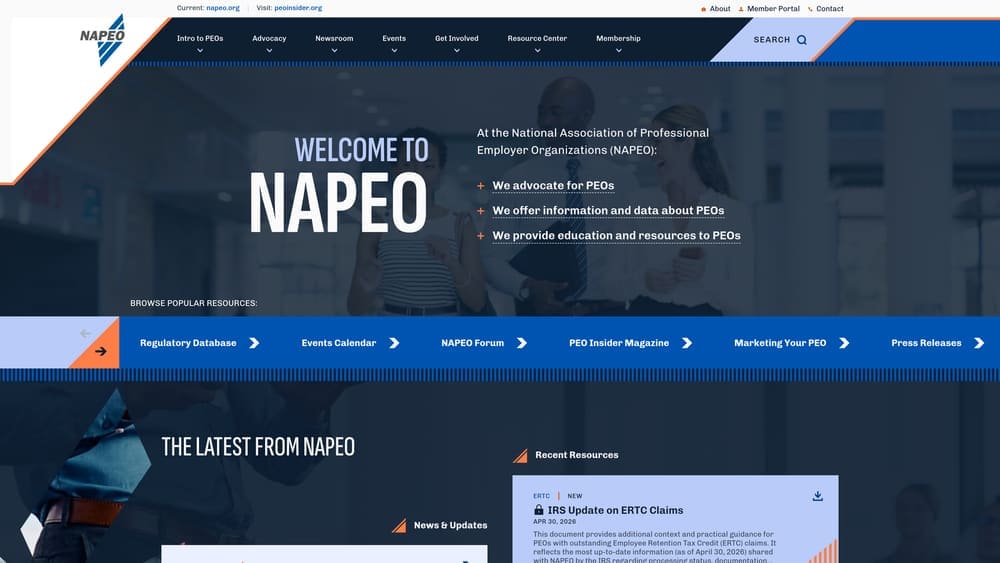
NAPEO (National Association of Professional Employer Organizations) is the industry’s main trade association, and its member directory confirms whether a PEO has agreed to its standards and code of conduct.
Where This Tool Shines
NAPEO membership isn’t a guarantee of quality — it’s a baseline. But it does mean the PEO has agreed to a code of ethics and participates in an industry community that has reputational stakes. PEOs operating outside any professional framework are a higher-risk category, particularly for smaller operators who lack the legal resources to pursue disputes.
Beyond vetting, NAPEO is also a useful resource for understanding state-level PEO regulations, which vary significantly and affect what protections you have as a client business.
Key Features
Searchable Member Directory: Quickly confirm whether a PEO holds current NAPEO membership.
Code of Ethics Requirement: Members agree to conduct standards that provide at least some accountability framework.
State Regulatory Information: NAPEO tracks state-level PEO licensing and registration requirements, which is useful context when evaluating a provider’s compliance posture.
Industry Education Resources: Helps buyers understand what PEOs are supposed to do — useful for identifying when a provider isn’t meeting standard expectations.
Best For
First-time PEO buyers who want a quick credibility check, and businesses comparing multiple providers who want to filter out providers operating entirely outside industry standards.
Pricing
Free to search the member directory. No account required.
5. State PEO Licensing Databases
Best for: Confirming a PEO holds required state-level licenses or registrations in your jurisdiction before signing any agreement.
State PEO licensing databases are public records systems maintained by individual states that track whether a PEO is properly registered or licensed to operate where your business is located.
Where This Tool Shines
Unlicensed PEOs are a recurring factor in service failures. Many business owners don’t realize that PEO licensing requirements vary dramatically by state — some states require full licensing with financial filing requirements, others require registration, and some have minimal oversight. Operating with an unlicensed PEO in a state that requires licensure creates real legal exposure for your business.
Checking state licensing status also surfaces something important: disciplinary actions. If a PEO has had its license suspended, faced enforcement actions, or has unresolved regulatory issues in your state, that information is often on record and publicly accessible.
Key Features
State-Specific Registration Verification: Confirms the PEO is properly authorized to operate in your state.
Disciplinary Action Records: License status searches often reveal past enforcement actions or complaints that wouldn’t appear in a standard Google search.
Financial Filing Requirements: Some states require PEOs to file financial statements as a condition of licensure, adding another layer of visibility into stability.
Varies Meaningfully by State: Requirements differ enough that this check needs to be done specifically for your jurisdiction, not generically.
Best For
Businesses in states with active PEO licensing requirements, and any company operating across multiple states who needs to verify a PEO’s compliance posture in each jurisdiction.
Pricing
Free. These are public government records, though the process for accessing them varies by state.
6. SOC Report Request Process
Best for: Businesses that want independent verification of a PEO’s payroll processing controls and data security practices.
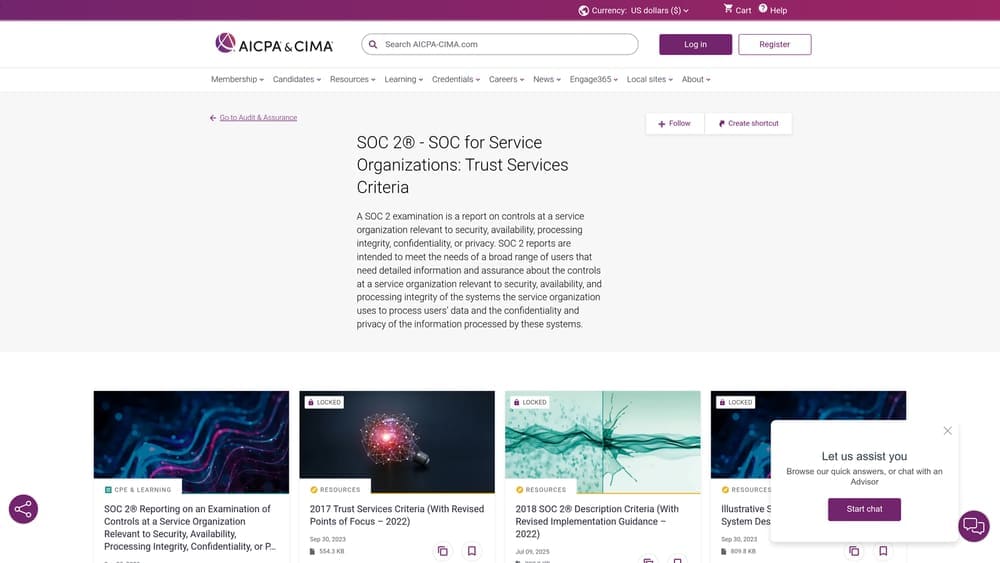
SOC (System and Organization Controls) reports are independent third-party audits that assess how a company handles financial reporting controls, data security, and operational procedures.
Where This Tool Shines
Payroll errors and data security failures are two of the most operationally damaging PEO problems a business can experience. A SOC 1 report tells you how well a PEO controls its payroll processing — the systems, checks, and procedures that prevent errors from reaching your employees’ paychecks. A SOC 2 report covers data security, availability, and processing integrity, which matters when you’re handing over sensitive employee information.
Most businesses never ask for these reports. That’s a mistake. A reputable PEO should provide them willingly. Hesitation or refusal to share SOC reports is itself a useful signal about how a PEO views accountability.
Key Features
SOC 1 Report: Covers financial reporting controls — specifically how the PEO manages payroll accuracy and the internal procedures that prevent processing errors.
SOC 2 Report: Covers data security, system availability, and processing integrity — directly relevant when a PEO holds sensitive employee records.
Independent Third-Party Audit: These aren’t self-assessments. A licensed CPA firm conducts the audit and issues the report.
Willingness to Share Is Itself a Signal: How a PEO responds to this request tells you something about their operational transparency before you’re locked into a contract.
Best For
Any business handing payroll processing to a PEO, and especially companies in regulated industries or those with significant data privacy obligations.
Pricing
Free to request from the PEO. The PEO bears the cost of the audit itself. Your cost is only the time to ask and review.
7. BBB and State AG Complaint Search
Best for: Surfacing real complaint patterns from actual businesses — the kind of information that doesn’t appear in a PEO’s marketing materials.
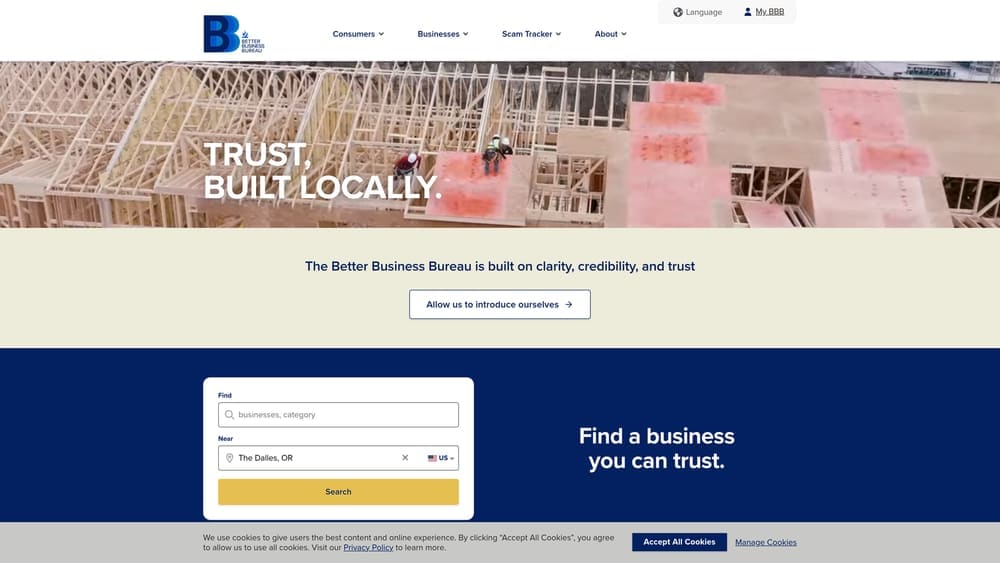
Better Business Bureau profiles and state Attorney General complaint databases capture documented disputes between businesses and service providers, including patterns that reveal systemic problems rather than isolated incidents.
Where This Tool Shines
A PEO’s website will always show curated testimonials. What it won’t show you is the billing dispute that took six months to resolve, the payroll errors that recurred across multiple clients, or the service gaps that appeared after the first renewal. BBB profiles and AG databases show you that side of the picture.
The real value isn’t the BBB rating itself — it’s the complaint patterns. A PEO with 40 complaints about billing discrepancies is telling you something specific about how they handle pricing. A cluster of complaints about unresponsive support after onboarding tells you something different. Read the actual complaints, not just the summary score.
Key Features
Complaint History and Resolution Patterns: Shows not just whether complaints exist, but how the company responded — and whether issues were actually resolved.
BBB Rating Methodology: Based on responsiveness to complaints and transparency, which is a reasonable proxy for how a PEO handles problems when they arise.
State AG Databases: May surface formal enforcement actions, investigations, or patterns of consumer complaints that go beyond what BBB captures.
Recurring Issue Identification: Patterns matter more than individual complaints. Multiple billing disputes or service delivery complaints point to systemic problems, not one-off situations.
Best For
Any business in the evaluation phase, and especially those considering a PEO they haven’t heard of through trusted referrals. Also useful when reviewing a current PEO relationship that feels like it’s underperforming.
Pricing
Free. Both BBB and state AG complaint databases are public consumer protection resources.
8. PEO Contract Review Checklist
Best for: Businesses reviewing a PEO service agreement who want to identify the specific contract terms most associated with service failures and disputes.
A structured PEO contract review checklist focuses attention on the clauses that actually determine what happens when things go wrong — not just the services promised when things go right.
Where This Tool Shines
Most PEO service failures have a contract dimension. Either the termination clause made it prohibitively expensive to leave when problems surfaced, the rate guarantee language was vague enough to allow significant mid-contract increases, or the liability allocation left the client business exposed in ways they didn’t understand when they signed.
Reading a PEO contract without a structured framework means you’ll focus on the service descriptions and miss the clauses that actually govern your exposure. A checklist keeps you focused on the terms that have historically caused the most damage.
Key Features
Termination Clause Analysis: Notice periods, early termination penalties, and data portability rights — what happens when you need to leave, and how hard is it to do so cleanly.
Rate Guarantee Language: Which fees are actually locked, which are subject to change, and what triggers allow the PEO to adjust pricing mid-contract.
Liability Allocation Review: Who bears responsibility when a payroll error occurs, when a compliance filing is missed, or when a workers’ comp claim is mishandled.
Service Level Commitments: Whether the promised service standards are measurable and enforceable, or written broadly enough to be meaningless in a dispute.
Best For
Any business before signing a new PEO agreement, and companies approaching renewal who want to understand what they’re actually agreeing to for another contract term. Especially valuable for businesses that have never had legal review of their current PEO contract.
Pricing
Free. PEO Metrics provides a service agreement guide covering these key contract areas — accessible without a paid engagement.
Matching the Right Tools to the Failure Patterns That Matter Most
The failures that hurt businesses most tend to cluster around a few specific breakdowns. Knowing which tool addresses which risk makes this list more actionable.
If your primary concern is financial insolvency risk: Start with ESAC accreditation verification and IRS CPEO status. These two checks address the scenario where a PEO collects your payroll taxes and doesn’t remit them — one of the most financially damaging outcomes possible.
If you’re worried about hidden fees and pricing surprises: PEO Metrics and the contract review checklist work together here. Transparent pricing comparison before you sign, combined with a careful read of rate guarantee language in the contract, is the most effective combination against fee escalation.
If compliance gaps are your main exposure: State licensing databases and SOC reports are your tools. Verifying a PEO is properly licensed in your jurisdiction, combined with independent audit verification of their internal controls, addresses the compliance failure pattern directly.
If you want a complete picture before signing: Run the full stack. ESAC, CPEO, NAPEO, state licensing, BBB complaints, SOC reports, and contract review. It sounds like a lot, but most of these checks take under fifteen minutes each. The cost of skipping them can be measured in years of headaches.
The businesses that end up as PEO failure case studies almost always had warning signs available. Unlicensed providers, no ESAC accreditation, complaint patterns on public record, vague contract language. The information was there. The vetting just didn’t happen.
Before you sign that PEO renewal, make sure you’re not leaving money on the table. Many businesses unknowingly overpay because of bundled fees, hidden administrative markups, and contracts designed to limit flexibility. Don’t auto-renew. Make an informed, confident decision.
