
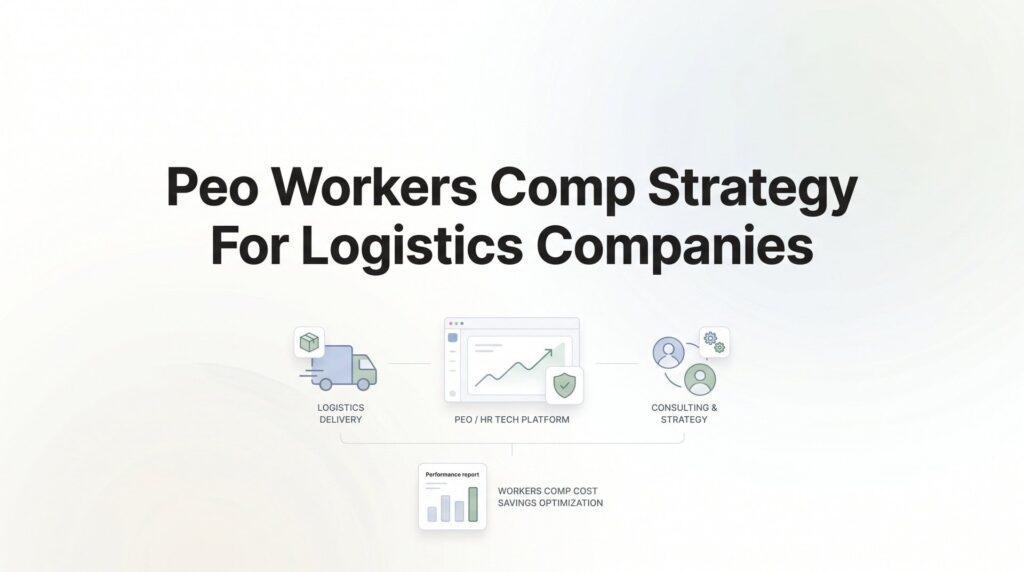
Logistics companies face a workers’ comp problem that most PEO providers aren’t built to solve. Warehouse injuries, fleet incidents, and repetitive motion claims pile up fast, and when your experience modification rate (EMR) climbs above 1.0, your options get expensive in a hurry. A PEO can help by pooling your risk under a master policy and negotiating group rates that individual companies can’t access, but only if the PEO actually understands logistics risk.
The reality is that many PEOs prefer clean, low-risk white-collar clients. Some will decline logistics businesses outright. Others will accept you but misprice your class codes, which can cost you more than going it alone. The NCCI class codes involved in logistics — warehouse (8018), long-haul trucking (7219), short-haul trucking (7229), and clerical (8810) — carry wildly different rates, and a PEO that doesn’t split them correctly is leaving your money on the table.
This guide covers the PEO providers and comparison tools that actually serve logistics operations, along with what distinguishes each one. If you want broader context on how PEOs handle risk management, the PEO Metrics resource library covers foundational PEO risk strategy in more depth.
1. PEO Metrics
Best for: Logistics companies that want to compare multiple PEOs on workers’ comp pricing before committing
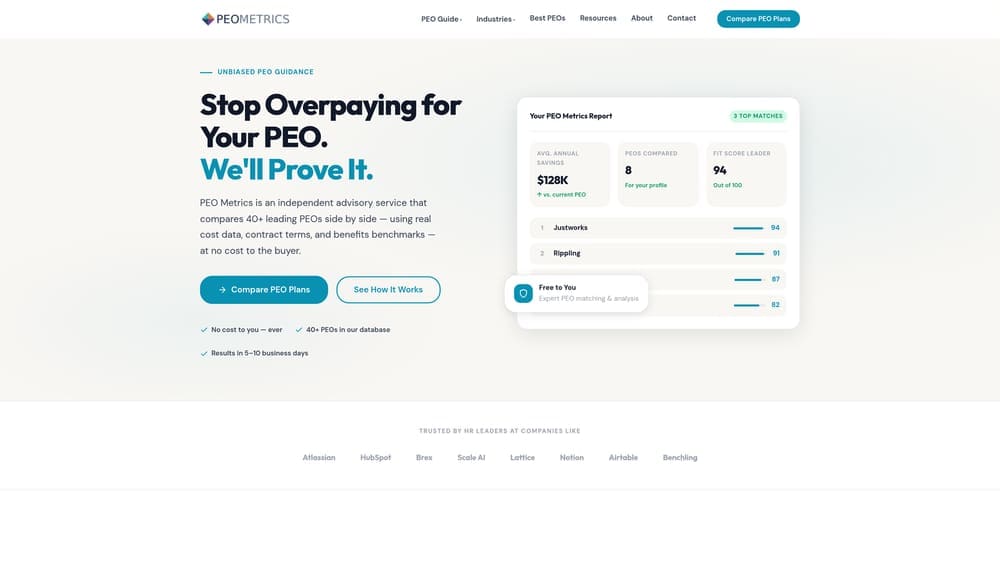
PEO Metrics is a free PEO comparison platform built specifically to give businesses transparent, side-by-side provider data, including workers’ comp rate breakdowns by class code and risk profile.
Where This Tool Shines
The biggest problem logistics companies run into when shopping PEOs isn’t finding providers — it’s figuring out which ones will actually price their risk fairly. PEO Metrics addresses this directly by showing you how different providers handle logistics-specific class codes, so you can spot the ones that lump warehouse and trucking into unfavorable rate buckets versus those that price them competitively.
Because PEO Metrics isn’t tied to any single provider, the comparisons are unbiased. You’re not being steered toward a partner relationship. You’re getting a cleaner read on what the market actually looks like for your specific risk profile, which is genuinely useful when your EMR or class code mix makes you a harder-to-place account.
Key Features
Side-by-Side Provider Comparisons: View multiple PEOs against each other on workers’ comp rates, admin fees, and service structure in a single view.
Class Code-Specific Pricing Analysis: Breakdowns by logistics class codes — warehouse, trucking, clerical — so you can see exactly where rate differences come from.
Unbiased Guidance: No single-provider affiliation means the analysis isn’t shaped by referral incentives.
Risk Profile Matching: Helps identify which PEOs accept and competitively price logistics risk, including businesses with elevated EMR.
Pricing Transparency: Surfaces bundled fee structures and admin markups that are easy to miss in standard PEO proposals.
Best For
Any logistics company currently shopping for a PEO, evaluating a renewal, or unsure whether their current provider is pricing them fairly. Particularly useful for businesses with mixed class code workforces where the spread between warehouse and clerical rates is significant.
Pricing
Free to use. PEO Metrics earns from provider relationships, not from the businesses using the platform, so there’s no cost to run a comparison.
2. Insperity
Best for: Mid-size logistics operations that need hands-on safety and loss control support
Insperity is a full-service PEO with a dedicated risk management practice and on-site safety consulting, making it one of the stronger options for logistics companies that want more than just workers’ comp administration.
Where This Tool Shines
What separates Insperity in the logistics context is the loss-control piece. They can put consultants on-site to assess warehouse layouts, fleet protocols, and injury patterns, which directly affects your claims frequency over time. That matters a lot when you’re trying to bring an elevated EMR back under 1.0.
Their return-to-work program support is also worth noting. Getting injured workers back into modified duty roles faster reduces claim duration and long-term cost, and Insperity has infrastructure to support that process rather than leaving it entirely to the employer.
Key Features
On-Site Safety Consultants: Dedicated loss-control professionals available for physical site assessments and protocol reviews.
Integrated Workers’ Comp Administration: Claims handling, reporting, and compliance built into the HR platform.
Strong Carrier Relationships: Group purchasing power that can yield competitive rates for logistics class codes.
Return-to-Work Support: Structured programs to reduce claim duration and total cost per incident.
Comprehensive HR Platform: Full benefits, payroll, and compliance infrastructure alongside the risk management layer.
Best For
Mid-size logistics operations with 25 to 200 employees, particularly those dealing with recurring injury patterns that need operational intervention, not just insurance coverage. Less suited for very small operations or companies looking for the lowest-cost option.
Pricing
Custom pricing based on headcount and risk profile. Typically requires a minimum of five employees. Expect pricing to reflect the premium service level.
3. ADP TotalSource
Best for: Multi-state logistics operations navigating complex jurisdictional workers’ comp requirements
ADP TotalSource is an enterprise-grade PEO with deep multi-state compliance infrastructure, built for companies that can’t afford gaps in coverage when operating across state lines.
Where This Tool Shines
Multi-state logistics operations face a compliance layer that most PEOs handle inconsistently. Monopolistic state funds in Ohio, Washington, Wyoming, and North Dakota require separate handling because private workers’ comp insurance isn’t permitted there. ADP TotalSource has the infrastructure to navigate these jurisdictions without leaving you exposed.
The class code assignment automation is also meaningful at scale. When you’re running distribution centers across multiple states, manual class code management creates errors and audit risk. ADP’s systems handle this across jurisdictions, which reduces both compliance exposure and administrative burden.
Key Features
Multi-State Compliance Handling: Includes navigation of monopolistic state fund requirements in Ohio, Washington, Wyoming, and North Dakota.
Automated Class Code Assignment: Reduces error risk when managing workers across multiple states and job classifications.
Large Risk Pool: Scale absorbs higher-risk logistics class codes better than smaller PEOs with thinner pools.
Integrated Payroll and Reporting: Workers’ comp reporting tied directly to payroll data, reducing reconciliation issues at audit time.
Established Carrier Relationships: ADP’s volume gives them negotiating leverage with major carriers.
Best For
Logistics companies operating in five or more states, particularly those running into compliance complexity at state borders. Better suited for companies with 25 or more employees where the infrastructure investment pays off.
Pricing
Custom pricing. Generally positioned for companies with 25 or more employees. Enterprise scale means pricing reflects a more comprehensive service package.
4. Paychex PEO
Best for: Logistics companies with seasonal workforce swings that want to avoid large upfront workers’ comp deposits
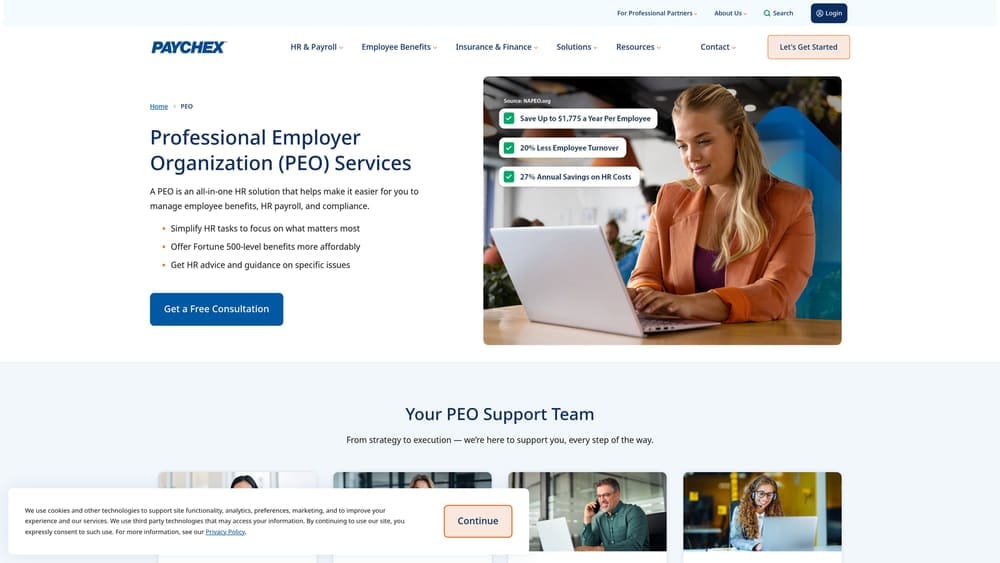
Paychex PEO offers pay-as-you-go workers’ comp billing tied directly to payroll runs, which solves a real cash flow problem for logistics operations that staff up and down throughout the year.
Where This Tool Shines
Traditional workers’ comp policies require upfront deposits based on estimated annual payroll, then true up at audit. For logistics companies that spike headcount during peak shipping seasons, this creates cash flow strain and audit surprises. Pay-as-you-go billing eliminates the deposit and aligns payments with actual payroll, which is a straightforward operational improvement.
The online safety training library is a practical add-on that often gets underutilized. Warehouse safety and fleet modules can support OSHA compliance documentation and help build the training records that matter when a claim goes to litigation.
Key Features
Pay-As-You-Go Workers’ Comp: Premiums tied to actual payroll runs, eliminating large upfront deposits and reducing audit exposure.
Seasonal Scalability: Headcount can flex without triggering deposit adjustments or policy amendments.
Safety Training Library: Online modules covering warehouse operations and fleet safety.
Scalable Platform: Handles operations from small teams to mid-size logistics firms without requiring a platform switch.
Integrated Payroll: Workers’ comp billing and payroll run on the same system, reducing reconciliation errors.
Best For
Small to mid-size logistics companies with seasonal or variable headcount, particularly those that have been burned by workers’ comp deposit requirements or year-end audit surprises. Minimum headcount requirements vary by region.
Pricing
Custom pricing with pay-as-you-go workers’ comp included as a billing option. Minimum headcount varies by region. Worth asking specifically how they handle logistics class codes during the proposal process.
5. PrestigePEO
Best for: Logistics companies with elevated EMR or challenging claims histories that larger PEOs have declined
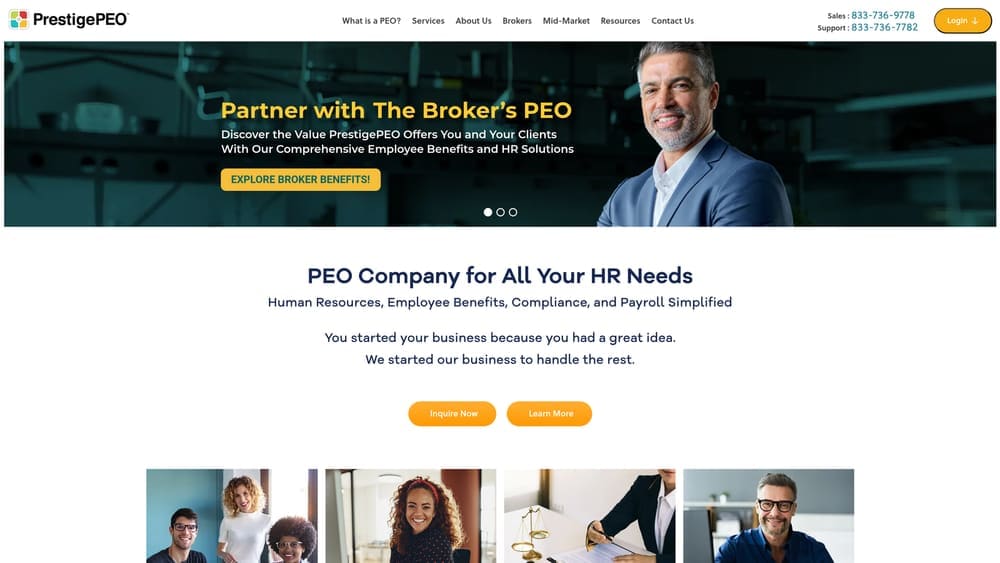
PrestigePEO is known for more flexible underwriting in higher-risk verticals, making it a realistic option when the bigger national PEOs have passed on your account.
Where This Tool Shines
Most large PEOs are selective about the risk they bring into their master policy pool. A logistics company with an EMR above 1.2 or a history of significant claims will often get declined or quoted at rates that make the PEO model pointless. PrestigePEO has a different appetite for this type of account, which makes them worth evaluating if you’ve been turned away elsewhere.
The personalized account management model is also a meaningful differentiator. Larger PEOs often route service through call centers, which creates friction when you’re dealing with an active claim or a compliance question. PrestigePEO’s model keeps you closer to a dedicated contact, which matters when things go sideways.
Key Features
Flexible Underwriting: More willing to accept warehouse and transportation class codes, including accounts with elevated EMR.
Higher-Risk Account Acceptance: Realistic option for companies that have been declined by larger national PEOs.
Personalized Account Management: Dedicated contacts rather than call-center routing for service and claims questions.
Northeast and Mid-Atlantic Strength: Particularly strong carrier relationships and market presence in those regions.
Competitive Pricing for Hard-to-Place Accounts: Often more competitive than the surcharges other PEOs apply to higher-risk verticals.
Best For
Logistics companies with a difficult claims history, elevated EMR, or operations that have been declined or priced out by larger providers. Also a strong fit for companies in the Northeast and Mid-Atlantic corridor.
Pricing
Custom pricing. Tends to be competitive relative to the surcharges larger PEOs apply to higher-risk accounts. Request a detailed workers’ comp rate breakdown by class code during the proposal review.
6. Justworks
Best for: Smaller logistics operations with mixed office and light warehouse staff who want simple, predictable pricing
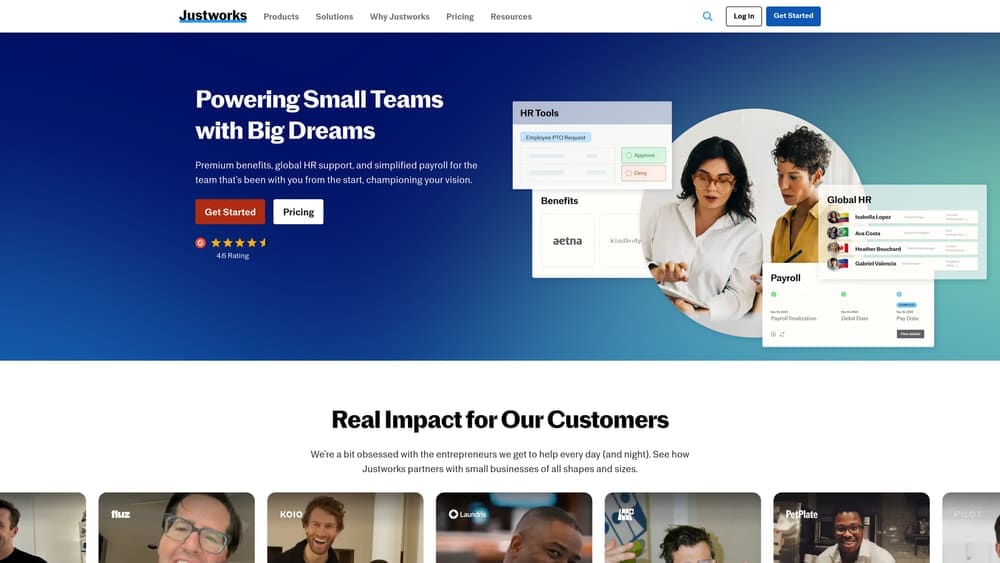
Justworks offers flat per-employee pricing with workers’ comp included, which works well when your workforce is a mix of lower-risk roles and you want pricing clarity without complex negotiations.
Where This Tool Shines
Justworks built their product around simplicity, and that’s genuinely useful for smaller logistics companies that don’t have a dedicated HR team managing benefits and compliance. The flat pricing model removes the guesswork, and workers’ comp being bundled into the per-employee fee means no separate policy to manage or audit to worry about.
The caveat for logistics is real: Justworks works best when your workforce skews toward lower-risk classifications. If your headcount is primarily heavy warehouse or long-haul trucking, the flat pricing model may not reflect your actual risk profile favorably, and you may find better value with a provider that prices by class code.
Key Features
Flat Per-Employee Pricing: Workers’ comp included in the monthly fee, no separate policy or deposit required.
Transparent Pricing Structure: Published rates with no hidden admin markups or complex fee structures.
Clean Onboarding Interface: Straightforward platform for employee onboarding, benefits enrollment, and compliance.
Benefits Access: Access to group health, dental, and vision through the same platform.
Best for Mixed Workforces: More favorable when clerical and light-duty roles make up a meaningful share of headcount.
Best For
Small logistics companies with 5 to 50 employees and a mixed workforce that includes office staff, dispatchers, and light warehouse roles. Less suited for operations that are primarily heavy warehouse or trucking.
Pricing
Basic plan starts at $59 per employee per month with workers’ comp included. Plus plan at $109 per employee per month. Transparent published pricing, which is relatively rare in the PEO space.
7. Oasis (Paychex Subsidiary)
Best for: Logistics companies concentrated in Florida, Texas, Georgia, and other Sun Belt states
Oasis operates as a Paychex subsidiary with its own account management structure and regional carrier relationships that can yield better workers’ comp rates in high-logistics-volume Sun Belt markets.
Where This Tool Shines
Workers’ comp rates vary significantly by state, and carrier relationships in specific markets matter more than most businesses realize. Oasis has built strong regional carrier relationships in states like Florida, Texas, and Georgia, which are major logistics hubs with significant workers’ comp rate variation. If your operations are concentrated in those markets, Oasis’s regional positioning can translate to real cost advantages.
The claims advocacy function is worth highlighting. Having a dedicated team that actively manages claims toward resolution, including coordinating return-to-work programs, reduces total claim cost over time. In logistics, where claims can escalate quickly, this kind of active management has a direct impact on your EMR trajectory.
Key Features
Regional Carrier Relationships: Strong market presence in Sun Belt states with carrier access that can yield competitive logistics rates.
Dedicated Risk Management Team: Industry-specific experience in managing logistics workers’ comp programs.
Claims Advocacy: Active claims management and return-to-work coordination to reduce total claim cost.
Paychex Infrastructure Integration: Access to Paychex payroll and HR systems with separate, dedicated account management.
Return-to-Work Coordination: Structured support for getting injured workers back into modified duty roles.
Best For
Logistics companies with operations primarily in Florida, Texas, Georgia, or other Sun Belt states. Also a good fit for companies that want the infrastructure of a large PEO but prefer a more regional, relationship-based service model.
Pricing
Custom pricing. Operates independently from Paychex PEO with separate account management and proposal process. Request a comparison if you’re also evaluating Paychex directly.
8. CoAdvantage PEO
Best for: Logistics companies with clean safety records that want to leverage their EMR for better program pricing
CoAdvantage offers customizable workers’ comp program structures, including loss-sensitive options that reward logistics companies with strong claims histories rather than pooling them with higher-risk accounts.
Where This Tool Shines
Most PEOs pool all their clients under a master policy, which can actually penalize logistics companies with clean records if the overall pool is heavy with high-claim accounts. CoAdvantage’s loss-sensitive and partially self-insured program options break from that model, letting companies with favorable EMR access pricing structures that reflect their actual risk rather than the pool average.
This is a meaningful differentiator for logistics operations that have invested in safety programs and have the claims history to show for it. If your EMR is below 0.9 and you’ve been getting pooled pricing that doesn’t reflect that, CoAdvantage is worth a direct conversation.
Key Features
Loss-Sensitive Program Options: Pricing structures that reward clean claims history rather than averaging it into a larger pool.
Partially Self-Insured Options: For qualifying companies, the ability to retain more risk in exchange for lower base premiums.
Customizable Safety Programs: Tailored warehouse and fleet compliance programs built around your specific operations.
Scalable Fit: Serves companies from 25 to 500 employees, covering most mid-market logistics operations.
EMR-Sensitive Pricing: Program structure adjusts based on your claims history, not just class code averages.
Best For
Mid-market logistics companies with 25 to 500 employees and a clean or improving claims history. Particularly valuable for operations that feel they’re being overcharged relative to their actual risk profile under a standard pooled PEO arrangement.
Pricing
Custom pricing. Program structure, whether fully insured or loss-sensitive, affects total cost significantly. The loss-sensitive option typically requires a minimum headcount and claims history review before it’s offered.
Finding the Right Fit Without Overpaying
The right PEO for a logistics company depends on three things: your headcount, your EMR, and where you operate. Getting those three variables wrong in your evaluation process leads to either overpaying or ending up with a provider that can’t actually serve your risk profile.
Here’s a rough framework based on the options covered above:
If you’re shopping blind and don’t know what’s competitive: Start with PEO Metrics. It’s free, unbiased, and shows you how different providers actually price logistics class codes before you spend time in proposal conversations.
If your EMR is elevated and you’ve been declined elsewhere: PrestigePEO is the most realistic option. They have the underwriting appetite for harder-to-place logistics accounts that larger national PEOs pass on.
If you’re operating across multiple states: ADP TotalSource handles the jurisdictional complexity, including monopolistic state funds, better than most. Oasis is worth adding to the comparison if your footprint is Sun Belt-heavy.
If your EMR is clean and you want pricing that reflects it: CoAdvantage’s loss-sensitive options let strong performers access better structures instead of subsidizing higher-risk pool members.
If you have seasonal headcount swings: Paychex PEO’s pay-as-you-go billing model eliminates the deposit and audit surprise problem that catches logistics companies off guard.
If you’re a smaller operation with mixed office and warehouse staff: Justworks offers the simplest pricing model, though it works best when your workforce isn’t primarily heavy warehouse or trucking.
One thing worth emphasizing: the class code split matters more than most logistics companies realize when evaluating PEO proposals. A provider that doesn’t properly separate warehouse, trucking, and clerical classifications can cost you significantly, even if their headline rate looks competitive. Always ask for a line-item breakdown by class code before comparing proposals.
Before you sign that PEO renewal, make sure you’re not leaving money on the table. Many businesses unknowingly overpay because of bundled fees, hidden administrative markups, and contracts designed to limit flexibility. Don’t auto-renew. Make an informed, confident decision.
