

Grease trap pumping looks straightforward from the outside. You pump the trap, haul the waste, dispose of it properly, and move on to the next job. But if you’re running one of these operations, you know the HR reality is a lot messier than that.
You’ve got field crews doing hazardous waste work in confined spaces, CDL drivers with DOT compliance requirements, workers’ comp exposure that most generic PEOs don’t underwrite well, and seasonal staffing fluctuations that make headcount planning genuinely difficult. Throw in OSHA 1910.146 (confined space entry), FOG disposal regulations that vary by municipality, and multi-state compliance if you’ve expanded beyond your home market — and you’ve got a workforce profile that most off-the-shelf PEO solutions weren’t designed for.
The right PEO can meaningfully reduce your workers’ comp costs, handle field payroll without friction, and keep you on the right side of OSHA and environmental regulators. The wrong one will misprice your risk, misclassify your workers’ comp codes, and charge you for services built for office environments you’ll never use.
Here are the top PEO providers worth evaluating if you run a grease trap pumping operation — along with one essential tool to use before you sign anything.
1. PEO Metrics
Best for: Grease trap operators comparing multiple PEO providers before committing to a contract.
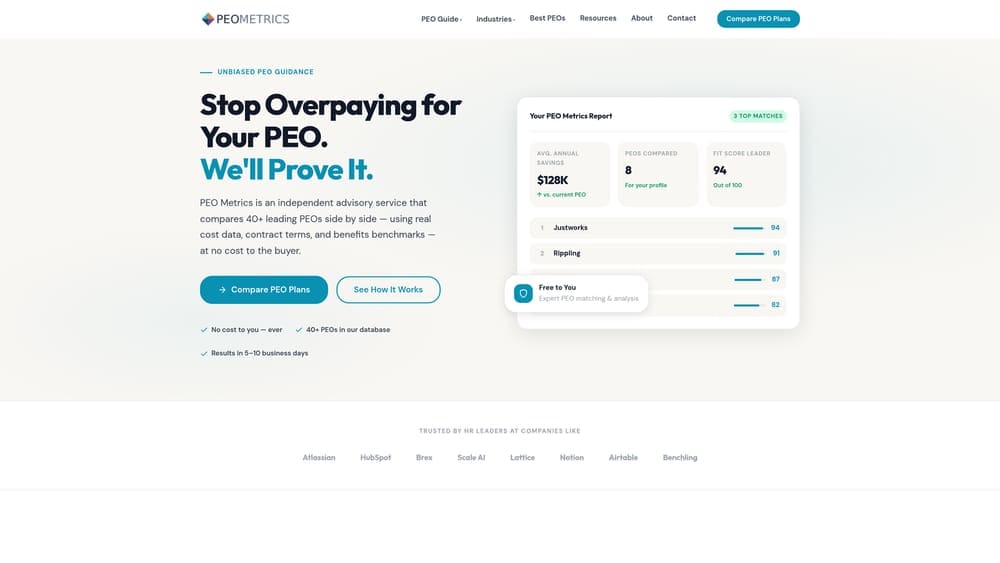
PEO Metrics is a PEO comparison platform that helps businesses evaluate providers side-by-side on pricing, services, and contract terms — before signing anything.
Where This Tool Shines
PEO Metrics isn’t a PEO itself. It’s the tool you use before choosing one. That distinction matters a lot for grease trap operators, because this industry has specific risk characteristics — hazardous waste handling, confined space work, vehicle fleets — that cause real pricing variation across providers. What one PEO quotes you for workers’ comp may be dramatically different from what another quotes for the exact same workforce.
Most business owners pick a PEO based on a sales rep’s pitch and a brochure. PEO Metrics gives you a structured way to compare what providers are actually charging, identify whether workers’ comp classification codes are accurate, and understand what you’re getting for the fee. For an industry where comp rates can make or break the economics of a PEO relationship, this kind of visibility is genuinely valuable.
Key Features
Side-by-Side Provider Comparisons: Compare multiple PEO providers on pricing, services, and contract terms in one place rather than managing separate sales conversations.
Industry-Specific Risk Analysis: Accounts for high-risk workforce profiles, including the kind of hazardous and field-based work common in grease trap operations.
Workers’ Comp Classification Review: Helps identify whether comp codes are accurate before you commit — a critical check for any high-hazard field service business.
Unbiased Guidance: No provider kickbacks or sales incentives. The analysis is designed to surface the best fit, not the best commission.
Useful for Switchers Too: Not just for first-time PEO buyers — operators coming off a bad PEO experience can use it to avoid repeating the same mistake.
Best For
Any grease trap operation evaluating PEO options for the first time, or operators who suspect they’re overpaying on their current arrangement. Particularly useful if workers’ comp is your primary cost driver and you want to pressure-test what you’re being quoted.
Pricing
Free to use the comparison tools. Advisory services pricing varies based on scope. Worth starting here regardless of which PEO you ultimately choose.
2. Insperity
Best for: Mid-size grease trap operations (40+ employees) that want full-service HR infrastructure and strong benefits.
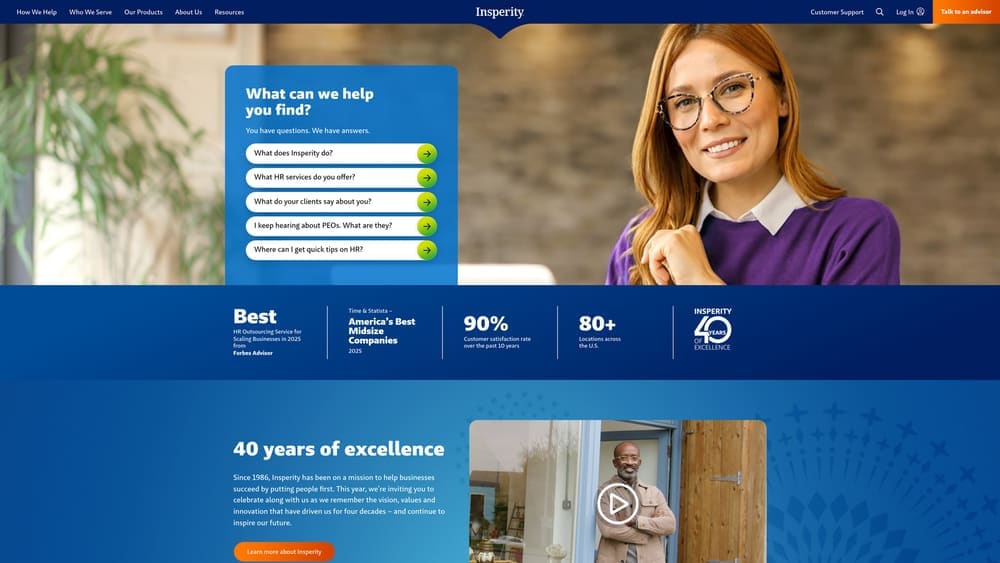
Insperity is one of the largest CPEO-certified PEOs in the U.S., known for dedicated HR specialists and robust compliance infrastructure.
Where This Tool Shines
Insperity’s real strength is the depth of its HR infrastructure. You get a dedicated HR specialist assigned to your account — not a call center — which matters when you’re dealing with a workers’ comp claim from a confined space incident or navigating a DOT compliance issue. Their compliance team is built for OSHA-exposed industries, and their workers’ comp management is more sophisticated than most smaller PEOs can offer.
The tradeoff is cost. Insperity sits at the premium end of the market, and that premium is harder to justify if you’re running a crew of 10 or 15. Where they shine is for operations that have grown to the point where HR complexity is real and the cost of a mistake — a misclassified worker, a botched comp claim, a compliance gap — is genuinely significant.
Key Features
Dedicated HR Specialist: A named HR professional assigned to your account, not a rotating support queue.
Workers’ Comp Management: Robust claims support and risk management built for industries with meaningful injury exposure.
CPEO Certification: Payroll tax liability transfers to Insperity, reducing your IRS exposure.
Multi-State Compliance: Strong infrastructure for operators running crews across state lines.
Competitive Benefits Packages: Access to large-employer health and benefits options that small field service companies can’t typically access independently.
Best For
Grease trap operations with 40 or more employees, particularly those with a mix of field crews and office/admin staff who need comprehensive HR support rather than just payroll and comp management.
Pricing
Per-employee-per-month pricing at the premium end of the market. Requires a direct quote based on headcount, industry classification, and state. Not typically the most competitive option for smaller operations.
3. BBSI (Barrett Business Services)
Best for: West Coast grease trap operators in California, Oregon, Washington, Nevada, or Arizona where workers’ comp costs are a primary concern.
BBSI is a publicly traded PEO with a branch-based service model and deep experience in high-risk field industries.

Where This Tool Shines
BBSI is one of the few national PEOs that has genuinely built its model around high-risk field industries rather than retrofitting an office-worker platform. Their branch-based structure means you’re working with someone local who understands regional comp markets, not a national account manager reading from a script. For environmental services and field trades on the West Coast, that local knowledge translates into more competitive workers’ comp programs and more relevant risk management support.
Their safety program support is practical rather than theoretical. For grease trap operators dealing with confined space entry protocols, vehicle fleet risk, and hazardous waste handling, having a PEO that actually engages with safety rather than just processing paperwork is a meaningful differentiator.
Key Features
Branch-Based Local Model: Local business partners who understand your regional comp market and regulatory environment.
High-Risk Industry Experience: Built for construction, environmental services, and field trades — not retrofitted from an office-worker model.
Workers’ Comp Programs: Competitive comp programs specifically designed for high-hazard occupational classifications.
Risk Management and Safety Support: Practical safety program assistance relevant to confined space and field operations.
West Coast Strength: Particularly competitive in California, Oregon, Washington, Nevada, and Arizona markets.
Best For
Grease trap operators on the West Coast with 15 to 50 employees where workers’ comp is the dominant cost driver. Also worth evaluating for any high-risk field service operator who’s been quoted poor comp rates by national PEOs.
Pricing
Pricing varies by location, industry classification, and headcount. Requires a direct quote from the local branch. Generally competitive for high-risk classifications where national PEOs struggle to price well.
4. TriNet
Best for: Grease trap companies with a mixed workforce of field crews and office or admin staff who need strong benefits and multi-state payroll.
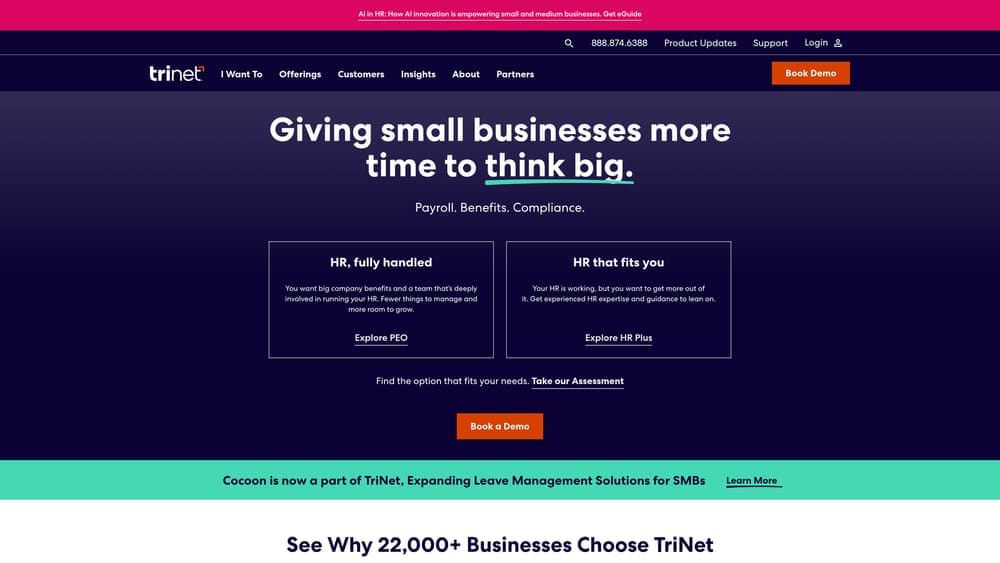
TriNet is a national CPEO-certified PEO with strong benefits packages and sophisticated multi-state payroll capabilities.
Where This Tool Shines
TriNet’s platform is genuinely strong on the technology and benefits side. If you’re running a grease trap operation that has grown to include dispatch staff, office administrators, or sales personnel alongside your field crews, TriNet’s benefits packages and HR platform are competitive in a way that smaller regional PEOs often aren’t. Employee retention in field services is a real problem, and access to quality health benefits can be a meaningful differentiator when recruiting.
The honest caveat: TriNet may not be the most competitive option if your workforce is predominantly field-based and workers’ comp is your primary cost concern. Their model is strongest for mixed workforces where benefits administration and HR technology matter as much as comp pricing.
Key Features
Competitive Health and Benefits: Large-employer benefit options that help with recruitment and retention in a tight labor market.
Multi-State Payroll Compliance: Strong infrastructure for operators with crews working across state lines.
HR Technology Platform: Integrated platform for payroll, benefits, and HR administration.
CPEO Certification: Payroll tax liability transfer for qualifying employers.
Broad Industry Coverage: Serves field services alongside many other industries.
Best For
Grease trap operations with a meaningful office or admin headcount alongside field crews, or operators expanding into multiple states who need solid multi-state compliance infrastructure.
Pricing
Per-employee-per-month fees that vary by workforce size, state, and benefits selections. Requires a direct quote. Typically mid-to-premium range.
5. Oasis (a Paychex Company)
Best for: Smaller grease trap operations (10–30 employees) transitioning from DIY payroll to a managed PEO solution.
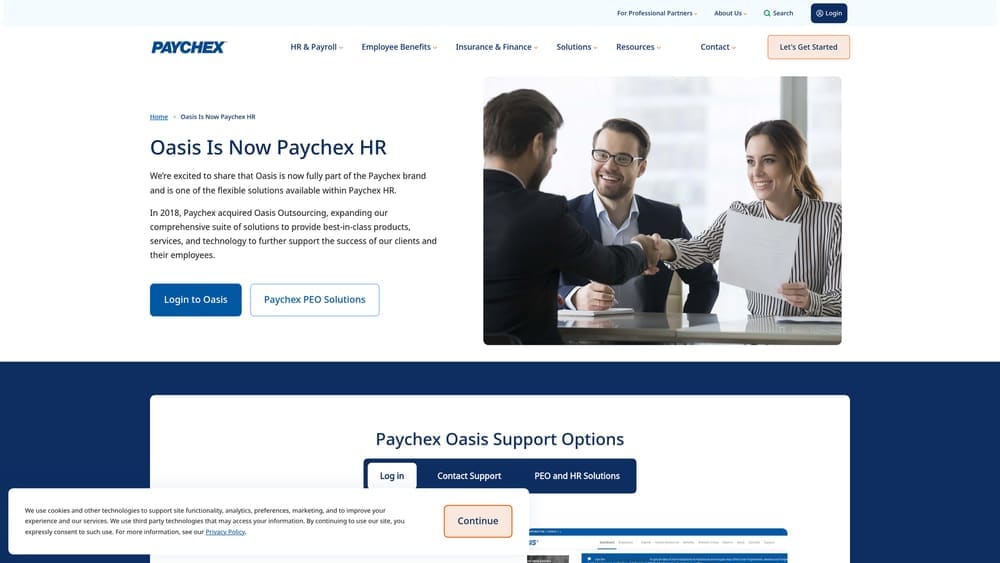
Oasis is a PEO solution backed by Paychex infrastructure, offering accessible entry-level PEO services with broad workers’ comp carrier access.
Where This Tool Shines
Oasis makes the most sense for operators who are currently doing payroll themselves or through basic payroll software and are ready to move to a more structured HR arrangement. The Paychex infrastructure behind it means the technology is reliable and familiar to many small business owners. For grease trap operators in that 10–30 employee range who haven’t yet accessed group health benefits or formalized their workers’ comp program, Oasis provides a manageable entry point.
The service model tends to be less hands-on than regional providers like BBSI or G&A Partners. If you need someone deeply engaged with your risk profile and safety programs, Oasis may feel transactional by comparison. But for operators primarily looking for payroll reliability, benefits access, and comp carrier options without a lot of complexity, it delivers.
Key Features
Paychex Infrastructure: Backed by one of the largest payroll platforms in the U.S., with proven reliability at scale.
Workers’ Comp Carrier Access: Broad access to multiple carriers for competitive rate shopping rather than a single captive program.
Accessible for Smaller Companies: Designed to serve businesses in the 10–30 employee range without minimum headcount barriers.
Benefits Administration: Group health and benefits access that small operators can’t typically obtain independently.
Familiar Platform: Useful for operators already using Paychex payroll who want to upgrade to full PEO services.
Best For
Smaller grease trap operations moving off DIY payroll or basic payroll software, particularly those already in the Paychex ecosystem looking for a straightforward upgrade path.
Pricing
Per-employee-per-month pricing; generally competitive for smaller companies. Requires a direct quote based on headcount and state.
6. Employers PEO
Best for: Small grease trap operations (5–25 employees) where workers’ comp rates are the primary financial driver of the PEO decision.
Employers PEO is an insurance-first PEO with workers’ comp programs specifically designed for small businesses in higher-risk occupational classifications.

Where This Tool Shines
Employers PEO is built around the insurance side of the PEO equation rather than HR technology or large-company benefits. For a small grease trap operation where the entire ROI calculation hinges on whether the PEO can get you better comp rates than you’d find on the open market, this focus is actually an advantage. They understand high-risk occupational codes in a way that general-purpose PEOs often don’t.
The structure is intentionally straightforward. You’re not paying for sophisticated HR platforms or dedicated account teams. You’re getting solid workers’ comp programs, basic HR and payroll administration, and a bundled structure that’s easy to understand. For operations under 25 employees where simplicity and comp cost are the priorities, that’s a reasonable trade.
Key Features
Insurance-Led Model: Workers’ comp programs are the core product, not an add-on to an HR platform.
Small Business Focus: Designed specifically for 5–50 employee companies, not retrofitted from enterprise solutions.
Higher-Risk Occupational Classifications: Experience underwriting comp for industries with elevated injury exposure, including field and environmental services.
Bundled HR and Payroll: Basic administration included without large-company complexity or pricing.
Straightforward Structure: Easy to evaluate and compare without navigating complex tiered service models.
Best For
Small grease trap operations in the 5–25 employee range where workers’ comp cost reduction is the primary reason for evaluating a PEO. Also worth evaluating if you’ve been declined or poorly rated by standard carriers.
Pricing
Pricing is closely tied to workers’ comp rates and occupational classification codes. Requires a direct quote based on employee count, classification, and state.
7. Engage PEO
Best for: Grease trap operators with elevated regulatory exposure — OSHA, confined space, hazardous waste, or multi-state compliance complexity.
Engage PEO differentiates itself with an attorney-led HR and compliance team, providing legal-grade support for employment law and regulatory matters.
Where This Tool Shines
Most PEOs offer compliance support in the sense that they’ll process paperwork and flag obvious issues. Engage PEO’s model is different: their compliance team is led by employment attorneys, which means you’re getting actual legal analysis rather than generic HR guidance. For grease trap operators dealing with OSHA 1910.146 confined space requirements, DOT compliance for CDL drivers, or hazardous waste handling regulations, that distinction matters.
This is particularly relevant for operators who’ve had a compliance issue in the past, are expanding into new states with unfamiliar regulatory environments, or are running operations that regularly involve confined space entry and want defensible compliance documentation. The attorney-led model typically comes at a modest premium, but for operators where regulatory exposure is a genuine business risk, it’s often worth it.
Key Features
Attorney-Led Compliance Team: Employment attorneys driving compliance guidance, not just HR generalists.
OSHA Compliance Support: Directly relevant to confined space entry, hazardous waste handling, and field operations safety requirements.
Multi-State Compliance Management: Strong infrastructure for operators working across multiple regulatory environments.
Dedicated HR Support with Legal Backing: HR guidance backed by actual legal expertise rather than templated policies.
Elevated Regulatory Exposure Specialization: Designed for businesses where compliance mistakes carry real legal and financial consequences.
Best For
Grease trap operators with multi-state operations, prior compliance issues, or operations involving regular confined space entry and hazardous waste work where legal-grade compliance support is worth the additional cost.
Pricing
Per-employee-per-month pricing at a modest premium over standard PEO rates, reflecting the attorney-led service model. Requires a direct quote.
8. G&A Partners
Best for: Grease trap operators in Texas, the Southeast, or the Southwest who want a relationship-based PEO with real experience in physical labor industries.
G&A Partners is a regional PEO with deep roots in Texas and the broader South and Southwest, known for hands-on service and practical experience with field service and physical labor industries.
Where This Tool Shines
G&A Partners is a different kind of PEO experience than the large national platforms. The service model is genuinely relationship-based — you’re working with people who know your region, understand the labor market, and have served businesses with similar workforce profiles. For Texas and Southeast operators in particular, that regional depth shows up in more practical HR guidance and workers’ comp programs that reflect the actual local market.
Their experience with physical labor industries, including environmental services, means they’re not learning your business from scratch when you come on board. That matters for grease trap operators whose workforce profile doesn’t fit neatly into the templates that national PEOs use.
Key Features
Strong Regional Presence: Deep market knowledge in Texas, Southeast, and Southwest where many grease trap operations are concentrated.
Relationship-Based Service Model: Hands-on service with consistent contacts rather than rotating support teams.
Physical Labor Industry Experience: Practical familiarity with field service and environmental services workforce profiles.
Workers’ Comp and Risk Management: Comp programs and risk support informed by regional market knowledge.
Full HR, Payroll, and Benefits Administration: Complete PEO services with local expertise built in.
Best For
Grease trap operators in Texas, the Southeast, or the Southwest who value a hands-on, relationship-based PEO over a technology-heavy national platform. Particularly strong for operations where local market knowledge and consistent service contacts matter.
Pricing
Per-employee-per-month pricing; regional focus allows competitive pricing in core markets. Requires a direct quote based on headcount and location.
Which PEO Actually Fits Your Grease Trap Operation
The honest answer is that it depends on where you operate, how many employees you have, and what’s driving your PEO evaluation in the first place. Workers’ comp cost reduction, compliance support, and benefits access are all valid reasons to pursue a PEO — but they point toward different providers.
Here’s a quick way to think through it:
Start with comparison data, not sales calls. Before you talk to any PEO sales rep, use PEO Metrics to run a side-by-side comparison. Grease trap operations have specific risk characteristics that cause real pricing variation across providers. Knowing what you should be paying before the conversation starts changes the negotiation entirely.
West Coast operators with 15–50 employees: BBSI deserves a close look. Their branch-based model and high-risk industry experience make them more competitive on comp rates than most national PEOs in California, Oregon, and Washington.
Texas and Southeast operators: G&A Partners brings regional depth and physical labor industry experience that national providers often can’t match in those markets.
Compliance is your primary concern: Engage PEO’s attorney-led model is worth the modest premium if you’re dealing with multi-state operations, confined space compliance, or elevated regulatory exposure from hazardous waste work.
Small operations under 25 employees focused on comp rates: Evaluate Employers PEO alongside whatever the comparison tools surface. Their insurance-first model is purpose-built for this profile.
Mid-size operations with mixed workforces: Insperity and TriNet are worth evaluating if you have a meaningful admin or office headcount alongside field crews and need full HR infrastructure.
The one mistake to avoid: choosing a PEO based on a sales pitch alone. Grease trap pumping has specific risk factors — hazardous waste handling, confined space entry, vehicle fleets, CDL compliance — that generic PEOs routinely misprice or misclassify. Get the numbers in writing, compare at least two or three providers, and verify that workers’ comp classification codes are accurate before you sign anything.
For a deeper look at how PEO costs work in field services industries, the guides on general contractors PEO pricing cost structure and best PEO for general contractors are worth reading — the cost dynamics translate closely to grease trap and environmental services work.
Many businesses unknowingly overpay because of bundled fees, hidden administrative markups, and contracts designed to limit flexibility. Before you renew or sign, get a clear breakdown of what you’re actually paying for. Don’t auto-renew. Make an informed, confident decision.
Before you sign that PEO renewal, make sure you’re not leaving money on the table.
Many businesses unknowingly overpay because of bundled fees, hidden administrative markups, and contracts designed to limit flexibility. We give you a clear, side-by-side breakdown of pricing, services, and contract terms—so you can see exactly what you’re paying for and choose the option that truly fits your business.
