

If you run an advertising or media agency, the PEO versus payroll question tends to show up when headcount climbs, the freelancer roster keeps growing, and benefits or compliance work starts eating senior time. This list is for owners and HR leads at small to mid-size creative and media shops. The providers were chosen for HR support depth, benefits access, contractor handling, multistate payroll, and pricing transparency. They fall into three groups: a comparison service, full PEOs, and payroll-first platforms.
The deciding factor is rarely payroll features. It is who carries employer responsibilities. Details below reflect vendor websites as of October 2026, and you should confirm current pricing, minimums, and state coverage with each vendor directly.
Quick Comparison of the Providers
- PEO Metrics: agencies that want to test PEO options before committing; pricing on its website; compares multiple PEO quotes on a common basis instead of selling one service.
- Justworks: small agencies wanting an easy PEO; pricing on its website; published, simple pricing for small teams.
- TriNet: mid-size agencies; quote-based; industry-specific plan design.
- Insperity: agencies with complex HR needs; quote-based; high-touch advisory HR support.
- ADP TotalSource: growing agencies with staff in several states; quote-based; national scale from a vendor that sells both payroll and PEO.
- Paychex: agencies unsure which model they need; quote-based; payroll-to-PEO upgrade path in one vendor.
- Rippling: remote creative teams; pricing on its website; device and app management alongside HR and payroll.
- Gusto: small agencies with some HR capability; pricing on its website; self-serve payroll that leaves benefits plans in your hands.
- OnPay: bookkeeper-managed agencies; flat monthly pricing, see its website; payroll a bookkeeper can comfortably run.
1. PEO Metrics
PEO Metrics is a PEO comparison and consulting service, and it is the company behind this article. It is a decision aid, not a PEO or a payroll provider, so it never runs your payroll or HR. It is built for agency owners and HR leads who suspect a PEO might fit but can’t tell whether the quotes in front of them are reasonable.
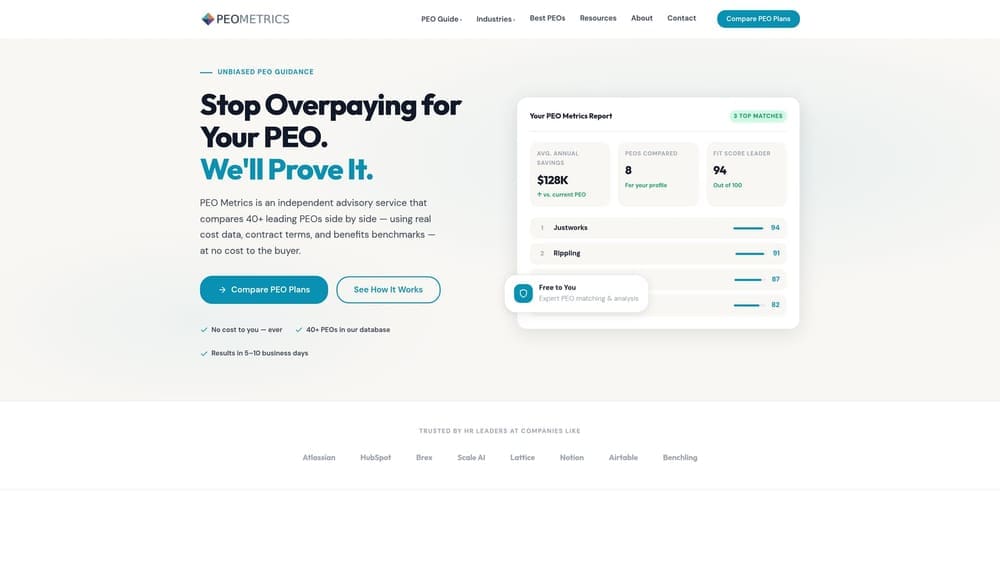
What it does differently from everything else here is put several PEO quotes on a common basis. PEO proposals bundle payroll, benefits, workers’ comp, and administration in different ways, so per-employee figures aren’t directly comparable with each other, and certainly not with a payroll-only price. Lining them up is where the value sits.
- Side-by-side PEO provider comparison, so you see service differences rather than only headline fees.
- Detailed metrics and pricing analysis that break bundled quotes into comparable pieces.
- Guidance on whether your agency fits a PEO or a payroll company at all.
- Help spotting where a quote may be overpriced.
Integrations don’t apply, since it’s a consulting service. Setup is a conversation about your headcount, states, and benefits goals, and an owner or HR lead can handle it.
The limits are plain. It does not process payroll or deliver HR services. It may receive vendor placement fees, so you should weigh its guidance with that in mind. And if you only want payroll, it won’t help much. Pricing: see the website.
Best for: Agencies that want to test PEO options before committing.
2. Justworks
Justworks is a PEO aimed at small and growing teams, with payroll, benefits, compliance support, and an employee app on one platform. For a 15-person agency moving off a patchwork of payroll and benefits brokers, it is one of the more approachable ways into co-employment.
Its standout trait on this list is a published, simple pricing structure for small teams. Most PEOs make you request a quote before you learn anything, so being able to model a budget first helps early comparison.
- PEO co-employment, which shifts part of the employer administration to Justworks.
- Payroll and benefits administration in one place, cutting reconciliation work.
- An employee self-service app, so staff handle most routine requests themselves.
- Compliance support for filings and policy questions.
- Contractor payments; verify the current scope, since freelancer-heavy agencies depend on it.
It connects with accounting and time tracking tools; verify the current list. Setup is manageable for an office manager or HR generalist.
The tradeoff is customization. It offers less configurability and less hands-on HR advisory than larger PEOs, so agencies with messy employee-relations issues may outgrow it. Pricing is published per-employee tiers; verify current pricing on the website as of October 2026. Headcount and plan tier move the cost.
Best for: Small agencies wanting an easy-to-use PEO with clear pricing.
3. TriNet
TriNet is a PEO that organizes its offerings by industry, bundling payroll, benefits, risk and compliance services, and HR support. Its pitch to professional-services-style firms, which is how many agencies look to a benefits carrier, is plan design that reflects how those firms hire and retain people.
That industry-specific design is its differentiator here. Agencies that treat benefits as a talent-retention lever, competing for strategists and designers with larger shops, may find that framing useful. Verify whether its plan options for professional services apply to an agency of your size and profile.
- PEO co-employment with shared employer responsibilities.
- Industry-tailored plan options, which can matter when benefits drive hiring.
- Benefits access that may reach beyond what a small group could buy alone.
- Risk and compliance services covering areas such as workers’ comp coordination.
- HR support for day-to-day employee questions.
It works with accounting and HRIS tools; verify the current list. Implementation typically involves a TriNet team alongside your HR lead or finance manager.
Quote-based pricing makes early comparison difficult, and you should verify minimums if your agency is very small. Pricing varies with headcount, benefits selections, and the services you include.
Best for: Mid-size agencies wanting a PEO with industry-aware benefits design.
4. Insperity
Insperity is a PEO known for service-intensive HR support, delivering payroll, benefits, and compliance through assigned HR representatives. It suits an agency where the owner is tired of being the de facto HR department, handling performance conversations, terminations, and leave questions.
Where Justworks leans on software, Insperity leans on people. That high-touch advisory approach is its main distinction on this list, and it matters most when situations are complicated and a person who knows your account can walk you through them.
- PEO co-employment covering payroll, benefits, and compliance.
- An assigned HR representative; verify the current service model for your account size.
- Payroll and benefits handled together, reducing vendor sprawl.
- Employee relations support for disputes, discipline, and documentation.
- Performance management help for agencies without formal review processes.
It connects with accounting and time tracking tools; verify the current list. Day-to-day, an HR lead or office manager works with the representative.
The service-heavy model can cost more than you need if all you want is payroll and benefits administration. Smaller agencies with straightforward needs may be paying for support they won’t use. Pricing is quote-based and moves with headcount, benefits choices, and service level.
Best for: Agencies with complex employee-relations or HR compliance needs.
5. ADP TotalSource
ADP TotalSource is ADP’s PEO offering, and it is separate from ADP’s payroll-only products. That distinction matters: buying ADP payroll does not put you in co-employment, while TotalSource does, with payroll, benefits, and HR services under that arrangement.
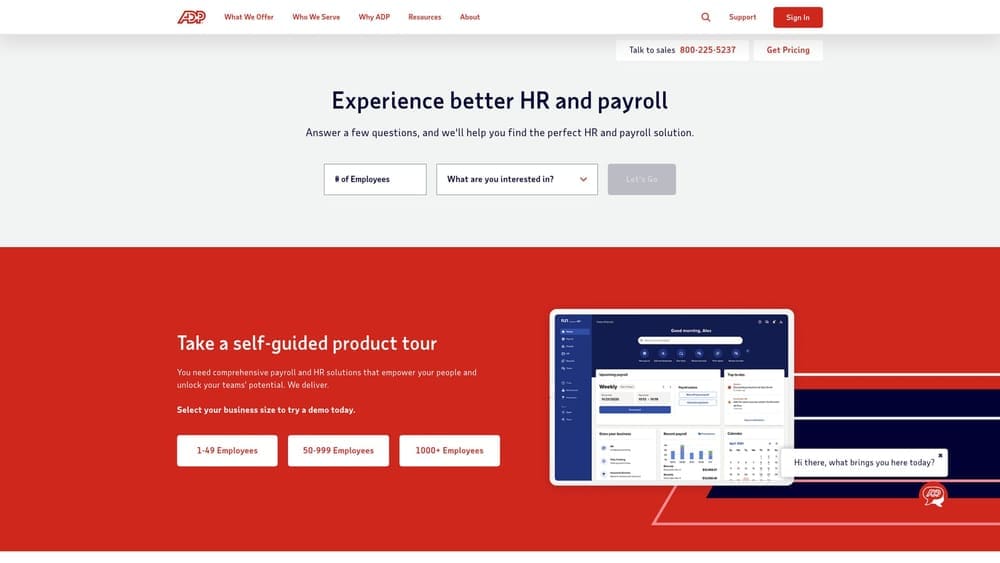
Its edge is national scale from a vendor with both payroll and PEO products. For an agency with remote creatives in several states, that can simplify multistate payroll and tax handling, though you should verify which states TotalSource serves.
- PEO co-employment with shared employer responsibilities.
- National-scale benefits options for staff spread across locations.
- Payroll tied into the ADP platform, so there’s one system of record.
- Compliance support for multistate employment rules.
- Multistate employer support; verify states served before assuming coverage.
It works within the ADP ecosystem and common accounting tools; verify the details. Setup is more structured than with lighter platforms and usually needs an HR or finance owner.
It may feel less tailored for very small creative shops, and you should review contract exit terms before signing. Pricing is quote-based and varies with headcount, states, and benefits.
Best for: Growing agencies with employees in several states.
6. Paychex
Paychex sells both payroll (Paychex Flex) and a PEO, which gives agencies a path: start with payroll, move toward co-employment when benefits and compliance start to hurt. Like ADP, it shows that a single brand can offer two quite different products.
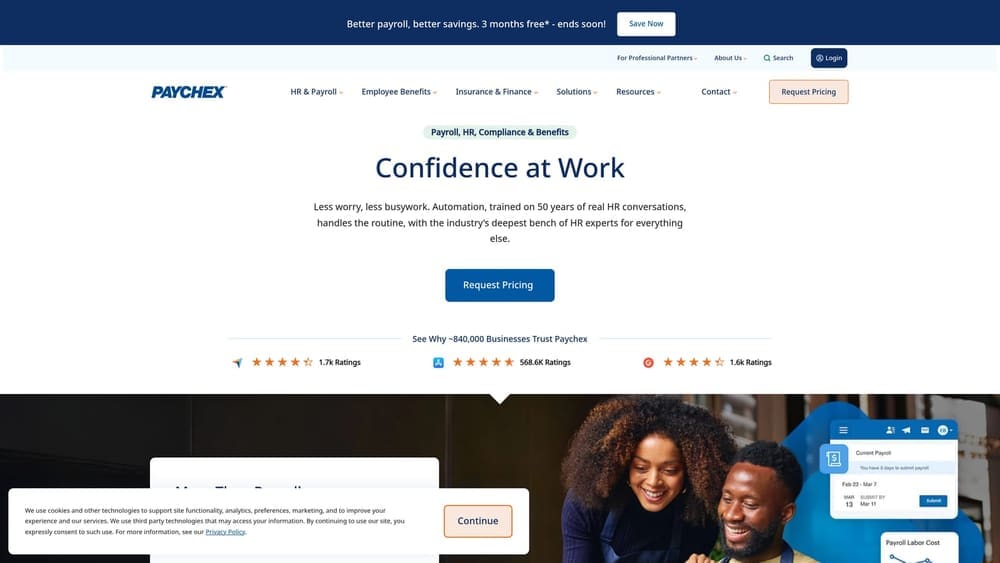
The upgrade path within one vendor is its distinguishing point. If your agency is at 12 people with a fast-growth plan, you can avoid a full vendor switch later, though you still need to compare terms at the moment you change models.
What You Get
- A payroll platform with tax filing for agencies that only need pay processing.
- A PEO option for when shared employer responsibility becomes attractive.
- Benefits administration to manage enrollment and carriers.
- HR support in tiers, so you can buy only the guidance you need.
Limits and Cost
Payroll-only plans do not provide pooled benefits or shared employer responsibilities, so don’t assume a payroll subscription brings PEO protections. Integrations include accounting and time tracking tools; verify the current list. Pricing is quote-based and depends on headcount, payroll frequency, and chosen HR services. Setup for payroll is light; moving to the PEO is a larger project.
Best for: Agencies unsure whether they need payroll or a PEO yet.
7. Rippling
Rippling is a workforce platform that joins HR, IT, and payroll, with a PEO available through Rippling; verify current coverage. It targets companies that want one system for employee records, pay, and equipment.
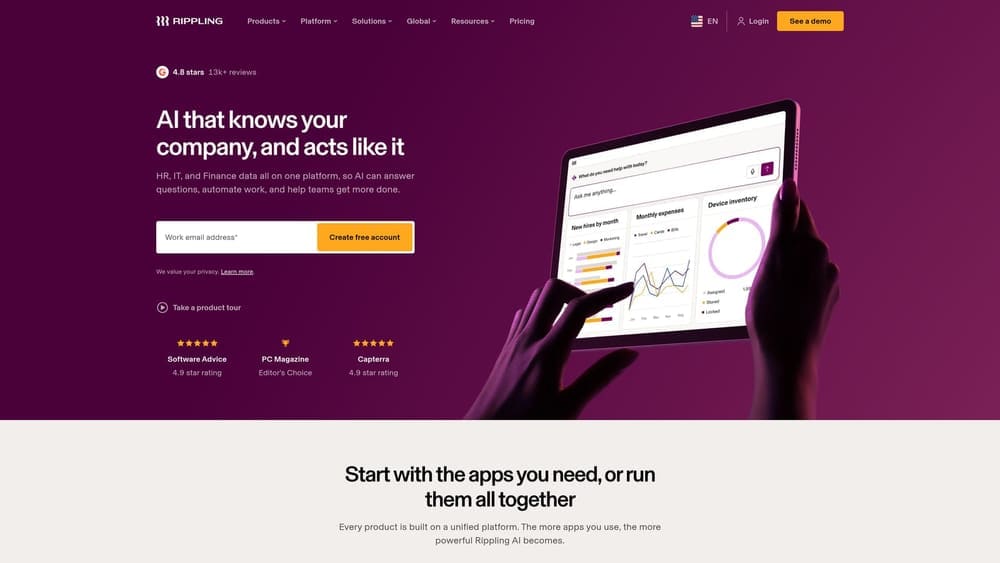
Its distinguishing feature is device and app management alongside HR and payroll. For agencies with remote designers, editors, and strategists who need laptops, Adobe seats, and project tools provisioned on day one and revoked on departure, that connection is unusual.
- Payroll that runs from the same employee records as HR.
- HRIS for onboarding, documents, and org structure.
- Device and app management to ship laptops and assign software seats.
- A PEO option; verify states before counting on it.
- Benefits administration inside the same platform.
It offers wide app integrations; verify the current list. Because it covers so much, setup involves more decisions, and a small agency may not use the breadth. Someone with operations or IT sense, not only HR, will likely own it.
The limitation is that very small teams may face more configuration than they need. Pricing: see the website; cost generally moves with the modules you choose and your headcount.
Best for: Remote creative teams that also need laptop and software-seat management.
8. Gusto
Gusto is a payroll-first platform with benefits administration and contractor payments. It is not a PEO, so your agency keeps its own employer responsibilities, including compliance and the benefits contracts themselves.
That is both its appeal and its boundary. You get self-serve payroll with low overhead and keep your own benefits plans and insurance, which suits agencies that already have a broker or an HR person and don’t want to hand over the employer relationship.
- Full-service payroll that calculates pay and runs it on schedule.
- Tax filing, so deposits and returns are handled for you.
- Benefits administration for plans you arrange yourself.
- Contractor payments, useful when freelancers outnumber staff on some projects.
- Employee onboarding to collect forms and set up new hires.
It integrates with QuickBooks, Xero, and time tracking tools; verify the current list. Setup is quick and usually run by an owner, office manager, or bookkeeper.
The limits: no pooled large-group benefits and no shared compliance responsibility. Worker classification for freelancers remains your risk, and you should check your state’s tests. Pricing is published in tiers and moves with plan level and headcount; verify as of October 2026.
Best for: Small agencies with some HR capability that want payroll without co-employment.
9. OnPay
OnPay is a payroll provider with flat-rate pricing and benefits administration, aimed at small businesses. Like Gusto, it is not a PEO, and your agency stays the sole employer of record.
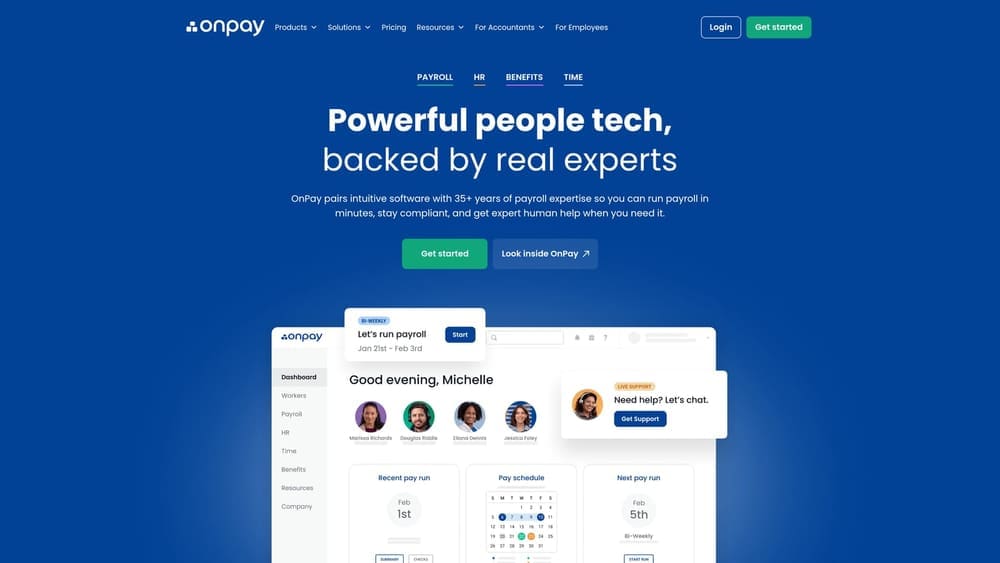
Its practical strength is being accounting-friendly. A part-time bookkeeper or outside accountant can run it comfortably, which fits agencies where finance is outsourced and HR questions go to a consultant.
- Payroll and tax filing handled in one workflow.
- Contractor payments for 1099 freelancers.
- Benefits administration for plans you source elsewhere.
- Flat pricing that makes monthly cost easier to predict.
- Accounting integrations that cut manual journal entries.
It integrates with QuickBooks and Xero; verify the current list. Setup is light, and a bookkeeper can own it.
Its HR advisory support is narrower, and there is no co-employment, so compliance questions, handbooks, and employee relations need another source. Pricing is flat monthly; verify current rates on the website, since add-ons and headcount can change the total.
Best for: Bookkeeper-managed agencies with outside HR help.
Matching the Provider Type to Your Agency’s Stage
A payroll company generally fits when you have under roughly 20 staff and a capable HR resource, whether an in-house generalist or a consultant. Gusto and OnPay sit here. You keep your own benefits plans and employer duties, and you avoid paying for services you won’t use.
A PEO fits when benefits access and compliance support are the real pain. Justworks suits smaller teams that want clear pricing, Insperity suits complicated employee-relations needs, and TriNet or ADP TotalSource suit larger or multistate agencies. Keep in mind that a PEO shares, but does not remove, your compliance liability, and if CPEO status matters to you, check the vendor against the IRS CPEO list.
For growth stages, Paychex offers a payroll-with-PEO path, and Rippling suits remote teams that need device and software management too. When quotes are hard to line up, a comparison service helps; PEOMetrics provides that, and it may receive vendor placement fees, so weigh its guidance accordingly. This article is informational, not legal, tax, or benefits advice.
Before you sign that PEO renewal, make sure you’re not leaving money on the table.
Many businesses unknowingly overpay because of bundled fees, hidden administrative markups, and contracts designed to limit flexibility. We give you a clear, side-by-side breakdown of pricing, services, and contract terms, so you can see exactly what you’re paying for and choose the option that truly fits your business.
