
Running a moving company puts you in a tough spot with HR. Your crews are hauling heavy furniture up flights of stairs, loading trucks in summer heat, and driving long-haul routes across state lines. Workers’ comp rates reflect that reality. So do the DOT compliance requirements, the seasonal headcount swings, and the ongoing challenge of keeping good drivers when larger carriers are competing for the same labor pool.
A PEO can address several of these pressure points at once: pooled workers’ comp coverage, payroll infrastructure, multi-state compliance support, and access to group health benefits that would otherwise be out of reach for a smaller operation. The catch is that not every PEO will touch high-risk class codes, and some that do will quote you rates that make the whole arrangement pointless.
This guide covers the top tools available to moving companies evaluating PEO options right now. If you want a foundational primer before diving in, this breakdown of what a PEO actually does is a good place to start.
1. PEO Metrics
Best for: Moving companies that want pricing and provider data before talking to any sales rep
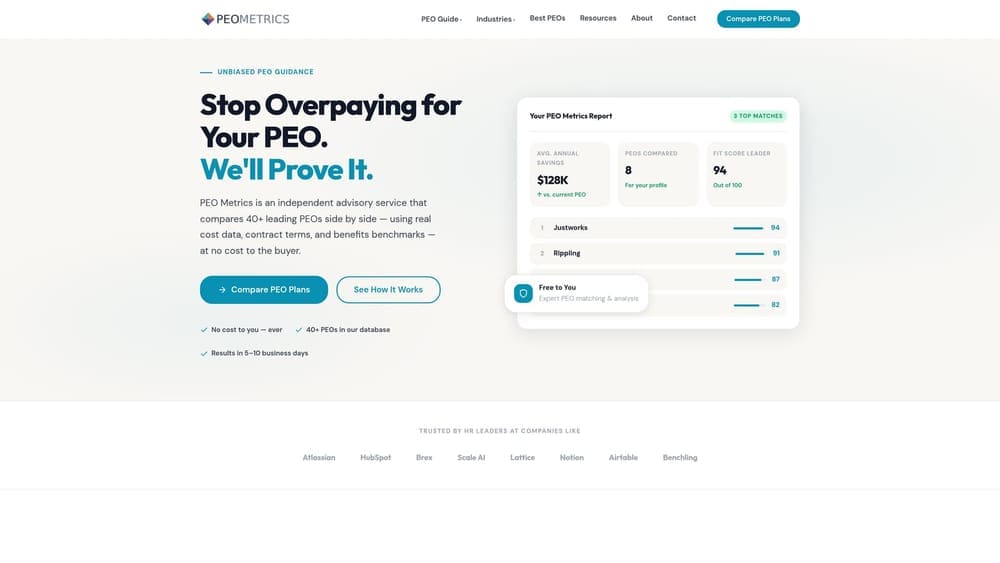
PEO Metrics is a PEO comparison service that gives you structured, side-by-side data on providers before you commit to a single conversation with a vendor.
Where This Tool Shines
For moving companies specifically, the workers’ comp angle is where PEO Metrics delivers the most value. Workers’ comp pricing across PEO providers is notoriously opaque. Rates vary significantly depending on how a provider handles high-risk class codes like those covering furniture movers and trucking operations, and most businesses don’t find out the real cost until they’re already deep in a sales process.
PEO Metrics surfaces that cost data early. You can see how providers differ on pricing, contract structure, and service scope without having to sit through multiple sales calls first. For a moving company owner trying to figure out whether a PEO even makes financial sense, that’s a meaningful starting point.
Key Features
Side-by-Side Provider Comparisons: Compare PEO providers on pricing, features, and contract terms in one view rather than piecing together information from separate sales conversations.
Unbiased Guidance: Recommendations aren’t commission-driven, which matters when you’re trying to evaluate whether a PEO is actually a fit rather than just hearing why every provider claims to be.
Workers’ Comp Rate Visibility: Helps identify true cost differences across providers, including how they handle elevated class codes common in the moving industry.
Pre-Contract Evaluation: Designed specifically to help businesses pressure-test pricing and terms before signing a 12-month agreement.
Best For
Moving company owners who are actively comparing PEO options and want to understand cost differences before any vendor engagement. Also useful for businesses that have been auto-renewing with a PEO and want to know if they’re overpaying relative to what’s available.
Pricing
Contact PEO Metrics directly for details. The comparison service is designed to surface savings opportunities, so the conversation is worth having before you renew anything.
2. PEOcompare
Best for: Moving companies in early evaluation that want a broker to surface which PEOs will actually serve them
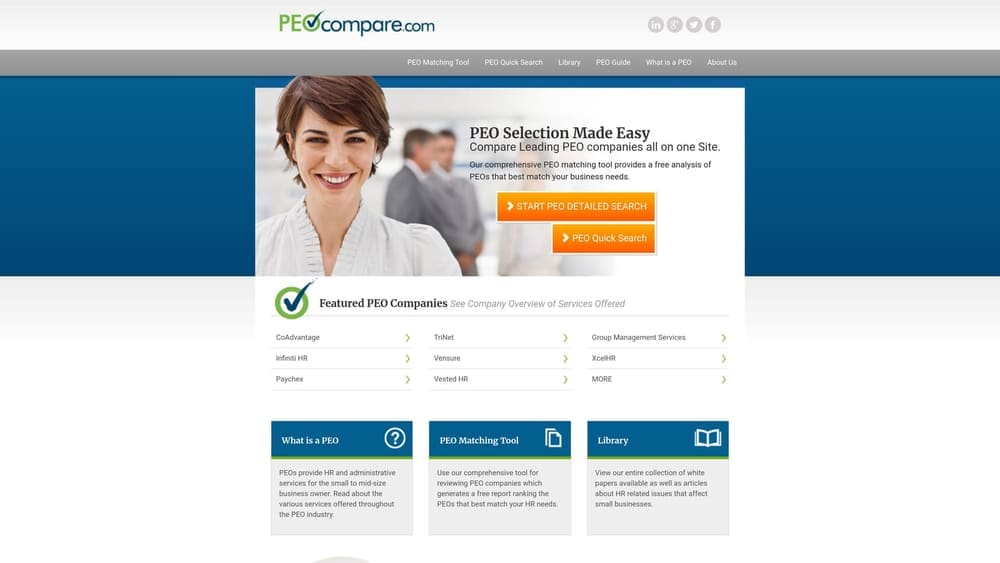
PEOcompare is a broker-style PEO matching platform that connects businesses with providers based on company profile, industry, and headcount.
Where This Tool Shines
One of the real friction points for moving companies is figuring out which PEOs will even write workers’ comp for high-risk operations. Not all of them will. PEOcompare’s matching approach can help you filter out providers that aren’t a realistic fit for your industry before you spend time on them.
It’s a useful early-stage tool if you’re starting from scratch and don’t yet know which PEOs operate in your state, serve transportation-adjacent industries, or can handle multi-state payroll complexity. Think of it as a way to narrow the field rather than a tool for deep pricing analysis.
Key Features
Industry-Based Matching: Connects companies with PEO providers based on industry fit, which is relevant when your class codes limit which providers will actually quote you.
Headcount and Profile Filtering: Matches based on company size and structure, useful for moving companies with seasonal headcount swings that affect minimum thresholds.
Broad Provider Network: Surfaces options you might not have found independently, particularly helpful if you’re new to evaluating PEOs.
Early-Stage Discovery: Good for understanding which PEOs are even in the running before you invest time in detailed evaluation.
Best For
Moving companies in the early stages of PEO research that want a starting point for identifying which providers serve high-risk industries. Less suited for businesses that already have a shortlist and need granular pricing comparisons.
Pricing
Free to use. Revenue model is typically referral-based, which means provider relationships may influence which options get surfaced. Worth keeping in mind as you evaluate recommendations.
3. HR Guide
Best for: Moving company owners in early research mode who want to understand HR and PEO fundamentals before engaging any provider
HR Guide is an educational HR and PEO resource platform that helps business owners understand their options before they start talking to vendors.

Where This Tool Shines
If you’re not yet sure whether a PEO is the right move for your operation, HR Guide provides the kind of foundational grounding that helps you ask better questions when you do start evaluating providers. For moving company owners who are newer to HR infrastructure decisions, that context matters.
It’s not a comparison tool and it won’t tell you which PEO to pick. But it covers HR decision-making frameworks and PEO selection considerations that can sharpen your thinking before you enter any sales process. That’s genuinely useful if you’re still at the “do I even need this?” stage.
Key Features
PEO Selection Guidance: Covers what to look for when evaluating PEO providers, including questions worth asking before you sign anything.
HR Fundamentals Coverage: Explains core HR concepts relevant to small and mid-sized businesses, including compliance basics that moving companies deal with regularly.
Educational Framing: Content is written for business owners, not HR specialists, which makes it accessible if you’re not coming from an HR background.
Research-Stage Resource: Useful for building foundational understanding before engaging a broker or comparison service.
Best For
Moving company owners who are earlier in the decision process and want to understand PEO and HR basics before engaging any vendor or comparison service. Not the right tool for active buyers ready to compare pricing.
Pricing
Free resource. No sign-up required for most content.
Which Option Actually Fits Your Situation
The right starting point depends on where you are in the process. Here’s a quick way to think about it.
If you’re actively comparing PEO options and want pricing data before any sales conversations, start with PEO Metrics. The workers’ comp angle alone makes it worth the conversation, especially if your class codes have historically made PEO pricing unpredictable. Getting side-by-side data before you’re in a vendor sales cycle is a real advantage.
If you’re earlier in the process and don’t yet know which PEOs will even serve a moving operation, PEOcompare is a reasonable first filter. It won’t give you deep pricing analysis, but it can help you identify which providers are worth evaluating further. Just go in knowing the referral model means it’s not purely objective.
If you’re still at the research stage and trying to understand whether a PEO makes sense at all, HR Guide provides solid educational grounding. It’s not a decision tool, but it’ll help you ask better questions when you do start talking to providers.
For moving companies specifically, the workers’ comp question is where most of the financial leverage sits. A PEO that can bring you into a master policy at better rates, or correctly structure your class codes, can materially change your cost structure. That’s worth getting right before you sign a 12-month contract, and it’s worth understanding in detail before you auto-renew with whoever you’re currently using.
Before you commit to any provider, it’s worth reading up on why PEOs fail companies and why companies regret using a PEO. Both are short reads that will sharpen your evaluation criteria. If you’re already managing workers’ comp class codes internally, this breakdown on class code restructuring under a PEO is directly relevant to how moving companies are classified and what a PEO can actually change.
Many moving companies are overpaying for PEO services right now — not because they chose badly, but because they didn’t have pricing data when they signed, and they’ve been renewing on autopilot since. Don’t auto-renew. Make an informed, confident decision.
Before you sign that PEO renewal, make sure you’re not leaving money on the table.
Many businesses unknowingly overpay because of bundled fees, hidden administrative markups, and contracts designed to limit flexibility. We give you a clear, side-by-side breakdown of pricing, services, and contract terms—so you can see exactly what you’re paying for and choose the option that truly fits your business.
