
Towing is one of the harder industries to place with a PEO. You’ve got drivers operating heavy recovery vehicles on public roads, workers’ comp classification codes that make most underwriters nervous, DOT compliance requirements, and a workforce that’s often split between full-time, part-time, and on-call schedules. Most generalist PEOs aren’t built for that risk profile — and discovering that after you’ve signed a contract is an expensive lesson.
This list focuses on PEOs that can genuinely handle what towing companies actually deal with: high-hazard comp classifications, driver compliance complexity, and benefits packages that work for hourly and variable-schedule employees. We’ve also included PEO Metrics at the top — not because it’s a PEO itself, but because comparing providers side-by-side before you commit is the smartest first move you can make in a high-risk industry like this one.
1. PEO Metrics
Best for: Towing companies comparing multiple PEO providers before signing any contract
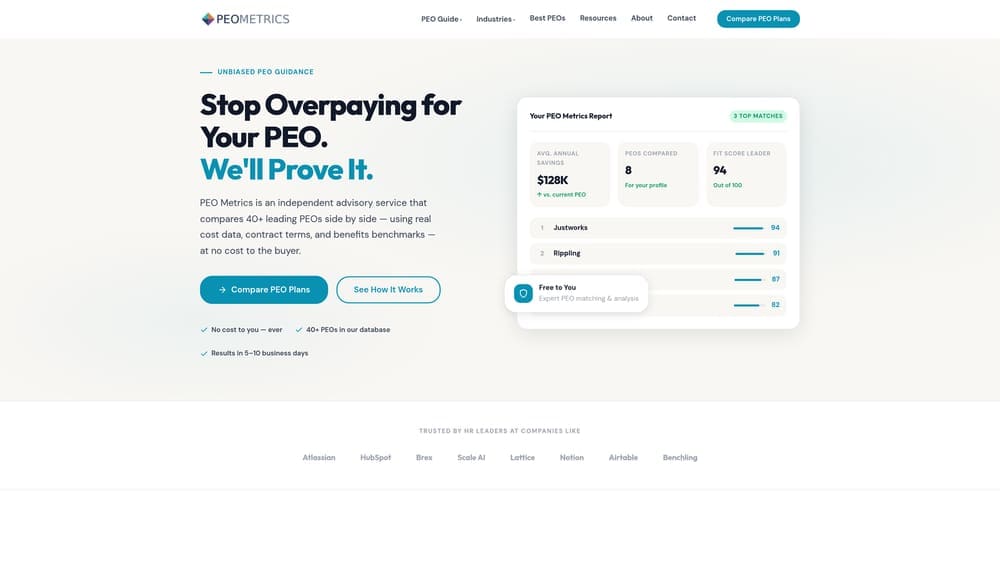
PEO Metrics is a PEO comparison platform that helps towing companies evaluate providers side-by-side using detailed pricing analysis and unbiased guidance — before you’re locked into anything.
Where This Tool Shines
For towing operators, the gap between a good PEO fit and a bad one isn’t just about price — it’s about whether a provider will even write workers’ comp coverage for your classification codes, and what happens when a driver gets hurt. PEO Metrics helps you surface which providers actually have appetite for high-risk classifications like towing, versus which ones will quote high and quietly hope you don’t push back.
The comparison-first approach matters here more than in most industries. Workers’ comp is typically the largest cost component of a PEO relationship for towing companies, and the pricing spread between providers for the same risk profile can be substantial. Going directly to one PEO without benchmarking is how operators end up overpaying for years.
Key Features
Side-by-Side PEO Comparison: Evaluate multiple providers simultaneously with detailed breakdowns of pricing, workers’ comp handling, benefits, and contract terms.
Unbiased Guidance: PEO Metrics is not affiliated with any single PEO provider — the goal is finding the right fit, not pushing a preferred vendor.
High-Risk Classification Filtering: Helps identify which PEOs have genuine appetite for towing-specific comp codes rather than those likely to decline or overprice.
Pricing Transparency: Detailed metrics on fee structures, administrative markups, and contract terms that are typically buried in standard PEO proposals.
Contract Term Analysis: Surfaces renewal terms and exit clauses — critical for towing companies that may face rate increases after year one.
Best For
Any towing company that hasn’t yet committed to a PEO, or that is approaching a renewal and wants to know if they’re getting a fair deal. Particularly valuable for operators with complex comp histories or multi-state operations where provider pricing varies significantly.
Pricing
Free to use. PEO Metrics earns fees from providers, not from the businesses using the comparison service — so there’s no cost to get a side-by-side analysis before you sign anything.
2. Employers PEO
Best for: Small towing operations needing workers’ comp coverage in non-standard or higher-hazard classifications
Employers PEO is the PEO division of Employers Holdings, a specialty insurance carrier with meaningful experience in small business and higher-hazard workers’ comp classifications.
Where This Tool Shines
Most PEOs source workers’ comp through third-party carriers and have limited control over which classifications they’ll accept. Employers is different — the comp underwriting is in-house, which means they have more flexibility to write coverage for industries like towing that standard market carriers often decline or surcharge heavily.
For small towing operators who have struggled to find affordable comp outside the assigned risk pool, Employers PEO is worth a serious look. Their claims management is also oriented toward small business outcomes, which matters when a single driver injury can affect your experience modification factor for years.
Key Features
In-House Workers’ Comp Underwriting: Specialty carrier background gives Employers more flexibility with higher-hazard classifications than most generalist PEOs.
Claims Management Support: Focused on small business risk outcomes — relevant for towing operators where individual claims carry significant weight.
Bundled HR and Payroll: Payroll processing and HR administration packaged alongside comp coverage in a single co-employment arrangement.
Non-Standard Market Experience: Competitive for businesses that struggle to find affordable comp through standard market carriers.
Regional Strength: Particularly strong in Western and Southeastern U.S. markets — worth confirming coverage footprint for your operating area.
Best For
Small towing companies, particularly those in the Western or Southeastern U.S., who are paying high workers’ comp premiums through the standard market or assigned risk pool and need a PEO with genuine appetite for their classification codes.
Pricing
Quote-based; percentage-of-payroll model is typical. Request a quote directly and specify your comp classification codes upfront — towing-specific rates will vary meaningfully from generic PEO pricing.
3. TriNet
Best for: Towing companies building out administrative and dispatch staff alongside their driver workforce
TriNet is a publicly traded, IRS-certified PEO with strong benefits infrastructure and nationwide reach, built for small to mid-size businesses across a range of industries.
Where This Tool Shines
TriNet’s primary strength is benefits access. For towing companies trying to attract and retain qualified drivers in competitive labor markets, access to large-group health, dental, and vision coverage for hourly employees is a real operational advantage. TriNet’s carrier relationships and group buying power can make benefits packages available that small towing operators couldn’t access independently.
Where TriNet is less differentiated is on the workers’ comp side for high-hazard classifications. It’s better suited to towing companies that have a mixed workforce — drivers plus dispatchers, office staff, and managers — where the overall risk profile is more moderate and the benefits story matters as much as the comp story.
Key Features
Large-Group Benefits Access: Health, dental, and vision coverage available for hourly employees — not just salaried staff.
IRS-Certified PEO Status: Provides tax liability protection relevant for co-employment arrangements.
Robust HR Platform: Payroll, time tracking, and compliance tools in an integrated platform.
Dedicated Industry Reps: Industry-specific HR guidance available through assigned representatives.
Nationwide Reach: Multi-state payroll and compliance support for towing operations that cross state lines.
Best For
Towing companies with a meaningful mix of hourly drivers and administrative or dispatch staff, where benefits competitiveness is a priority for retention and the overall workforce risk profile is more balanced.
Pricing
Quote-based; PEPM and percentage-of-payroll options available depending on company profile. Worth asking specifically about which model makes more sense given towing’s variable-hour workforce.
4. Insperity
Best for: Growing towing companies that need hands-on HR support and strong compliance infrastructure
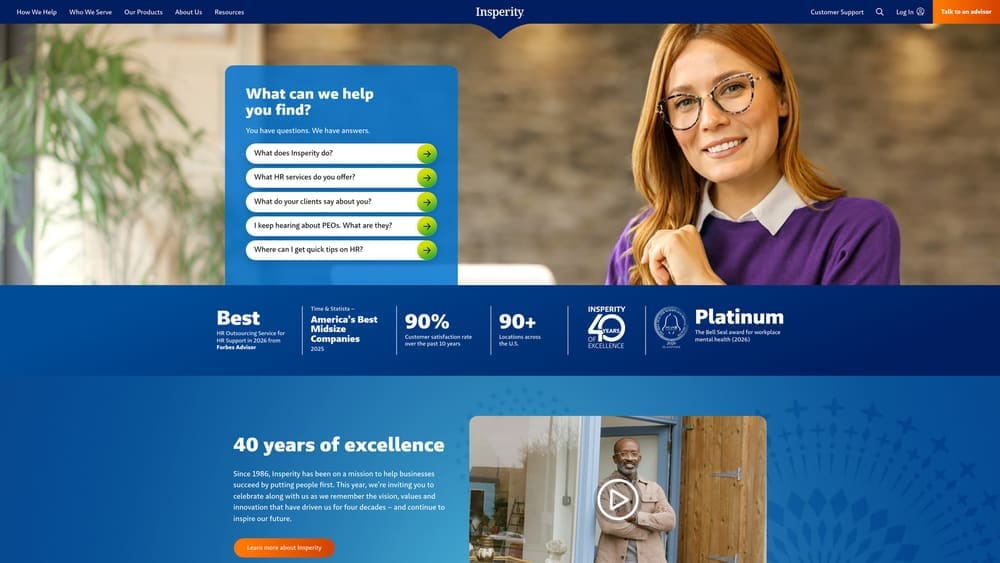
Insperity is one of the largest full-service PEOs in the U.S., known for dedicated HR specialists, strong compliance support, and a premium service model that goes well beyond payroll processing.
Where This Tool Shines
Insperity’s differentiator is the dedicated HR specialist model. You’re not calling a general support line — you’re working with a named HR professional who understands your business. For towing companies dealing with DOT compliance questions, driver qualification files, or employment practices issues, having a real person in your corner who knows your situation is worth a lot.
The tradeoff is cost. Insperity generally prices at a premium relative to mid-market PEOs, and that premium is only worth it if you’ll actually use the hands-on support. If you’re running a lean operation and mostly need payroll and comp consolidation, there are more cost-efficient options on this list.
Key Features
Dedicated HR Specialist: Named HR professional assigned to each client — not a call center or ticketing system.
Employment Practices Liability Support: Strong compliance guidance for employment law, terminations, and workplace documentation.
Comprehensive Benefits Packages: Competitive carrier access with broad coverage options for hourly and salaried employees.
ESAC-Accredited and IRS-Certified: Two important quality markers that indicate financial stability and compliance standards.
Workforce Analytics: Robust HR technology platform with payroll reporting and workforce data tools.
Best For
Towing companies that are scaling, adding management layers, or dealing with recurring HR and compliance challenges where dedicated specialist support will be used regularly. Less ideal for small operators primarily looking to solve a workers’ comp pricing problem.
Pricing
Quote-based; generally priced at a premium relative to mid-market PEOs. Best value for companies that will actively use the hands-on HR support rather than treating it as background infrastructure.
5. ADP TotalSource
Best for: Towing companies with complex pay structures or multi-state operations already in the ADP ecosystem
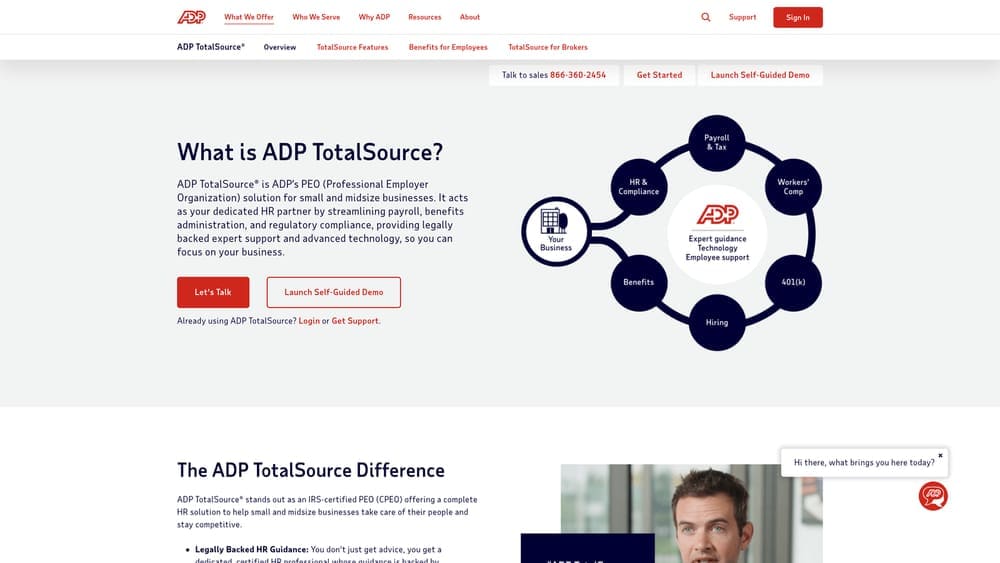
ADP TotalSource is the PEO arm of ADP, offering co-employment services built on one of the most established payroll processing infrastructures in the industry.
Where This Tool Shines
ADP TotalSource’s real advantage is payroll reliability and multi-state compliance depth. Towing companies operating across state lines face a layered compliance challenge: workers’ comp rates vary by state, payroll tax rules differ, and some states have monopolistic comp funds that affect how a PEO can structure coverage. ADP has the infrastructure to handle this complexity without it becoming your problem to manage.
If your company is already running payroll through ADP Workforce Now, the migration into TotalSource is relatively straightforward. For companies not already in the ADP ecosystem, the onboarding is more involved — worth factoring into your evaluation timeline.
Key Features
Best-in-Class Payroll Processing: Reliable infrastructure for complex pay structures including overtime, variable hours, and on-call scheduling.
IRS-Certified PEO: Strong tax compliance and co-employment liability protection.
Multi-State Compliance Support: Payroll and regulatory compliance across state lines — relevant for towing companies with interstate operations.
Wide Workers’ Comp Carrier Network: Experience across many industry types, though high-hazard classifications should be confirmed upfront.
ADP Ecosystem Integration: Connects directly with ADP Workforce Now for companies already using ADP’s broader platform.
Best For
Mid-size towing companies with multi-state operations, complex payroll needs, or existing ADP relationships. Also a strong option for operators who prioritize payroll accuracy and compliance infrastructure over specialized workers’ comp handling.
Pricing
Quote-based; percentage-of-payroll model is standard. Pricing tends to be more competitive at higher employee counts — smaller operations may find better value elsewhere on this list.
6. Oasis by Paychex
Best for: Towing companies with on-call drivers, irregular scheduling, and variable payroll cycles
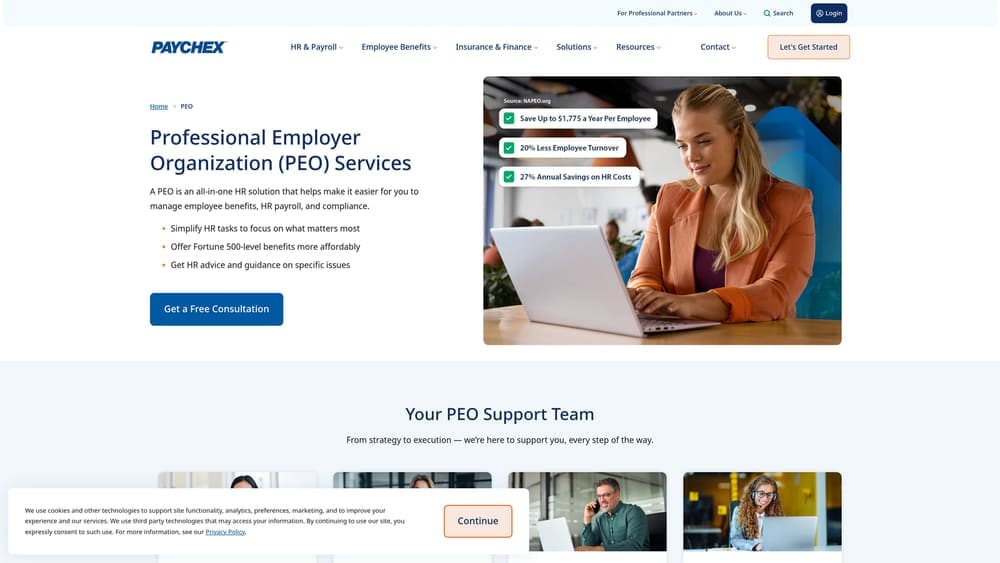
Oasis by Paychex is the PEO division of Paychex, offering flexible co-employment services built on Paychex’s payroll backbone with strong support for hourly and variable-schedule workforces.
Where This Tool Shines
Towing operations that run 24/7 dispatch models often have genuinely messy payroll: on-call drivers who work irregular hours, overtime that’s hard to predict, and headcount that fluctuates seasonally. Oasis handles variable-hour payroll well, and Paychex’s infrastructure has been processing this kind of complexity for small businesses for decades.
The flexible co-employment structure is also worth noting. Some towing companies have a mix of full-time mechanics, part-time drivers, and contracted dispatchers — Oasis can accommodate different employee classifications within the same arrangement better than some of the more rigid enterprise PEOs on this list.
Key Features
Variable-Hour Payroll Processing: Strong handling of on-call scheduling, irregular hours, and overtime calculations common in 24/7 towing operations.
Flexible Co-Employment Structure: Accommodates mixed employee types within a single PEO arrangement.
Benefits Access for Hourly Employees: Health insurance and retirement options available for non-salaried staff.
HR and Compliance Support: Employment law guidance and HR assistance through Paychex’s service network.
Seasonal Staffing Flexibility: Handles headcount fluctuations without the rigidity of some larger enterprise PEO contracts.
Best For
Towing companies with genuinely complex scheduling, heavy use of on-call or part-time drivers, and payroll cycles that don’t fit neatly into a standard biweekly model. Also worth evaluating if PEPM pricing is preferable given your driver wage levels.
Pricing
Quote-based; both PEPM and percentage-of-payroll options are available. Given towing’s variable-hour workforce, it’s worth running the math on both structures before deciding — the difference can be meaningful depending on average driver wages.
7. Justworks
Best for: Small towing operations that want transparent pricing and a simple HR platform without surprises
Justworks is a modern, ESAC-accredited PEO known for transparent per-employee pricing, a clean HR platform, and straightforward onboarding built primarily for small businesses.
Where This Tool Shines
Justworks is one of the few PEOs that publicly discloses its pricing ranges, which is genuinely unusual in this industry. For towing operators who’ve dealt with opaque PEO proposals full of bundled fees and administrative markups, the transparency alone is refreshing. You know what you’re paying, and the platform is clean enough that you don’t need an HR background to use it.
The honest caveat for towing companies: Justworks is not specialized in high-hazard workers’ comp. It works well for towing companies where the driver count is small and the comp situation is manageable, but if workers’ comp complexity is your primary concern, the providers earlier on this list are better suited to that specific challenge.
Key Features
Transparent PEPM Pricing: Published pricing ranges — no percentage-of-payroll surprises or opaque fee structures.
Clean HR and Payroll Platform: Intuitive interface that doesn’t require dedicated HR staff to operate effectively.
Small Business Benefits Access: Health, dental, vision, and 401(k) options available for small teams.
ESAC-Accredited and IRS-Certified: Both quality markers present — important for co-employment confidence.
Straightforward Onboarding: Minimal implementation complexity compared to enterprise PEOs.
Best For
Small towing operations — typically under 25 employees — where the priority is administrative simplicity, pricing transparency, and solid benefits access rather than specialized workers’ comp handling or complex compliance support.
Pricing
Starts at approximately $59–$99 PEPM depending on plan tier and benefits selections. One of the few PEOs with publicly disclosed pricing ranges, which makes budgeting straightforward before you ever talk to a sales rep.
8. Extensis HR
Best for: Small towing operators where workers’ comp claims management and risk support are the top priorities
Extensis HR is a boutique PEO focused on small businesses, with a particular emphasis on risk management, workers’ comp claims handling, and personalized HR service that larger nationals don’t always deliver.
Where This Tool Shines
Extensis has built its reputation on risk management and claims support — which puts it in a relevant position for towing companies where a single serious injury can affect experience modification factors and comp premiums for years. The boutique service model also means you’re more likely to reach someone who actually knows your account, rather than navigating a large national PEO’s support queue.
For small towing operators who feel underserved by the large nationals — too small to get attention, too high-risk to get good pricing — Extensis is worth evaluating as an alternative. The key question to answer upfront is whether they’ll write coverage for your specific comp classification codes and what the pricing looks like relative to your current market.
Key Features
Workers’ Comp Risk Management Focus: Dedicated claims support and risk management orientation — directly relevant for high-injury-rate industries like towing.
Dedicated HR Generalists: Small business orientation with accessible, named HR support rather than a call center model.
Large-Group Benefits Access: Carrier relationships that give small operators access to benefits packages they couldn’t secure independently.
Workplace Safety Compliance Support: Employment law and safety compliance guidance relevant for towing’s regulatory environment.
Boutique Accessibility: More responsive service model for small operators than large national PEOs typically provide.
Best For
Small towing companies — typically under 50 employees — where workers’ comp claims history is a concern, risk management support is genuinely needed, and personalized service is valued over brand-name recognition.
Pricing
Quote-based; pricing varies by industry risk profile. Towing companies should request a comp-specific quote and be upfront about classification codes and loss history to get an accurate picture of what Extensis will actually cost for your operation.
Which PEO Actually Makes Sense for Your Towing Operation
Here’s the honest breakdown by situation.
If you haven’t compared providers yet, start with PEO Metrics. The pricing and risk profile differences between PEOs for towing companies are significant enough that going in without benchmarking is a real financial risk. Workers’ comp is typically the largest cost component of a PEO relationship for towing operators, and the spread between what different providers will quote for the same risk profile can be substantial.
If workers’ comp is your primary concern — and for most towing operators, it should be — Employers PEO and Extensis HR are worth a close look. Both have genuine orientation toward higher-hazard classifications and claims management, which is what actually matters when a driver gets hurt.
If you’re scaling and benefits access is the priority, Insperity or TriNet make more sense. The hands-on HR support and large-group carrier relationships are where those providers earn their fees. If you need multi-state payroll and compliance infrastructure, ADP TotalSource is a reliable choice, particularly if you’re already in their ecosystem.
For smaller operations that want pricing clarity and a simple platform without a complicated implementation, Justworks is the most transparent option on this list. And if your payroll is genuinely irregular — on-call drivers, fluctuating headcount, variable scheduling — Oasis by Paychex handles that operational complexity better than most.
The biggest mistake towing companies make when choosing a PEO is treating it like a commodity purchase. Your workers’ comp classification codes, your DOT driver requirements, and your mix of hourly versus salaried staff all affect what a PEO will actually cost you — and whether they’ll even renew you at the end of year one. A bad PEO fit in a high-risk industry like towing doesn’t just cost money; it can leave you exposed at exactly the wrong moment.
Many businesses unknowingly overpay because of bundled fees, hidden administrative markups, and contracts designed to limit flexibility. Before you sign or renew anything, get a side-by-side breakdown of what you’re actually paying for. Don’t auto-renew. Make an informed, confident decision.
Before you sign that PEO renewal, make sure you’re not leaving money on the table.
Many businesses unknowingly overpay because of bundled fees, hidden administrative markups, and contracts designed to limit flexibility. We give you a clear, side-by-side breakdown of pricing, services, and contract terms—so you can see exactly what you’re paying for and choose the option that truly fits your business.
