
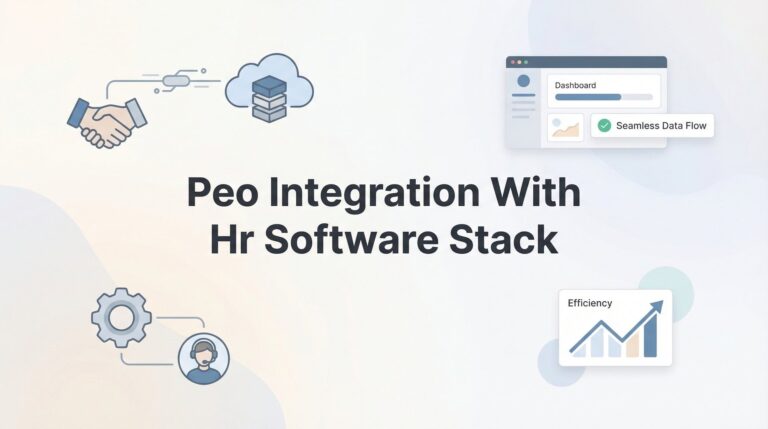
Integrating a PEO with your existing HR software stack is rarely plug-and-play, despite what sales teams promise. This guide covers the practical steps for connecting your PEO to current HR tools—from auditing your systems and negotiating integration support to building workarounds when native connections don’t exist—so you can maintain the recruiting platforms, performance management systems, and time-tracking software your team already relies on.
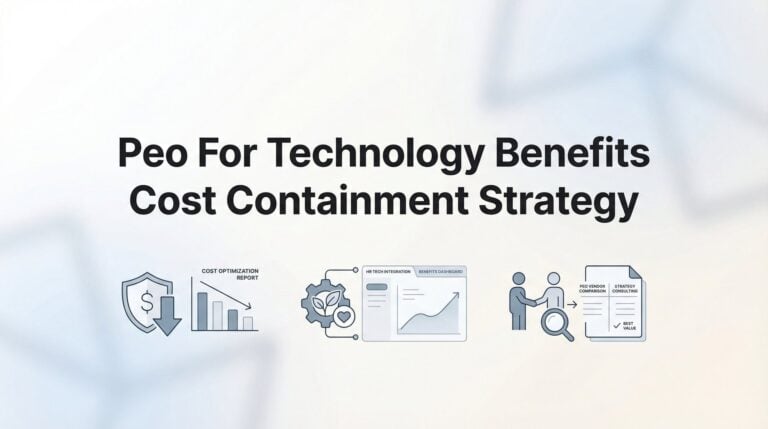
Technology companies can reduce benefits costs while maintaining competitive coverage by partnering with a PEO for technology benefits cost containment strategy that goes beyond standard plans. This guide reveals seven proven tactics tech companies use—from leveraging younger workforce demographics for better risk pooling to strategically structuring voluntary benefits—that actually lower expenses without sacrificing the premium health coverage engineers expect when competing against well-fun…
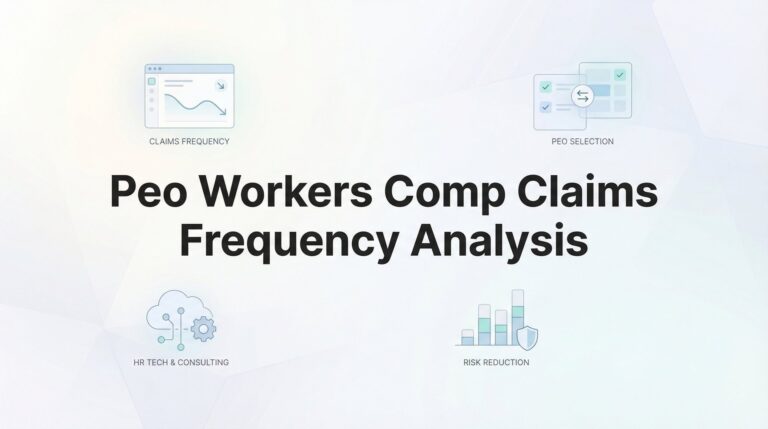
When you join a PEO, your workers comp claims frequency doesn’t function like it does under a traditional policy—your claims get pooled with hundreds of other employers, meaning both your individual frequency and the entire pool’s performance affect your costs. This creates a shared risk scenario where high-risk businesses can benefit from a stable pool, while low-risk companies might pay more if the pool’s claims frequency deteriorates, making it essential to understand peo workers comp clai…
Restaurant owners face constant litigation exposure from wage disputes, workplace injuries, and employment claims due to high turnover and tipped workers. This framework shows how to strategically deploy a PEO for restaurants litigation risk mitigation—not just for HR convenience, but as structural defense that builds defensible systems preventing lawsuits before they materialize and strengthening your position when claims arise.
This practical guide provides a 6-step PEO HR standardization roadmap to help businesses prepare for a smooth PEO transition by identifying gaps in current HR processes, determining which functions to keep in-house versus transfer, and creating clear documentation before implementation begins.

Your PEO employment agreement alignment determines whether your contract matches your actual business operations—who makes decisions, how employees are classified, and where liability sits. Most companies sign their agreement once and never revisit it, creating costly gaps between what’s written and what’s happening, which leads to compliance exposure, wasted spending on unused services, and unexpected liability during claims.
Most businesses evaluate PEOs with vague cost expectations and miss the real financial picture. This guide provides seven practical steps to create a comprehensive PEO financial impact assessment checklist that identifies hidden expenses, quantifies bundled service value, and establishes clear benchmarks to measure whether your PEO relationship actually delivers ROI—giving you the financial clarity needed before, during, and after implementation.
Most PEOs obscure their cost allocation methodology, making it nearly impossible to verify charges or compare proposals accurately. Understanding how providers distribute administrative fees, benefits costs, and workers’ comp expenses across their client base is essential—it reveals whether you’re paying a fair rate or unknowingly subsidizing other companies’ claims. This breakdown exposes the hidden mechanics behind your monthly PEO invoice and shows you which cost buckets are truly fixed ve…
Partnering with a PEO means sharing employer responsibilities like payroll, benefits, and compliance, but you still carry legal and financial exposure if issues arise. This guide covers seven essential PEO internal audit considerations that help business owners verify accuracy, maintain compliance, and protect against costly surprises—from payroll tax verification to benefits administration and regulatory filings—giving you control over a relationship where your company’s reputation and finan…

Before signing with a PEO provider, conduct a thorough PEO state employment law risk review to evaluate how they handle multi-state compliance challenges. Companies operating across states like California, Texas, and New York face vastly different leave laws, wage payment rules, and penalty structures—making your PEO choice either a critical safety net or a major liability exposure. This systematic review process helps you stress-test a provider’s state-specific compliance capabilities before…
PEO expense visibility challenges leave many businesses unable to understand their monthly invoices, with vague line items like “administrative services” and “risk management fees” that don’t break down further. While some opacity stems from PEO business model structures, it often limits your ability to identify cost increases, comparison-shop effectively, or negotiate better rates—turning the promised transparency into confusion that exceeds in-house payroll complexity.
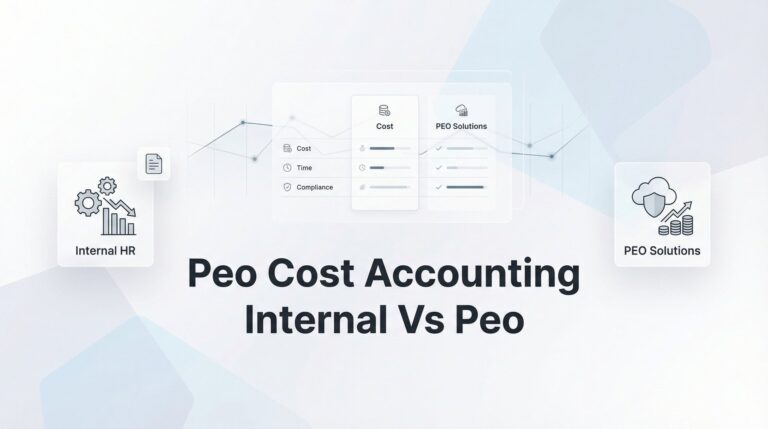
Most businesses miss 60-70% of actual costs when comparing PEO expenses to internal HR by only looking at payroll versus PEO invoices. This guide presents seven cost accounting methods to conduct an accurate PEO cost accounting comparison internal vs PEO, helping you surface hidden expenses scattered across benefits administration, compliance work, workers’ comp, and HR software to make data-driven decisions based on complete financial pictures rather than incomplete comparisons.