
When a wage claim or compliance investigation hits your business, your PEO’s audit trail capabilities determine whether you have immediate documentation or a costly legal problem. Comprehensive PEO audit trail requirements should include timestamped records of all payroll transactions, manager approvals, schedule changes, and calculation histories that prove exactly what happened with every employee hour and payment—documentation that can resolve disputes in hours instead of turning into expe…
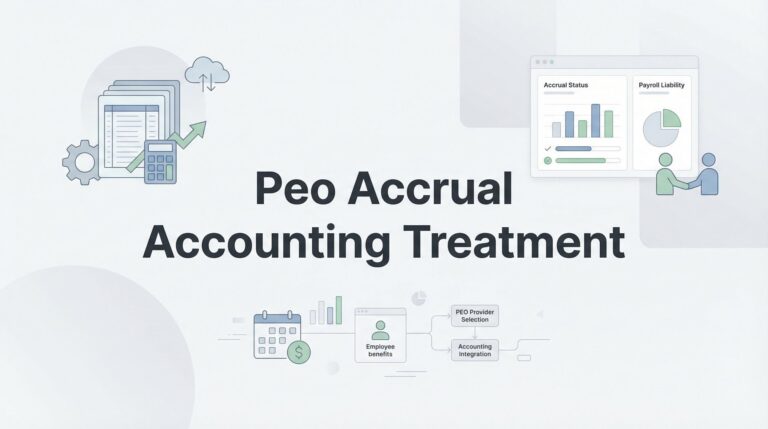
This step-by-step guide shows business owners how to properly handle PEO accrual accounting treatment when PEO invoices don’t align with internal payroll periods. You’ll learn the practical mechanics of unbundling PEO invoices, recording accurate monthly accruals, managing timing differences between pay periods and billing dates, and implementing a repeatable reconciliation system that keeps your financial statements accurate and prevents expense misstatements.
A comprehensive PEO financial modeling template must account for more than simple fee comparisons—it requires capturing bundled services, variable admin costs, pass-through expenses, and workforce-specific benefit savings that standard spreadsheets miss. This guide breaks down seven essential components that provide complete cost visibility, including hidden internal HR labor, insurance premium differentials, and operational efficiency factors that determine whether a PEO investment delivers …
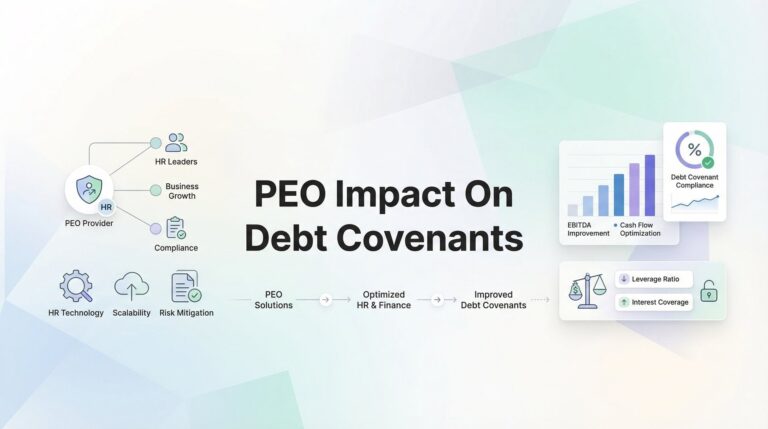
Switching to a PEO can alter how payroll and employment liabilities appear on financial statements, potentially affecting the debt ratios lenders use to monitor covenant compliance. Before signing a PEO agreement, business owners should understand the PEO impact on debt covenants, particularly if they have revolving credit facilities or loans tied to EBITDA or fixed charge coverage ratios, as the transition may trigger recalculation requirements or technical violations without proper coordina…

This guide reveals seven actionable strategies to lower your PEO loss ratio and reduce workers’ compensation costs, complete with a practical peo loss ratio improvement calculator approach that requires no actuarial expertise. You’ll learn how to measure the financial impact of each risk management change and use that data to negotiate better PEO terms at renewal time.
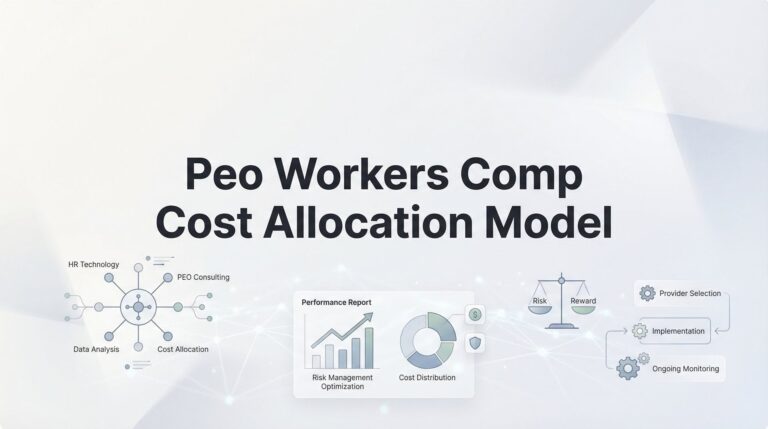
PEOs use three distinct workers comp cost allocation models that determine whether you pay based on your actual claims, share costs across a pooled group, or fall somewhere in between. Understanding which PEO workers comp cost allocation model your provider uses is critical because the pricing structure—not just the quoted rate—directly impacts whether you’re getting fair pricing or unknowingly subsidizing other companies’ workplace injuries.
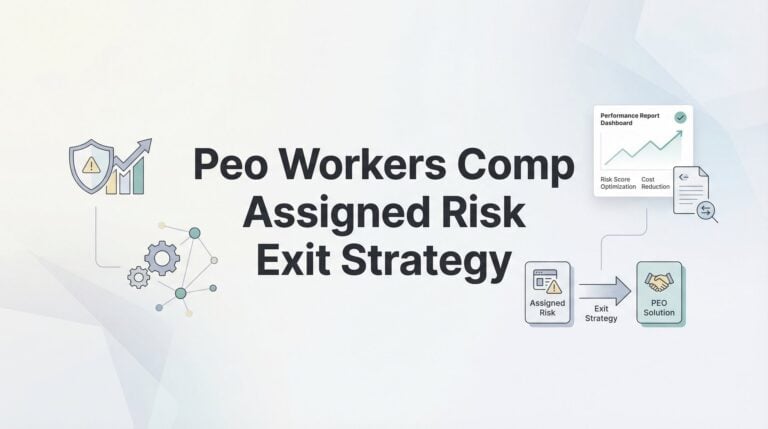
Businesses trapped in assigned risk workers’ compensation pools face premium rates and limited options, but a Professional Employer Organization (PEO) offers a proven exit strategy. This guide provides a step-by-step approach to leveraging a PEO’s master workers’ comp policy to escape assigned risk, rebuild insurability, and eventually qualify for standard market coverage—including how to find accepting PEOs, negotiate timelines, and avoid common pitfalls that keep businesses stuck.
Most business owners miss hidden HR infrastructure costs when evaluating PEO services by focusing solely on monthly fees. This guide presents seven practical strategies for conducting a thorough PEO HR infrastructure cost analysis, helping you compare your current expenses—including payroll systems, benefits platforms, compliance tools, HRIS software, and staffing—against a PEO’s complete cost structure to identify real savings and hidden expenses.

A PEO mod rate forecasting model helps business owners predict workers’ compensation costs before they spike by analyzing the underlying math behind experience modification rates. Instead of treating your mod rate as unpredictable, this forecasting approach lets you project costs 2-3 years ahead, giving you visibility into whether your PEO relationship is actually reducing risk or simply masking rising expenses within a master policy.

When selling a business that uses a PEO, the co-employment relationship creates significant complications in M&A transaction warranties, particularly around employer representations. Since PEOs serve as the employer of record for payroll tax purposes while sellers remain the worksite employer for operational control, standard warranty language about being the “sole employer” becomes legally ambiguous, requiring careful negotiation of purchase agreement terms to accurately reflect the shared e…

When you partner with a PEO, determining your official employee headcount becomes surprisingly complex due to co-employment arrangements. The number you report varies depending on the context—IRS filings, ACA compliance, insurance policies, and loan applications may each require different headcount figures. Understanding PEO impact on headcount reporting is critical because these numbers trigger important legal thresholds like FMLA coverage and ACA mandates, affect insurance premiums, and inf…

PEO vs Employer of Record (EOR) isn’t about service differences—it’s about legal structure. PEOs create co-employment where you remain the legal employer, while EORs become the legal employer on paper. This distinction determines liability, control, costs, and exit complexity. Choose a PEO if you have legal entities where employees work; select an EOR for international hiring or markets without established entities.