
Fire protection contractors carry a payroll and compliance burden that most industries never deal with. Workers’ comp codes for sprinkler installation and suppression systems sit in high-risk NCCI classifications, certified payroll requirements kick in on any prevailing wage job, and crews often shift between multiple trade types on the same week’s timesheet. A basic payroll company handles the processing — but it doesn’t touch your workers’ comp exposure, your benefits package, or your multi-state compliance headaches.
A PEO bundles all of that under one roof through a co-employment model. But not every PEO will take on fire protection trade codes, and some that do will quietly load your premiums until there’s no savings left. The right choice depends on your headcount, your workers’ comp situation, whether you do prevailing wage work, and how much employer responsibility you want to retain.
Here are the top PEO and payroll solutions worth evaluating if you’re in the fire protection trades — covering both full-service PEOs and construction-specific payroll platforms.
1. PEO Metrics
Best for: Fire protection contractors who want unbiased, side-by-side PEO comparisons before committing
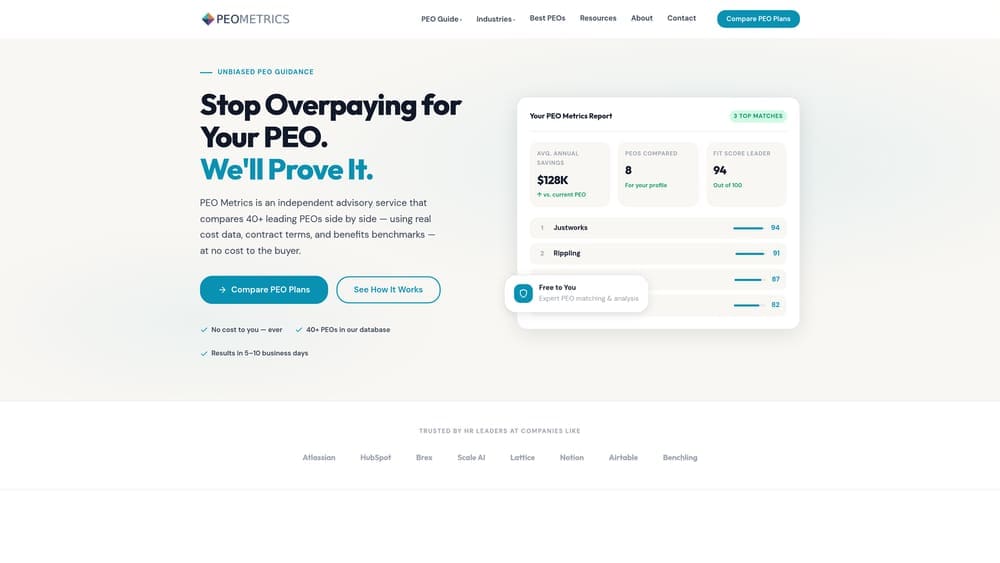
PEO Metrics is a PEO comparison service that helps fire protection contractors evaluate multiple providers with real pricing and workers’ comp data — not sales pitches.
Where This Tool Shines
The biggest mistake fire protection contractors make when evaluating PEOs is comparing quotes in isolation. One PEO quotes you a low admin fee, another bundles workers’ comp differently, and a third loads risk premiums you don’t notice until month three. PEO Metrics puts those comparisons side by side with enough detail to actually spot the differences.
For a trade with NCCI codes like 5183 (automatic sprinkler installation) already carrying elevated experience modification rates, the workers’ comp component of any PEO deal can swing your total cost significantly. Having a service that specifically analyzes workers’ comp rates across providers — rather than just listing features — is genuinely useful here.
Key Features
Side-by-Side Provider Comparisons: Detailed metrics across multiple PEOs so you can evaluate pricing, coverage, and contract terms in one view.
Workers’ Comp Rate Analysis: Breaks down how different PEOs handle workers’ comp for high-risk trade codes — critical for fire protection classification codes.
Unbiased Guidance: Not affiliated with any single PEO provider, so the recommendations aren’t shaped by referral fees or preferred partnerships.
Pricing Transparency: Surfaces bundled fees and administrative markups that can inflate costs without obvious disclosure in standard quotes.
Best For
Fire protection contractors who are considering a PEO for the first time, switching providers, or coming up on renewal and wondering if they’re overpaying. Also useful for multi-state operations trying to compare how different PEOs handle cross-state compliance.
Pricing
Contact for details. This is a comparison and advisory service, not a PEO subscription — so there’s no per-employee monthly fee to evaluate your options.
2. Insperity
Best for: Mid-market fire protection firms that need scalable HR infrastructure alongside payroll
Insperity is a full-service PEO with dedicated HR support and benefits packages built for companies that have moved past the “figure it out yourself” stage.

Where This Tool Shines
Insperity’s strength is the depth of HR infrastructure it provides. Dedicated HR specialists, compliance support, and performance management tools give fire protection firms something most payroll companies can’t offer: actual people who understand employment law and can help when something goes sideways.
For fire protection contractors in the 20 to 150 employee range, this matters. You’re large enough that HR issues are real and recurring, but not large enough to justify a full in-house HR department. Insperity fills that gap with a co-employment model that also bundles benefits, which helps with recruiting skilled tradespeople in a tight labor market.
Key Features
Dedicated HR Specialists: Assigned HR professionals who handle compliance questions, employee relations, and regulatory guidance.
Comprehensive Benefits Packages: Access to health, dental, vision, and retirement benefits at group rates that smaller contractors can’t usually access independently.
Performance Management Tools: Built-in tools for reviews, goal tracking, and training — useful for contractors trying to retain certified technicians.
Scalable Infrastructure: Designed to grow with you, making it a reasonable long-term fit rather than something you’ll outgrow in two years.
Best For
Fire protection companies with 20 to 150+ employees that need HR depth, benefits access, and compliance support — and are comfortable with the co-employment model that PEOs require.
Pricing
Custom pricing based on headcount and selected services. Typically structured as a per-employee-per-month fee. Quotes require direct contact with their sales team.
3. ADP TotalSource
Best for: Multi-state fire protection operations with complex compliance and reporting needs
ADP TotalSource is an enterprise-grade PEO backed by ADP’s payroll infrastructure, built to handle the regulatory complexity that comes with operating across multiple states.
Where This Tool Shines
Multi-state fire protection contractors face a layered compliance problem. Different workers’ comp requirements, state tax filings, licensing rules, and payroll regulations in each jurisdiction add up fast. ADP TotalSource handles multi-state tax filing and compliance management at a scale that smaller PEOs often can’t match.
The workers’ comp pooling through ADP’s large employer base can also be meaningful for fire protection contractors — though as with any PEO, you’ll want to verify how your specific trade codes are rated before assuming you’ll see savings.
Key Features
Multi-State Tax Filing and Compliance: Handles the regulatory variation across state lines, which is a real operational headache for contractors licensed in multiple jurisdictions.
Large-Scale Workers’ Comp Pooling: Access to ADP’s broader employer pool, which can influence rates for high-risk trade classifications.
Robust Reporting and Analytics: Dashboard-level visibility into payroll, HR, and compliance data — useful for contractors managing multiple crews and job sites.
ADP Ecosystem Integration: Connects with ADP’s broader payroll and HR tools if you’re already using other ADP products.
Best For
Fire protection contractors with 10 or more employees operating in multiple states who need a PEO with the infrastructure to handle cross-state complexity without manual workarounds.
Pricing
Custom quotes required. Generally positioned for companies with at least 10 employees. Contact ADP TotalSource directly for pricing based on headcount and state footprint.
4. Foundation Software
Best for: Fire protection contractors doing prevailing wage or government work that requires certified payroll
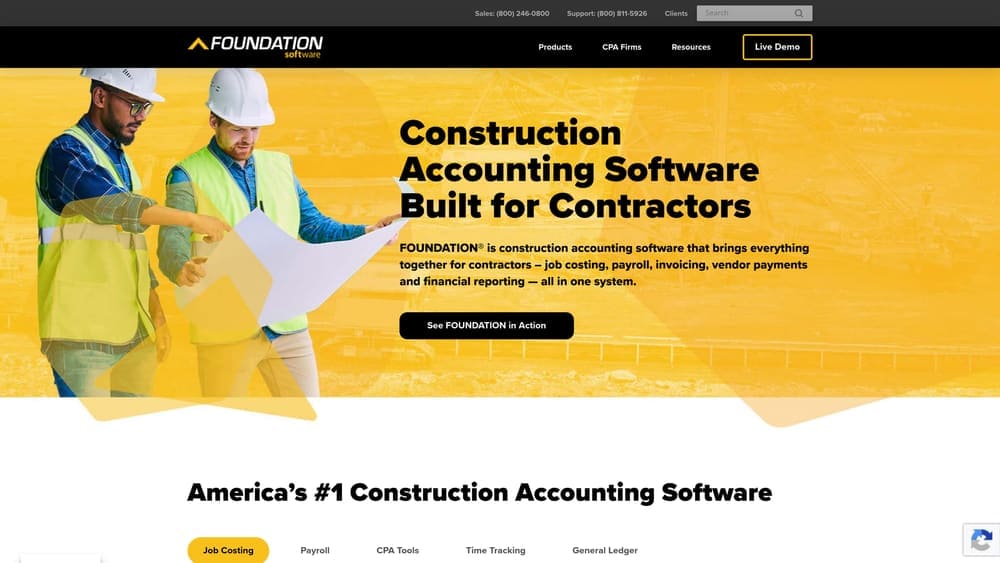
Foundation Software is a construction-specific accounting and payroll platform with certified payroll, job costing, and prevailing wage tracking built in from the ground up.
Where This Tool Shines
Certified payroll is a hard requirement on any public works or Davis-Bacon project. General-purpose payroll platforms and many PEOs handle it poorly — often requiring manual workarounds or third-party add-ons that create errors and compliance risk. Foundation was designed specifically for construction, which means certified payroll isn’t a bolt-on feature; it’s core functionality.
For fire protection contractors doing a mix of commercial and government work, the job costing and multi-trade crew support also makes a real difference. You can track labor costs by project, phase, and trade classification without exporting data into a separate spreadsheet.
Key Features
Certified Payroll Reporting: Built-in prevailing wage compliance and certified payroll output for Davis-Bacon and state prevailing wage projects.
Job Cost Tracking: Labor cost allocation by project and phase, with AIA billing integration for contractors billing on standard construction formats.
Union Payroll and Multi-Trade Support: Handles union deductions, multi-trade crews, and the payroll complexity that comes with mixed-classification workforces.
Construction-Native Design: Built for contractors, not adapted from general-purpose accounting software — which shows in how it handles construction-specific workflows.
Best For
Fire protection contractors doing prevailing wage work, government contracts, or mixed commercial and public projects where certified payroll reporting is a regular requirement. Also strong for shops that want job-level cost visibility.
Pricing
Starts around $600 per month for core modules. Final pricing varies based on company size, number of users, and add-on modules. Contact Foundation for a detailed quote.
5. Paychex PEO
Best for: Smaller fire protection shops that want PEO benefits without high employee minimums
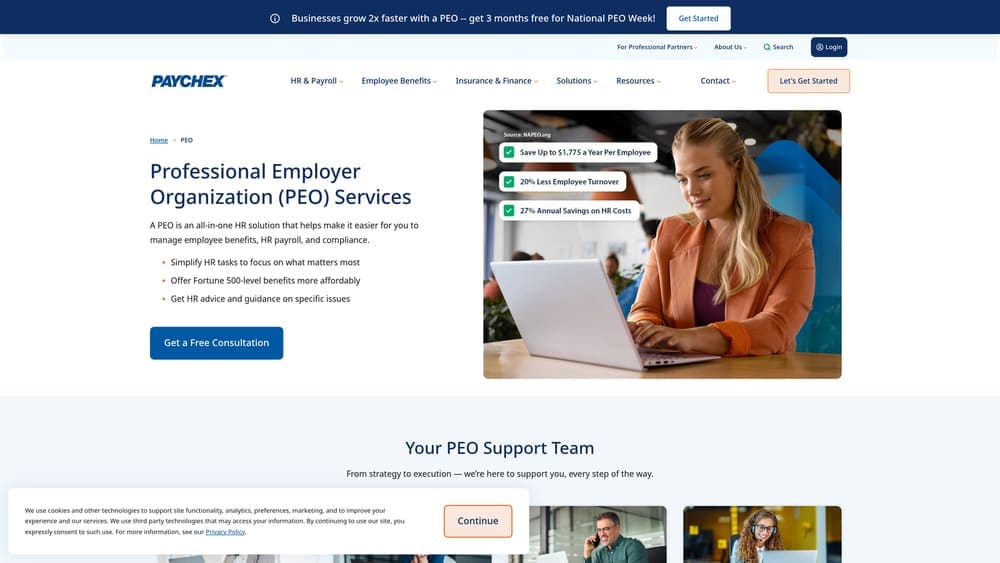
Paychex PEO bundles payroll, benefits, and pay-as-you-go workers’ comp in a PEO model that’s more accessible for smaller contractors than most enterprise PEO options.
Where This Tool Shines
The pay-as-you-go workers’ comp structure is genuinely useful for fire protection contractors. Traditional workers’ comp policies require a large upfront deposit based on estimated payroll — which creates cash flow pressure, especially for seasonal or project-based businesses. Paychex PEO calculates and pays workers’ comp premiums with each payroll run, eliminating the deposit requirement and reducing audit exposure.
For smaller shops under 50 employees, Paychex PEO also clears a common barrier: many PEOs require 10 to 25 employees minimum. Paychex tends to work with smaller headcounts, making it one of the more accessible PEO options for a 5 to 15 person fire protection crew.
Key Features
Pay-As-You-Go Workers’ Comp: Premiums calculated and paid each payroll cycle — no large upfront deposit, no year-end audit surprises.
Bundled Payroll, HR, and Benefits: Single-vendor approach to payroll processing, HR administration, and benefits enrollment.
Lower Employee Minimums: More accessible for smaller fire protection operations than PEOs with strict headcount thresholds.
Employee Self-Service Portal: Online access for employees to manage benefits, view pay stubs, and handle basic HR tasks without going through the owner.
Best For
Small fire protection contractors under 50 employees who want workers’ comp flexibility, basic benefits access, and a bundled HR solution without the complexity or cost of enterprise PEO options.
Pricing
Custom pricing. Generally competitive for small businesses. Contact Paychex directly for a quote based on headcount, state, and trade classification.
6. Viewpoint Vista (Trimble)
Best for: Larger fire protection contractors that need payroll tightly integrated with project management and accounting
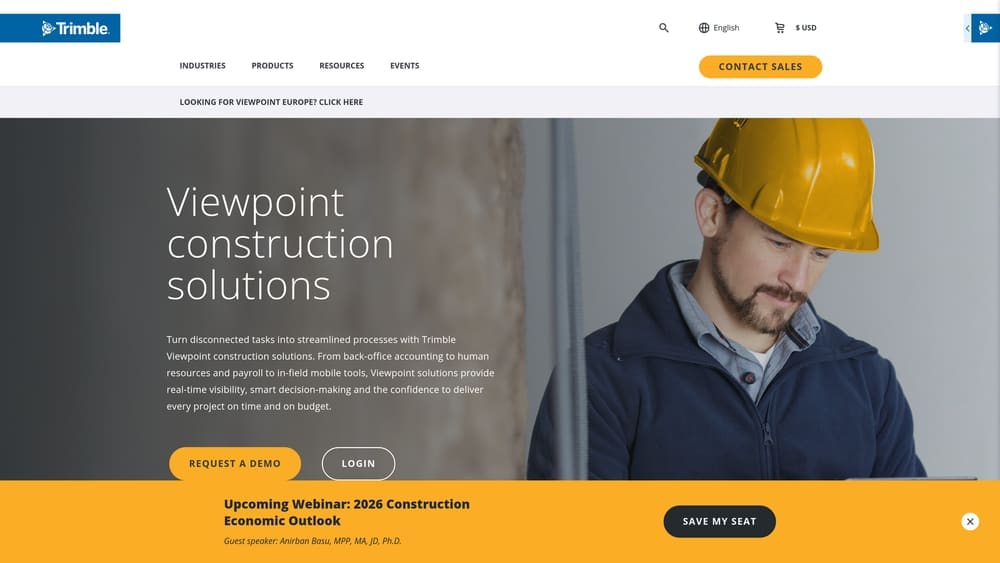
Viewpoint Vista is a full construction ERP that integrates payroll, certified payroll compliance, job costing, and project management for contractors operating at scale.
Where This Tool Shines
Once a fire protection contractor reaches a certain size — multiple active projects, multi-entity structure, crews across several states — the limitation of standalone payroll software becomes obvious. Payroll data lives in one system, project costs in another, and reconciling them manually burns hours every week. Vista eliminates that disconnect by tying payroll directly into the project management and accounting layer.
For contractors doing $5 million or more in annual revenue, that integration has real operational value. Certified payroll, prevailing wage compliance, and multi-state payroll all run through the same system that tracks your job costs and manages your billing.
Key Features
Integrated Payroll and Project Management: Payroll data flows directly into job costing and project accounting — no manual reconciliation between systems.
Certified Payroll and Prevailing Wage Compliance: Built-in compliance tools for Davis-Bacon and state prevailing wage requirements.
Multi-Entity and Multi-State Support: Handles complex organizational structures and cross-state payroll without requiring separate instances or manual workarounds.
Enterprise Scalability: Designed for contractors with significant revenue and operational complexity — not a tool you’ll outgrow quickly.
Best For
Established fire protection contractors doing $5 million or more in annual revenue who need payroll, project management, and accounting in a single integrated system. Less suited for small shops due to implementation cost and complexity.
Pricing
Enterprise pricing with a custom quote required. Implementation investment is significant — this is a platform decision, not a subscription you can trial cheaply. Contact Viewpoint for a detailed proposal.
7. TriNet
Best for: Fire protection firms competing for skilled labor who need competitive benefits access
TriNet is a full-service PEO known for giving smaller companies access to Fortune-500-level benefits, with industry-specific compliance teams that understand trade and construction risk profiles.

Where This Tool Shines
Recruiting and retaining certified fire protection technicians is genuinely competitive. Sprinkler fitters, alarm installers, and suppression system specialists have options — and a weak benefits package is a real disadvantage when you’re competing against larger mechanical contractors or union shops. TriNet’s benefits access levels that playing field, giving smaller fire protection firms health, dental, vision, and retirement options that would be difficult to source independently.
TriNet also offers industry-specific risk and compliance guidance, which matters for a trade that sits at the intersection of construction, OSHA compliance, and state licensing requirements. The platform covers the 10 to 100 employee range well, which fits a large portion of mid-sized fire protection operations.
Key Features
Fortune-500-Level Benefits Access: Group health, dental, vision, and 401(k) options at rates that smaller contractors can’t typically negotiate independently.
Industry-Specific Compliance Guidance: Risk and compliance teams familiar with construction and trade-specific regulatory requirements.
Integrated HR, Payroll, and Benefits Platform: Single system for payroll processing, benefits administration, and HR management.
Strong Mid-Market Fit: Designed for companies in the 10 to 100 employee range — not oversized for smaller fire protection operations but capable of handling growth.
Best For
Fire protection contractors with 10 to 100 employees who are losing skilled technicians to competitors with better benefits packages and need a PEO that can close that gap quickly.
Pricing
Per-employee-per-month pricing with custom quotes based on industry risk profile and headcount. Contact TriNet directly for a quote specific to fire protection trade classifications.
Which Option Actually Fits Your Operation
The PEO vs. payroll company decision for fire protection contractors isn’t really about features. It comes down to three things: how much your workers’ comp is costing you, whether benefits access matters for retention, and whether you’re doing prevailing wage work that requires certified payroll.
If workers’ comp is your primary pain point and you want to explore whether a PEO can lower your effective rate, start by comparing multiple providers before you sign anything. The range in how PEOs handle high-risk trade codes like NCCI 5183 is significant — some will pool you into favorable risk groups, others will quietly load your premiums. That’s exactly what PEO Metrics is built to surface.
If certified payroll is a regular requirement, a general-purpose PEO or payroll platform likely won’t serve you well. Foundation Software is the cleaner fit for contractors doing government and prevailing wage work at any size. Viewpoint Vista makes sense once you’re large enough to justify the ERP investment.
For smaller shops under 50 employees, Paychex PEO’s pay-as-you-go workers’ comp structure removes a real cash flow burden without requiring a large headcount. For mid-market firms focused on retention, Insperity and TriNet both offer the benefits infrastructure that helps you compete for skilled tradespeople.
Multi-state operations add another layer. Cross-state payroll, licensing, and workers’ comp requirements favor either a PEO with proven multi-state capability like ADP TotalSource or a construction ERP like Vista that handles multi-entity complexity natively.
Before you sign a renewal or lock into a new agreement, make sure you’re actually comparing apples to apples. Bundled fees, administrative markups, and inflexible contract terms can quietly erode any savings a PEO promises. Don’t auto-renew. Make an informed, confident decision.
