

If you run several franchise units, the PEO versus payroll question is really about how much HR, benefits, and workers’ comp responsibility you want to hand off, and how much co-employment you’re willing to accept in return. This list is for multi-unit franchisees and franchise groups weighing both routes. The options were chosen for multi-location fit, service model (PEO, ASO, or payroll-only), how benefits and workers’ comp are handled, and how transparent the pricing is.
Before the list, one distinction matters. A PEO (professional employer organization) enters a co-employment arrangement: it becomes a co-employer for certain purposes, typically runs payroll, offers pooled benefits, and provides HR and compliance support, sometimes with workers’ comp. An ASO (administrative services organization) provides similar administrative help without co-employment. A payroll-only provider processes pay and files taxes while you remain the sole employer and keep HR and benefits in-house. A PEO does not remove your employer liability, and these models are not interchangeable.
Quick Comparison of the Eight Options
- PEO Metrics: best for groups comparing PEO quotes before committing; pricing on its website; compares multiple PEO providers on pricing and metrics, but is not a provider itself.
- Paychex: best for franchisees who want a path from payroll to PEO; quote-based; offers both payroll and PEO under one vendor.
- Insperity: best for groups with no HR staff; quote-based; a dedicated HR advisor service model.
- TriNet: best for groups wanting an industry-oriented PEO; quote-based; industry-specific PEO packaging.
- Justworks: best for small groups wanting transparent pricing; see website; published per-employee pricing tiers.
- ADP TotalSource: best for groups already on ADP payroll; quote-based; a PEO from an established payroll brand.
- Gusto: best for lean groups with HR capacity; see website; payroll without co-employment.
- OnPay: best for franchisees with few units and simple payroll; see website; a single flat pricing plan that works as a benchmark against PEO fees.
1. PEO Metrics
PEO Metrics is our own service, so read this entry with that in mind. It is a PEO comparison service, not a PEO or payroll provider, and it may receive vendor placement fees. It is designed for businesses that haven’t picked a PEO yet and want to see providers next to each other.
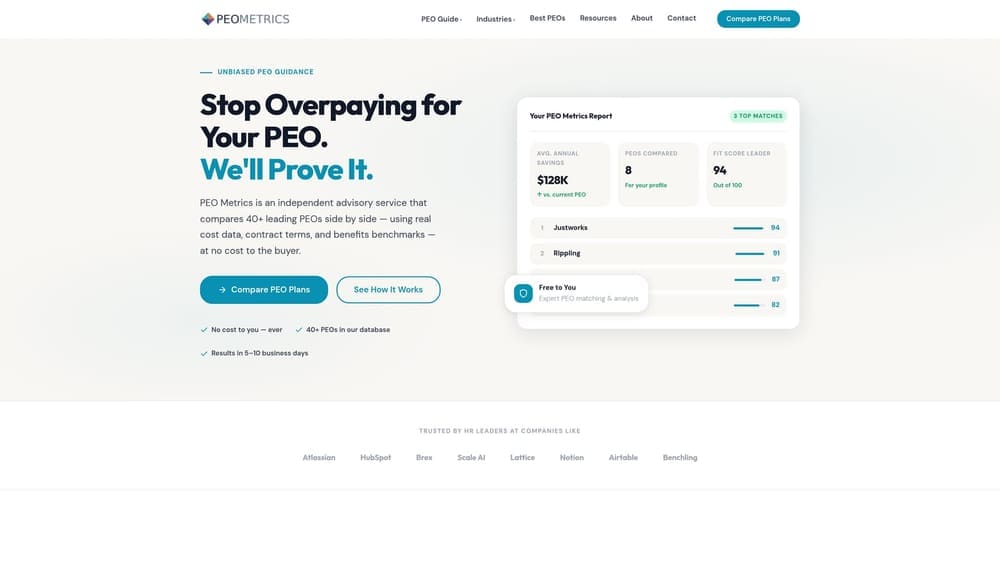
What it does distinctively well on this list: it is the only entry that compares several PEOs on pricing and metrics before a franchise group commits. Every other entry is a single vendor describing itself. For a multi-unit group, that matters because the headline admin fee rarely shows total cost once benefits, workers’ comp, and state mix are factored in.
- Side-by-side provider comparison, so you can weigh several PEOs against the same criteria.
- Pricing analysis that looks beyond the headline fee toward what you would actually pay.
- Detailed provider metrics that give you more to compare than a sales deck does.
- Guidance on selecting a PEO, useful if nobody on your team has bought one before.
Integrations don’t apply, since it is a comparison service and doesn’t touch your payroll or HRIS. Setup is a conversation about your headcount, locations, and needs, and whoever owns HR or finance for the group would typically run it.
Limitations are plain. It does not run payroll, administer benefits, or act as your employer, so it can’t replace any other tool here. If you already know you want payroll-only, or you’re locked into a vendor, it adds less. Pricing details are on the website.
Best for: Franchise groups that want to compare PEO quotes before deciding.
2. Paychex
Paychex offers both payroll and PEO services, which makes it the clearest option for a group that isn’t sure which model it needs. You can begin with payroll and move to a PEO later without changing vendors, a real advantage if you’re adding units and your HR burden is growing.
What you get
- Payroll processing across locations, so each unit can run through one system.
- PEO services for groups ready to share employer responsibilities.
- Benefits administration to handle enrollment and plan management.
- Time and attendance tools suited to hourly, shift-based franchise staff.
- HR support for day-to-day employee questions and compliance.
Fit and limits
Integrations should be verified on the official site, particularly with your POS or scheduling software. Day-to-day, an owner, controller, or office manager usually runs payroll, while the PEO side shifts more work to the provider.
The main drawback is quote-based pricing. You can’t build a cost model from a rate card, so early comparison against other options is harder. Pricing generally moves with headcount, services selected, and the service model you choose. Get written quotes for each tier you’re considering.
Best for: Franchisees who want a path from payroll to PEO without changing vendors.
3. Insperity
Insperity is a PEO built around a hands-on service model, with dedicated HR advisors supporting employers who have no in-house HR department. That distinguishes it from the technology-first approach some other PEOs take. For a franchise group where the owner is also handling hiring, discipline, and paperwork, a named advisor can be the main draw.
Limitations come first here because they shape fit. Pricing is quote-based, and you should verify any minimum company size before investing time in a proposal. Because it is a PEO, you accept co-employment, and you should review the contract terms and your franchise agreement before signing.
- PEO co-employment, which shares certain employer responsibilities with the provider.
- HR advisory support, giving managers someone to call on employee relations issues.
- Benefits access through the provider’s plans rather than ones you assemble yourself.
- Payroll run as part of the same relationship.
- Compliance support to help you keep up with employment rules across locations.
Integrations should be verified on the official site. Setup typically involves onboarding employees across each unit onto the provider’s systems, so plan for a transition period. Cost depends on headcount and the benefits and services you choose.
Best for: Groups with no HR staff that want hands-on support.
4. TriNet
TriNet is a PEO that packages its offering by industry. For franchise groups, the draw is the possibility of a program shaped to your sector rather than a generic bundle. Verify directly with the vendor whether its current packaging fits your franchise type, since that is the point to confirm before taking this further.
Its limitations mirror other quote-based PEOs: no public price list, and size minimums to check. A group with a handful of units may find eligibility is a hurdle, so ask early.
- PEO co-employment, with shared employer responsibilities.
- Benefits plans offered through the PEO’s pooled arrangements.
- Payroll processing included in the service.
- An HR technology platform for employees and managers to use day to day.
- Compliance support for multi-location employers.
Integrations should be confirmed on the official site. Setup involves migrating payroll and benefits, and the platform is usually run by whoever handles HR or finance for the group. Pricing is quote-based and typically moves with headcount, benefits selections, and the services included.
Best for: Groups wanting an industry-oriented PEO.
5. Justworks
Justworks is a technology-forward PEO and the one on this list most associated with published pricing. Its per-employee pricing tiers make early cost comparison easier than with quote-only vendors. That is useful when you want a rough benchmark before requesting proposals.
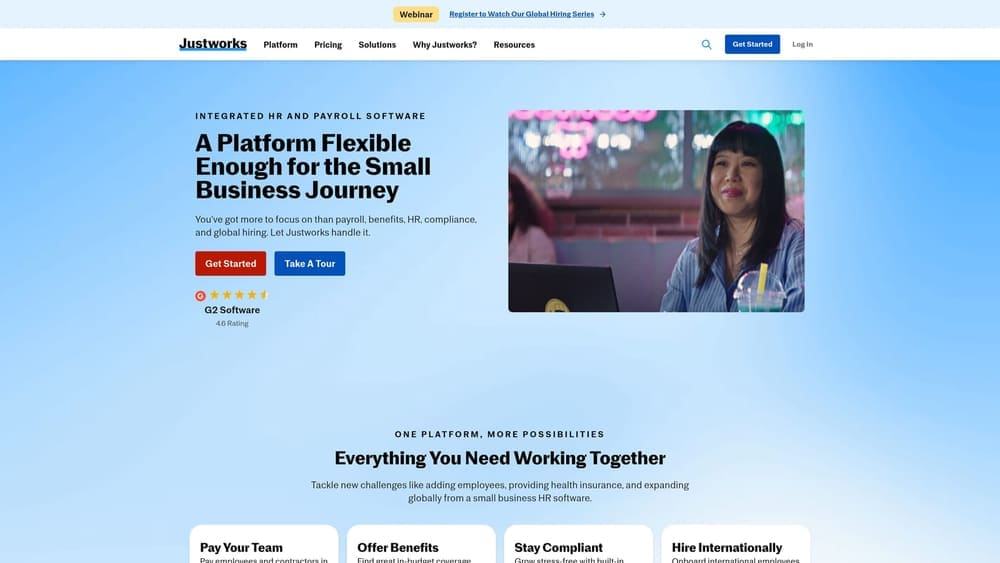
The trade-off is scale. It may suit smaller, simpler groups better than large multi-state operators, and you should verify state availability for every location you operate in. If your units span many states, confirm coverage before anything else.
- PEO co-employment, so the provider shares employer responsibilities.
- Payroll that runs inside the same platform as HR and benefits.
- Benefits access without building plans unit by unit.
- Compliance support to reduce the paperwork load on owners.
- A mobile app so staff and managers can handle tasks from a phone.
Integrations should be verified on the official site. Setup is generally self-service friendly, and a single owner or office manager can usually run it. Pricing details are on the website as of 2026 and typically vary with headcount and the plan tier selected, so confirm current rates directly.
Best for: Small groups that want transparent pricing.
6. ADP TotalSource
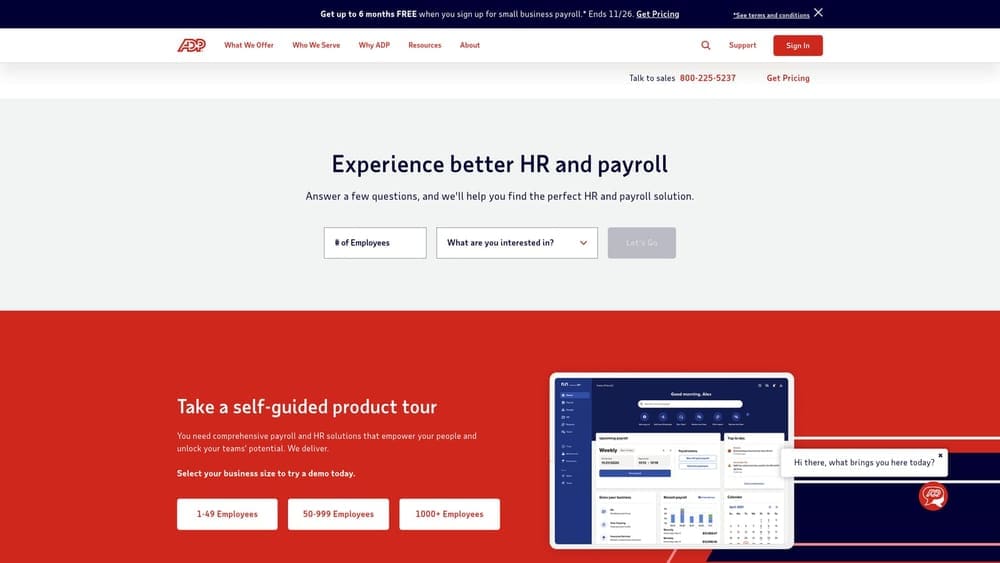
ADP TotalSource is the PEO offering from ADP, a large payroll brand. What sets it apart is that existing ADP payroll clients can compare the payroll-only and PEO models within a familiar vendor relationship. That helps a group already running payroll with ADP evaluate whether stepping up is worthwhile.
- PEO co-employment, shifting certain employer duties to the provider.
- Payroll tied to the same relationship as HR and benefits.
- Benefits offered through the PEO structure.
- HR support for managers handling employee issues.
- Compliance help across locations.
Limitations: pricing is quote-based, and you need to confirm eligibility and size requirements. Because ADP sells several products, make sure your proposal is specifically for the PEO and not a payroll package, since they are different service models with different liability implications.
Integrations should be verified on the official site. Setup involves moving from your current payroll into the PEO arrangement, usually handled by an owner or finance lead with provider onboarding support. Cost typically depends on headcount, benefits chosen, and services included.
Best for: Groups already on ADP payroll weighing a PEO.
7. Gusto
Gusto is a payroll and HR platform, not a PEO. That is its defining trait on this list: you process payroll without co-employment, so the franchisee stays the sole employer. For groups that want to keep control of HR decisions, that is a feature, not a gap.
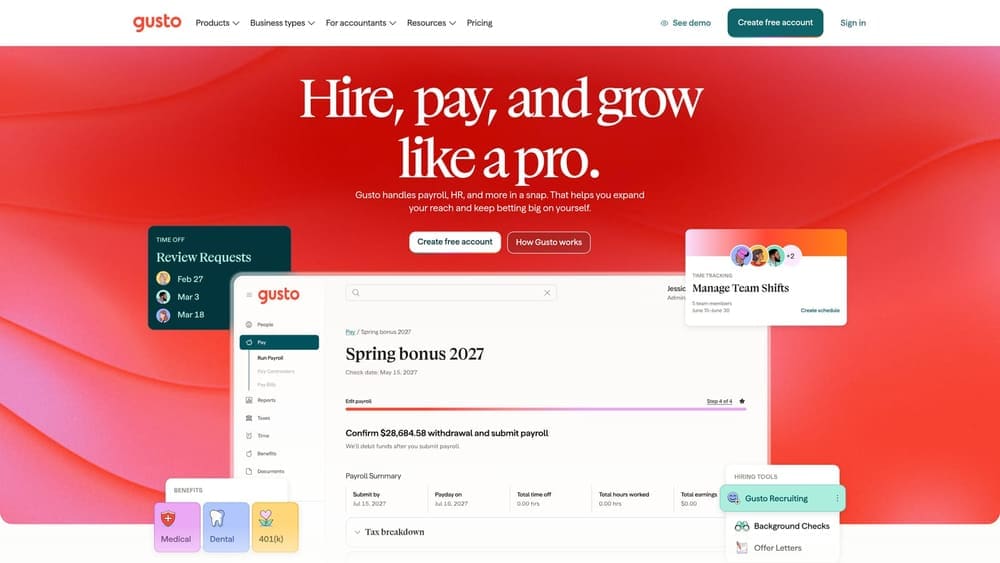
The limits follow directly. There are no pooled PEO benefits or workers’ comp arrangements, and HR stays in-house. If nobody in your group can handle employee relations, leave calculations, or compliance questions, the lower complexity of payroll-only can turn into hidden workload.
- Payroll processing for hourly and salaried staff across units.
- Tax filing handled so you don’t file each return yourself.
- Benefits administration, meaning you manage plans rather than join a pooled one.
- Onboarding tools to get new hires set up quickly.
- Time tracking to feed hours into payroll.
Integrations should be verified on the official site, especially for scheduling and POS tools. Setup is typically light, and a manager or bookkeeper can run it. Pricing is on the website as of 2026 and generally moves with the plan tier and headcount.
Best for: Lean groups with existing HR capacity.
8. OnPay
OnPay is a payroll provider with simple published pricing, and it is not a PEO. Its single flat pricing plan makes it a clean benchmark: when a PEO proposal arrives, you can compare what you’d pay for payroll alone against what the PEO bundles on top.
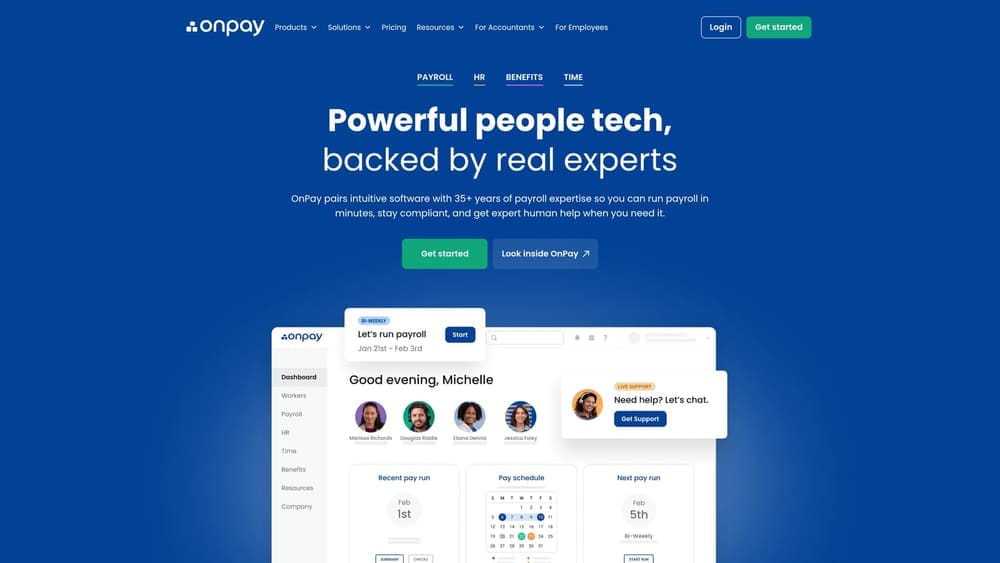
It doesn’t offer co-employment, pooled benefits, or workers’ comp coverage, so those remain your responsibility to arrange. That makes it a weaker fit for a growing group without HR staff, but a reasonable one for a small operation with straightforward needs.
- Payroll processing with one pricing structure to track.
- Tax filing to cover federal and state obligations.
- Benefits administration for plans you source yourself.
- Time tracking to support hourly staff.
- Onboarding tools for new hires.
Integrations should be verified on the official site. Setup is usually quick and run by an owner or office manager. Pricing is listed on the website as of 2026, and the total typically scales with the number of employees paid.
Best for: Franchisees with few units and simple payroll needs.
Matching the Model to Your Franchise Group
Start with PEO Metrics if you’re leaning toward a PEO but haven’t seen competing quotes. Comparing providers side by side on pricing and metrics before you commit is the cheapest mistake to avoid. As noted, PEOMetrics may receive vendor placement fees, and it doesn’t run payroll or serve as your employer.
If you lack HR staff and want pooled benefits and workers’ comp support, a PEO such as Insperity, TriNet, or ADP TotalSource is the model to evaluate. If you have in-house HR and want to remain the sole employer, Gusto or OnPay fit better. Paychex sits in between if you want room to move up later.
Whatever you choose, get written quotes and verify minimums, state availability, and contract terms as of today. Check your franchise agreement for approved-vendor rules and joint-employer provisions, and talk to counsel, because co-employment can interact with franchisor requirements. For background, see our [LINK CHECK: PEO vs payroll guide] and [LINK CHECK: PEO comparison hub].
Before you sign that PEO renewal, make sure you’re not leaving money on the table.
Many businesses unknowingly overpay because of bundled fees, hidden administrative markups, and contracts designed to limit flexibility. We give you a clear, side-by-side breakdown of pricing, services, and contract terms, so you can see exactly what you’re paying for and choose the option that truly fits your business.
