Decision-focused content for business owners evaluating long-term HR infrastructure and growth strategy.

At 75 employees, you’re in a strategic position where you have negotiating power with PEOs but face the risk of being oversold unnecessary services. This guide provides seven targeted strategies to help mid-sized companies evaluate PEO options specifically for this growth stage, focusing on which features actually matter, how to leverage your headcount for better terms, and how to avoid common mistakes that create painful transitions as you scale beyond startup solutions but before needing fu…
At 15 employees, you’re past spreadsheet-level HR but too small for a full-time HR hire—making this the critical moment to evaluate whether a PEO for 15 employees delivers real ROI or just locks you into expensive services you don’t need. This guide breaks down the specific cost-benefit math and operational realities that determine whether a PEO makes sense at your exact size, or whether simpler alternatives give you better flexibility without the multi-year commitment.
When your company reaches 500 employees, you have significant negotiating leverage with PEO providers, but many organizations overpay by using outdated arrangements from their growth phase. This guide reveals seven strategic approaches to renegotiate pricing, create hybrid HR models, and maximize PEO value at scale—helping you determine whether a PEO for 500 employees still makes financial sense or if it’s time to restructure your arrangement.

At 150 employees, companies face a critical infrastructure gap—too large for basic HR but too small to justify full specialist departments. A PEO for 150 employees solves this by providing enterprise-grade benefits, multi-state compliance management, and specialized HR support without the overhead of building an entire in-house team, freeing your stretched generalists to focus on strategic growth instead of drowning in administrative complexity.
Growing companies often reach a critical inflection point where their scrappy HR approach breaks down, but building a full internal department feels premature and costly. A PEO for growing companies can bridge this gap by providing scalable HR infrastructure that supports expansion from 15 to 100+ employees without the overhead of premature hiring, though selecting the right partnership requires understanding your specific growth trajectory and avoiding solutions you’ll need to unwind later.
A PEO service agreement explained properly reveals it’s far more than standard paperwork—it’s the legal framework governing your entire employment infrastructure, defining liability for payroll taxes, exit terms, fee structures, and protection during disputes. Understanding what you’re signing before committing is critical, as these contracts are designed to protect the PEO first and can lock you into terms affecting your business flexibility for years.

At 40 employees, you’re stuck in the messy middle—too large for DIY HR but too small for a full department. A PEO for 40 employees can handle your growing compliance burden, benefits administration, and payroll complexities, but with annual fees ranging from $50,000 to $85,000, you need to carefully evaluate whether outsourcing HR infrastructure makes financial sense compared to your current patchwork approach.
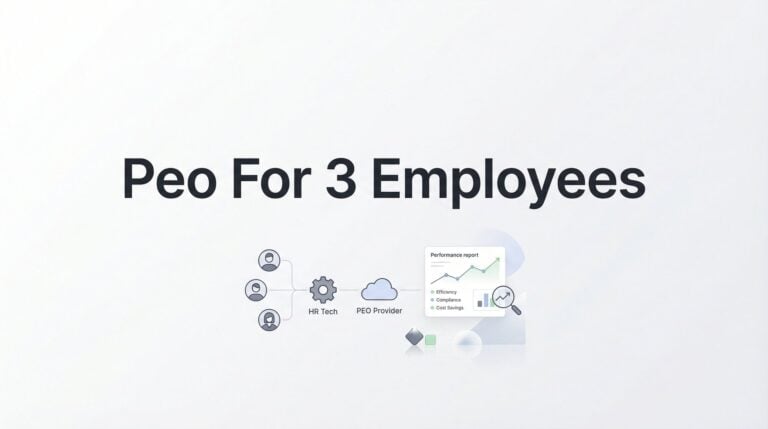
A PEO for 3 employees can streamline payroll and benefits but requires careful evaluation since per-employee pricing models often become disproportionately expensive at micro-business scale. This guide provides seven specific strategies to determine whether a PEO makes financial sense for your three-person team, which providers actually serve small operations effectively, and when alternative HR solutions might deliver better value without the administrative overhead.
