
Not every business needs the full PEO package. Maybe you’ve already got payroll locked down but need help with benefits administration. Or perhaps compliance is your weak spot, but you want to keep HR in-house. Partial PEO configurations let you pick and choose—outsourcing only what makes sense for your situation while keeping control over the rest. Here are the top platforms and providers that offer flexible, modular PEO services, so you can build a configuration that fits your business instead of forcing your business to fit a one-size-fits-all model.
1. PEO Metrics
Best for: Businesses comparing partial service configurations across multiple PEO providers before committing
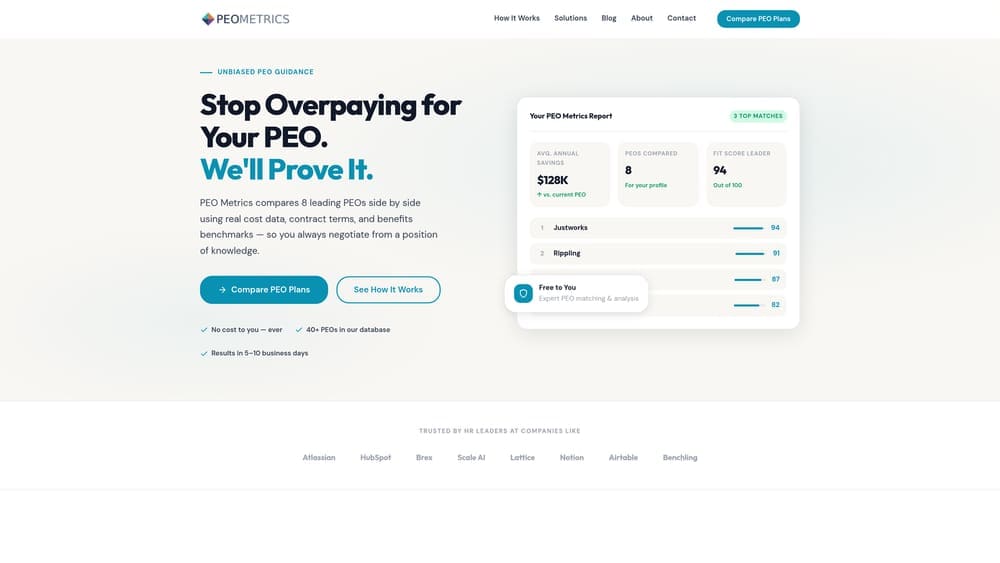
PEO Metrics is a comparison platform designed to help businesses evaluate and compare partial PEO configurations with detailed pricing and feature analysis across providers.
Where This Tool Shines
The biggest challenge with partial PEO configurations is figuring out which provider actually offers the modules you need at a price that makes sense. PEO Metrics solves this by breaking down service bundles side-by-side, showing you exactly what you’re paying for and what you can skip.
This is especially valuable when you’re trying to compare apples to apples across providers who structure their partial offerings differently. One might bundle benefits with compliance, while another lets you pick each separately. PEO Metrics shows you the actual cost and coverage differences.
Key Features
Side-by-side provider comparison: See how different PEO providers structure their partial service offerings in one view.
Detailed pricing transparency: Understand the actual cost of each service module across providers, not just bundled quotes.
Unbiased guidance: Get recommendations on which services to outsource based on your business situation, not sales pressure.
Custom configuration recommendations: Receive tailored suggestions for which modules make sense for your headcount, industry, and current HR setup.
Best For
Businesses evaluating multiple PEO providers for the first time, or companies looking to switch from a full-service PEO to a more flexible partial arrangement. Particularly useful if you’re trying to avoid overpaying for services you don’t need.
Pricing
Free comparison service with no obligation to use any particular provider.
2. TriNet
Best for: Companies primarily seeking premium health insurance access without full HR outsourcing
TriNet is a full-service PEO that offers flexible benefits-focused arrangements for businesses wanting large-group health insurance rates without complete co-employment.
Where This Tool Shines
TriNet’s real value is benefits leverage. If your main pain point is health insurance costs or attracting talent with competitive benefits, they can get you access to enterprise-level plans even if you only have 15 employees. In some cases, you can access their benefits marketplace without a full PEO arrangement.
Their industry-specific expertise also matters. They’ve built specialized offerings for tech, financial services, and nonprofits that include compliance guidance relevant to those sectors. You’re not just getting generic HR support.
Key Features
Large-group health insurance rates: Access to Fortune 500-level benefits pricing for small and mid-sized businesses.
Benefits-only arrangements: Some flexibility to access benefits administration without full co-employment in certain configurations.
Industry-specific expertise: Tailored compliance and HR support for tech, financial services, nonprofits, and professional services.
Compliance support add-ons: Option to layer on multi-state compliance help without committing to full HR outsourcing.
Best For
Growing companies where benefits are the primary concern, especially in competitive hiring markets. Works well for businesses with 20-200 employees who want better insurance options but aren’t ready to outsource all HR functions.
Pricing
Custom quotes based on headcount and services selected, typically structured as a percentage of payroll. Expect higher costs than basic payroll providers but competitive rates for the benefits access you’re getting.
3. Justworks
Best for: Small businesses wanting transparent, modular pricing without complex bundling requirements
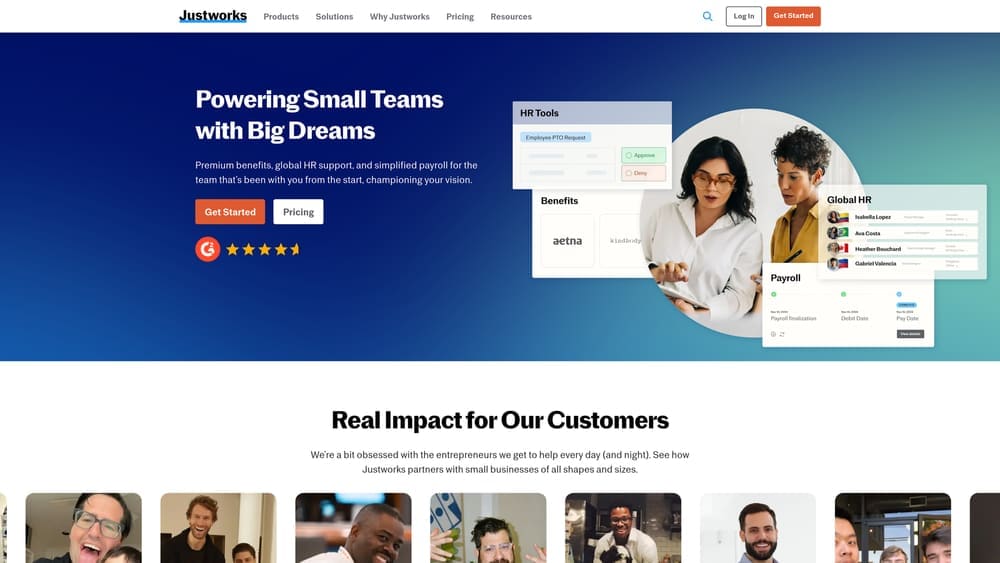
Justworks is a modern PEO platform with clear per-employee pricing that allows businesses to select payroll and benefits services without forced bundling.
Where This Tool Shines
Justworks doesn’t play pricing games. You see exactly what you’re paying per employee, and you can choose between their Basic and Plus tiers based on how much HR support you actually need. No hidden fees, no surprise percentage-of-payroll calculations.
Their benefits marketplace is genuinely competitive, especially for companies under 50 employees who typically get hammered on health insurance rates. The platform itself is clean and easy to use, which matters when you’re managing this stuff yourself.
Key Features
Transparent per-employee pricing: Fixed monthly cost per employee with no percentage-of-payroll surprises.
Basic and Plus tiers: Choose the service level that matches your needs without paying for unused features.
Strong benefits marketplace: Access to quality health insurance, dental, vision, and retirement plans at competitive group rates.
Simple onboarding: Quick setup process designed for businesses that want to get running fast.
Best For
Startups and small businesses with 5-75 employees who want PEO-level benefits access and basic HR support without enterprise complexity. Ideal if you value pricing transparency and don’t need heavy-touch HR consulting.
Pricing
Basic starts at $59 per employee per month; Plus starts at $109 per employee per month. Add-on services priced separately.
4. Insperity
Best for: Businesses wanting HR advisory and consulting without full PEO co-employment
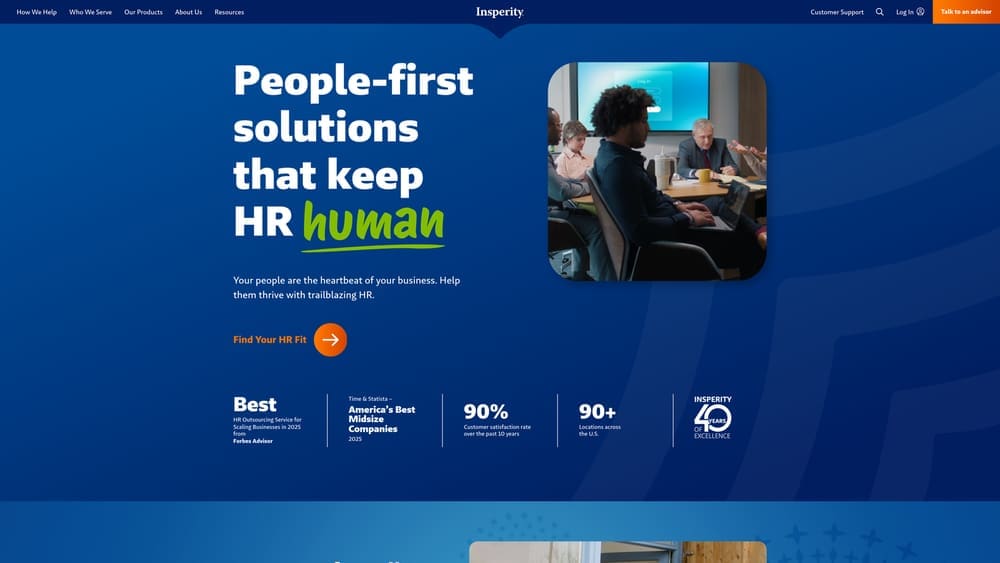
Insperity is an established PEO provider offering Workforce Optimization services that provide HR support and strategic guidance without requiring full co-employment.
Where This Tool Shines
Insperity’s Workforce Optimization model lets you keep your existing payroll and benefits setup while getting access to HR expertise, performance management tools, and compliance guidance. You’re essentially buying HR consulting with teeth—not just advice, but actual systems and support.
This works particularly well for companies that have grown past the “figure it out as we go” stage but aren’t ready to hand over complete HR control. You get dedicated advisors who know your business, not a call center.
Key Features
Workforce Optimization services: HR advisory and support without full PEO co-employment requirements.
Scalable service levels: Start with basic consulting and add modules as your needs grow.
HR advisory and consulting: Strategic guidance on employee relations, compliance, and organizational development.
Performance management tools: Systems for goal-setting, reviews, and employee development.
Best For
Mid-sized businesses with 50-500 employees who need professional HR guidance but want to maintain control over payroll and benefits decisions. Good fit for companies with existing HR staff who need backup and expertise.
Pricing
Custom quotes based on services selected and company size. Expect to pay for the quality of advisory support you’re getting.
5. ADP TotalSource
Best for: Companies with complex multi-state or regulatory compliance requirements
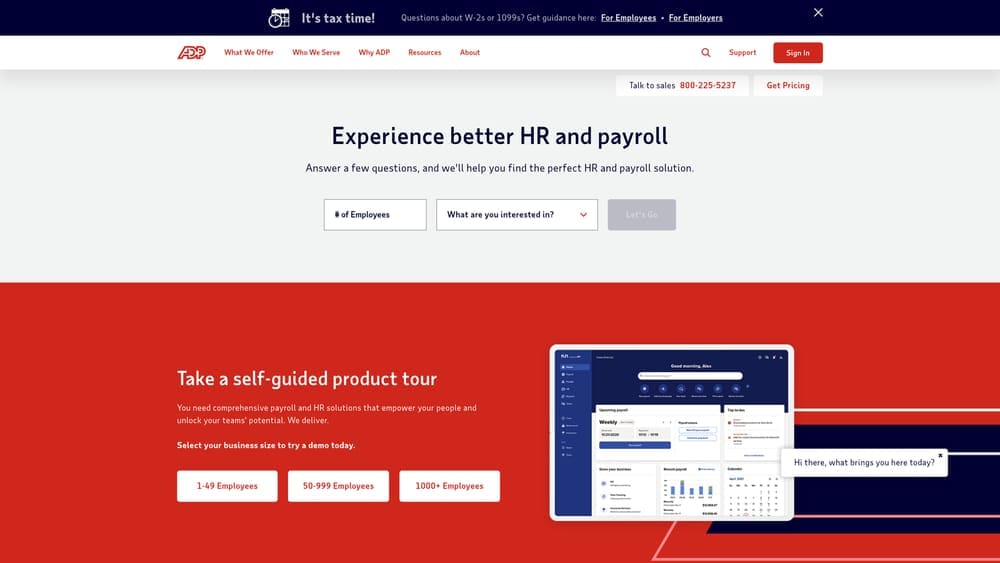
ADP TotalSource is an enterprise-grade PEO with modular compliance and HR services designed for businesses operating across multiple states or heavily regulated industries.
Where This Tool Shines
If you’re dealing with employees in 15 different states, each with its own wage and hour laws, ADP TotalSource has the infrastructure to handle it. Their multi-state compliance expertise is real—they’ve seen every permutation of state-level employment law and know how to navigate it.
The integration with the broader ADP ecosystem also matters. If you’re already using ADP for payroll, adding TotalSource modules doesn’t mean ripping out your existing systems. You can layer on what you need.
Key Features
Multi-state compliance expertise: Deep knowledge of state-level employment law across all 50 states.
Scalable service modules: Add compliance, benefits, or HR support as needed without full PEO commitment.
ADP ecosystem integration: Works seamlessly with existing ADP payroll and HR systems.
Dedicated HR business partner: Assigned support person who knows your business and compliance situation.
Best For
Businesses with 100+ employees spread across multiple states, or companies in heavily regulated industries like healthcare, financial services, or construction. Particularly valuable if compliance risk keeps you up at night.
Pricing
Custom enterprise pricing based on headcount, number of states, and services selected. Not the cheapest option, but priced for the complexity they’re handling.
6. Paychex PEO
Best for: Businesses in safety-conscious industries needing strong workers’ compensation management
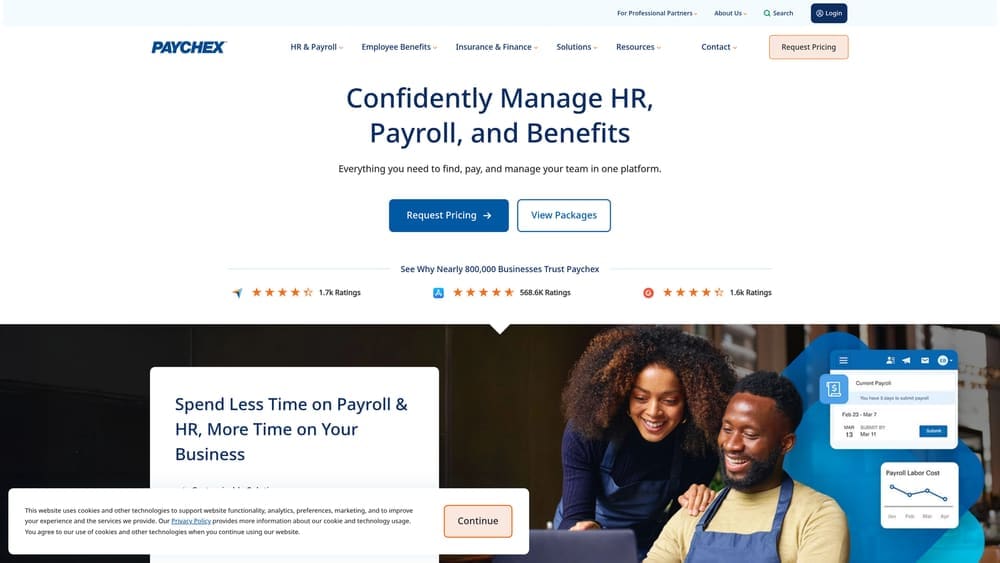
Paychex PEO is a PEO provider with deep risk management and workers’ compensation expertise, offering carve-out options for industries where safety and claims management matter most.
Where This Tool Shines
If you’re in construction, manufacturing, or another high-risk industry, workers’ comp isn’t just a checkbox—it’s a major cost driver and liability exposure. Paychex PEO specializes in managing this risk through safety assessments, claims management, and return-to-work programs.
They also offer genuine flexibility in service bundling. You can focus on workers’ comp and safety services without being forced into a full-service PEO arrangement. That matters when you’ve got the rest of HR handled but need expert help on the risk side.
Key Features
Workers’ compensation management: Expert handling of claims, safety programs, and cost containment strategies.
Safety and risk assessment services: Proactive evaluation and improvement of workplace safety protocols.
Flexible service bundling: Focus on risk management without committing to full HR outsourcing.
Small business support: Strong track record with businesses under 100 employees in high-risk industries.
Best For
Companies in construction, manufacturing, logistics, or other industries where workers’ compensation is a significant cost and risk factor. Works well for businesses with 20-200 employees who need specialized risk management.
Pricing
Custom quotes based on industry risk profile and services selected. Competitive pricing for risk-focused configurations compared to traditional workers’ comp insurance plus separate HR services.
7. Rippling
Best for: Tech-forward companies wanting granular control over which HR services to automate
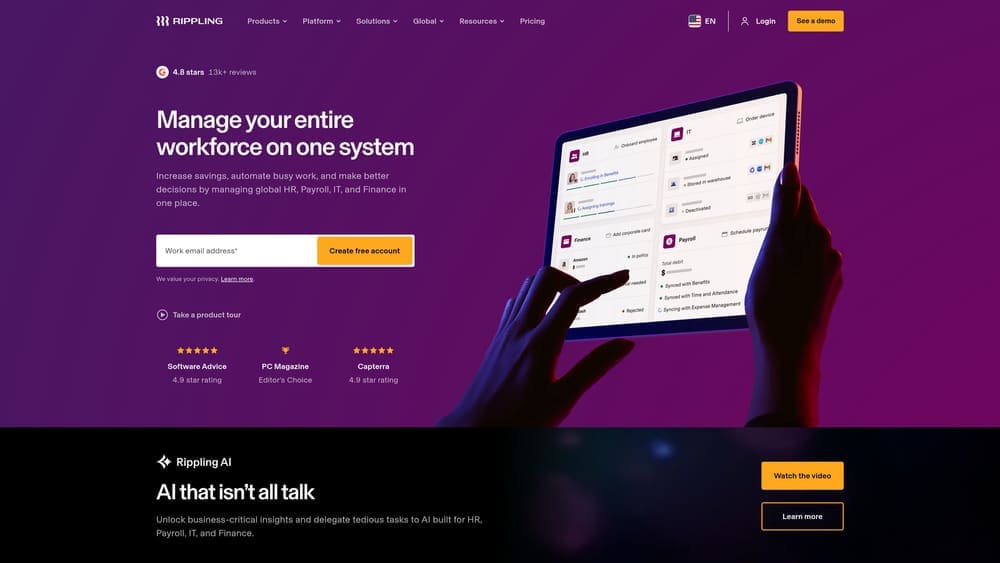
Rippling is a modern HR platform with a modular app marketplace that allows precise selection of HR, payroll, benefits, and IT management services.
Where This Tool Shines
Rippling takes a fundamentally different approach. Instead of pre-set PEO bundles, they built an app marketplace where you can turn on exactly the features you need. Want payroll and device management but not benefits? Done. Need compliance tools but not performance reviews? Easy.
The automation is also legitimately good. Rippling can handle things like automatically provisioning software access when someone is hired and revoking it when they leave. If you’re a tech company or just tech-savvy, this level of integration matters.
Key Features
Modular app marketplace: Choose exactly which HR, payroll, benefits, and IT services to activate.
PEO and non-PEO options: Access benefits through their PEO or manage everything yourself without co-employment.
Strong automation and integrations: Connects HR systems with IT, finance, and operations tools.
Device and IT management: Manage laptops, software access, and security alongside HR functions.
Best For
Tech companies, remote-first businesses, and organizations with 10-500 employees who value automation and integration over high-touch service. Ideal if your team is comfortable with software and wants maximum control.
Pricing
Starts at $8 per employee per month for base platform; each module priced separately. Can be cost-effective if you’re selective about which services you activate.
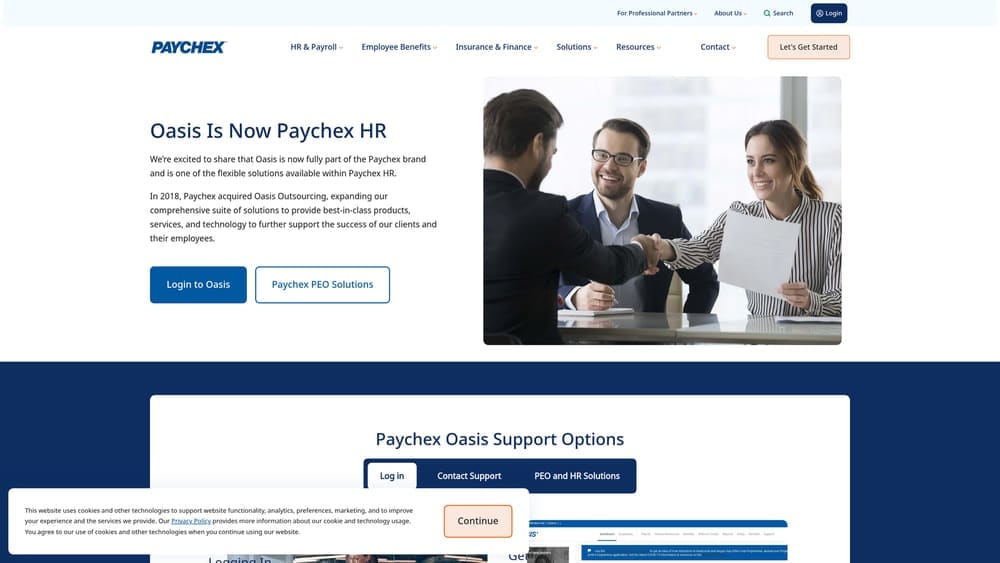
8. Oasis (Paychex)
Best for: Small businesses under 50 employees seeking benefits access with personalized support
Oasis is a small business-focused PEO offering strong benefits administration services with flexibility designed specifically for companies under 50 employees.
Where This Tool Shines
Small businesses get hammered on benefits costs because they don’t have bargaining power. Oasis solves this by pooling small employers together to access better rates. You get Fortune 500-level benefits options even if you only have 12 employees.
The dedicated service team approach also matters at this size. You’re not calling a 1-800 number—you’ve got a team that knows your business. When you’re too small for a full HR department, that personal touch makes a difference.
Key Features
Benefits access for small employers: Group purchasing power that gets small businesses competitive health insurance rates.
Dedicated service team: Assigned support team that knows your business and employees.
Compliance support: Help navigating employment law and regulatory requirements for small employers.
Retirement plan administration: Access to 401(k) options that would be cost-prohibitive to set up independently.
Best For
Businesses with 5-50 employees who struggle with benefits costs and need hands-on support. Particularly valuable for companies where the owner is still handling HR and wants to offload the administrative burden.
Pricing
Custom quotes based on headcount and services selected. Pricing structured for small business budgets.
9. CoAdvantage
Best for: Businesses wanting customizable service bundles with hands-on account management
CoAdvantage is a regional PEO provider offering highly customizable service bundles with dedicated account management for businesses that need personalized configurations.
Where This Tool Shines
CoAdvantage doesn’t force you into pre-set packages. They’ll actually sit down and figure out which services you need and which you don’t, then build a configuration around that. This consultative approach works well for businesses with unusual needs or specific gaps in their HR setup.
Their regional expertise also matters. They understand local market conditions, state-level compliance nuances, and industry dynamics in the areas they serve. You’re not getting cookie-cutter national advice.
Key Features
Customizable service bundles: Build your own configuration based on actual needs rather than pre-set packages.
Regional expertise: Deep knowledge of local compliance requirements and market conditions.
Dedicated account management: Hands-on support from a team that knows your business situation.
Flexible contract terms: More willing to negotiate on contract length and service modifications than national providers.
Best For
Mid-sized businesses with 50-300 employees who have specific HR needs that don’t fit standard PEO packages. Good option if you’ve been frustrated by one-size-fits-all approaches from larger providers.
Pricing
Custom quotes based on your specific configuration. Pricing tends to be competitive for the level of customization and account management provided.
Making the Right Choice
The right partial PEO configuration depends entirely on what you’re trying to solve.
If benefits costs are killing you, TriNet or Justworks will get you access to better rates without forcing you to outsource everything. If compliance keeps you up at night—especially across multiple states—ADP TotalSource has the infrastructure to handle it. For businesses in high-risk industries, Paychex PEO’s workers’ comp expertise can actually reduce your insurance costs while improving safety.
Tech-forward companies often prefer Rippling’s modular approach because it integrates HR with IT management and gives you granular control. Smaller businesses under 50 employees typically get better value from Oasis or CoAdvantage, where you’re not just a number in a massive client base.
The biggest mistake is assuming you need to buy everything or nothing. Most businesses waste money on bundled services they don’t use. Start by identifying your actual pain points—benefits access, compliance risk, workers’ comp costs, or administrative burden—then find the provider that solves those specific problems without forcing you to pay for the rest.
Before you sign that PEO renewal, make sure you’re not leaving money on the table. Many businesses unknowingly overpay because of bundled fees, hidden administrative markups, and contracts designed to limit flexibility. We give you a clear, side-by-side breakdown of pricing, services, and contract terms—so you can see exactly what you’re paying for and choose the option that truly fits your business. Request a comparison
