Foundational guides explaining what a Professional Employer Organization is, how co-employment works, and how the PEO model is structured. Start here if you’re new to PEOs or researching how they operate.
The PEO co-employment legal structure divides administrative responsibilities between your business and the PEO provider, shifting certain liabilities while you retain full operational control of your workforce. Despite the concerning name, co-employment doesn’t mean sharing ownership of employees—it’s a practical arrangement where the PEO handles HR compliance and payroll administration while you maintain day-to-day management authority and business decisions.
Before signing with a PEO, understanding key PEO financial due diligence considerations is critical to protecting your business. Since PEOs handle your payroll taxes, workers’ comp premiums, and benefits contributions, their financial instability could leave you liable for unpaid taxes, lapsed insurance, and regulatory penalties—even if the failure wasn’t your fault. Most businesses focus on pricing and services but overlook the financial health indicators that reveal whether a PEO can respon…
Evaluating the pros and cons of using a PEO requires looking beyond generic lists to understand real operational impacts for your specific business situation. This practical framework examines how PEO partnerships actually affect day-to-day operations, cost structures, and compliance management, helping companies from 15 to 200+ employees determine whether a PEO solves their biggest HR challenges or introduces unnecessary constraints.
This step-by-step guide demystifies how a PEO works by walking through the practical mechanics of the co-employment process, from signing the agreement through daily operations. You’ll learn exactly what happens with employee data transfers, payroll processing, insurance policies, and which responsibilities you retain versus what the PEO handles—focusing on real operational changes rather than abstract concepts.
A Professional Employer Organization (PEO) is a co-employment arrangement that handles payroll, benefits, and compliance while you maintain full control over your business operations and employees. Through this partnership, the PEO becomes the employer of record for tax and benefits purposes, giving small businesses access to enterprise-level health insurance rates and HR expertise without hiring an in-house team.
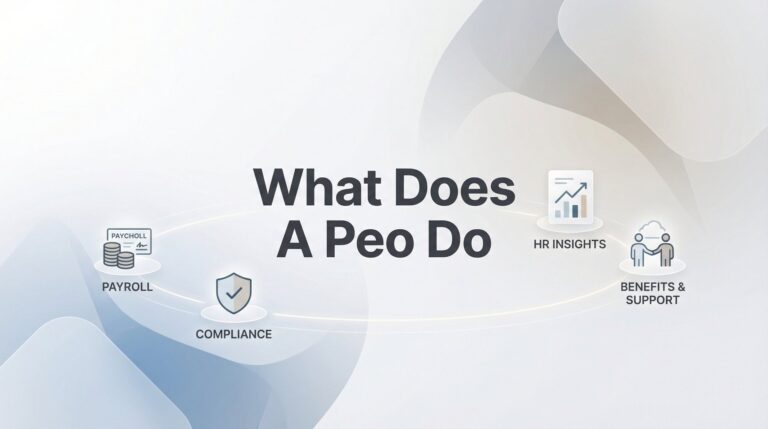
A PEO (Professional Employer Organization) becomes your employer of record for tax and benefits purposes while you maintain full control of your team and operations. They handle payroll processing, benefits administration, tax compliance, and HR paperwork—removing the administrative burden so you can focus on running and growing your business without becoming an expert in employment law and regulations.
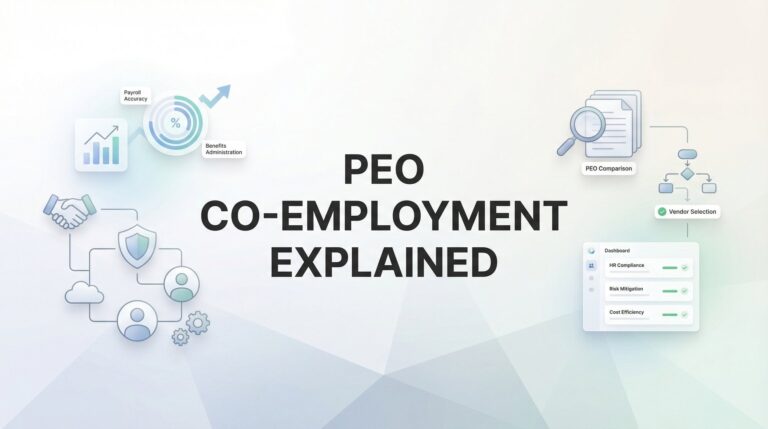
PEO co-employment explained: it’s not about surrendering your employees, but rather a legal framework that divides responsibilities between you and the PEO. You maintain full operational control and decision-making authority over your team, while the PEO assumes administrative duties like payroll processing, compliance filings, and benefits management. Understanding this distinction is crucial for business owners evaluating whether a PEO partnership makes sense for their HR operations and lon…
