How PEOs work across industries like construction, healthcare, startups, and multi-state employers.
Many companies wonder if they can use a PEO with an in-house payroll team without creating costly redundancy or threatening existing staff. The answer depends on clearly defining roles, understanding what each party handles, and being strategic about which functions you keep internal versus outsource. Success requires honest assessment of your actual needs—some organizations make this hybrid model work efficiently by leveraging the PEO for benefits and compliance while maintaining internal pa…
Using a PEO during acquisition integration provides a fast, unified solution for the operational chaos that follows a deal closing. Instead of juggling mismatched payroll systems, incompatible benefits, and conflicting HR policies across two companies, a PEO offers a single platform to consolidate operations, maintain employee trust, and buy time while you build your long-term infrastructure.
Electrical contractors paying 8-15% of payroll in workers’ comp premiums can leverage PEO master policies for better rates, but standard arrangements aren’t optimized for high-risk trades. This guide reveals how to negotiate class code allocations, structure safety programs for premium credits, and strategically position your company within a PEO’s risk pool to capture real savings on workers’ compensation costs.
Plumbing contractors face crushing HR costs—$180K+ in workers’ comp, double-digit health insurance hikes, and endless compliance paperwork across multiple jurisdictions. This guide breaks down how a PEO for plumbing companies delivers real cost containment benefits through reduced insurance premiums, streamlined payroll, and consolidated compliance management, plus reveals exactly when the partnership makes financial sense versus when it’s just another expense on your P&L.
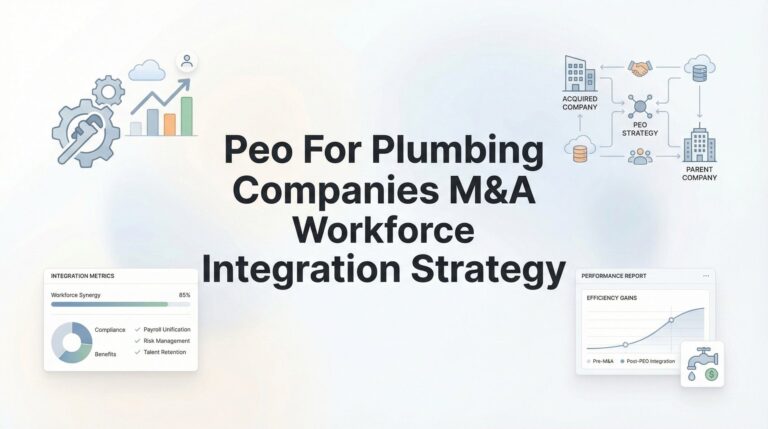
When acquiring a plumbing company, workforce integration failures in the first 60 days can cost you your best technicians—not due to dissatisfaction, but from benefits lapses and administrative chaos. A strategically deployed PEO for plumbing companies M&A workforce integration strategy can prevent skilled plumbers from walking out by ensuring seamless benefits continuity, preserving apprenticeship hours, and maintaining payroll stability during the critical transition period when uncertainty…
HVAC companies face unique HR cost pressures including high workers’ comp premiums from job site injuries, seasonal workforce fluctuations, and competitive benefits demands. A PEO for HVAC companies delivers benefits through cost containment strategies that address industry-specific challenges like high-risk work classifications and seasonal hiring cycles, helping contractors reduce insurance costs and administrative burden while retaining skilled technicians through better benefit offerings.
Workers’ compensation represents the largest insurance cost for plumbing contractors, making proper PEO structuring critical for cost savings. This guide explains how to negotiate and structure workers’ comp coverage through a PEO for plumbing companies, addressing unique challenges like multiple job classifications, hazardous work conditions, and multi-state operations that require advanced workers’ comp structuring beyond standard office-based PEO arrangements.
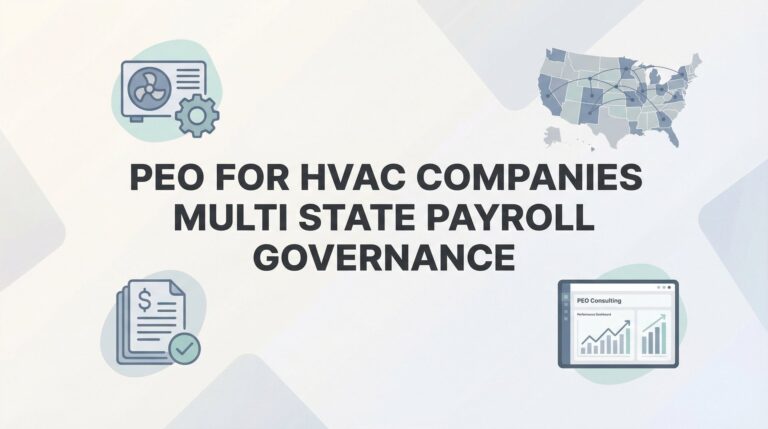
HVAC companies operating across state lines face complex payroll challenges with varying withholding rules, workers’ comp classifications, and wage laws in each jurisdiction. A PEO for HVAC companies multi-state payroll governance streamlines this complexity by consolidating payroll administration, tax filings, and workers’ comp coverage under one system, helping contractors avoid costly penalties and administrative headaches when crews work across Pennsylvania, Maryland, Virginia, and other …
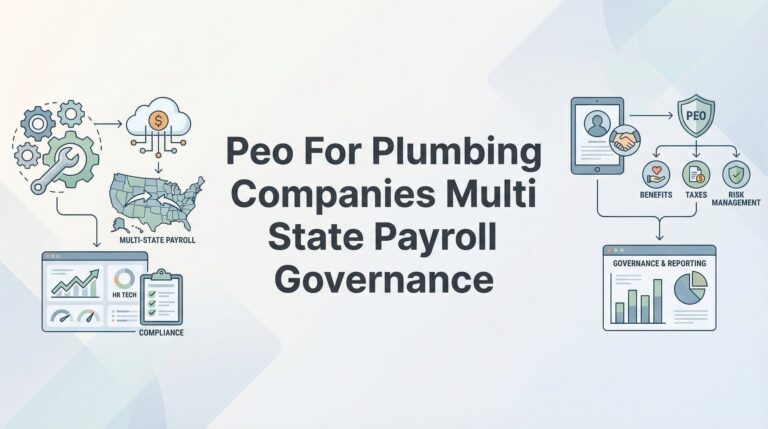
Plumbing companies operating across state lines face complex compliance challenges when crews work in multiple states during a single week, each with different workers’ comp classifications, withholding rules, and wage requirements. A PEO for plumbing companies multi state payroll governance centralizes this complexity by serving as the employer of record, though selecting the right provider requires finding one with proper state registrations and understanding of industry-specific requiremen…
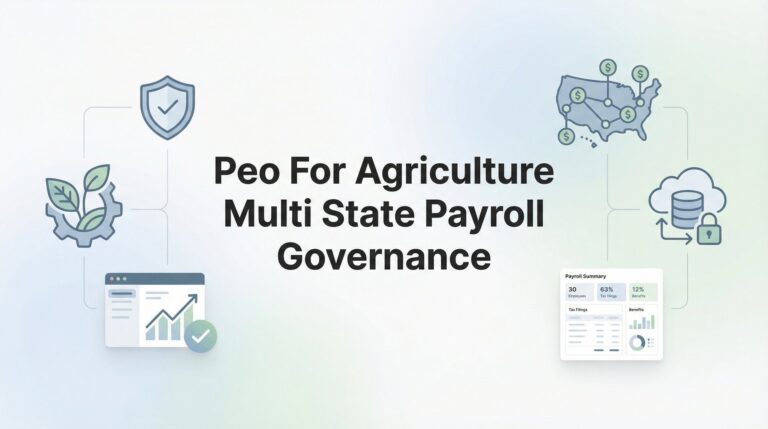
Managing seasonal agricultural workers across multiple states creates a payroll compliance nightmare—different withholding rules, unemployment registrations, and overtime interpretations in each location, compounded by H-2A visa requirements and fluctuating crew sizes. A PEO for agriculture multi-state payroll governance handles state registrations, workers’ compensation, and the unique compliance challenges that standard payroll systems can’t accommodate, from piece-rate compensation to hous…
