How PEOs work across industries like construction, healthcare, startups, and multi-state employers.
Most PEOs pool all clients into blended workers comp policies, forcing low-risk software companies to subsidize higher-risk industries despite having desk-based employees and clean safety records. Advanced PEO for software companies with proper workers comp structuring can significantly reduce costs by separating your low-risk workforce from the pooled rates—but only if you know which options to request and meet specific eligibility thresholds.
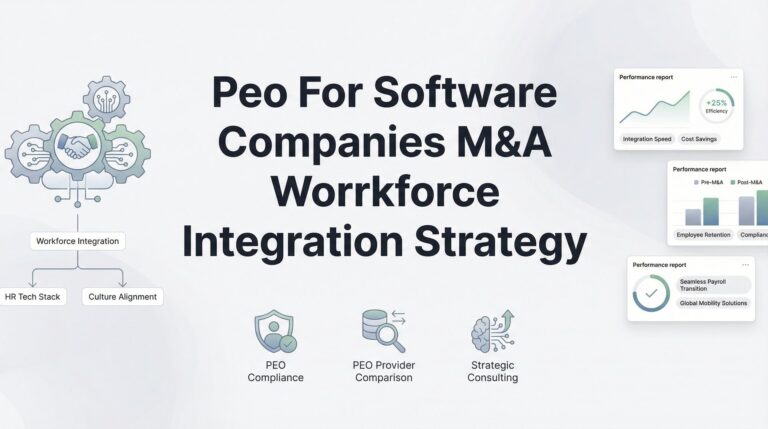
When acquiring software companies, the administrative complexity of integrating diverse workforces—spanning multiple states, employment classifications, and benefit plans—often derails otherwise strategic deals. A PEO for software companies M&A workforce integration strategy solves this critical challenge by rapidly consolidating payroll, benefits, and compliance across acquired teams, preventing the coverage gaps and administrative chaos that typically cause post-acquisition talent loss duri…

A PEO for SaaS companies offers critical benefits and cost containment strategy for fast-scaling startups facing distributed teams and investor scrutiny on burn rate. Unlike traditional businesses, SaaS companies spend 60-80% of their budget on labor, making the right PEO partnership essential for extending runway while offering competitive benefits that attract top engineering talent across multiple states.
Venture-backed startups face critical workforce integration challenges post-acquisition, with misaligned payroll systems, benefits, and multi-state compliance creating operational chaos that can derail M&A success. A PEO for venture-backed startups M&A workforce integration strategy can dramatically compress integration timelines, enabling clean headcount reporting, reducing due diligence risks, and ensuring the operational execution that boards and future investors demand during critical gro…
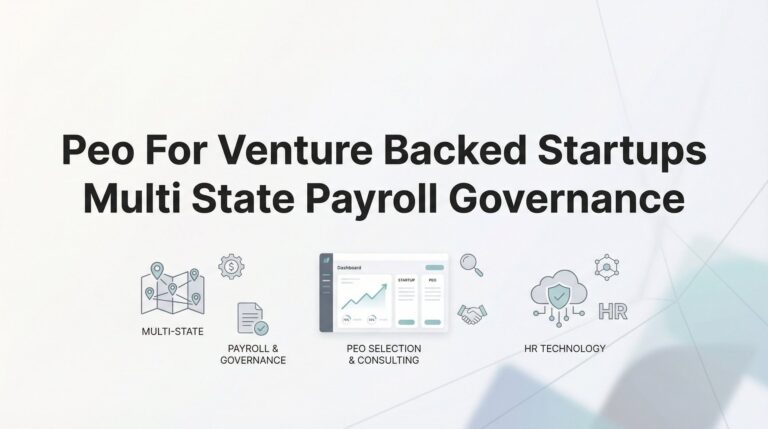
Venture-backed startups scaling across multiple states face unique challenges when selecting a PEO for multi-state payroll governance—balancing rapid hiring, remote team expansion, and investor expectations around employment liability. This guide explains how to evaluate PEO relationships for high-growth operations and identify when a PEO solution might actually complicate governance rather than streamline it.

Warehousing operations struggle with high benefits costs driven by injury rates, physically demanding work, and workforce turnover that traditional administration can’t efficiently manage. This guide reveals seven PEO for warehousing benefits cost containment strategies specifically designed for distribution centers and fulfillment operations, including pool-based workers’ comp solutions, targeted wellness programs, and tactical approaches that address the unique cost drivers in warehouse fac…

When spinning off a business unit, you immediately inherit employees but none of the HR infrastructure to support them—no payroll, benefits, or compliance systems. A PEO for divestiture support provides instant operational infrastructure, allowing divested companies to onboard employees within days rather than months, maintain compliance across jurisdictions, and avoid expensive Transition Services Agreements while building long-term HR capabilities. This solution bridges the critical gap bet…

Managing multiple portfolio companies with different HR systems creates expensive inefficiencies and compliance risks. A PEO for portfolio standard operating model centralizes employment infrastructure across your portfolio through unified benefits, standardized compliance protocols, and consolidated reporting—while maintaining individual company autonomy. This approach streamlines operations through one master service agreement and creates meaningful cross-portfolio workforce insights for be…

Private equity firms acquiring portfolio companies with employees across multiple states face fragmented payroll systems, inconsistent compliance practices, and unreliable labor cost data that complicate 100-day value creation plans. A PEO for private equity portfolio companies can standardize multi-state payroll governance and deliver the clean reporting boards demand, but success depends on matching the model to your specific portfolio company profile and understanding when internal capabil…

Private equity firms can use a PEO for M&A workforce integration to quickly consolidate disparate payroll systems, benefits packages, and multi-state compliance requirements across newly acquired portfolio companies. This strategic approach creates unified HR infrastructure during transitions, helping PE-backed companies accelerate operational improvements while minimizing compliance risks and employee disruption during the critical post-acquisition period.
