Coverage of tax responsibility, workers’ comp, liability exposure, and regulatory obligations under co-employment.
PEOs can significantly reduce workers’ comp costs through pooled risk and better rates, but savings aren’t guaranteed for every business. This guide examines seven specific mechanisms PEOs use for workers’ comp cost reduction and helps you determine whether your current mod rate, claims history, and risk profile position you to actually benefit from a PEO partnership.
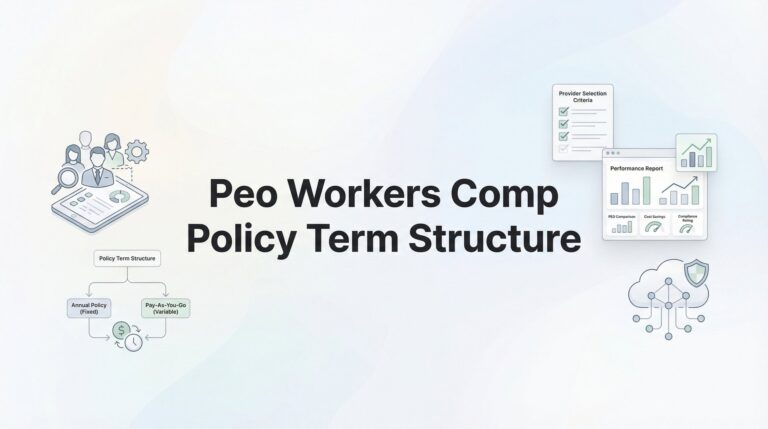
Understanding PEO workers comp policy term structure is critical before signing with a provider, as it determines what happens if you leave mid-term, how renewal cycles affect long-term costs, and which claims history you can take with you. Most business owners focus only on monthly rates, but the master policy structure, exit terms, and renewal timing create hidden costs and coverage gaps that become expensive problems when switching providers or bringing HR in-house.
IRS Certified PEO (CPEO) status provides federal legal protections around payroll tax liability that matter most when a PEO fails to remit taxes or during provider transitions. This guide helps business owners understand IRS Certified PEO requirements and protections to determine whether certification should be a critical factor in their PEO selection decision, or if it’s unnecessary for their specific situation.

PEO HR compliance services promise to handle regulatory headaches like DOL audits, worker misclassification issues, and state-specific employment laws, but their actual coverage varies significantly between providers. While some PEOs offer dedicated compliance specialists and proactive monitoring, others deliver only generic guidance and template documents, making it crucial for business owners to understand exactly what protection they’re purchasing beyond the marketing promises.

PEO workers compensation management allows businesses to join a master insurance policy through a co-employment arrangement, fundamentally changing how premiums are calculated and claims are handled compared to traditional standalone coverage. This structural shift can help businesses escape poor loss history and access better rates, but it’s not a one-size-fits-all solution—understanding the specific tradeoffs is essential before making the switch.
When IRS or DOL audit notices arrive, businesses using a PEO for audit protection gain significant advantages through co-employment arrangements that shift compliance responsibilities and documentation burdens to experienced professionals. Unlike managing payroll independently with scattered records and uncertain classifications, PEO partnerships provide systematic compliance infrastructure, proper worker classification, accurate tax withholding, and expert representation during audits—transf…
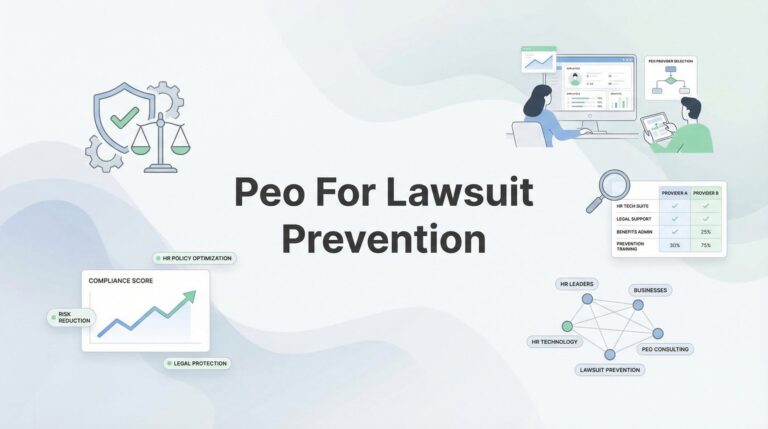
Employment lawsuits cost small businesses $40,000-$125,000 in legal fees alone, often before reaching settlement. A PEO for lawsuit prevention provides the compliance systems, documentation frameworks, and expert guidance that reduce legal exposure through co-employment—not by transferring liability completely, but by establishing the professional HR infrastructure most growing businesses lack internally to navigate federal regulations, state protections, and evolving employment law requireme…
When your business uses a PEO, payroll taxes are filed under the PEO’s EIN, creating unique accounting challenges for tracking liabilities and expenses that flow through a third party. This step-by-step guide addresses the specific mechanics of PEO payroll tax liability accounting—covering how to properly record transactions, maintain accurate books during co-employment, reconcile year-end records, and prepare for audits when tax deposits appear under a different employer identification num…
A PEO for risk mitigation transfers specific employer-of-record responsibilities through co-employment, reducing exposure to compliance violations, workers’ compensation claims, and certain employment-related liabilities. However, business owners often misunderstand the scope of protection—PEOs don’t provide blanket immunity from all employment risks, and certain responsibilities remain with the client company, making it essential to understand exactly which risks are mitigated and which rema…
When you join a PEO, workers’ compensation becomes a line item in your administrative fees rather than a standalone policy, creating unique accounting challenges. This guide explains how to properly track and verify PEO accounting for workers comp through your PEO invoices, reconcile charges against payroll, confirm your experience modification rate is correct, and maintain accurate internal records for audits and financial reporting.
