

Once payroll, benefits, and compliance are handled by your PEO, the next question is usually how to track what employees actually spend: corporate cards, travel, reimbursements, department budgets. That layer doesn’t come bundled with most PEO agreements, and the tool you pick needs to play well with the payroll and HR data your PEO already manages, not duplicate it or fight it. The tools below were chosen for HR and finance teams evaluating that exact gap, based on how deeply they integrate with payroll and HR systems, how flexible their approval workflows are, and how usable their reporting is for a team that didn’t build the expense stack from scratch.
Quick comparison
- Expensify: best for small and mid-sized teams wanting employee-friendly reporting; pricing on website; automated receipt scanning turns photos into coded line items with minimal manual entry.
- Ramp: best for companies wanting card issuance and tracking in one system; pricing on website; blocks or flags out-of-policy card transactions before they post.
- Brex: best for high-growth companies managing multiple cost centers; pricing on website; budget tracking built for many simultaneous departments and projects.
- SAP Concur: best for large, multinational organizations; quote-based; deepest configuration for complex approval hierarchies and multi-currency travel.
- Rippling Spend Management: best for companies already on Rippling HR/payroll; pricing on website; spend rules update automatically when HR records change.
- Airbase: best for mid-market teams consolidating finance tools; quote-based; combines procurement, AP, and expense reporting in one workflow.
- Bill Spend and Expense (Divvy): best for tight-budget small businesses; pricing on website; no-cost core plan ties department budgets directly to card limits.
- Zoho Expense: best for cost-conscious small businesses; pricing on website, including a free tier; lowest-cost entry point for basic expense reporting.
- Navan: best for travel-heavy teams; pricing on website; travel booking and expense data live in one record, avoiding manual reconciliation.
1. Expensify
Expensify is an expense reporting and corporate card platform built around automated receipt capture, aimed at companies that want a simple, employee-facing workflow rather than a heavyweight finance system. Employees photograph a receipt, the app codes it, and the report moves through approval without much manual entry on either side.
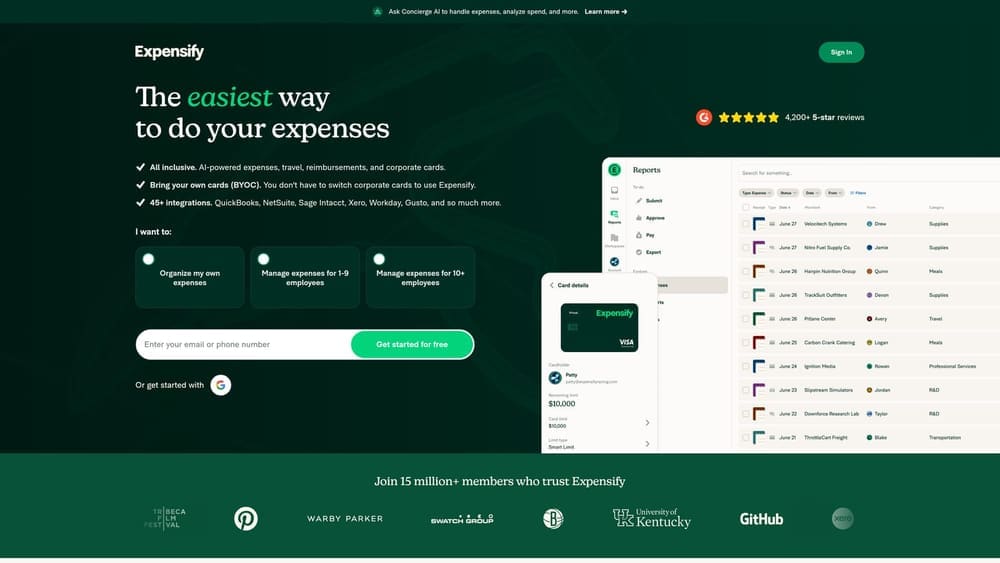
Compared with the other platforms on this list, Expensify’s strength is how little training employees need to use it correctly on day one. That matters for HR teams rolling out a new expense tool alongside an existing PEO relationship, where you don’t want a second onboarding project.
- SmartScan receipt capture that reads photographed receipts and fills in expense details automatically
- Automated expense report creation so employees aren’t building reports line by line
- A corporate card program for centralizing company spend
- Payroll and accounting integrations that push approved expenses into your existing systems
It connects with common payroll platforms and accounting software such as QuickBooks and Xero, and setup is generally handled by a single HR or finance admin rather than a dedicated implementation team. Where it falls short is complex approval hierarchies and multi-entity structures; companies with layered cost centers or subsidiary-level reporting needs will find more capable tools elsewhere on this list. Pricing details are on Expensify’s website as of 2026 and vary by plan and card usage.
Best for: Small and mid-sized teams that want a low-friction, employee-friendly expense tool.
2. Ramp
Ramp pairs corporate card issuance with real-time expense tracking and policy enforcement, built for companies that want spend control and reporting managed as one system rather than stitched together from a card provider and a separate expense app.
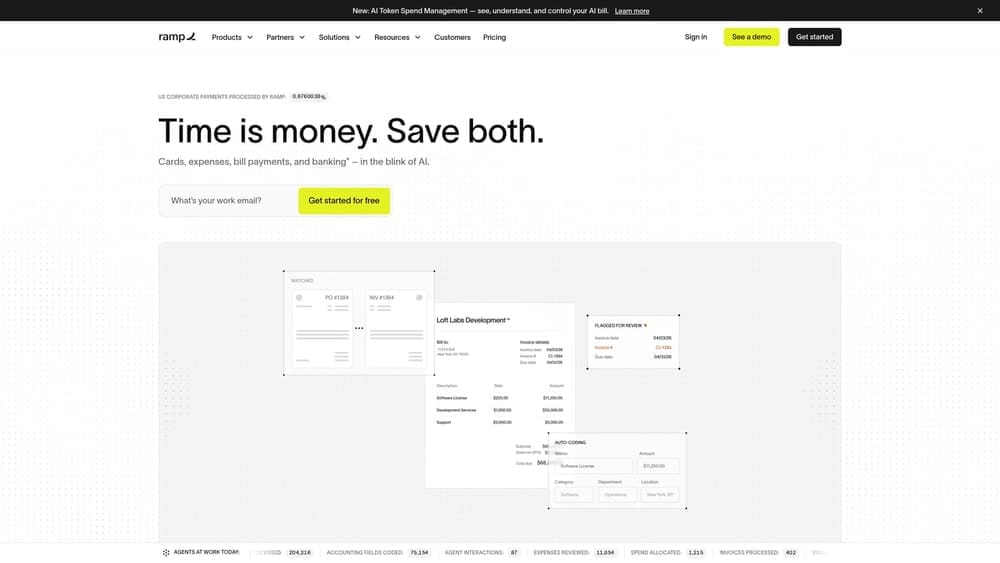
Its standout capability is stopping problems before they happen: transactions that fall outside policy can be flagged or blocked at the point of sale, rather than caught during a monthly reconciliation. That shifts expense management from a review exercise to a preventive one.
- Corporate card issuance that replaces the need for a separate card vendor
- Real-time transaction tracking visible as spend happens, not after the fact
- Automated policy enforcement that catches out-of-policy spend at the transaction level
- Receipt matching that reduces manual reconciliation work for finance staff
Ramp connects to accounting software and to HR and payroll systems via API, and is typically administered by a finance or operations lead rather than HR directly. The card-centric model is the main limitation: if most of your spend is personal-card reimbursement rather than company card transactions, you lose some of what makes Ramp distinctive. Pricing is available on Ramp’s website as of 2026.
Best for: Companies that want card issuance and expense tracking managed in one system.
3. Brex
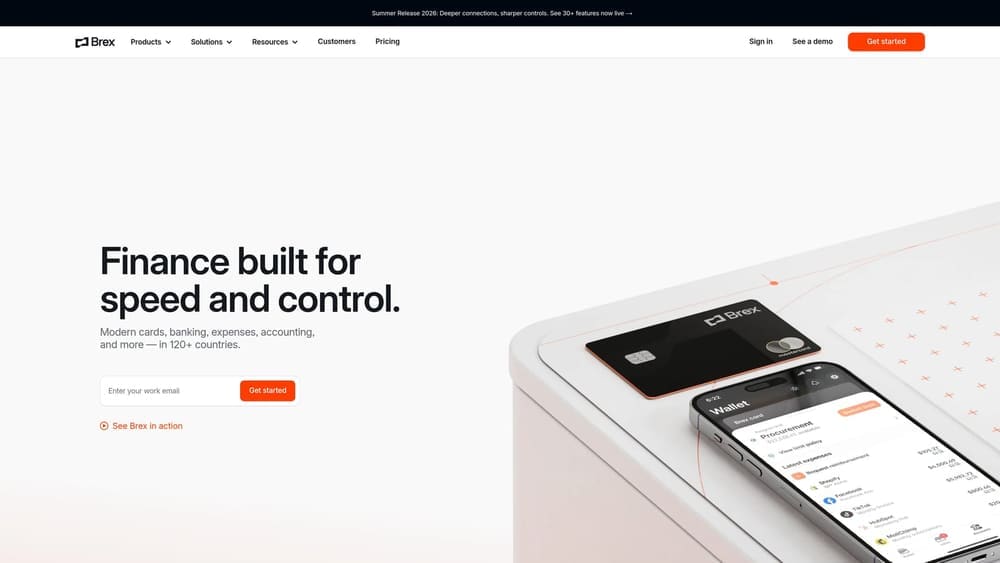
Brex is a spend management platform built around corporate cards and budget tracking, aimed at fast-growing companies that need to control spend across many departments as headcount scales quickly.
Where it fits
Brex’s budgeting tools are designed to handle many simultaneous cost centers at once, which suits companies adding new teams, projects, or locations faster than a simpler tool can track. Custom approval workflows can be built to match org charts that change frequently.
Features and setup
- A corporate card program tied to individual budgets
- Department and project-level budgets that scale as new cost centers appear
- Custom approval workflows that adapt to changing org structures
- Expense reporting built on top of card transaction data
Brex integrates with accounting platforms and HR systems via API. It generally requires more upfront configuration than Expensify or Zoho Expense, so a dedicated finance admin should own the setup and ongoing rule maintenance. That configuration overhead is unnecessary for a very small team with simple, flat spend patterns. Pricing is listed on Brex’s website as of 2026.
Best for: High-growth companies managing spend across multiple departments or entities.
4. SAP Concur
SAP Concur is an enterprise-grade expense, travel, and invoice management suite used by large and multinational organizations that need to manage spend across many currencies, entities, and approval layers.
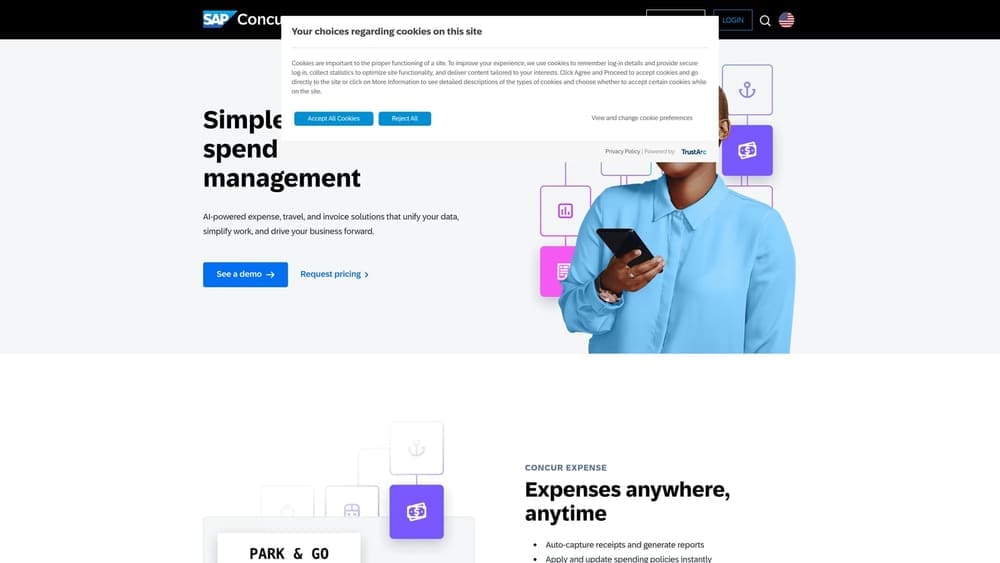
No other tool on this list matches Concur’s depth for multinational configuration. Multi-currency handling, invoice management alongside expense reporting, and custom approval hierarchies that can mirror complex regional finance structures are built for organizations that outgrow simpler platforms.
- Integrated travel booking paired directly with expense reporting
- Invoice management alongside employee expense workflows
- Multi-entity and multi-currency support for global operations
- Custom approval hierarchies built for layered finance organizations
Concur integrates with major ERP and HCM systems and with travel booking providers, but implementation is a bigger project than most companies on this list will need. It’s generally managed by a dedicated finance systems team rather than a single HR admin, and the configuration and rollout period is longer than with Expensify, Zoho, or Bill Spend and Expense. Smaller companies are likely to find Concur more platform than they need. Pricing is quote-based as of 2026.
Best for: Large or multinational organizations with complex travel and expense policies.
5. Rippling Spend Management
Rippling Spend Management builds expense and corporate card controls directly into Rippling’s unified HR, IT, and payroll platform, aimed at companies that already run HR operations through Rippling.
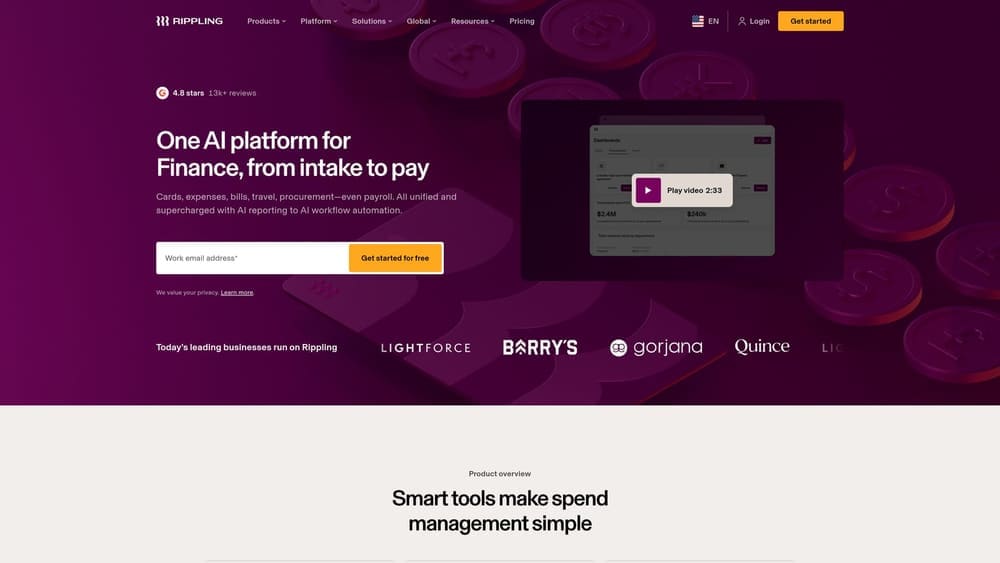
The distinctive piece here is how spend rules stay current with HR data automatically. When someone is hired, promoted, or leaves the company, their card limits and approval routing update because the employee record is the same one used for payroll and benefits, not a separate synced copy that can drift out of date.
- Corporate cards with spend limits tied directly to each employee’s HR record
- Expense reporting built on the same data as payroll
- Automated approval workflows that reflect current org structure
- Shared data with Rippling’s payroll, benefits, and IT modules, avoiding duplicate entry
Setup is native if you’re already on Rippling for HR and payroll, since there’s no separate integration to build. The tradeoff is that its biggest advantage disappears if you’re not already using Rippling elsewhere; as a standalone expense tool it doesn’t offer much over dedicated platforms like Ramp or Brex. Pricing is available on Rippling’s website as of 2026.
Best for: Companies already using Rippling’s HR platform that want expense management in the same system.
6. Airbase
Airbase combines procurement, accounts payable automation, and expense reporting in a single platform, aimed at mid-market finance teams that are tired of running separate tools for each function.
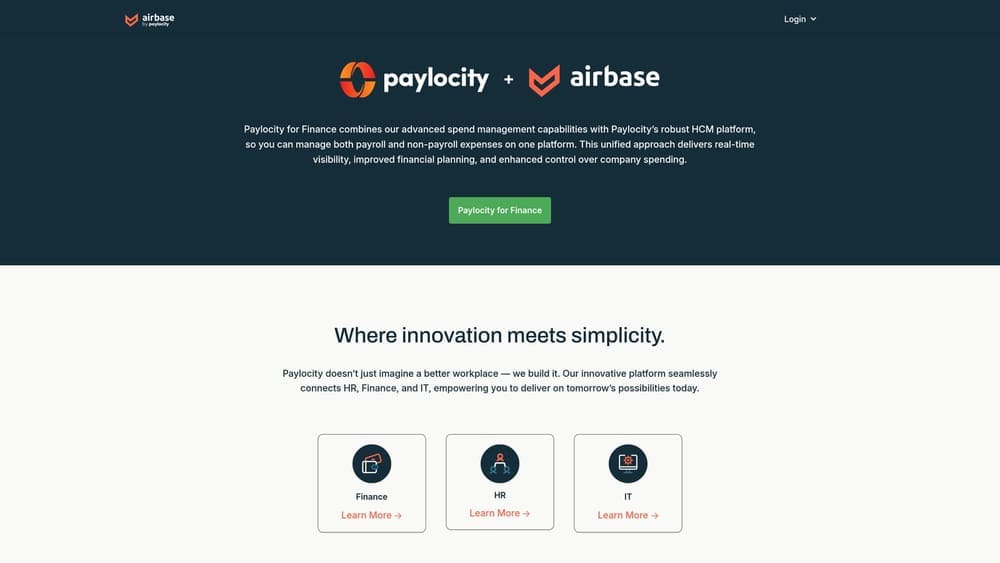
What separates Airbase from the card-first platforms on this list is scope: it covers the full spend lifecycle from purchase request through payment and expense reconciliation, including multi-subsidiary support for companies with more than one legal entity.
- Procurement workflows that manage purchase requests before money is spent
- Accounts payable automation that handles vendor bill payment
- Expense reporting and card management for employee-level spend
- Multi-subsidiary support for companies operating more than one entity
Airbase integrates with accounting and ERP systems and is typically run by a finance operations lead given the breadth of its workflows. That breadth is also its limitation: a company that only needs simple expense reporting will be paying for procurement and AP capability it doesn’t use. Pricing is quote-based as of 2026.
Best for: Mid-market finance teams consolidating procurement, AP, and expense management into one platform.
7. Bill Spend and Expense (Divvy)
Bill Spend and Expense, formerly Divvy, pairs corporate cards with real-time department budgets, and offers a no-cost core plan for companies that want budget-linked cards without adding software spend to the ledger.
The no-cost core plan is the main reason this tool shows up on shortlists for smaller companies: budgets are tied directly to card limits by department, so a manager can’t overspend a budget that hasn’t been allocated, without the company paying a platform fee for that control.
- Real-time budget tracking broken out by department
- Corporate cards issued against those budgets
- Expense reporting built on card transaction data
- A no-cost core plan for managing card spend and budgets
It integrates with accounting software including QuickBooks, and is generally administered by whoever handles finance operations, without a dedicated systems team. Its procurement and accounts payable features are less developed than a platform like Airbase built specifically for that purpose, so companies with heavier vendor payment needs may outgrow it. Pricing details, including how the paid tiers work, are on Bill’s website as of 2026.
Best for: Small and mid-sized businesses that want budget-linked cards without a large software cost.
8. Zoho Expense
Zoho Expense is expense reporting software priced for small business budgets, sold as part of the broader Zoho suite of business applications.
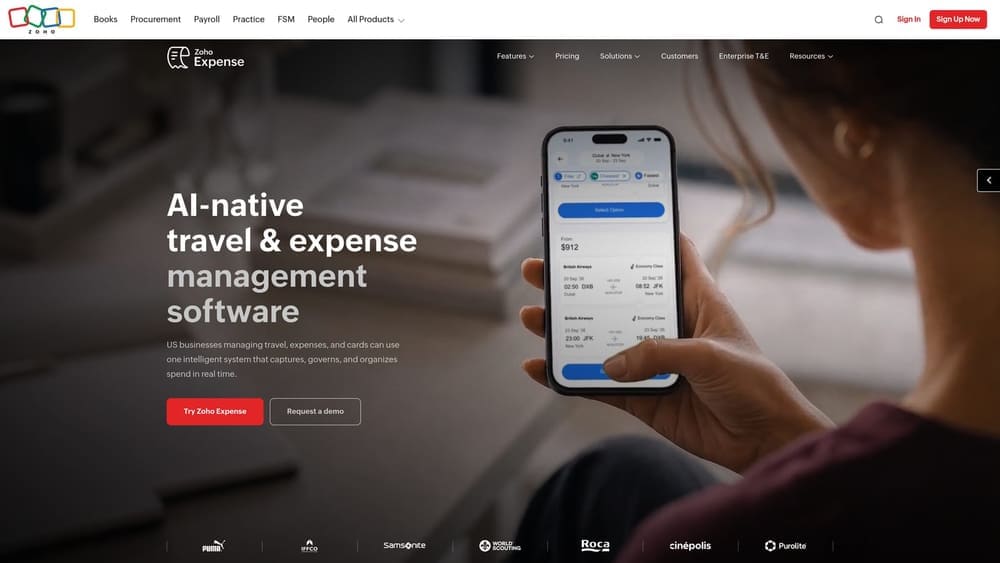
Its main advantage on this list is cost. A free tier makes it accessible to very small teams not ready to pay for a dedicated spend platform, while still covering the core mechanics of expense reporting, approvals, and reimbursement.
- Expense report automation that reduces manual data entry
- Approval workflows for routing reports to the right manager
- Mileage and per diem tracking for employees who travel locally
- A free tier for very small teams
Zoho Expense integrates with the wider Zoho suite and with QuickBooks, and setup is usually handled by a single HR or finance person without outside help. It lacks the advanced spend control and procurement features found in platforms built for larger finance teams, such as real-time card blocking or multi-subsidiary procurement, so it’s better suited to straightforward expense reporting than to complex spend governance. Pricing, including the free tier’s limits, is on Zoho’s website as of 2026.
Best for: Cost-conscious small businesses that need expense reporting without enterprise pricing.
9. Navan
Navan combines travel booking with expense management, aimed at companies where employees travel regularly enough that keeping travel and expense data in separate systems creates real reconciliation work.
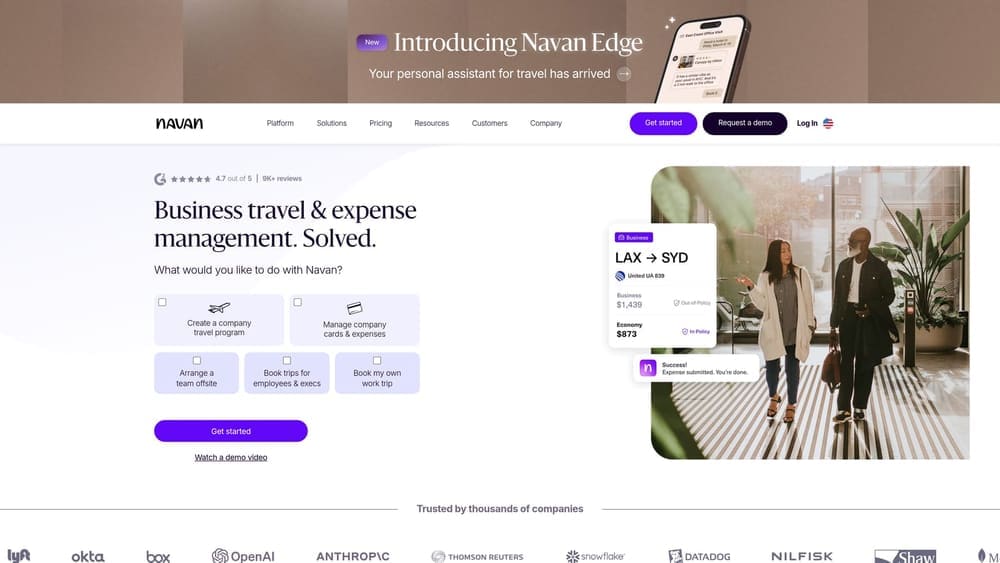
The core advantage is that trip data and expense data live in the same record from the start. A flight or hotel booked through Navan already carries the cost information into the expense report, so finance staff aren’t manually matching a travel invoice to a separate expense submission.
- Integrated travel booking for flights, hotels, and related expenses
- Expense reporting tied directly to trip data
- A corporate card option for travel and incidental spend
- Policy enforcement that applies travel spend rules automatically
Navan integrates with accounting software and with travel and booking providers, and is typically managed by a finance or travel administrator. For companies with minimal employee travel, this integration doesn’t add much value, and a simpler expense-only tool will cover the need with less overhead. Pricing is available on Navan’s website as of 2026.
Best for: Companies with regular employee travel that want travel and expense data connected.
Matching the tool to your situation
If you want employees to adopt the tool without much training, Expensify and Zoho Expense are the two built around simplicity, with Zoho the lower-cost option for very small teams. If you want card issuance and spend control combined into a single system, Ramp and Brex both do that well, with Brex better suited to companies juggling many cost centers as they scale. For organizations with genuinely complex approval structures or multinational operations, SAP Concur and Airbase offer the deepest configuration, though both come with more setup work than the rest of this list.
If your company already runs HR and payroll through Rippling, its spend management module is worth evaluating first, since it shares employee data with systems you’re already using rather than syncing a second copy of it. Bill Spend and Expense fits budget-conscious teams that want department-level control without adding a software line item, and Navan is the clear choice if travel booking is a regular part of how your teams operate.
None of these tools replace the work of choosing the right PEO itself. Expense management software runs alongside your PEO’s payroll and benefits administration, it doesn’t factor into what you’re paying for co-employment, compliance support, or benefits access. That’s a separate decision, and it’s one where bundled fees and administrative markups are easy to miss in a standard PEO proposal. Don’t auto-renew. Make an informed, confident decision.
Before you sign that PEO renewal, make sure you’re not leaving money on the table.
Many businesses unknowingly overpay because of bundled fees, hidden administrative markups, and contracts designed to limit flexibility. We give you a clear, side-by-side breakdown of pricing, services, and contract terms, so you can see exactly what you’re paying for and choose the option that truly fits your business.
