
Gig economy platforms face an HR challenge that most PEO providers aren’t built for. Your core W-2 team might be 20 people today and 90 people eighteen months from now. You’re competing for engineering and operations talent against well-funded tech companies. And you’re operating in a regulatory environment where worker classification is under constant scrutiny, which means your PEO partner needs to understand the co-employment landscape, not just run payroll.
Traditional PEO arrangements assume stable headcounts and predictable hiring cycles. Gig platforms don’t have that luxury. The right provider needs to handle volatile growth, offer benefits purchasing power that keeps your core team competitive, and give you pricing structures that don’t punish you for scaling fast.
We evaluated these providers based on flexibility with scaling, benefits cost containment tools, experience with tech-forward companies, pricing transparency, and how well they handle the unique compliance complexity that comes with running a platform business. Here are the PEO providers worth a serious look.
1. PEO Metrics
Best for: Gig economy platforms that want unbiased, data-driven PEO comparisons before committing to a provider.
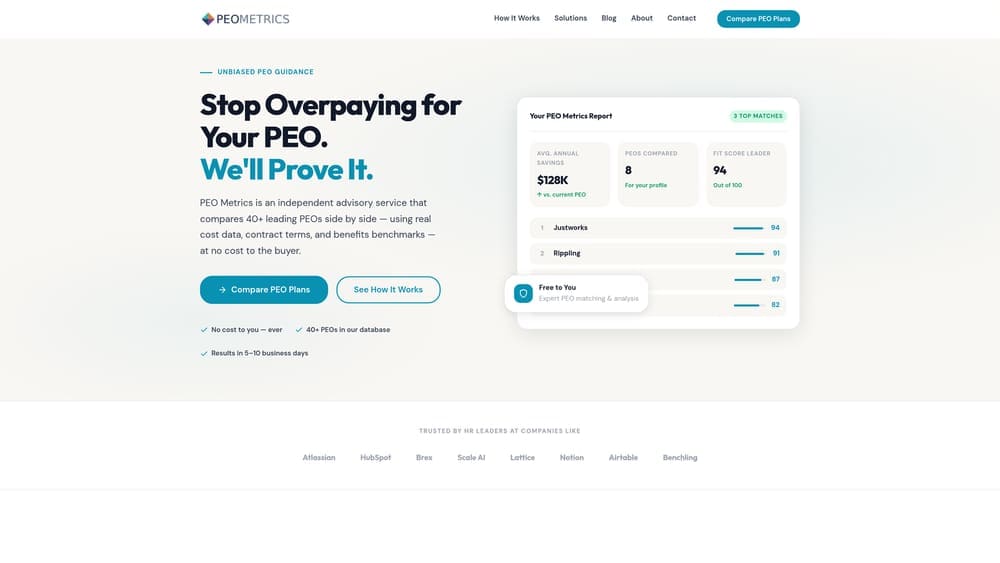
PEO Metrics is an independent PEO comparison platform that helps businesses evaluate multiple providers side-by-side using real pricing data, benefits analysis, and service metrics.
Where This Tool Shines
The core problem with selecting a PEO as a gig platform is that you’re making a decision with incomplete information. Most PEO providers don’t publish transparent pricing, bundle services in ways that obscure true costs, and use sales processes designed to close deals rather than help you find the right fit. PEO Metrics exists specifically to fix that.
For platforms with volatile headcount projections, this matters a lot. The difference between a per-employee-per-month model and a percentage-of-payroll model can mean tens of thousands of dollars annually as you scale. PEO Metrics surfaces those differences clearly, so you can make a decision based on your actual cost trajectory rather than a sales pitch.
Key Features
Side-by-Side Provider Comparisons: Real pricing data and service breakdowns across multiple PEO providers in a single view.
Benefits Cost Analysis: Tailored analysis based on your headcount, industry, and benefits priorities — not generic estimates.
Unbiased Guidance: Not affiliated with any single PEO provider, so recommendations reflect your needs rather than commission structures.
Compliance and Scalability Metrics: Detailed data on how each provider handles compliance support, co-employment nuances, and growth scenarios.
Contract Transparency: Helps you identify bundled fees, administrative markups, and contract terms that limit flexibility.
Best For
Gig economy platforms evaluating their first PEO relationship or considering a switch. Particularly valuable if you’re unsure whether your current pricing model is competitive or if you’re approaching a headcount inflection point where your cost structure needs to be re-examined.
Pricing
Free comparison consultation. Contact PEO Metrics directly for details on what’s included in the analysis.
2. Justworks
Best for: Tech startups and smaller gig platforms that need predictable, flat-rate pricing with access to large-group health benefits.
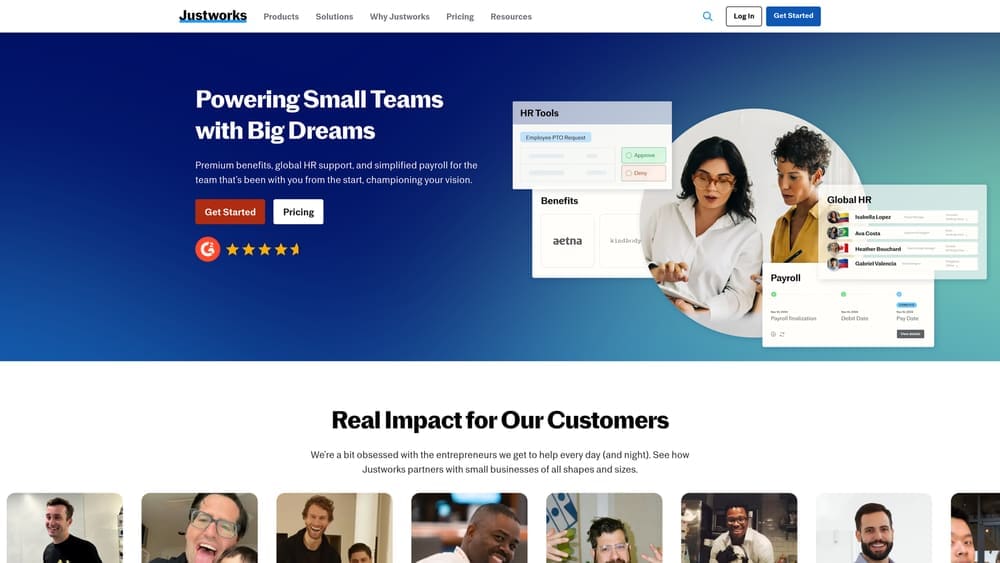
Justworks is a PEO known for transparent per-employee pricing and a clean, modern platform that resonates with tech-native teams.
Where This Tool Shines
The flat per-employee-per-month pricing model is genuinely valuable for gig platforms. When you’re projecting headcount growth and trying to model future HR costs, PEPM pricing gives you something you can actually work with. Percentage-of-payroll models get expensive fast as you hire senior engineers and operations leads, which is exactly the profile of a scaling gig platform’s core team.
Justworks also provides access to large-group health plans through carriers like Aetna and Kaiser, which is meaningful at smaller headcounts. Getting competitive health benefits when you have 15 W-2 employees is normally difficult. Justworks’s pooled risk model makes it accessible.
Key Features
Flat PEPM Pricing: No percentage-of-payroll surprises — costs scale predictably as you add headcount.
Large-Group Health Access: Aetna, Kaiser, and other major carriers through Justworks’s pooled risk pool.
Modern Onboarding: Clean UI and streamlined onboarding built for tech teams that don’t want to deal with clunky HR software.
24/7 Support: Around-the-clock compliance and HR support, which matters when your team spans time zones.
Best For
Gig platforms with W-2 teams in the 5 to 100 employee range that prioritize cost predictability and benefits quality over deep customization. Works best for domestic-only teams.
Pricing
Basic plan starts at $59/employee/month. The Plus plan, which includes benefits access, is priced at a higher tier. Contact Justworks for current rates.
3. Rippling PEO
Best for: Tech-native gig platforms that want HR, IT, and finance managed in a single unified system with deep automation.
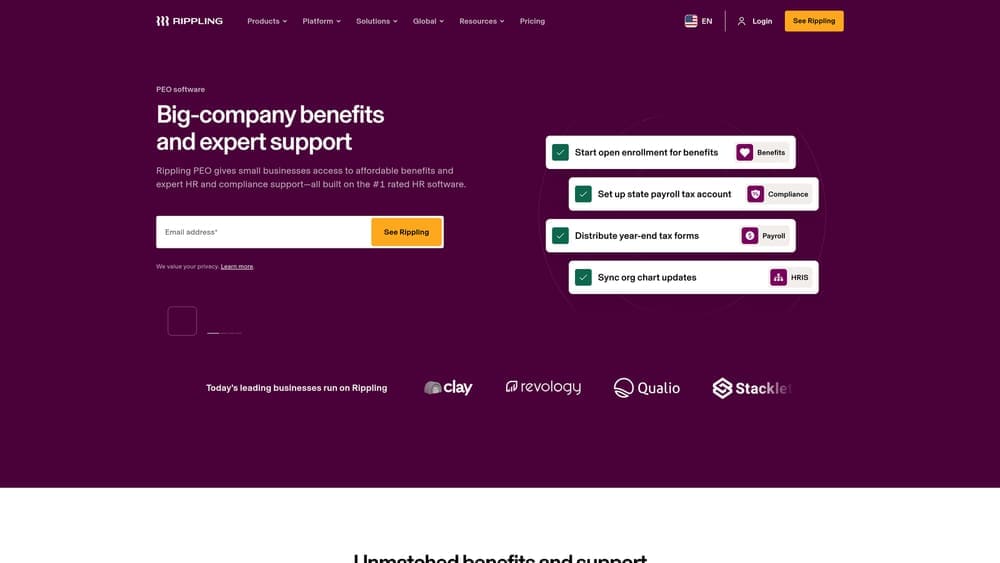
Rippling is a unified workforce platform that layers PEO services onto a system that also handles IT management, device provisioning, and finance workflows.
Where This Tool Shines
For gig platforms, the IT integration angle is underrated. When you’re onboarding a new engineer or operations manager, Rippling can handle the HR paperwork, payroll enrollment, benefits election, and device provisioning simultaneously. That kind of automation matters when your hiring pace is inconsistent and your HR team is lean.
The flexibility to transition between PEO and non-PEO as you scale is also worth noting. Some platforms reach a size where bringing HR in-house makes sense. Rippling is designed to accommodate that transition without forcing you to migrate to a completely different system.
Key Features
Unified Platform: HR, payroll, benefits, IT, and device management in a single system — no integration patchwork.
500+ App Integrations: Connects with the tools your tech team already uses, from Slack to your HRIS to your equity management platform.
Automated Compliance Workflows: Multi-state tax registration and compliance handled automatically as you hire in new locations.
PEO-to-Non-PEO Flexibility: Can transition out of PEO structure as your company scales without a full platform migration.
Best For
Gig platforms with engineering-heavy teams that value automation and integration over white-glove HR consulting. Best for companies that want to minimize manual HR administration as they scale rapidly.
Pricing
Base platform typically starts around $35/employee/month. PEO pricing is quoted separately. Custom pricing required — contact Rippling for a quote.
4. TriNet
Best for: Gig economy platforms that want industry-specific HR expertise and curated benefits bundles built for tech companies.
TriNet is a PEO that organizes its services around industry verticals, with dedicated teams and benefits configurations for technology companies.
Where This Tool Shines
TriNet’s industry-specific approach is its real differentiator. Instead of a generic PEO package, you get HR consultants who have worked with tech and platform companies and benefits bundles that reflect what those teams actually want. That’s relevant for gig platforms competing for talent in markets where compensation packages are highly competitive.
The risk mitigation and workers’ comp management is also notable. Gig platforms often operate across multiple states and face elevated scrutiny around employment practices. Having dedicated compliance support from people who understand the tech sector’s specific exposure is worth factoring into your evaluation.
Key Features
Tech-Focused Benefits Bundles: Curated health, dental, vision, and supplemental benefits packages designed for technology companies.
Dedicated HR Consultants: Sector-specific HR expertise rather than generalist support.
Risk and Workers’ Comp Management: Comprehensive risk mitigation support, including compliance guidance relevant to platform businesses.
Benefits Utilization Analytics: Reporting tools that show you how your team is using benefits, which helps with cost containment decisions at renewal.
Best For
Gig platforms with 20 to 500 W-2 employees that want consultative HR support and are willing to pay for industry-specific expertise. Less ideal if your primary concern is rock-bottom pricing.
Pricing
Custom pricing based on headcount and services. TriNet typically uses a percentage-of-payroll model. Requires a direct consultation for an accurate quote.
5. Insperity
Best for: Growing gig platforms that need strong benefits purchasing power and performance-oriented HR support as they scale from startup to mid-market.
Insperity is a full-service PEO with a large employee risk pool that translates into competitive group health rates, supported by dedicated HR business performance consultants.
Where This Tool Shines
Insperity’s scale is its primary advantage on the benefits side. A large pooled risk population means access to group health rates that smaller PEOs can’t match. For gig platforms trying to offer benefits packages competitive with well-funded tech companies, that purchasing power is meaningful — especially when your W-2 team is still relatively small.
The HR business performance consulting model is a different flavor than most PEOs. Insperity positions itself around workforce optimization and performance management, not just benefits administration. That’s relevant for platforms that are building out their management layer as they scale and need more than just payroll support.
Key Features
Large Risk Pool: Competitive group health rates driven by Insperity’s scale across its client base.
HR Business Performance Consultants: Dedicated consultants focused on workforce performance, not just compliance.
Broad Scalability: Service model designed to grow with companies from early-stage through 5,000+ employees.
Workforce Optimization Tools: Performance management and workforce analytics built into the platform.
Best For
Gig platforms in a sustained growth phase that want a PEO partner capable of scaling with them over several years. Works well for companies that value HR as a strategic function, not just an administrative one.
Pricing
Custom pricing, generally percentage-of-payroll. Requires a consultation to get an accurate quote based on your headcount and benefits selections.
6. Papaya Global
Best for: Gig economy platforms with internationally distributed core teams that need unified global payroll and benefits management.
Papaya Global is a global workforce management platform offering PEO and Employer of Record services across 160+ countries from a single dashboard.

Where This Tool Shines
Most PEOs on this list are built for domestic U.S. teams. Papaya Global solves a different problem: what happens when your core engineering or product team is distributed across multiple countries? For gig platforms that have gone global or that hire internationally to access specific talent pools, having a single platform manage payroll, benefits, and compliance across jurisdictions is genuinely difficult to replicate.
The compliance automation is particularly relevant. Labor law, tax treatment, and benefits requirements vary significantly across countries, and getting those wrong creates real liability. Papaya Global’s automated compliance layer handles that complexity without requiring your HR team to become experts in each local jurisdiction.
Key Features
160+ Country Coverage: Global payroll and benefits administration with localized compliance in each market.
Unified Dashboard: Single view for managing domestic and international employees without platform-switching.
Automated Local Compliance: Labor law and tax regulation compliance handled automatically as rules change.
Workforce Cost Analytics: Built-in reporting for tracking total workforce costs across regions and currencies.
Best For
Gig platforms with a meaningful portion of their W-2 team outside the U.S., or those planning international expansion. Less cost-effective for purely domestic teams where domestic-focused PEOs will offer better pricing.
Pricing
EOR services start at $599/employee/month. PEO and payroll-only tiers are available at lower price points. Contact Papaya Global for a tailored quote.
7. ADP TotalSource
Best for: Larger gig platforms with significant W-2 headcount that need enterprise-grade compliance infrastructure and benefits purchasing scale.
ADP TotalSource is ADP’s full-service PEO offering, backed by ADP’s compliance infrastructure and benefits purchasing power across a massive employer base.
Where This Tool Shines
ADP TotalSource’s primary advantage is scale. Access to Fortune 500-level benefits pricing through ADP’s pooled purchasing is difficult to match, and the compliance infrastructure is among the most robust available. For gig platforms that have grown to a meaningful W-2 headcount and are operating across multiple states, that compliance depth matters.
The worker classification guidance is worth highlighting specifically. Gig platforms face ongoing regulatory scrutiny around how they classify their contractor workforce, and having a PEO partner with deep expertise in that area provides a layer of protection and informed guidance that more generic providers can’t offer.
Key Features
Fortune 500-Level Benefits Access: Group health and ancillary benefits pricing driven by ADP’s scale.
Worker Classification Guidance: Compliance support that includes navigating the co-employment and classification landscape relevant to platform businesses.
Integrated Payroll and HR Platform: ADP’s established infrastructure for payroll, tax administration, and HR management.
Dedicated HR Business Partner: Named HR partner assigned to your account rather than a generic support queue.
Best For
Gig platforms with 25+ W-2 employees that prioritize compliance depth and benefits purchasing power over platform modernity. ADP TotalSource is more enterprise-oriented than startup-friendly in its approach.
Pricing
Custom pricing — requires a consultation. Generally suited for companies with 25 or more employees. Contact ADP TotalSource directly for a quote.
8. Deel
Best for: Gig platforms with mixed W-2 and contractor workforces that need a single system to manage both employment types and reduce classification risk.
Deel is a workforce platform purpose-built for companies managing W-2 employees, EOR workers, and independent contractors under one system.
Where This Tool Shines
Deel is the only provider on this list that was explicitly designed for the mixed employee-contractor model. For gig platforms, that’s not a minor detail. The ability to manage your W-2 core team through PEO services while also running contractor compliance and payments through the same platform reduces operational complexity and, critically, provides built-in tools for monitoring worker classification risk.
The API-first design reflects Deel’s focus on tech companies. If you’re running a gig platform, you likely have an existing tech stack, and the ability to integrate workforce management into your existing systems without manual workarounds is a real operational advantage.
Key Features
Unified Employee and Contractor Management: W-2 employees, EOR workers, and independent contractors managed in a single platform.
Worker Classification Compliance Tools: Built-in tools to assess and manage classification risk across your workforce.
Global Coverage: Localized payroll, benefits, and compliance across international markets.
API-First Architecture: Deep integration capabilities with existing HRIS, finance, and product systems.
Best For
Gig platforms where the line between the PEO relationship and the contractor management layer needs to be managed in one place. Particularly strong for platforms with international contractor networks alongside a domestic or global W-2 team.
Pricing
PEO services are available on request. Contractor management starts at $49/month per contractor. Contact Deel for a full pricing breakdown based on your workforce structure.
Which Provider Actually Fits Your Platform
The honest answer is that it depends on where you are in your growth curve and what your primary constraint is. There’s no single best PEO for gig economy platforms — there’s the right one for your specific headcount, geography, budget model, and operational priorities.
If your core problem is not knowing whether you’re overpaying or picking the wrong pricing model, start with PEO Metrics. Getting an unbiased comparison before you sign anything is worth the time, especially given how difficult PEO contracts can be to exit.
If you have a small domestic W-2 team and need predictable costs with solid benefits access, Justworks is a clean choice. If you’re tech-native and want everything automated in one platform, Rippling is worth a serious look. If your team is internationally distributed or you’re managing a global contractor network alongside W-2 employees, Papaya Global or Deel address problems the domestic-focused providers simply can’t.
For platforms further along in their growth — 50+ W-2 employees, multi-state operations, complex compliance exposure — TriNet, Insperity, or ADP TotalSource offer the depth and purchasing power that justify their pricing models.
The cost containment angle deserves one more mention. Gig platforms often auto-renew PEO contracts without evaluating whether the pricing still makes sense at their current headcount and benefits utilization. That’s a real and avoidable expense. Don’t auto-renew. Make an informed, confident decision. The comparison process takes less time than you’d expect, and the savings can be significant.
