
SaaS companies carry a specific litigation risk profile that most PEO providers aren’t built to handle. You’re running a remote-first workforce spread across a dozen states, using contractors for roles that blur the employee line, handing out equity that creates wage complications in California, and cycling headcount up and down based on funding — all at the same time. That’s not a compliance footnote. That’s a framework problem.
A generic PEO arrangement that handles payroll and bolts on a compliance hotline won’t protect you here. What you need is a provider whose co-employment structure, EPLI coverage, and multi-jurisdiction automation are actually designed for how software companies operate. The tools below were evaluated specifically on those dimensions: multi-state compliance depth, contractor classification support, employment practices liability coverage, and capacity to handle the rapid-change environment SaaS companies live in.
1. PEO Metrics
Best for: SaaS companies comparing PEO providers on litigation risk and compliance depth before committing.
PEO Metrics is an unbiased PEO comparison platform that helps SaaS companies evaluate providers side-by-side on the metrics that actually matter for litigation risk mitigation.

Where This Tool Shines
Most businesses pick a PEO based on a sales pitch and a pricing sheet. PEO Metrics flips that by giving you structured, data-driven comparisons across compliance depth, EPLI coverage, multi-state capabilities, and pricing transparency — before you sign anything. For SaaS companies specifically, this matters because the wrong PEO choice isn’t just expensive, it’s a liability gap you won’t discover until you’re already in trouble.
The platform is genuinely unbiased. It’s not affiliated with any single PEO provider, which means the analysis isn’t shaped by referral incentives. When you’re evaluating providers on something as consequential as litigation risk infrastructure, that independence is worth more than most people realize.
Key Features
Side-by-Side Provider Comparisons: Detailed metrics across compliance capabilities, risk coverage, and pricing so you can evaluate providers on substance rather than sales materials.
EPLI and Multi-State Compliance Analysis: Breaks down employment practices liability coverage and multi-jurisdiction compliance capabilities by provider — the two areas where SaaS companies are most exposed.
Pricing Transparency: Surfaces bundled fees, administrative markups, and contract structure differences that are easy to miss when reviewing proposals independently.
Industry Fit Filtering: Helps SaaS companies filter providers by tech industry experience and litigation risk mitigation strength, not just headcount tier.
Unbiased Guidance: No provider affiliations, no referral commissions shaping the recommendations you receive.
Best For
SaaS companies at any stage that are evaluating PEO providers for the first time, switching providers after outgrowing their current arrangement, or renewing a contract and want to verify they’re not overpaying. Particularly valuable for HR leaders who need to present a defensible, data-backed vendor decision to leadership.
Pricing
Free comparison tool. Contact PEO Metrics for detailed consulting engagements with deeper analysis and provider matching support.
2. Justworks
Best for: Early-to-mid-stage SaaS companies with distributed remote teams needing transparent pricing and solid multi-state compliance.
Justworks is a PEO built for modern, distributed companies with flat per-employee pricing and strong multi-state compliance infrastructure.

Where This Tool Shines
Justworks has positioned itself specifically around the remote-first, distributed team model that most SaaS companies run. Multi-state payroll tax registration and compliance automation are built into the product, not added as a premium tier. For a SaaS company with employees in eight states, that matters operationally and from a risk standpoint — inconsistent state tax registration is one of the quieter ways companies accumulate compliance exposure.
The transparent pricing model is also genuinely useful. You can model your actual cost without a sales conversation, which makes it easier to compare Justworks against alternatives on an apples-to-apples basis.
Key Features
Flat Per-Employee Pricing: No hidden administrative fees or percentage-of-payroll surprises — pricing is predictable and easy to model as headcount changes.
Multi-State Payroll Compliance: Automated state tax registration and ongoing compliance across states where your employees live and work.
EPLI Coverage Included: Employment practices liability insurance is included in PEO plans, not sold separately as an add-on.
Self-Service Onboarding: Employees can complete onboarding across states without HR having to manually manage state-specific paperwork variations.
Best For
Series A through Series C SaaS companies with remote-first teams spread across multiple states. Particularly well-suited for companies where headcount predictability matters and where finance teams want cost visibility without percentage-of-payroll pricing structures.
Pricing
Starts at $59/employee/month for the basic PEO plan. Higher tiers available with expanded benefits and HR support.
3. Rippling PEO
Best for: SaaS companies that want HR, IT, and compliance automation unified in a single platform with strong policy enforcement capabilities.
Rippling PEO is a unified IT, HR, and compliance platform that automates policy enforcement and state-level regulatory compliance alongside traditional PEO services.

Where This Tool Shines
Rippling’s core differentiator is that it treats compliance as a workflow problem, not just a policy problem. When an employee moves from Texas to California, Rippling can automatically trigger updated compliance policies, payroll adjustments, and state-specific documentation — without HR manually tracking the change. For SaaS companies where remote employees relocate frequently, that automation closes a real risk gap.
The unified device management and app provisioning layer also matters for SaaS companies specifically. Offboarding an employee who has access to production systems, source code repositories, and customer data requires coordinated IT and HR action. Rippling handles both sides in one system, which reduces the window of exposure during terminations.
Key Features
Automated State Compliance Workflows: Policy enforcement and payroll adjustments trigger automatically based on employee location, reducing manual compliance tracking.
Unified HR and IT Management: Device management, app provisioning, and HR records in one platform, which is particularly valuable during employee offboarding.
Custom Compliance Triggers: Configurable workflows that activate when specific employment events occur — relocations, role changes, terminations.
SaaS Integration Ecosystem: Connects with the tool stacks most SaaS companies already run, reducing data fragmentation across HR systems.
Best For
Technical founders and HR leaders at SaaS companies who want compliance automation baked into their HR infrastructure rather than managed manually. Especially strong for companies with frequent employee relocations or complex offboarding requirements.
Pricing
Custom pricing — typically starts around $35/employee/month for PEO services. Contact Rippling for a detailed quote based on your configuration and headcount.
4. TriNet
Best for: Mid-size SaaS and tech companies that need a dedicated technology industry vertical with specialized compliance advisors and robust EPLI.
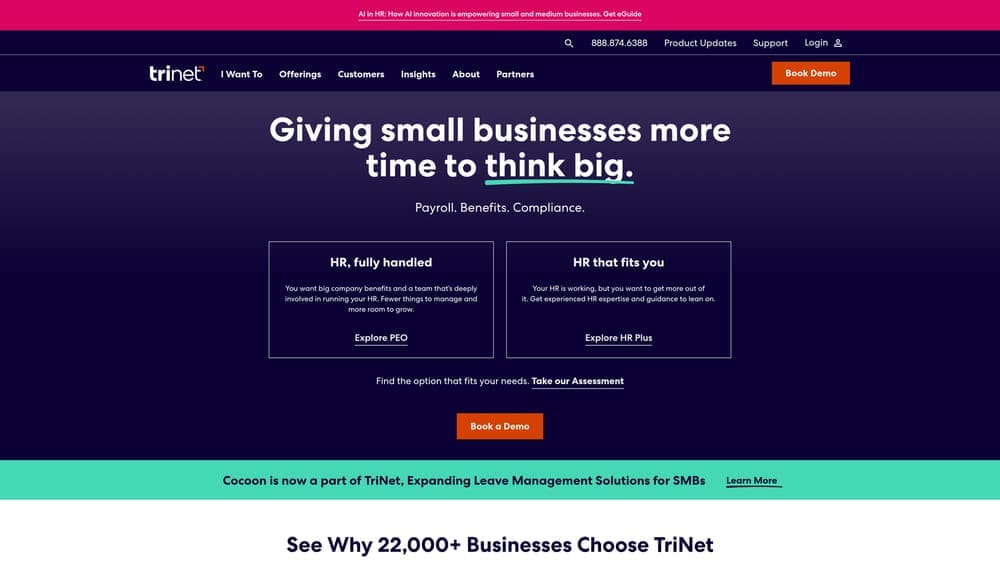
TriNet is a PEO with a dedicated technology industry vertical offering tailored compliance support, meaningful EPLI coverage, and HR consulting for growing tech companies.
Where This Tool Shines
TriNet has invested specifically in the technology vertical, which means their compliance advisors understand equity compensation structures, tech-specific termination dynamics, and the employment law nuances that come with SaaS business models. That industry-specific depth is the meaningful differentiator here — you’re not explaining your business model to an HR generalist who primarily serves restaurants and retail.
Their EPLI coverage is one of the more substantial offerings in the PEO market, with meaningful coverage limits and a structured approach to risk mitigation consulting. For SaaS companies that have already experienced employment disputes or are scaling fast enough to expect them, that coverage depth matters.
Key Features
Technology Industry Vertical: Dedicated compliance advisors with experience in tech company employment structures, including equity compensation and contractor dynamics.
Comprehensive EPLI Coverage: Employment practices liability insurance with substantive coverage limits, not just nominal protection.
Risk Mitigation Consulting: Handbook reviews, termination guidance, and proactive compliance support rather than reactive hotline access only.
Equity Compensation Compliance Support: Guidance on stock option and RSU arrangements and their wage-and-hour implications, particularly in California.
Best For
SaaS companies with 50 to 500 employees that have meaningful equity compensation programs, operate in California or other high-litigation states, and want an HR partner with genuine tech industry experience rather than a generalist PEO.
Pricing
Custom pricing using a percentage-of-payroll model. Contact TriNet for a quote — costs vary based on headcount, benefits selections, and coverage levels.
5. Insperity
Best for: SaaS companies scaling past 150 employees that need dedicated HR consultants and structured employment liability programs.
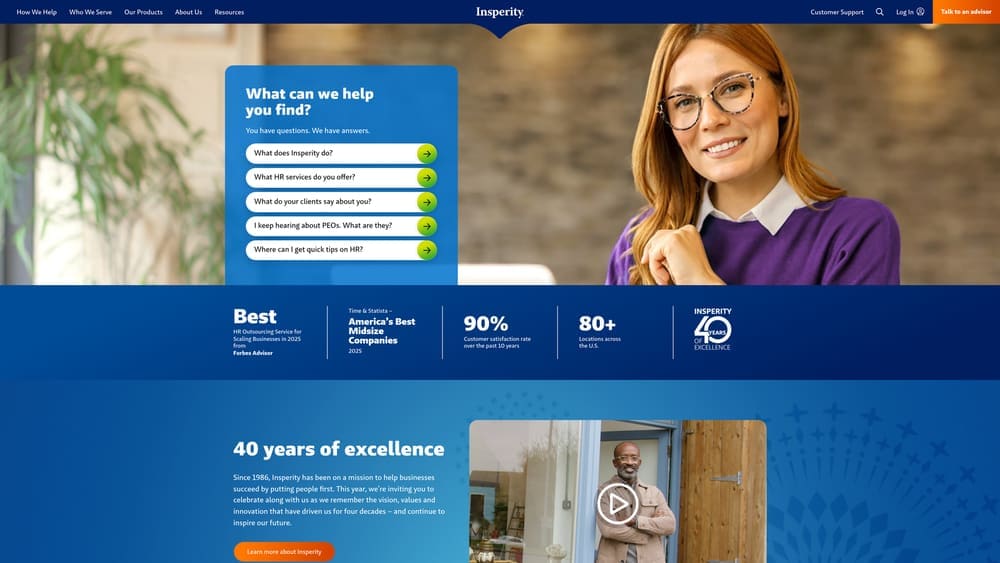
Insperity is a full-service PEO with dedicated HR business performance consultants and structured risk management programs for companies in growth mode.
Where This Tool Shines
Insperity’s model is built around dedicated HR consultants rather than self-service portals and ticketing systems. For SaaS companies at the stage where HR complexity has outpaced what a generalist can handle but where a full internal HR team isn’t yet warranted, that dedicated consultant relationship provides continuity that matters during high-stakes moments like reductions in force or complex terminations.
Their employment liability and risk management infrastructure is also more structured than most PEOs at this tier. It’s not just EPLI coverage — it includes performance management frameworks, termination compliance protocols, and documentation practices that reduce litigation exposure before a dispute ever materializes.
Key Features
Dedicated HR Business Performance Consultants: Named HR advisors who learn your business rather than rotating support staff handling tickets.
Employment Liability Programs: Structured risk management programs covering performance management, documentation, and termination compliance.
Termination Compliance Support: Guidance on legally defensible termination processes, which is where a significant portion of SaaS employment litigation originates.
Workers’ Comp and Safety Infrastructure: Comprehensive workers’ compensation programs with strong underwriting capacity and loss prevention support.
Best For
SaaS companies with 150 or more employees that have moved past the startup phase and need structured HR infrastructure with dedicated advisory support. Particularly valuable during periods of rapid scaling or planned workforce reductions.
Pricing
Custom per-employee pricing based on headcount and services selected. Contact Insperity for a detailed quote.
6. Deel
Best for: SaaS companies with international contractors or remote employees who need misclassification protection and EOR services across multiple countries.
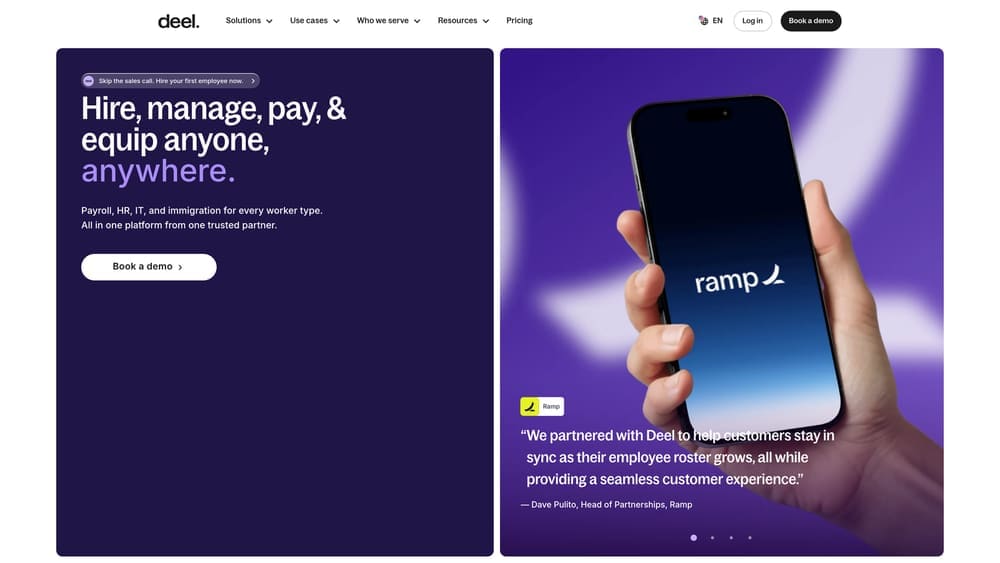
Deel is a global workforce compliance platform with EOR and contractor management that directly addresses misclassification risk for international SaaS teams.
Where This Tool Shines
Contractor misclassification is one of the highest-frequency litigation risks for SaaS companies, and it gets substantially more complicated the moment you cross international borders. Deel’s core value proposition is that it takes on the compliance burden for international contractor relationships — including misclassification exposure — across more than 150 countries. That’s not a small thing when you’re using contractors in Brazil, Germany, and India simultaneously.
The EOR pathway is also practically important. When a contractor relationship evolves into something that looks more like employment, Deel provides a structured mechanism to convert that relationship legally without starting from scratch in an unfamiliar jurisdiction.
Key Features
Contractor Misclassification Shield: Compliance guarantees and legal protections for contractor engagements across 150+ countries, reducing enforcement exposure significantly.
Jurisdiction-Specific Contract Generation: Automated contract templates with legally appropriate language for each country, not one-size-fits-all agreements.
Contractor-to-Employee Conversion: EOR services that provide a legal pathway when contractor relationships need to transition to employment.
IP Assignment Templates by Country: Built-in invention assignment and IP ownership agreements tailored to local enforceability standards — critical for SaaS companies protecting core IP.
Best For
SaaS companies with international contractors, distributed global teams, or any situation where the line between contractor and employee has become legally ambiguous. Also strong for companies that have received investor pressure to clean up their contractor classification before a funding round or acquisition.
Pricing
Contractor management from $49/month per contractor; EOR services from $599/employee/month. Pricing varies by country and service level.
7. Papaya Global
Best for: SaaS companies managing global workforces across multiple employment models who need compliance risk scoring and automated regulatory tracking.
Papaya Global is a multi-country workforce compliance engine with risk scoring and automated regulatory change tracking across PEO, EOR, and contractor employment models.
Where This Tool Shines
What separates Papaya Global from most global payroll platforms is the compliance risk scoring layer. Rather than just processing payroll and flagging obvious errors, it actively monitors regulatory changes across countries and surfaces risk exposure before it becomes a problem. For a SaaS company managing employees and contractors across ten or more countries, that proactive monitoring is genuinely difficult to replicate manually.
The unified view across employment models is also operationally significant. Most companies with global workforces are running a mix of PEO, EOR, and direct contractor arrangements simultaneously. Papaya consolidates compliance visibility across all three, which makes it easier to identify where the actual exposure sits.
Key Features
Compliance Risk Scoring: Active risk assessment across countries and employment types, not just reactive compliance checking.
Automated Regulatory Change Tracking: Monitors regulatory updates across jurisdictions and alerts you to changes that affect your workforce before deadlines hit.
Unified Multi-Model Compliance: Single platform covering PEO, EOR, and contractor arrangements, eliminating the fragmented compliance picture that comes from running multiple vendors.
Workforce Analytics: Compliance exposure visibility through workforce analytics, giving HR leadership a clear picture of where risk is concentrated.
Best For
SaaS companies with complex global workforce structures spanning multiple countries and employment models. Particularly useful for companies that have grown internationally through a mix of contractor relationships, EOR arrangements, and local entities and need consolidated compliance oversight.
Pricing
Starts at $25/employee/month for payroll services. EOR and PEO pricing is custom — contact Papaya Global for a detailed quote based on your workforce structure.
8. Paychex PEO
Best for: SaaS companies that need all-50-state compliance coverage with strong EPLI underwriting capacity and access to employment law specialists.
Paychex PEO is a large-scale PEO with deep workers’ compensation, EPLI, and regulatory compliance infrastructure covering every U.S. state.
Where This Tool Shines
Paychex’s scale is its primary advantage. They have a dedicated regulatory team monitoring compliance requirements across all 50 states, which matters for SaaS companies whose remote-first workforces create obligations in states they may not have anticipated. When an employee relocates to a state with unusual paid leave requirements or specific termination notice mandates, Paychex’s infrastructure is built to catch that.
The HR compliance hotline with access to employment law specialists is also worth noting. Most PEOs offer some version of this, but Paychex’s depth of coverage and the quality of access to actual employment law expertise — rather than generalist HR support — is a meaningful differentiator for companies navigating complex terminations or workforce reductions.
Key Features
All-50-State Compliance Coverage: Dedicated regulatory team tracking state-level requirements across every jurisdiction where your employees may reside.
EPLI and Workers’ Comp Programs: Employment practices liability and workers’ compensation with strong underwriting capacity and meaningful coverage structures.
Employment Law Specialist Access: HR compliance hotline with direct access to employment law specialists, not just HR generalists reading from a compliance manual.
Workplace Safety and Loss Prevention: Structured safety and loss prevention programs that reduce workers’ comp claims and associated litigation exposure.
Best For
SaaS companies with U.S.-focused distributed workforces that need comprehensive domestic compliance coverage and are particularly concerned about state-level regulatory variation. Also a strong fit for companies that have experienced employment litigation and want a PEO with substantial legal support infrastructure.
Pricing
Custom pricing based on headcount and risk profile. Contact Paychex directly for a quote — pricing varies based on benefits selections and coverage levels.
Picking the Right Framework for Your Stage and Risk Profile
There’s no universal answer here, and the right choice depends heavily on where your specific litigation exposure sits. A few honest observations based on the risk vectors SaaS companies actually face:
If your primary concern is international contractor misclassification, Deel is the most purpose-built solution for that specific problem. Papaya Global makes more sense if you’re managing a mix of employment models across multiple countries and need consolidated compliance visibility rather than just contractor protection.
For domestic U.S. compliance depth with strong EPLI, TriNet and Justworks are the two providers that have most deliberately targeted the technology vertical. TriNet runs deeper on advisory support and equity compensation complexity; Justworks is cleaner on pricing transparency and self-service infrastructure. Paychex PEO brings more scale and regulatory depth for companies worried about state-by-state compliance variation at a larger headcount.
Rippling is the right answer if you’re treating HR and IT compliance as a unified problem — which, for a SaaS company managing sensitive system access, is probably the right framing. Insperity makes the most sense once you’re past 150 employees and need dedicated HR advisory relationships rather than software-driven self-service.
The real mistake most SaaS companies make is choosing a PEO based on price and onboarding speed, then discovering the compliance gaps during a termination dispute or a contractor audit. The evaluation process itself is where you protect yourself.
Before you sign that PEO renewal, make sure you’re not leaving money on the table. Many businesses unknowingly overpay because of bundled fees, hidden administrative markups, and contracts designed to limit flexibility. PEO Metrics gives you a clear, side-by-side breakdown of pricing, services, and contract terms so you can see exactly what you’re paying for and choose the option that fits your actual risk profile. Don’t auto-renew. Make an informed, confident decision.
