
Most businesses sign a PEO contract, cross their fingers, and hope for the best. Then six months later, they’re wondering why response times have slipped, why benefits enrollment was a mess, or why their account manager keeps changing.
The problem isn’t that PEOs are bad. It’s that most companies never set up a real system to measure whether their PEO is actually delivering.
A vendor performance evaluation model gives you that system. It turns vague frustrations into trackable metrics and gives you leverage when it’s time to renegotiate or walk away. Here are tools and frameworks that help you evaluate PEO performance systematically, from purpose-built comparison platforms to customizable scorecards.
1. PEO Metrics
Best for: Businesses selecting a PEO or evaluating current provider performance against market standards
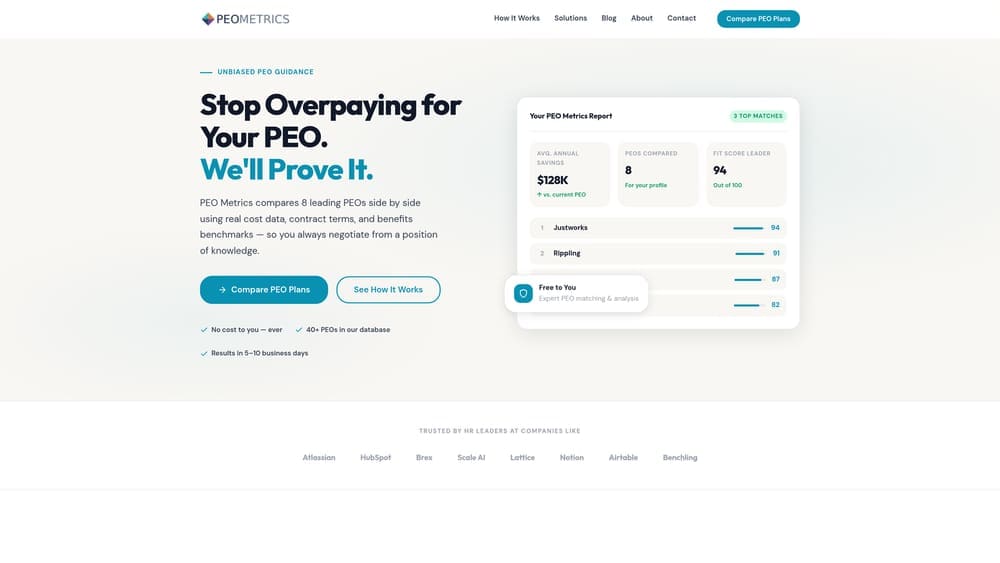
PEO Metrics is a comparison and evaluation platform built specifically for PEO relationships, providing unbiased analysis and performance tracking.
Where This Tool Shines
What makes PEO Metrics different is the focus on transparency. Most PEO brokers get paid by the providers they recommend, which creates obvious conflicts. This platform operates independently, giving you side-by-side comparisons without the sales pressure.
The real value shows up when you’re trying to figure out if you’re overpaying or if your current provider’s service quality matches what you were promised. Instead of relying on gut feel, you get actual benchmarks.
Key Features
Side-by-Side Provider Comparisons: Standardized metrics across multiple PEOs so you can actually compare apples to apples.
Pricing Transparency: Cost benchmarking data that reveals what you should actually be paying based on your company size and needs.
Ongoing Performance Tracking: Monitor your current PEO’s performance against industry standards throughout the contract term.
Unbiased Evaluation Criteria: Assessment framework not tied to PEO commissions or referral fees.
Detailed Metrics Analysis: Goes deeper than surface-level comparisons to examine service delivery, compliance support, and hidden costs.
Best For
Companies in the market for a new PEO who want to avoid the sales pitch circus. Also valuable for businesses already using a PEO who suspect they’re not getting what they’re paying for and need data to support a renegotiation or switch.
Pricing
Contact-based pricing with a consultation model. The approach focuses on understanding your specific situation before recommending evaluation criteria.
2. Gartner Vendor Scorecard Framework
Best for: Enterprise companies with formal procurement processes and existing Gartner subscriptions
Gartner provides enterprise-grade vendor evaluation methodology that can be adapted to PEO and HR outsourcing relationships.
Where This Tool Shines
If you’re running a larger organization with multiple vendor relationships, Gartner’s framework brings structure to what can otherwise become a chaotic evaluation process. The methodology forces you to think through performance dimensions you might otherwise miss.
The framework is particularly strong when you need to justify vendor decisions to executives or boards. It provides the kind of documented, defensible process that holds up under scrutiny.
Key Features
Structured Evaluation Criteria: Breaks down vendor performance across financial, operational, strategic, and risk dimensions.
Industry Benchmarking: Compare your PEO’s performance against Gartner’s research on HR outsourcing standards.
Risk Assessment Integration: Evaluates not just current performance but potential future risks in the relationship.
Governance Frameworks: Formal processes for regular vendor reviews, escalation procedures, and contract management.
Customizable Weighting: Adjust which performance factors matter most based on your business priorities.
Best For
Mid-market to enterprise companies with 500+ employees who already have procurement teams and formal vendor management processes. Less practical for smaller businesses that need something simpler.
Pricing
Requires a Gartner subscription, which typically runs into five figures annually for enterprise access. Not a standalone purchase.
3. SHRM Vendor Management Toolkit
Best for: HR teams who want industry-specific templates without building from scratch
SHRM offers vendor management resources and templates specifically designed for HR outsourcing relationships.

Where This Tool Shines
SHRM’s toolkit is built by HR professionals for HR professionals, which means the evaluation criteria actually reflect what matters in day-to-day PEO relationships. You’re not adapting generic procurement frameworks—you’re using templates that already understand the difference between payroll accuracy and benefits enrollment support.
The compliance focus is particularly valuable. SHRM’s materials help you evaluate whether your PEO is actually keeping you compliant or just claiming they are.
Key Features
HR Outsourcing Templates: Pre-built evaluation forms specific to PEO and HR service relationships.
Industry Benchmarks: Data on typical service delivery standards for HR outsourcing providers.
Compliance Assessment Criteria: Checklists for evaluating your PEO’s compliance support and risk management.
Best Practice Guidance: Documentation of what effective vendor management looks like in HR contexts.
Sample SLAs: Examples of service level agreements you can adapt for your PEO contract.
Best For
HR teams at companies with 50-500 employees who want professional-grade tools but don’t need enterprise complexity. Works well if you already have a SHRM membership for other reasons.
Pricing
SHRM membership starts at $244 annually for individual professionals. Toolkit access is included with membership rather than sold separately.
4. Coupa Supplier Performance Management
Best for: Companies managing multiple vendor relationships who need centralized performance tracking
Coupa is a comprehensive supplier management platform with automated performance tracking and contract compliance monitoring.
Where This Tool Shines
Coupa excels when you’re managing your PEO alongside other major vendors and need everything in one system. The automation is the real differentiator—you set up your performance criteria once, and the platform handles reminders, data collection, and alerts when metrics slip.
The contract compliance monitoring catches issues before they become problems. If your PEO contract specifies response times or error rates, Coupa tracks whether they’re meeting those commitments.
Key Features
Automated Performance Tracking: System-generated alerts when vendor performance falls below defined thresholds.
Customizable Scorecards: Build evaluation frameworks specific to PEO relationships with weighted criteria.
Contract Compliance Monitoring: Tracks whether your PEO is meeting contractual service level agreements.
Procurement Integration: Connects vendor performance data with broader procurement and financial systems.
Stakeholder Collaboration: Multiple team members can input feedback and view performance dashboards.
Best For
Mid-market to enterprise companies with mature procurement functions managing multiple significant vendor relationships. Overkill if your PEO is your only major outsourced service.
Pricing
Enterprise pricing model with costs varying based on company size and module selection. Contact Coupa for specific quotes.
5. Kissflow Procurement Cloud
Best for: Companies that need custom evaluation workflows without IT involvement
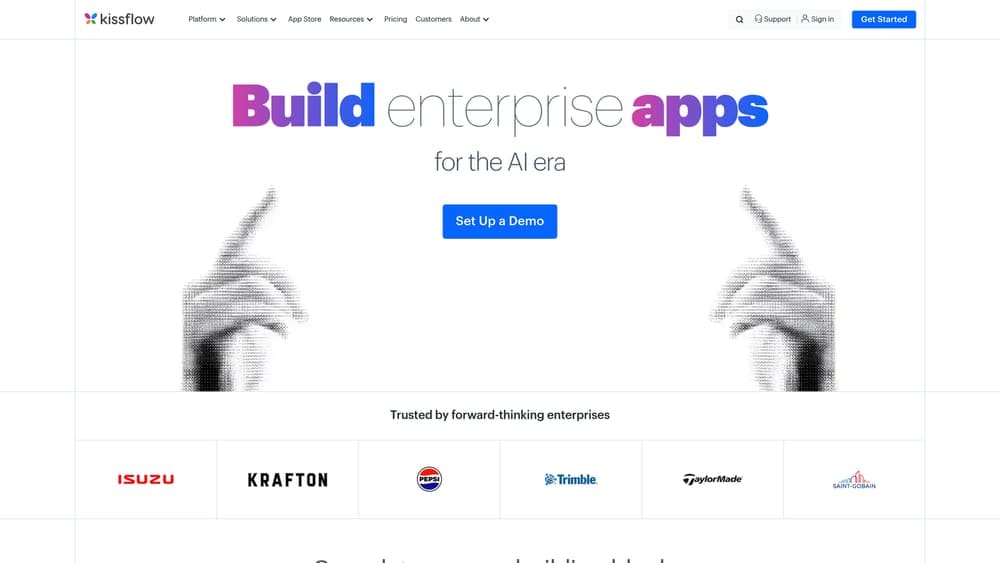
Kissflow is a no-code procurement platform that lets you build custom vendor evaluation processes and approval workflows.
Where This Tool Shines
The no-code approach means your HR or operations team can set up exactly the evaluation process you need without waiting for IT to build something. You’re not stuck with someone else’s idea of what PEO evaluation should look like.
Kissflow works particularly well when you have multiple stakeholders who need to weigh in on PEO performance—finance on costs, HR on service quality, compliance on risk management. The platform manages that input process without endless email chains.
Key Features
Custom Workflow Builder: Design your own evaluation processes with drag-and-drop tools.
Flexible Scoring Systems: Create rating criteria that match your specific PEO relationship priorities.
Automated Review Cycles: Set up quarterly or annual reviews with automatic reminders to stakeholders.
Stakeholder Collaboration: Multiple team members can provide input within structured workflows.
Approval Routing: Define who needs to sign off on evaluation results or vendor changes.
Best For
Growing companies with 100-1,000 employees that need more structure than spreadsheets but don’t want enterprise procurement complexity. Good fit if you value customization over pre-built templates.
Pricing
Small business tier starts at $1,500 monthly. Pricing scales with user count and feature requirements.
6. Smartsheet Vendor Scorecard Templates
Best for: Teams comfortable with spreadsheets who want enhanced collaboration and automation
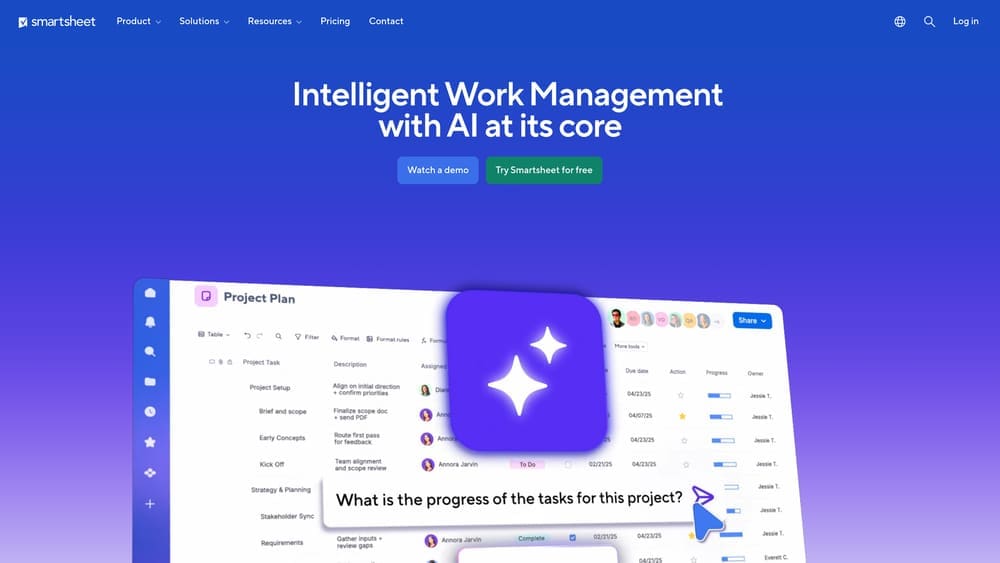
Smartsheet offers spreadsheet-based work management with pre-built vendor scorecard templates and automation features.
Where This Tool Shines
If your team already lives in spreadsheets, Smartsheet gives you familiar territory with upgrades that actually matter. The pre-built vendor templates save you from starting with a blank sheet, and the automation handles the tedious parts like review reminders.
The dashboard views turn your evaluation data into something executives can actually digest. Instead of sending a spreadsheet with 47 tabs, you show them a visual summary of how your PEO is performing across key metrics.
Key Features
Pre-Built Vendor Templates: Ready-to-use scorecard structures you can customize for PEO evaluation.
Spreadsheet Interface: Familiar grid layout with added workflow and automation capabilities.
Dashboard Views: Visual performance trend tracking without manual chart creation.
Collaboration Features: Multiple users can update scorecards with automatic version control.
Automated Alerts: Set up notifications when performance metrics need attention.
Best For
Small to mid-market companies with 25-500 employees that want better than Excel but don’t need a full procurement platform. Works well for teams already using spreadsheets for vendor tracking.
Pricing
Pro plan at $9 per user monthly for basic features. Business plan at $32 per user monthly includes advanced automation and reporting.
7. ServiceNow Vendor Risk Management
Best for: Enterprise organizations prioritizing compliance and risk assessment alongside performance
ServiceNow combines vendor performance management with integrated risk assessment and compliance tracking.
Where This Tool Shines
ServiceNow treats vendor risk as inseparable from vendor performance, which is the right approach for PEO relationships. Your PEO has access to employee data, handles payroll, manages benefits—the risk exposure is significant.
The compliance audit trails are particularly valuable if you’re in a regulated industry. When auditors ask how you’re monitoring your PEO’s compliance performance, ServiceNow gives you documented evidence rather than vague assurances.
Key Features
Integrated Risk Assessment: Evaluates vendor performance and risk exposure in a unified framework.
Compliance Tracking: Documents your PEO’s compliance performance with audit-ready trails.
Automated Risk Scoring: Calculates risk levels based on performance data and compliance incidents.
Enterprise Workflow Integration: Connects vendor management with broader IT and operations systems.
Third-Party Risk Monitoring: Tracks not just your PEO but their subcontractors and technology dependencies.
Best For
Large enterprises with 1,000+ employees in regulated industries where vendor risk management is a formal requirement. Not practical for smaller companies without dedicated compliance teams.
Pricing
Enterprise pricing varies based on company size and module selection. Contact ServiceNow for specific quotes.
8. Airtable Vendor Management Base
Best for: Small to mid-market companies wanting flexible, customizable tracking without complex software
Airtable provides a flexible database platform with customizable templates for vendor performance and relationship tracking.
Where This Tool Shines
Airtable hits a sweet spot between spreadsheet simplicity and database power. You can structure your PEO evaluation data however makes sense for your business without fighting rigid software constraints.
The multiple view options are genuinely useful. Look at your PEO performance as a grid when you’re analyzing metrics, switch to a calendar view for review schedules, or use kanban for tracking action items from your last evaluation. Same data, different perspectives.
Key Features
Customizable Database Structure: Build your vendor tracking system exactly how you need it.
Visual Dashboards: Create performance reports and trend views without coding.
Automation Capabilities: Set up automatic reminders for quarterly reviews or performance check-ins.
Multiple View Options: Switch between grid, kanban, calendar, and gallery views of the same data.
Collaboration Features: Team members can comment, attach files, and update records in real-time.
Best For
Companies with 10-250 employees that want more flexibility than templates but don’t need enterprise vendor management platforms. Good option if your evaluation needs are evolving and you’re not sure exactly what you’ll be tracking long-term.
Pricing
Free tier available for basic use. Team plan at $20 per user monthly includes expanded features and automation.
9. Internal Balanced Scorecard Approach
Best for: Budget-conscious companies with internal resources to build and maintain custom frameworks
The balanced scorecard methodology is a proven business framework you can adapt to PEO vendor evaluation without buying specialized software.
Where This Tool Shines
The balanced scorecard forces you to evaluate your PEO across four distinct perspectives: financial (are we getting value for cost?), customer (is our employee experience good?), process (are operations running smoothly?), and learning (is the relationship improving over time?). That structure prevents the common mistake of focusing only on price or only on service quality.
Building it yourself means you can weight the dimensions exactly how your business needs. If compliance is your biggest concern, make that 40% of the score. If you care most about employee satisfaction with benefits, emphasize that instead.
Key Features
Four-Perspective Evaluation: Assesses financial, customer, process, and learning dimensions of your PEO relationship.
Complete Customization: Build the framework entirely around your specific priorities and concerns.
No Software Costs: Implement using existing tools like spreadsheets or documents.
Proven Methodology: Based on decades of business performance management research and application.
Flexible Implementation: Can be as simple or sophisticated as your resources allow.
Best For
Small businesses with 10-100 employees that have someone internally who can build and maintain the framework. Also works for larger companies that want to pilot vendor evaluation before investing in platforms.
Pricing
The methodology itself is free. Implementation costs depend on internal time investment and whether you use existing tools or purchase supporting software.
Matching Your Evaluation Approach to Your Reality
The right evaluation model depends less on which tool has the most features and more on what you’ll actually use consistently.
If you’re selecting a PEO for the first time or questioning whether your current provider is competitive, start with a purpose-built comparison platform. You need market context before you can evaluate individual performance fairly.
For companies with formal procurement processes and multiple vendor relationships, enterprise platforms like Coupa or ServiceNow make sense. The investment pays off when you’re managing complexity across your entire vendor portfolio.
Smaller companies often do better with flexible tools like Airtable or Smartsheet. You get enough structure to stay organized without the overhead of enterprise software. The key is picking something your team will actually maintain rather than abandon after the first quarter.
The balanced scorecard approach works when you have internal resources and want complete control. Just be honest about whether someone will own it long-term. A simple framework used quarterly beats a sophisticated one that gathers dust.
Whatever you choose, the goal is the same: turn “I think our PEO is underperforming” into “Here’s the data showing our PEO missed SLAs in three of the last four quarters.” That shift from feeling to evidence changes the conversation entirely.
Before you sign that PEO renewal, make sure you’re not leaving money on the table. Many businesses unknowingly overpay because of bundled fees, hidden administrative markups, and contracts designed to limit flexibility. We give you a clear, side-by-side breakdown of pricing, services, and contract terms—so you can see exactly what you’re paying for and choose the option that truly fits your business.
