
When you’re running payroll, benefits, and HR compliance through multiple vendors — or through a single PEO that’s quietly overcharging — the cost leaks add up faster than most business owners realize. Vendor consolidation under a PEO can cut redundant admin fees, eliminate duplicate software subscriptions, and unlock better group rates on benefits. But how much would you actually save?
That’s where a savings calculator comes in. The tools below range from full-service PEO comparison platforms with built-in cost modeling to standalone ROI estimators that help you model what consolidation could look like for your specific headcount and spend. We evaluated each based on how transparent the inputs are, whether the output is genuinely useful or just a lead-gen wrapper, and how well it accounts for the real cost variables: admin fees, benefits markups, workers’ comp rates, and technology overlap.
Here are the tools worth your time.
1. PEO Metrics
Best for: Businesses that want unbiased, data-driven PEO comparisons to model real consolidation savings
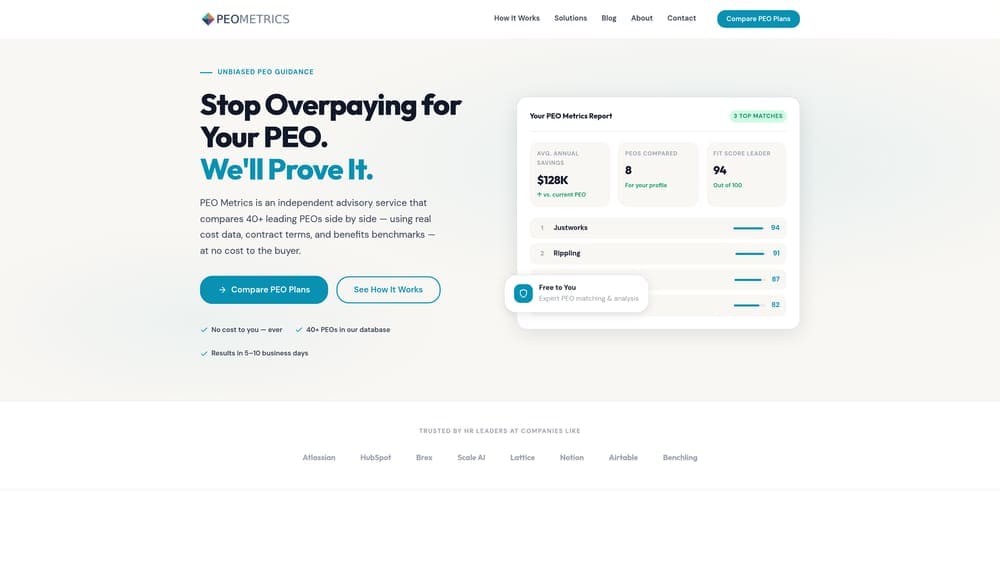
PEO Metrics is an independent PEO comparison platform built specifically to give businesses the pricing transparency they rarely get from providers directly.
Where This Tool Shines
Most “calculators” in this space are sales funnels dressed up as tools. PEO Metrics is different because it’s not affiliated with any single PEO provider. That independence matters a lot when you’re trying to figure out whether your current setup is actually costing you more than it should.
Instead of giving you a single number based on one provider’s assumptions, PEO Metrics breaks down admin fees, benefits costs, and workers’ comp rates separately across multiple providers. That granularity is what makes it genuinely useful for modeling consolidation scenarios. You’re not comparing apples to marketing language — you’re comparing actual pricing structures side by side.
Key Features
Side-by-Side Provider Comparisons: Compare multiple PEO providers on actual pricing metrics, not just feature lists or vague service descriptions.
Disaggregated Cost Breakdown: Admin fees, benefits costs, and workers’ comp rates are shown separately so you can see exactly where the cost differences live.
Market Rate Benchmarking: Helps you identify where your current vendor spend is above market, which is the first step in building a real consolidation business case.
Unbiased Analysis: No provider affiliation means the comparison isn’t skewed toward whoever pays the highest referral fee.
Scenario Modeling: Detailed enough to model what switching or consolidating under a specific provider would actually cost over time.
Best For
HR leaders and business owners who are already running multiple vendors and need real data to justify consolidation internally. Also strong for anyone approaching a PEO renewal and wanting to know whether they’re getting a fair deal before signing again.
Pricing
Contact for details. The service is focused on helping businesses avoid overpaying — not on charging them to find out they are.
2. ADP TotalSource
Best for: Existing ADP customers who want to consolidate payroll and HR services under one enterprise PEO
ADP TotalSource is ADP’s full-service PEO offering, with cost modeling tools that draw on existing payroll data to project what consolidation would look like.
Where This Tool Shines
If you’re already an ADP payroll customer, TotalSource has a meaningful advantage: it can use your actual payroll data to model consolidation savings rather than asking you to estimate inputs manually. That reduces the garbage-in-garbage-out problem that plagues most self-serve calculators.
The implementation team can also map your current vendor spend across payroll, benefits, compliance, and tax administration — which gives you a more complete picture of what you’re actually paying today versus what bundling would cost. For businesses in the 50-500 employee range, that analysis is worth the consultation call.
Key Features
Data-Driven Projections: Pulls from existing ADP payroll data to generate cost projections grounded in your actual numbers.
Full-Bundle Modeling: Models savings across payroll, benefits, compliance, and tax administration in one analysis.
Vendor Spend Mapping: Dedicated implementation team helps document current vendor costs before building the consolidation case.
Enterprise Scale: Designed to handle complexity for businesses with 50-500+ employees across multiple states.
Best For
Businesses already using ADP for payroll who want a natural consolidation path to full PEO services without migrating platforms. Less compelling if you’re not already in the ADP ecosystem.
Pricing
Custom pricing through consultation. Typically structured as a percentage-of-payroll model, which means costs scale with your headcount and compensation levels.
3. Justworks
Best for: Small to mid-size businesses that want transparent, published pricing to model consolidation costs without a sales call
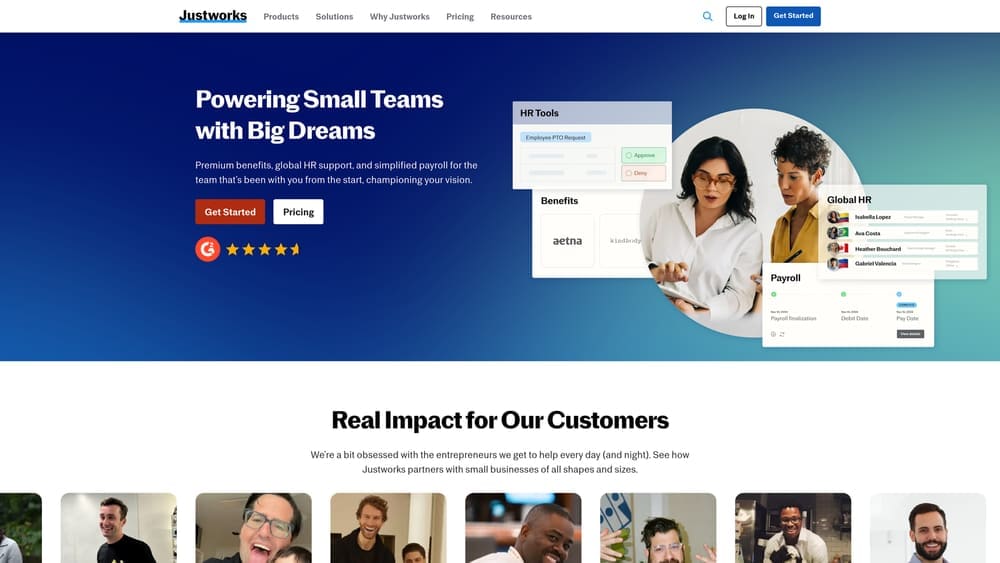
Justworks is a PEO platform that publishes its per-employee pricing openly, which makes it genuinely useful as a consolidation modeling baseline.
Where This Tool Shines
Transparency is rare in PEO pricing. Most providers won’t give you a number until you’ve sat through a sales process. Justworks publishes its rates on its website, which means you can run a real comparison against your current vendor costs without committing to anything.
Their online cost estimator is simple but functional. You can quickly model what your current headcount would cost under Justworks versus your existing multi-vendor setup. It won’t capture every nuance of your current spend, but it gives you a fast directional answer on whether consolidation makes sense to explore further.
Key Features
Published Pricing: Per-employee-per-month rates are listed on the website — no consultation required to get a number.
Flat-Rate Structure: Payroll, benefits, compliance, and HR tools are bundled into one rate with no hidden percentage-of-payroll markups.
Online Cost Estimator: Quick modeling tool to estimate total monthly costs based on your headcount.
No Hidden Admin Fees: The flat-rate model makes it easier to do an honest apples-to-apples comparison against your current setup.
Best For
Startups and growing businesses with 10-200 employees that want a straightforward consolidation path and don’t want to negotiate pricing. Also useful as a benchmark when evaluating other PEOs to see if their custom quotes are reasonable.
Pricing
Starts at $59/employee/month for the Basic plan; $109/employee/month for the Plus plan, which includes access to benefits. Pricing is published and updated on their website.
4. Insperity
Best for: Mid-market companies that want an ROI analysis covering both hard-dollar savings and soft costs like reduced HR burden
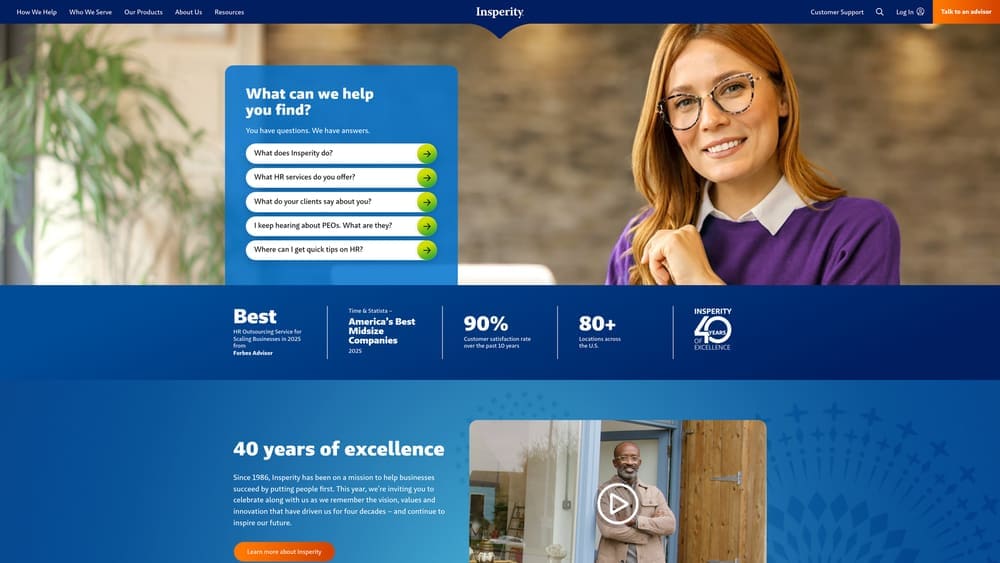
Insperity is a full-service PEO with a consultative approach to consolidation analysis that goes beyond just comparing admin fees.
Where This Tool Shines
Most calculators only model the obvious stuff: payroll fees, benefits premiums, and software subscriptions. Insperity’s ROI analysis also factors in HR staff time savings and turnover cost reduction — the soft costs that are harder to quantify but often represent the largest portion of the real savings opportunity.
If you have an internal HR team that’s spending significant time on compliance, vendor management, and benefits administration, Insperity’s analysis can help you put a dollar figure on what that time is worth. That’s a more complete picture than most calculators provide, and it’s particularly relevant for companies in the 50-150 employee range where HR bandwidth is often stretched thin.
Key Features
Comprehensive ROI Modeling: Includes HR staff time savings and turnover cost reduction alongside direct fee comparisons.
Full-Service Bundle: Covers payroll, benefits, risk management, and training — the full scope of what consolidation would replace.
Dedicated HR Business Partner: Assigned partner helps model the consolidation impact specific to your business rather than using generic assumptions.
Mid-Market Focus: Service model and analysis tools are calibrated for businesses in the 50-150 employee range.
Best For
Companies with internal HR staff who want to understand the full value of consolidation — not just fee savings but time and operational relief. Less suited for very small businesses where the consultative overhead doesn’t fit the scale.
Pricing
Custom pricing based on headcount and services. Requires a consultation to get a quote. Expect a comprehensive service bundle at a premium price point relative to self-serve platforms.
5. Rippling
Best for: Tech-forward businesses that want to audit their full vendor stack before deciding whether to consolidate under a PEO
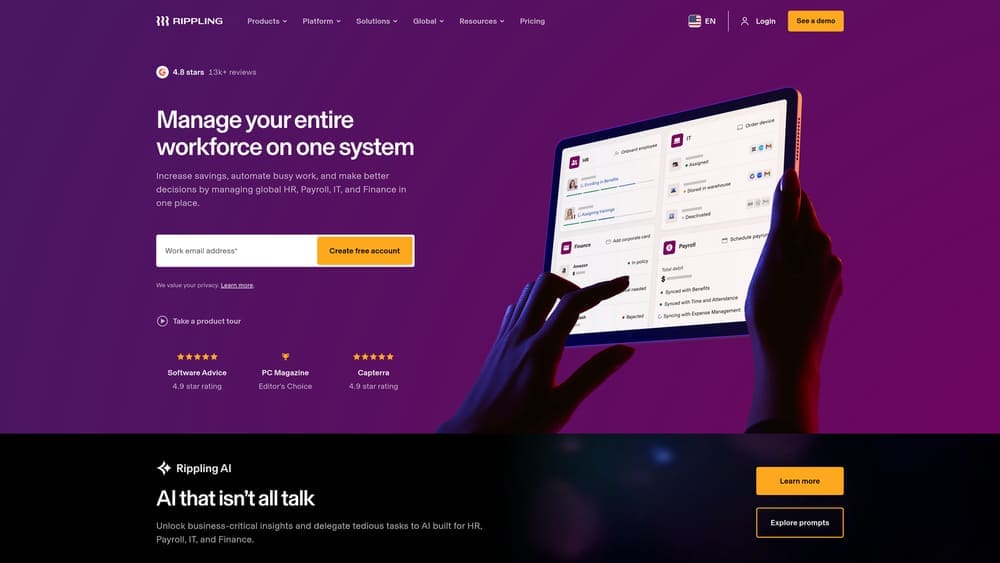
Rippling is a unified HR, IT, and finance platform with spend management features that surface what you’re actually paying across vendors before you decide what to consolidate.
Where This Tool Shines
Rippling approaches consolidation differently from traditional PEOs. Its spend management dashboard pulls in actual vendor invoices and software subscriptions, which means you can see overlapping tools and redundant costs in real terms — not estimated inputs. That’s a meaningful advantage when you’re trying to build an honest baseline of current spend.
It also gives you flexibility that most PEOs don’t: you can use Rippling as a full PEO, as a standalone HR platform, or somewhere in between. That modularity makes it easier to consolidate incrementally rather than committing to a full migration upfront.
Key Features
Spend Management Dashboard: Pulls actual vendor invoices and subscription data to identify redundant costs across HR, IT, and payroll.
Overlap Identification: Flags where you’re paying for duplicate functionality across multiple tools.
Automated Consolidation: Can replace multiple point solutions by absorbing their functions into one platform.
Flexible Deployment: Works as a full PEO or standalone HR platform depending on what your business actually needs.
Best For
Companies with a sprawling vendor stack across HR, IT, and finance that want to see the full picture before consolidating. Particularly strong for businesses with 20-200 employees that have accumulated software subscriptions over time and aren’t sure what they’re paying for.
Pricing
Core platform starts at $8/employee/month. PEO pricing is custom and requires a consultation. Total cost varies significantly based on which modules you activate.
6. NAPEO Cost Comparison Resources
Best for: Business owners and HR leaders who want neutral industry benchmarks to validate savings claims from PEO providers
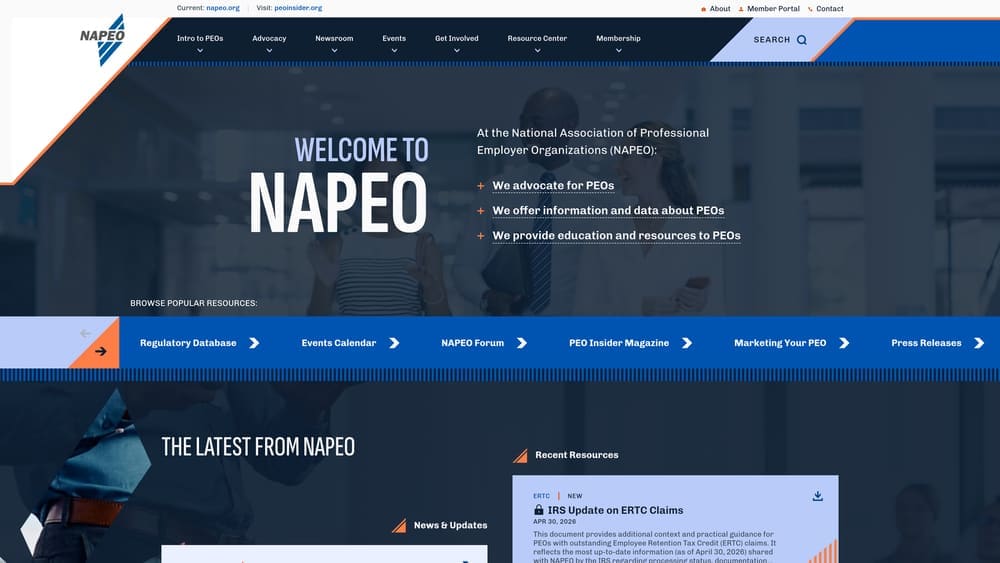
NAPEO (National Association of Professional Employer Organizations) publishes industry research and benchmarks that serve as a useful reality check when evaluating consolidation savings projections.
Where This Tool Shines
Every PEO’s internal calculator is going to show you favorable numbers. That’s not a cynical observation — it’s just how sales tools work. NAPEO’s resources are different because they’re not tied to any single provider. The association publishes white papers and industry-level research on PEO cost structures, ROI patterns, and consolidation benefits that you can use to sanity-check whatever a provider is telling you.
If you’re building an internal business case for consolidation and need neutral third-party data to support it, NAPEO’s published research is one of the few genuinely independent sources in this space. It won’t give you a line-by-line savings estimate for your specific situation, but it provides the benchmarks you need to evaluate whether the numbers a provider shows you are realistic.
Key Features
Industry Benchmarks: Published data on PEO cost structures and savings patterns across different business sizes and industries.
Independent Research: Not affiliated with any single PEO provider — the association represents the industry broadly.
White Papers and ROI Studies: Downloadable research on PEO consolidation benefits useful for building internal business cases.
Educational Resources: Explanatory content on how PEO pricing models work, which helps you decode provider quotes more accurately.
Best For
HR leaders who need to present a consolidation business case to leadership and want credible, neutral supporting data. Also useful for business owners who want to understand whether a provider’s savings claims are in line with industry norms before committing.
Pricing
Many resources are free and publicly available on the NAPEO website. Some research content and deeper data access requires NAPEO membership.
7. Paychex PEO
Best for: Existing Paychex customers evaluating whether to consolidate add-on services under Paychex’s full PEO tier
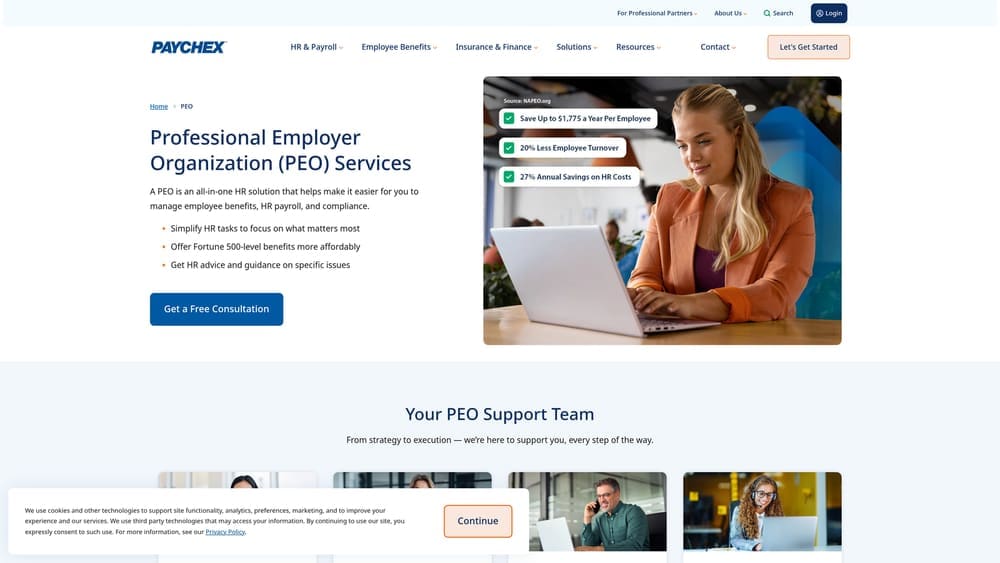
Paychex PEO is the full-service PEO offering from Paychex, with bundled savings estimators designed specifically for businesses already using Paychex for payroll or other services.
Where This Tool Shines
Similar to ADP TotalSource, Paychex PEO’s consolidation analysis is strongest when you’re already in their ecosystem. If you’re running payroll through Paychex and have added retirement, insurance, or compliance services separately over time, their estimators can model what bundling everything under the PEO tier would cost — and where the savings would come from.
The migration path for existing Paychex customers is smoother than switching to a new platform entirely. That operational continuity has real value: no data migration headaches, no retraining your team on a new system, and no gap in payroll processing during transition. For businesses with 5-200 employees that are already Paychex users, this is often the path of least resistance toward consolidation.
Key Features
Bundled Savings Estimation: Models what consolidating payroll, retirement, insurance, and compliance under the PEO tier would cost versus managing them separately.
Smooth Migration for Existing Customers: No platform switch required if you’re already using Paychex for payroll or other services.
Online Cost Estimator: Basic online tools to estimate per-employee PEO costs before committing to a consultation.
Broad Business Size Support: Service model designed for businesses ranging from 5 to 500 employees.
Best For
Small to mid-size businesses already using Paychex that have accumulated add-on services over time and want to know whether consolidating under PEO makes financial sense. Less compelling if you’re not already a Paychex customer.
Pricing
Custom pricing through consultation. Typically structured on a per-employee-per-month basis. Existing Paychex customers may have leverage to negotiate based on their current relationship.
Picking the Right Calculator for Your Situation
Here’s the honest reality: most of the “calculators” in this space are built to generate leads, not to give you genuinely useful numbers. The ones that come closest to real modeling are the ones that either use your actual data or give you enough pricing transparency to run the comparison yourself.
If you’re starting from scratch and want to understand what you’re actually paying versus market rates, PEO Metrics is the right starting point. It’s the only option on this list that’s genuinely independent and built specifically to surface the pricing data you need to evaluate consolidation across multiple providers.
If you’re already inside a specific vendor’s ecosystem — ADP, Paychex, or Justworks — their internal tools make sense as a next step, with the caveat that you should validate their projections against neutral benchmarks from NAPEO or an independent comparison service.
If your consolidation question is really about a sprawling software stack across HR, IT, and finance, Rippling’s spend management approach is worth exploring before you commit to a full PEO structure.
For mid-market businesses where the soft costs of HR admin burden are as significant as the direct fees, Insperity’s consultative ROI analysis tends to capture the full picture better than a self-serve calculator can.
Before you sign that PEO renewal, make sure you’re not leaving money on the table. Many businesses unknowingly overpay because of bundled fees, hidden administrative markups, and contracts designed to limit flexibility. Don’t auto-renew. Make an informed, confident decision.
