
An HR software stack assembles HRIS (Rippling, BambooHR, Gusto) + benefits broker + workers' comp carrier + compliance counsel as separate vendors. A PEO bundles those functions under one co-employment relationship with master plan economics. Stack wins for tech-forward teams, low workers' comp risk, single-state operations. PEO wins for benefits-intensive industries, high-mod workforces, multi-state operators, and companies that want one vendor instead of five.
The choice between a PEO and building your own HR software stack isn’t just about features—it’s about how much complexity you’re willing to own. A PEO bundles payroll, benefits, compliance, and HR support under one co-employment relationship. An HR software stack lets you pick best-in-class tools for each function but puts integration, compliance, and vendor management squarely on your plate.
This comparison breaks down both approaches plus the leading options in each category, so you can match the right solution to your actual operational reality—not a sales pitch.
1. PEO Metrics
Best for: Businesses evaluating PEO providers and comparing actual pricing before committing
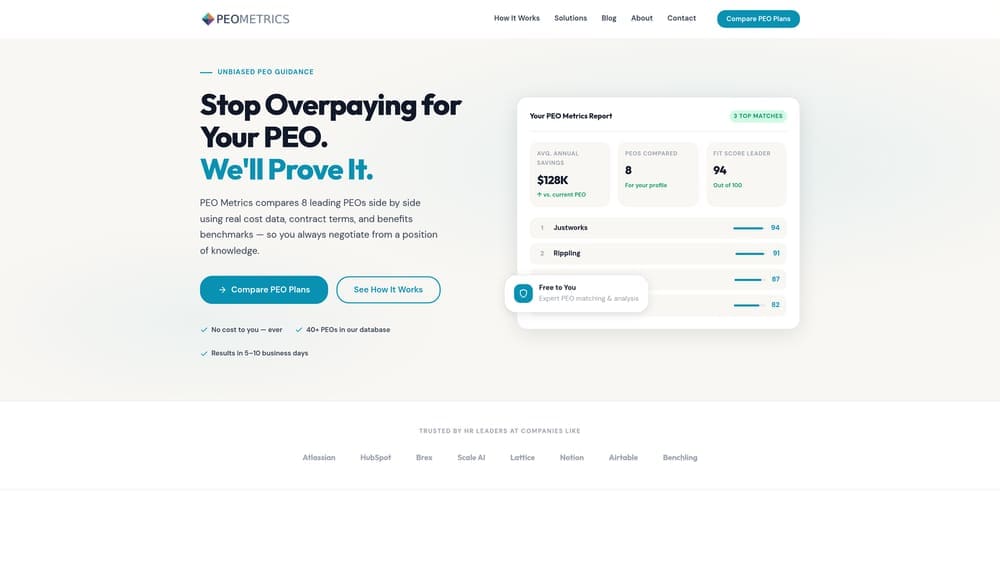
PEO Metrics is an unbiased comparison platform that helps you cut through PEO sales pitches with real data on pricing, service levels, and contract terms across providers.
Where This Tool Shines
Most businesses sign with the first PEO that presents well, only to discover later they’re overpaying or locked into inflexible terms. PEO Metrics solves this by providing side-by-side comparisons of actual provider costs and service metrics—without the sales pressure.
The platform surfaces pricing differences that can amount to thousands of dollars annually per employee, along with service-level data that reveals which providers actually deliver on their promises versus which ones hide fees in fine print.
Key Features
Side-by-Side Provider Comparisons: Compare multiple PEO options with detailed breakdowns of what you’re actually paying for.
Transparent Pricing Analysis: See real cost structures including administrative fees, benefits markups, and hidden charges most providers don’t disclose upfront.
Service-Level Metrics: Access data on response times, compliance track records, and client satisfaction that sales reps won’t volunteer.
Unbiased Guidance: Get objective recommendations based on your business profile without commission-driven sales tactics.
Contract Term Analysis: Understand cancellation policies, auto-renewal clauses, and flexibility options before you’re locked in.
Best For
Companies evaluating their first PEO relationship, businesses comparing renewal options against market alternatives, or any organization that wants to understand the true cost of PEO services before signing a contract. Particularly valuable for companies that don’t have dedicated HR expertise to negotiate PEO agreements.
Pricing
Free comparison service with no obligation to use any specific provider.
2. Justworks
Best for: Small businesses wanting straightforward PEO pricing without percentage-of-payroll fees
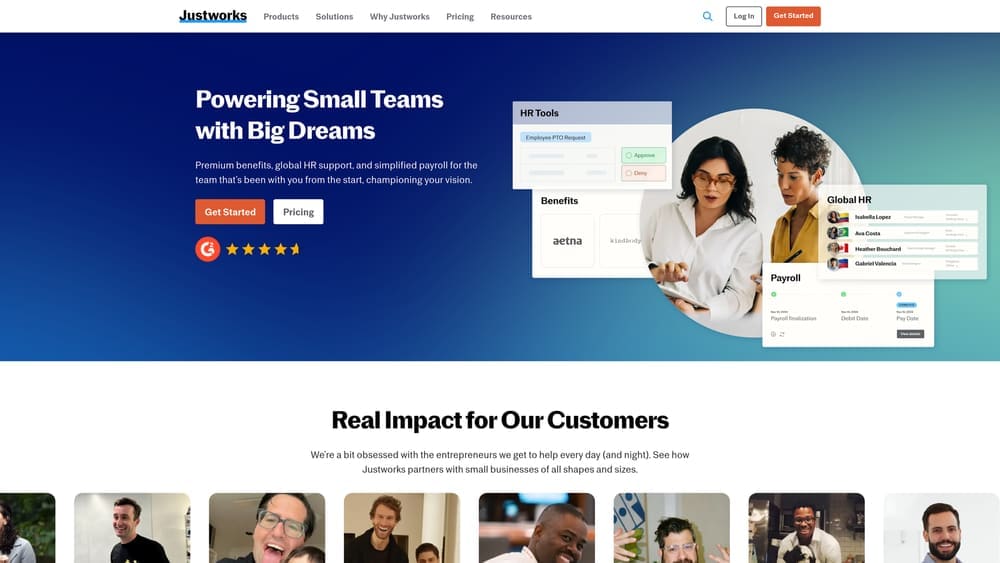
Justworks is a PEO platform known for transparent flat-rate pricing and streamlined benefits administration for growing companies.
Where This Tool Shines
Justworks built its reputation on pricing clarity in an industry notorious for opaque fee structures. Instead of charging a percentage of payroll, they use flat per-employee monthly rates that make budgeting predictable.
The platform excels at benefits administration, giving small businesses access to large-group health insurance rates they couldn’t negotiate independently. Their 24/7 support means you’re not stuck waiting until Monday morning when payroll issues arise.
Key Features
Flat Per-Employee Pricing: Predictable monthly costs with no percentage-of-payroll calculations or surprise administrative fees.
Large-Group Health Insurance Access: Leverage pooled buying power for better rates on medical, dental, and vision plans.
Built-In Compliance Support: Automatic tax filing, workers’ comp administration, and regulatory updates handled by the PEO.
24/7 HR Support: Access to certified HR professionals whenever issues arise, not just during business hours.
Employee Self-Service Portal: Team members manage their own benefits enrollment, PTO requests, and document access.
Best For
Companies with 10-100 employees that want PEO services without complex pricing models. Works well for businesses in competitive hiring markets where benefits quality matters but internal HR headcount doesn’t make sense yet.
Pricing
Starts at $59 per employee per month for the basic plan, with higher tiers adding premium benefits options and additional HR services.
3. Rippling
Best for: Companies wanting flexibility to choose PEO services or build their own HR stack
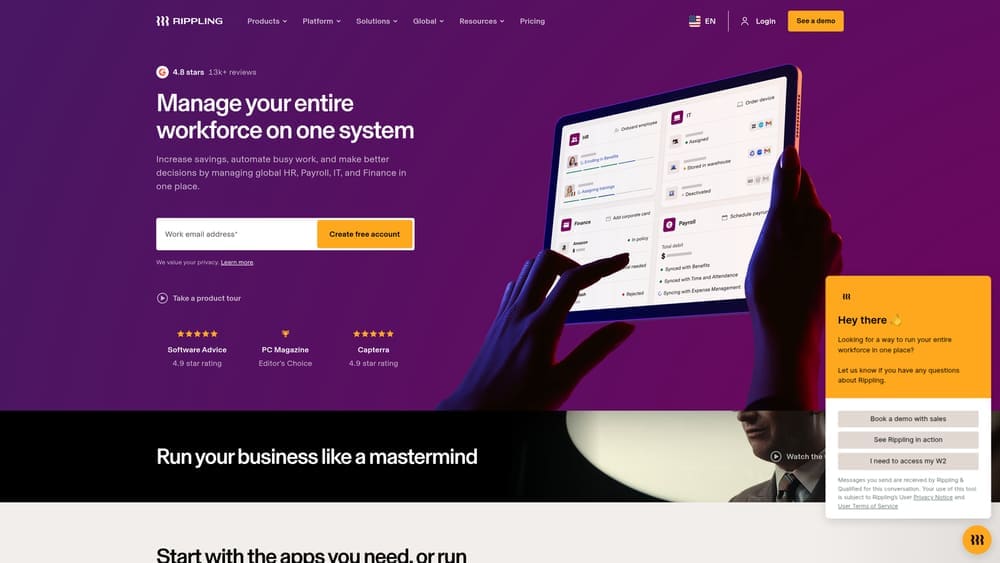
Rippling is a unified workforce platform that can operate as a PEO or standalone HR software with extensive integration capabilities across 500+ business applications.
Where This Tool Shines
Rippling breaks the traditional either-or choice by offering both PEO and non-PEO options on the same platform. You can start with just payroll and HR software, then add PEO services later if your compliance burden grows.
The integration ecosystem is genuinely impressive. Rippling connects HR data with IT systems, allowing you to provision software access, manage devices, and handle onboarding workflows from a single interface. This matters when you’re tired of manually syncing employee data across six different tools.
Key Features
PEO and Non-PEO Options: Choose co-employment services or maintain full employer status while using the same platform.
500+ App Integrations: Connect payroll and HR data with accounting, project management, and business tools automatically.
IT and Device Management: Provision laptops, software licenses, and access permissions tied directly to HR records.
Automated Compliance Workflows: Handle multi-state tax registration, benefits administration, and regulatory reporting without manual tracking.
Custom Workflow Builder: Create approval chains and automated processes tailored to your operational needs.
Best For
Tech-forward companies that value integration depth and want the option to scale PEO services up or down as business needs change. Particularly strong for remote-first teams managing distributed employees and equipment.
Pricing
Core platform starts at $8 per user per month. PEO pricing varies based on employee count and services selected, typically higher than standalone software but lower than traditional PEOs.
4. Gusto
Best for: Building an HR software stack starting with reliable payroll infrastructure
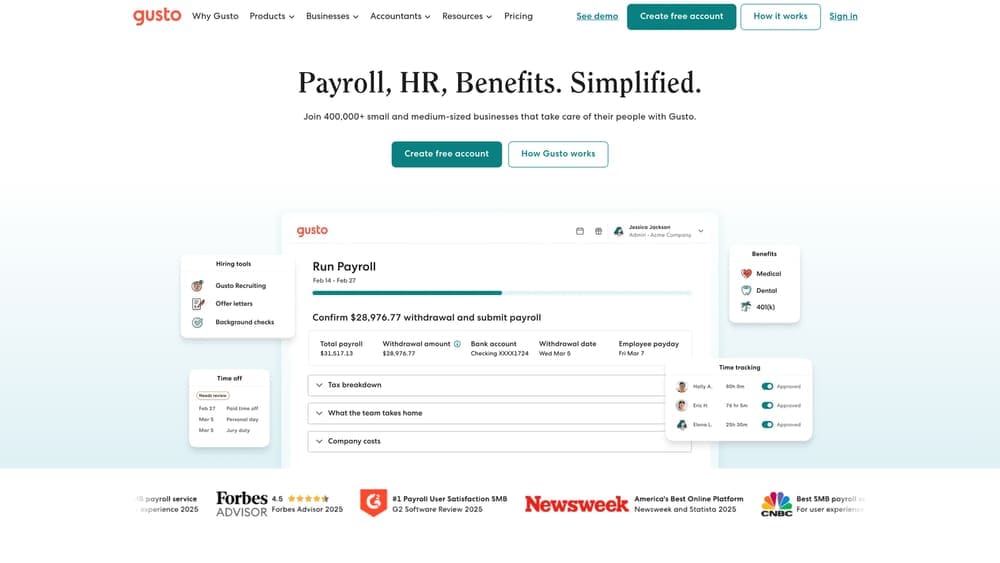
Gusto is a payroll-first platform with HR tools that serves as a foundation for companies assembling their own technology stack.
Where This Tool Shines
Gusto nails the payroll fundamentals—tax filing, direct deposit, contractor payments—without the bloat of features you won’t use. The interface is clean enough that you don’t need an HR degree to run payroll correctly.
Where it gets valuable is the modular approach. You can start with just payroll, then layer in benefits administration, time tracking, or PTO management as your needs evolve. This beats paying for a full PEO when you only need payroll handled reliably.
Key Features
Full-Service Payroll with Tax Filing: Automated payroll runs with federal, state, and local tax calculations and submissions.
Benefits Administration: Manage health insurance, 401(k) contributions, and commuter benefits through integrated workflows.
Time Tracking and PTO Management: Track hours worked and leave balances with employee self-service access.
Basic HR Document Storage: Centralized repository for offer letters, handbooks, and compliance documents.
Contractor Payment System: Handle 1099 payments and tax forms for freelancers and contract workers.
Best For
Companies with 5-75 employees that need solid payroll infrastructure but want to choose separate tools for recruiting, performance management, or other HR functions. Good fit for businesses with straightforward payroll needs and some internal HR capability.
Pricing
Starts at $40 per month base fee plus $6 per person per month. Higher tiers add benefits administration and HR support for additional per-employee costs.
5. BambooHR
Best for: Centralizing employee data and HR workflows without payroll complexity
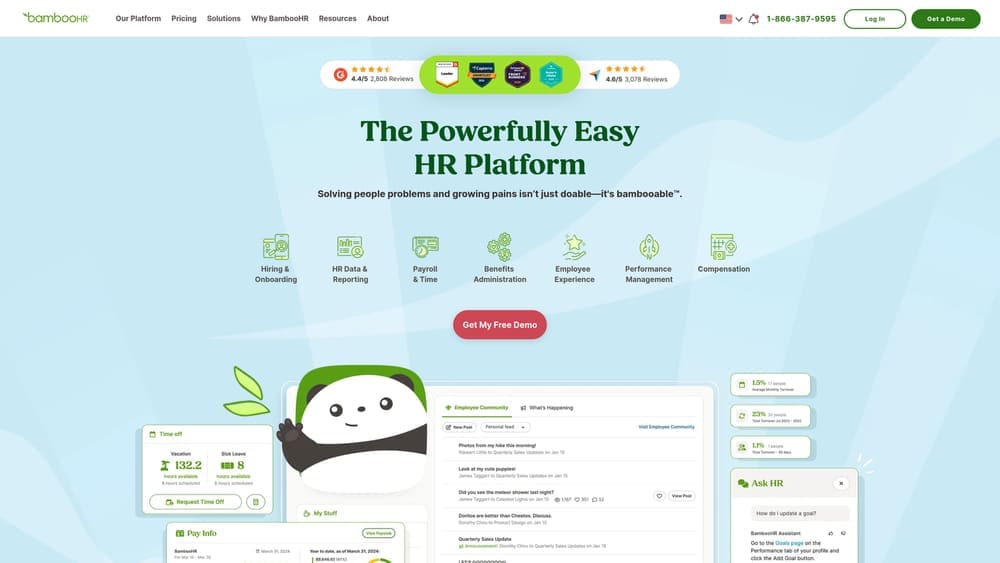
BambooHR is a standalone HRIS focused on employee data management, performance tracking, and HR process automation.
Where This Tool Shines
BambooHR solves the “where is that employee’s information?” problem that plagues growing companies. It’s the central database for everything employee-related—contact details, job history, performance reviews, time-off balances.
The applicant tracking system is legitimately useful for companies doing regular hiring. You can manage job postings, candidate pipelines, and interview scheduling without paying for a separate recruiting platform. The employee self-service portal reduces the “HR, can you update my address?” requests that eat up admin time.
Key Features
Centralized Employee Database: Single source of truth for employee information, documents, and organizational structure.
Performance Management Tools: Track goals, conduct reviews, and document feedback in structured workflows.
Applicant Tracking System: Post jobs, manage candidates, and coordinate hiring without separate recruiting software.
Employee Self-Service Portal: Let team members update personal information, request time off, and access documents independently.
Custom Reporting: Build reports on headcount, turnover, time-off usage, and other HR metrics without spreadsheet exports.
Best For
Companies with 25-500 employees that have payroll handled elsewhere but need better employee data management and HR process structure. Works well when you already have accounting or finance managing payroll and just need the people operations layer.
Pricing
Custom pricing based on employee count, typically $6-8 per employee per month. Implementation fees may apply for larger organizations.
6. TriNet
Best for: Companies wanting industry-specific PEO services with premium benefits access
TriNet is a full-service PEO offering industry-tailored packages with access to Fortune 500-level benefits for small and mid-sized businesses.
Where This Tool Shines
TriNet’s industry-specific approach means their HR consultants actually understand the operational realities of your business. Their tech industry package, for example, includes equity management support and immigration services that generic PEOs don’t handle well.
The benefits access is genuinely premium. You’re getting health insurance options, retirement plans, and ancillary benefits that would be impossible to negotiate as a 50-person company. The risk mitigation services—employment practices liability insurance, workers’ comp management—shift real liability off your plate.
Key Features
Industry-Tailored PEO Solutions: Specialized packages for technology, financial services, nonprofits, and other sectors with unique HR needs.
Premium Health Insurance Options: Access to top-tier medical, dental, and vision plans through large-group purchasing power.
Risk Mitigation Services: Employment practices liability coverage, workers’ compensation administration, and safety consulting.
Strategic HR Consulting: Dedicated HR advisors who understand your industry’s compliance landscape and talent challenges.
Equity and Stock Plan Administration: Support for managing employee stock options and equity compensation (particularly relevant for tech companies).
Best For
Companies with 20-500 employees in industries with complex compliance requirements or competitive talent markets. Particularly strong for businesses that need premium benefits to attract talent but lack the scale to negotiate those benefits independently.
Pricing
Custom pricing based on employee count, industry, and service level. Typically structured as a percentage of payroll or per-employee monthly fee ranging from $100-200+ per employee depending on services.
7. Deel
Best for: Managing international employees and contractors across multiple countries
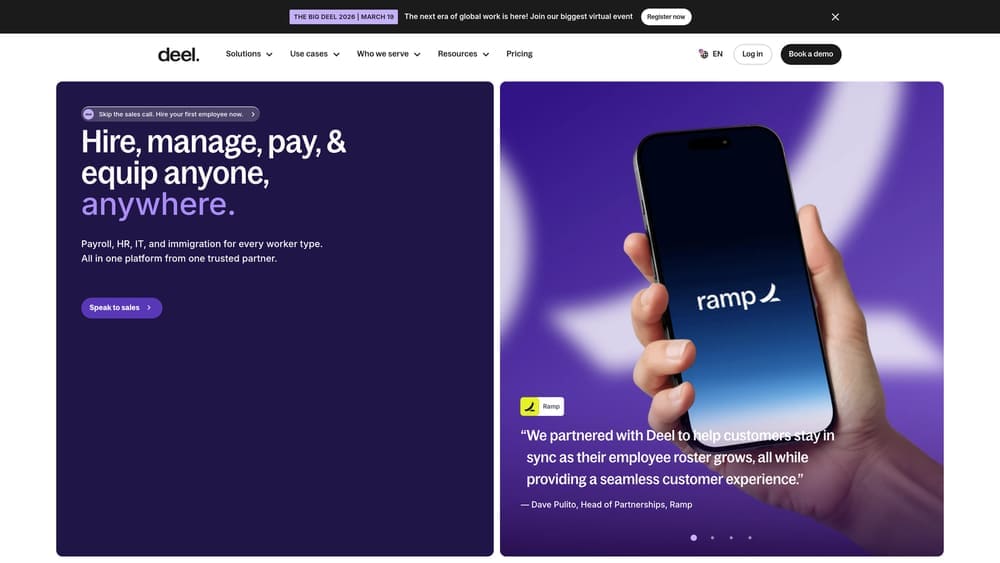
Deel is a global payroll and compliance platform that handles the complexity of hiring employees and contractors in 150+ countries.
Where This Tool Shines
Deel exists because hiring internationally without it is a compliance nightmare. Each country has different employment laws, tax requirements, and mandatory benefits. Deel’s Employer of Record service lets you hire someone in Germany or Singapore without establishing a legal entity there.
The contractor management side is equally valuable. You can pay freelancers in their local currency, handle tax documentation across jurisdictions, and maintain compliant independent contractor relationships—all from one platform. This matters when you’re scaling a remote team and don’t want to become an expert in 15 countries’ labor laws.
Key Features
Payroll in 150+ Countries: Process payroll for employees and contractors globally with local tax compliance and currency handling.
Employer of Record Services: Hire international employees through Deel’s legal entities without setting up your own foreign subsidiaries.
Contractor Management and Payments: Manage freelancer agreements, invoices, and payments with automated tax form generation.
Built-In Compliance by Country: Stay compliant with local employment laws, mandatory benefits, and termination requirements automatically.
Equity and IP Management: Handle stock option grants and intellectual property agreements across international team members.
Best For
Remote-first companies hiring internationally, businesses expanding into new markets without local HR infrastructure, or organizations managing a mix of employees and contractors across multiple countries. Less relevant if your entire team is domestic.
Pricing
Starts at $49 per contractor per month for contractor management. Employer of Record services start at $599 per employee per month, varying by country and service level.
8. Paychex Flex
Best for: Mid-market companies wanting scalable options from basic payroll to full PEO
Paychex Flex is a modular platform offering payroll services up to full PEO solutions, designed to scale with growing businesses.
Where This Tool Shines
Paychex’s strength is flexibility without platform switching. You can start with just payroll, add HR administration as you grow, then move to full PEO services if compliance burden increases—all on the same system.
The platform handles complexity well. Multi-state payroll, union reporting, garnishment processing, retirement plan administration—the unglamorous operational details that break simpler systems. Their client service model assigns dedicated reps rather than routing you through generic support queues, which matters when payroll issues need immediate resolution.
Key Features
Modular Service Tiers: Choose from payroll-only, payroll plus HR, or full PEO services based on current needs.
Payroll to Full PEO Options: Scale services up or down without migrating to a new platform as business requirements change.
HR Administration Tools: Employee onboarding, benefits enrollment, compliance tracking, and document management.
Retirement Services: 401(k) plan administration, recordkeeping, and fiduciary support integrated with payroll.
Dedicated Service Representatives: Assigned account reps who understand your business instead of rotating support staff.
Best For
Companies with 50-500 employees that need enterprise-grade payroll capabilities but want flexibility to add or remove HR services over time. Strong fit for businesses with complex payroll needs—multiple states, varied pay structures, or specialized reporting requirements.
Pricing
Custom pricing based on employee count and services selected. Payroll-only typically starts around $40 base plus per-employee fees. PEO services priced individually based on scope.
9. Zenefits
Best for: Budget-conscious companies prioritizing benefits administration over full HR infrastructure
Zenefits is an affordable HR software platform focused on benefits administration with optional payroll and basic HR tools.
Where This Tool Shines
Zenefits makes benefits enrollment less painful. The platform guides employees through health insurance selection, FSA setup, and ancillary benefits with a clean interface that doesn’t require HR translation.
At $8 per employee per month for the base tier, it’s one of the most affordable ways to digitize benefits administration and onboarding. The compliance calendar helps track deadlines for open enrollment, ACA reporting, and other regulatory requirements that are easy to miss when managing benefits manually.
Key Features
Benefits Administration Platform: Streamlined enrollment workflows for health insurance, retirement plans, and voluntary benefits.
Digital Onboarding: New hire paperwork, I-9 verification, and document collection handled electronically.
Time and Scheduling Tools: Basic time tracking, PTO management, and shift scheduling for hourly workforces.
Compliance Calendar: Automated reminders for benefits deadlines, regulatory filings, and HR compliance tasks.
Mobile App Access: Employee self-service for benefits changes, time-off requests, and document access from mobile devices.
Best For
Small businesses with 10-75 employees that need affordable benefits administration but don’t require advanced HR features or PEO services. Works well for companies with simple payroll needs who primarily want to modernize benefits enrollment and basic HR workflows.
Pricing
Starts at $8 per employee per month for the Essentials plan. Higher tiers add payroll processing, advanced HR features, and additional integrations at increased per-employee costs.
Making the Right Choice
The PEO versus HR software stack decision comes down to who owns the complexity.
Choose a PEO if you want someone else handling compliance liability, benefits negotiation, and multi-state payroll intricacies. PEOs like Justworks and TriNet make sense when you’re under 100 employees, don’t have dedicated HR staff, and need quality benefits to compete for talent. You’re trading control for operational simplicity and risk transfer.
Build an HR software stack if you need granular control over processes, already have HR expertise in-house, or operate in a niche that PEOs don’t serve well. Tools like Gusto for payroll, BambooHR for employee data, and Deel for international hiring give you flexibility to choose best-in-class solutions for each function. You’re trading bundled convenience for customization and potentially lower costs—but you’re also responsible for making everything work together.
For most companies under 100 employees without dedicated HR resources, a PEO typically delivers better value per dollar spent when you account for total administrative burden. The benefits access alone often justifies the cost difference, and the compliance liability transfer is worth real money in risk reduction.
Before you sign that PEO renewal, make sure you’re not leaving money on the table. Many businesses unknowingly overpay because of bundled fees, hidden administrative markups, and contracts designed to limit flexibility. We give you a clear, side-by-side breakdown of pricing, services, and contract terms—so you can see exactly what you’re paying for and choose the option that truly fits your business. Don’t auto-renew. Make an informed, confident decision.
The cost difference between PEO providers can be substantial—sometimes 30-40% for comparable service levels. Use objective comparisons to understand what you’re actually paying for before committing to any approach.
References & Sources
Government and industry sources referenced throughout this guide:
- IRS — Professional Employer Organization Overview ↗IRS authoritative landing page for PEO definition, classification, and certification.
- NAPEO — Industry Statistics ↗PEO industry size, growth, employment, and average client outcomes.
- NAPEO — What Is a PEO ↗Industry-association overview of how the PEO model works.
- DOL — Wage and Hour Division ↗Federal labor standards that apply under co-employment.
- IRS — Employer Tax Responsibilities ↗Federal employment tax obligations that flow through co-employment.
