
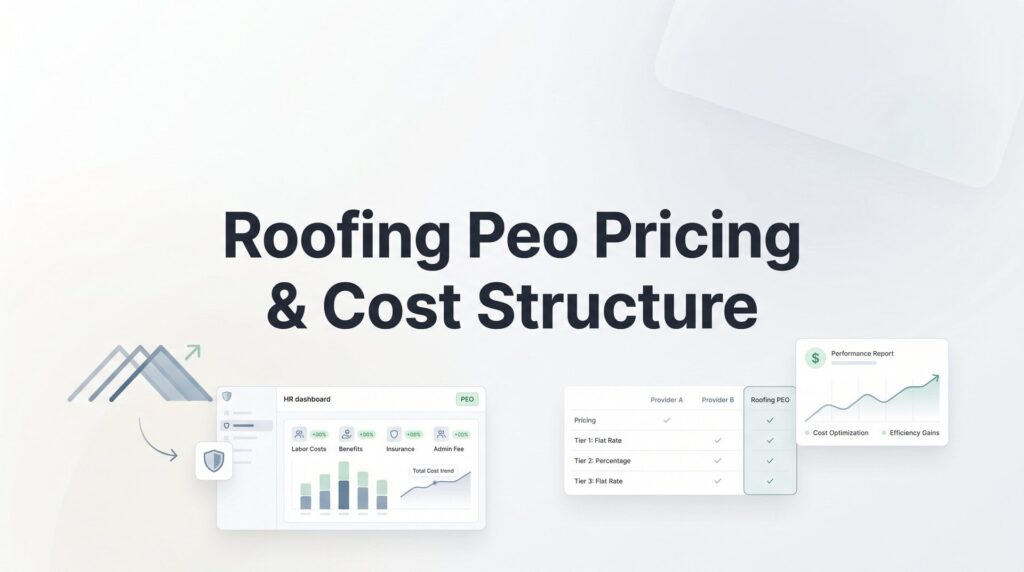
Roofing-specific PEO context. PEO pricing for roofing contractors reflects the specific risk and compliance profile of roofing work. Typical PEPM ranges $145–$200 PEPM (mainstream tier), with Highest construction-trade PEPM because of workers' comp risk pricing — the biggest premium savings opportunity also reflects the highest underlying risk.
Looking for the full Roofing PEO guide? See our PEO for Roofing Contractors pillar page covering the complete industry profile — pain points, recommended PEOs, PEO economics, when each model wins, and a decision framework specific to roofing.
Top Roofing HR & Compliance Pain Points
- OSHA fall protection is non-negotiable. Falls from heights are construction's top fatality category. OSHA 1926.501 requires 100% fall protection above 6 feet on residential roofs. Citations carry $16K–$161K per violation; willful violations expose individuals to criminal liability.
- Workers' comp mod rates can be brutal. Roofing carries the highest workers' comp class-code rates in construction (NCCI 5551). Standalone mods can exceed 1.50, doubling premium vs the base rate. PEO blended pools deliver some of the largest premium savings in any industry.
- Heat illness prevention regulations. California, Washington, Oregon, and several other states require formal heat-illness prevention plans with water-rest-shade requirements. Citations are common during summer enforcement sweeps.
- Seasonal labor with high turnover. Residential roofing has significant seasonal swings and turnover. Onboarding cycles per year can exceed total headcount. PEO onboarding workflows save 8–15 hours per hire.
- 1099 vs W-2 classification scrutiny. Residential roofing has been a state DOL enforcement target for misclassification. State penalties of $5K–$50K per worker plus back-wage exposure.
Where PEO Savings Come From for roofing contractors
Typical mod rate range: 1.20–1.65 (standalone) vs 0.90–1.00 (PEO blended). PEO blended pools typically deliver 30–45% workers\' comp premium savings for roofing operators. The full ROI breakdown:
- Workers' comp pool: 30–45% typical savings on high-mod roofers — the single largest dollar saver
- OSHA fall-protection compliance documentation prevents citations
- Heat-illness prevention plan templates for compliant states
- Return-to-work programs that close lost-time claims faster
For the full PEO pricing framework — PEPM tiers, percent-of-payroll comparison, hidden fees, negotiation levers, and renewal escalator math — see our PEO pricing guide.
Recommended PEOs for roofing contractors
- CoAdvantage: roofing-specific construction pool; aggressive RTW programs critical for high-mod roofers; fall-protection safety consulting
- Insperity: roofing vertical with mod-rate optimization service; multi-state operational depth for commercial roofers
- ADP TotalSource: enterprise-tier commercial roofing operators with federal work
- Paychex Employer Services: mid-market roofing with accounting platform integrations
Roofing PEO — Common Questions
How much workers' comp savings can a roofing contractor expect from a PEO?
Does a PEO help with OSHA fall protection compliance?
What's the workers' comp class code for roofing under a PEO?
How do PEOs handle the seasonal labor swings in residential roofing?
Is a PEO worth it for a roofer with a really good safety record (mod under 0.85)?
Get a Free Roofing PEO Comparison
We score 40+ PEOs against your specific roofing profile — mod rate, multi-state operations, compliance load. Free, delivered in 5–10 business days.
Get My Free Comparison