

If you run a private school, charter, childcare center, tutoring company or training program, there’s usually a point where payroll software stops covering what your office actually needs. Benefits renewals get harder, workers’ comp questions pile up, and nobody on staff owns compliance. These eight options are the ones education employers most often put side by side, chosen for fit with education staffing patterns, benefits and workers’ comp handling, compliance support and pricing transparency.
The decision underneath the list isn’t about software. It’s about who carries HR, benefits and workers’ comp responsibility. Four terms frame it. A PEO (professional employer organization) enters a co-employment relationship with you: it typically runs payroll, files payroll taxes under its own accounts, sponsors a pooled benefits plan and shares certain HR and compliance duties. A CPEO is a PEO certified by the IRS, which affects how federal employment tax responsibility is handled. An ASO (administrative services organization) provides similar services without co-employment, so you remain the employer of record for benefits and insurance. A payroll-only provider processes pay and filings, and you keep everything else.
Quick Comparison of the Eight Options
- PEO Metrics: best for schools deciding between a PEO and payroll-only; pricing on the website; compares PEO providers and pricing in one place before you commit to a vendor.
- Paychex: best for schools that want to price PEO and payroll-only from one vendor; quote-based; offers both models under one brand.
- Insperity: best for mid-sized private schools without in-house HR; quote-based; hands-on HR advisory for employers with no HR department.
- TriNet: best for schools that want a broad benefits menu to compete for teachers; quote-based; industry-oriented PEO packaging.
- Justworks: best for small private schools and tutoring businesses; see website for pricing; self-service platform built for small teams.
- ADP TotalSource: best for multi-campus schools with varied staff types; quote-based; fits schools already on ADP payroll.
- Gusto: best for small schools and tutoring centers that keep control of benefits; see website for pricing; a clear payroll-only option with no co-employment.
- OnPay: best for camps and small programs with seasonal staff; see website for pricing; flat-rate payroll pricing suited to fluctuating headcount.
1. PEO Metrics
PEO Metrics is the company that publishes this article, so weigh this entry accordingly. It is a PEO comparison and consulting service, not a PEO or a payroll provider. Its job is to help an employer weigh PEO providers and payroll alternatives side by side before signing anything, which suits a school business manager who has never bought co-employment services and doesn’t know what a fair quote looks like.
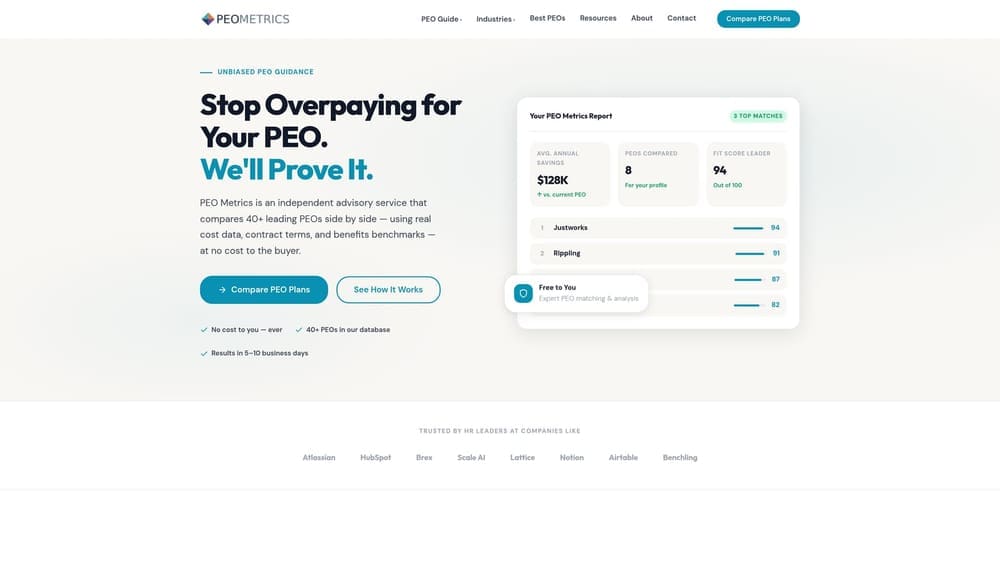
What it does differently from everything else here: every other entry sells you its own service. PEO Metrics puts providers and pricing in one view, so you can see how a school-friendly PEO stacks up against a payroll-only setup instead of hearing each vendor’s case in isolation.
- Side-by-side PEO provider comparisons, so you can see differences in services and contract terms without collecting a dozen separate pitches.
- Pricing analysis that looks past the headline per-employee figure, which matters when 10-month pay schedules and seasonal staff distort simple averages.
- Detailed provider metrics that give you more to evaluate than a brochure does.
- Guidance on PEO versus alternatives, including whether payroll-only or an ASO-style arrangement might fit better.
Integrations don’t apply, since this is an advisory service. Setup is a conversation rather than an implementation, and you or your business manager would run it.
The limits are plain. PEO Metrics doesn’t process your payroll, hold your benefits plan or carry your workers’ comp. It may also receive vendor placement fees, so you should treat it as a comparison aid and still verify any provider’s eligibility for education risk directly. Pricing details are on the PEO Metrics website.
Best for: Schools deciding between a PEO and payroll-only that want a data-driven comparison.
2. Paychex
Paychex offers both PEO and payroll/HR services, which lets a school price the two models from a single vendor. That’s the main reason to put it on a shortlist: you can see what co-employment adds over payroll-only without changing the underlying brand, platform or sales relationship.
The question it answers best is “what exactly would a PEO give us beyond what we have now?” A representative can quote both structures against your headcount and benefits situation.
- PEO services that move benefits, workers’ comp and certain compliance duties into a shared arrangement.
- Payroll processing, including filings, for schools that decide co-employment isn’t worth it.
- HR support so a lean office has someone to ask about policies and employee issues.
- Benefits administration to reduce the manual enrollment work that lands on a business manager each fall.
Paychex lists accounting and time-tracking integrations, but verify the current list against the systems your school uses. Implementation effort varies by which model you choose, and PEO onboarding is generally heavier than a payroll switch because benefits and insurance move too.
Pricing is quote-based, and PEO eligibility depends on your size and the nature of your operation, so confirm that education or childcare work is accepted. A vendor selling both models also has an incentive to place you in whichever one it offers best, so ask for both quotes in writing.
Best for: Schools wanting to price PEO and payroll-only from the same vendor.
3. Insperity
Insperity is a full-service PEO built around dedicated HR support. For a private school with a head and a business manager but no actual HR department, the draw is having a named HR representative to call about a terminated contract, a leave request or a handbook question.
Compared with the more self-service options on this list, Insperity leans toward advisory help. It’s the closest thing here to outsourcing the HR function rather than just the paperwork.
- A dedicated HR representative who handles employee relations questions you’d otherwise route to counsel or guess at.
- Benefits administration, giving staff access to plans sized for a larger pool than your school could assemble alone.
- Payroll built into the same service, so pay and HR records live together.
- Risk and compliance support covering areas like workers’ comp and employment law changes.
Check the official site for current integrations. Setup involves moving payroll, benefits and insurance under the PEO, so plan for a transition rather than a quick software switch, ideally timed away from open enrollment and the start of the school year. Your business office would manage the relationship day to day.
Insperity is typically aimed at mid-sized employers, so very small schools may not qualify or may find it a poor fit. Pricing is quote-based and moves with headcount, benefits selections and the services you take.
Best for: Mid-sized private schools lacking in-house HR.
4. TriNet
TriNet is a PEO with benefits and compliance services and industry-focused offerings. Its pitch for a school is breadth of benefits, which matters when you’re competing for teachers against public districts that offer pensions and established health plans.
Its distinguishing trait here is industry-oriented packaging. Whether education is covered is something you need to confirm directly, because not every PEO or carrier accepts education or childcare risk.
- A benefits marketplace that gives you more plan choices than a small school’s broker may be able to source.
- Payroll tied to the benefits and HR records.
- HR compliance support for employment rules that vary by state.
- Industry-specific plans, though you should verify whether any apply to education.
Check the official site for current integrations. Expect a full onboarding, and expect your business manager or HR lead to own the relationship and handle enrollment cycles.
The key limitation is eligibility. Industry acceptance and carrier appetite for education must be confirmed, and that includes workers’ comp for roles like coaches, bus drivers or childcare staff. Pricing is quote-based and typically varies with headcount, benefits choices and risk class.
Best for: Schools that want a broad benefits menu to compete for teachers.
5. Justworks
Justworks is a technology-forward PEO designed for small employers. The experience centers on a self-service platform where employees and administrators handle most tasks themselves, which fits a small school or tutoring business with one person wearing the HR hat.
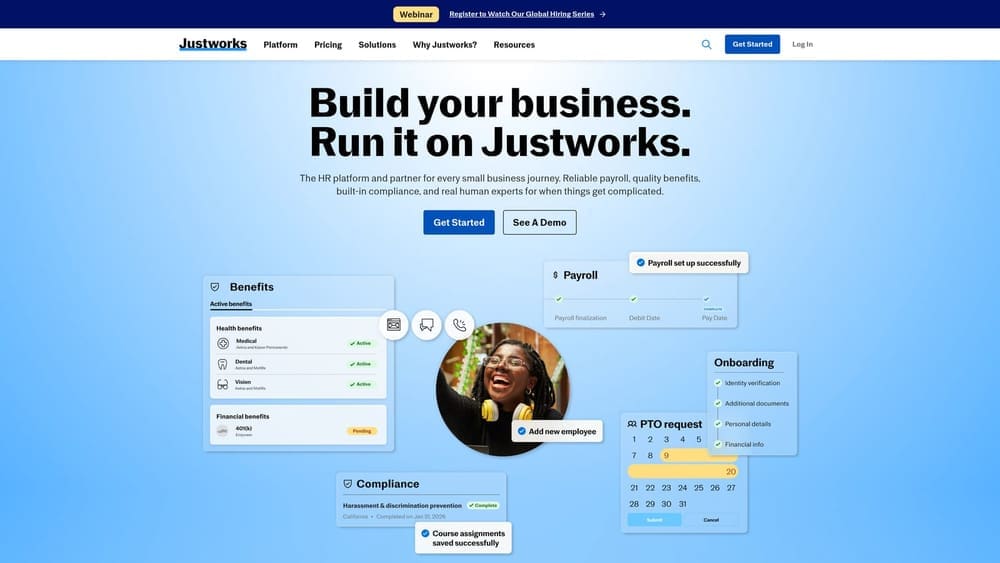
Where it differs from the other PEOs on this list is the emphasis on small teams and self-service over a dedicated HR advisor.
- A self-service platform so staff can handle routine changes without calling the office.
- Payroll in the same system as benefits, which cuts duplicate data entry.
- Benefits access through the PEO’s pooled arrangement.
- Compliance support for a team that has no specialist.
Check the official site for current integrations. Setup is usually lighter than with high-touch PEOs, though moving benefits and insurance still takes planning. Whoever manages admin at your school runs it.
The tradeoff is less hands-on HR consulting than the high-touch PEOs, so confirm what each service tier includes. Also confirm eligibility for education and childcare work and whether your pay schedules, including 10-month contracts, are handled the way you need. Pricing details are on the Justworks website and typically depend on headcount and plan selections.
Best for: Small private schools and tutoring businesses.
6. ADP TotalSource
ADP TotalSource is ADP’s PEO offering for employers wanting payroll, benefits and HR under one co-employment arrangement. Its advantage is continuity: a school already running payroll on ADP can look at co-employment without changing ecosystems.
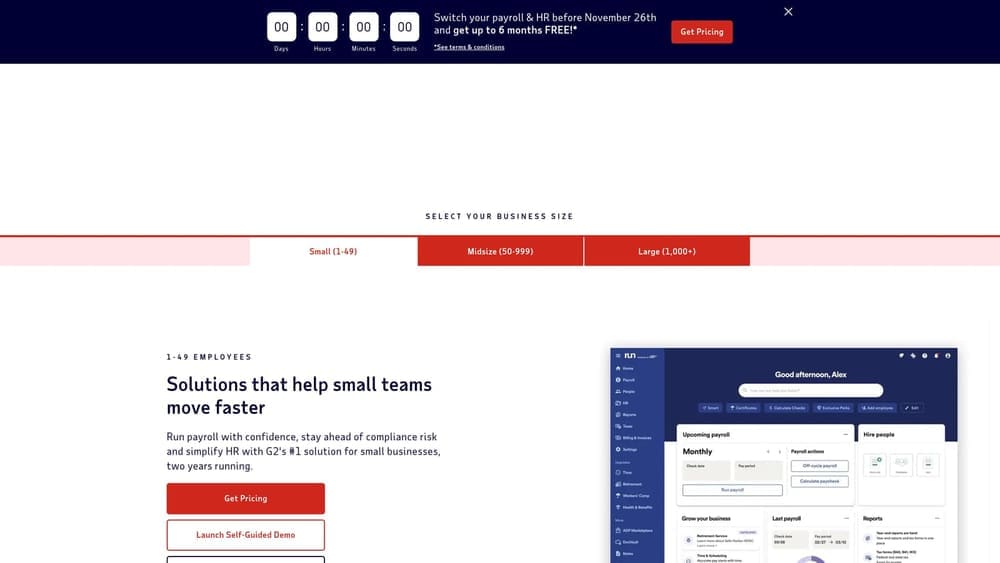
That makes it a natural comparison for multi-campus schools or networks with a mix of teachers, administrators, aides, hourly support staff and seasonal workers, where payroll complexity is already high.
- PEO co-employment that shifts shared employer responsibilities to the PEO.
- Payroll that can accommodate different pay types across staff groups.
- Benefits for a varied workforce, from full-time faculty to part-time staff.
- HR compliance support across the states where you operate.
Integrations sit inside the ADP ecosystem, so verify specifics for the systems you use. Implementation effort depends on whether you’re migrating from ADP payroll or starting fresh, and an HR lead or business office manager would typically run it.
Minimums and eligibility must be verified, including whether education operations and your headcount qualify. Pricing is quote-based and moves with headcount, benefits and risk. Note that the ADP website covers the whole company, so ask specifically for TotalSource terms.
Best for: Multi-campus schools with varied staff types.
7. Gusto
Gusto is a payroll-first platform with benefits administration, and it is not a PEO. That makes it the cleanest example on this list of the alternative to co-employment: you stay the employer for everything, and Gusto helps you run it.
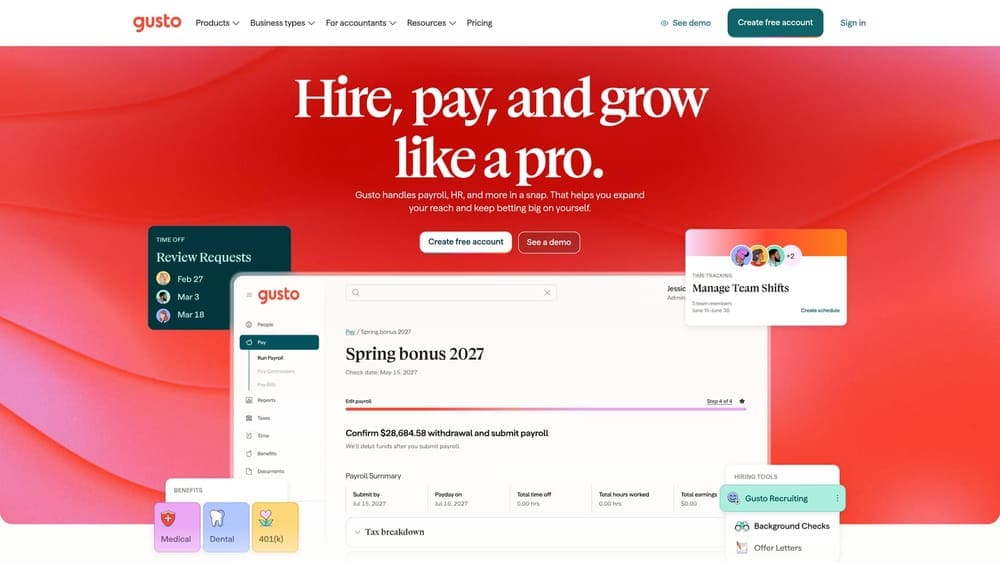
The distinguishing point is the absence of co-employment. Your school keeps its own workers’ comp policy, its own benefits carriers and its own broker relationships.
- Payroll that handles pay runs and tax calculations.
- Benefits administration so you can offer plans from carriers you already work with and manage enrollment online.
- Compliance filings that cover routine payroll tax paperwork.
- Employee self-service so staff can see pay stubs and update details themselves.
Gusto lists accounting and time-tracking integrations; verify the current list against your tools. Setup is typically quicker than a PEO move because insurance and benefits plans don’t need to transfer. A business manager can run it.
The limitation is responsibility. The school keeps workers’ comp, benefits carriers and HR compliance, so a school with no HR staff and weak benefits access may find gaps remain. Pricing details are on the Gusto website and generally depend on plan tier and headcount.
Best for: Small schools and tutoring centers keeping control of benefits.
8. OnPay
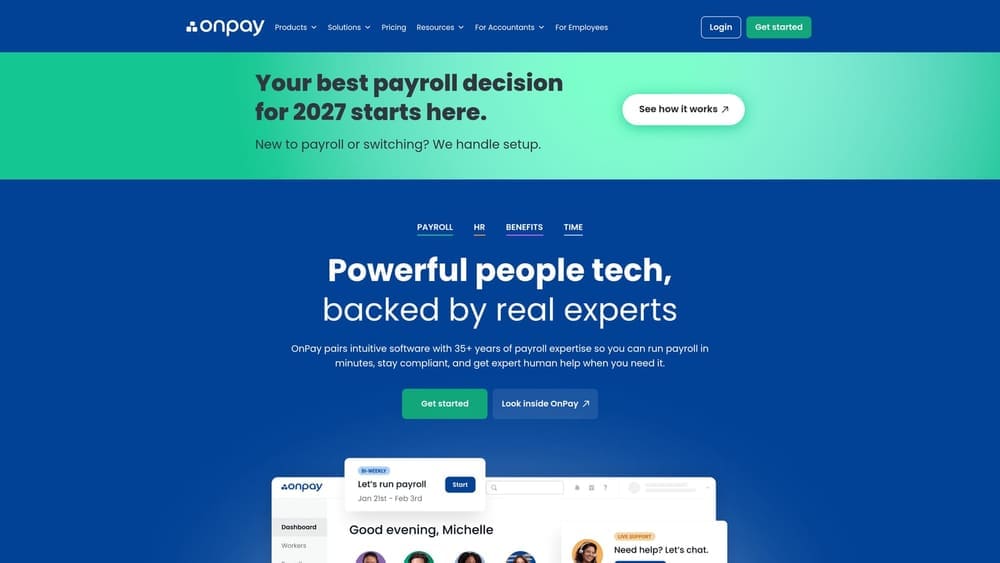
OnPay is a payroll provider with simple pricing for small employers. Its distinguishing feature on this list is flat-rate pricing, which can suit organizations whose headcount swings, such as summer camps, after-school programs and seasonal tutoring operations.
- Payroll that covers regular and seasonal pay runs.
- Benefits administration that lets you manage plans bought elsewhere.
- Compliance filings to keep routine tax paperwork on track.
- Multiple pay types, useful when you have salaried teachers, hourly aides and stipended coaches in the same organization.
Check the official site for current integrations. Setup is light compared with a PEO and a small administrative team can run it.
OnPay is payroll-only. There’s no pooled benefits buying power and no co-employment, so workers’ comp, benefits carriers and HR compliance stay with you. If your pain is benefits access or compliance burden, this won’t fix it. Pricing details are on the OnPay website; confirm how the structure treats months when staff aren’t paid.
Best for: Camps and small programs with seasonal staff.
Matching the Option to Your School’s Situation
Payroll-only is usually enough when your staff is small, you already have a broker you trust and benefits in place, and someone in the building can handle compliance questions. Gusto and OnPay fit that profile, with OnPay’s flat pricing leaning toward seasonal programs. A PEO starts making sense when no one owns HR, your benefits access is weak compared with what teachers expect, or the compliance burden is eating the business manager’s time. Insperity suits mid-sized schools that need hands-on help, Justworks suits small teams comfortable with self-service, and ADP TotalSource suits multi-campus operations already on ADP. Paychex is useful if you want both models quoted together.
Before you decide, avoid the common mistakes: comparing only per-employee price, overlooking academic-year and 10-month pay schedules, assuming every PEO accepts education or childcare risk, and forgetting that nonprofit schools may have different benefits and unemployment tax setups. Confirm minimums, states served, pricing and education eligibility with each vendor as of your evaluation date. This article is informational, not legal, tax or benefits advice. Also note that PEO Metrics may receive vendor placement fees, so use it as one input alongside direct vendor verification. For background, see [LINK CHECK: PEO vs payroll guide] and [LINK CHECK: PEO comparison hub].
Before you sign that PEO renewal, make sure you’re not leaving money on the table.
Many businesses unknowingly overpay because of bundled fees, hidden administrative markups, and contracts designed to limit flexibility. We give you a clear, side-by-side breakdown of pricing, services, and contract terms, so you can see exactly what you’re paying for and choose the option that truly fits your business.
