Contract reviews, exit planning, transition steps, and what happens when you leave a PEO.
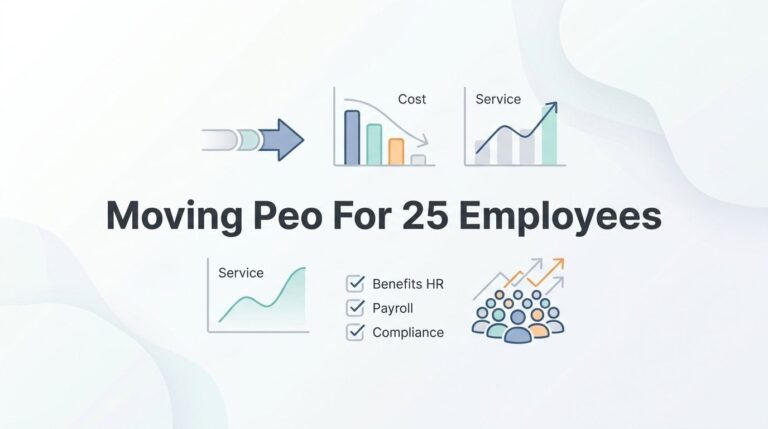
At 25 employees, moving PEOs demands a headcount-specific approach — one that balances contract exit risk, benefits continuity, and transition timing without the buffer a larger company has. This guide breaks down seven practical strategies to help 25-person companies switch PEOs cleanly, negotiate from a position of strength, and avoid the costly mistakes that derail transitions at this size.
Switching senior care and assisted living facilities to a PEO demands a transition strategy built around licensed staff, state compliance requirements, and uninterrupted 24/7 care delivery. This guide covers the real steps operators need — from workers’ comp structuring to payroll cutover — so the move strengthens your facility without putting residents or survey readiness at risk.
Switching a veterinary practice to a PEO offers real advantages — stronger benefits, consolidated HR, and reduced compliance risk — but the transition requires careful planning to avoid payroll gaps or benefit lapses. This guide covers the full operational process, from pre-switch audits and provider evaluation to contract review, team communication, and what to expect in the first 90 days.
PEO contracts carry hidden risks for auto dealerships because of their complex, multi-pay-type workforces — commissioned salespeople, flat-rate technicians, and F&I managers don’t fit the standard employer mold most PEO agreements were written for. This guide walks GMs, controllers, and dealer principals through the specific contract clauses that deserve close scrutiny before signing.
PEO contracts for auto dealerships contain exit mechanics — notice periods, auto-renewal windows, early termination fees, and workers’ comp tail coverage provisions — that most owners only read closely when they’re already trying to leave. This guide breaks down the Auto Dealerships PEO Cancellation Policy terms dealers most commonly overlook, so you can negotiate smarter upfront or plan a cleaner exit.

Switching a behavioral health clinic to a PEO is more complex than a standard HR transition — credentialing requirements, workers’ comp class codes, HIPAA obligations, and co-employment sensitivities all demand a deliberate, clinic-specific approach. This guide walks through each stage of the process so clinical operations stay intact and compliance gaps don’t surface after the handoff.
Switching Urgent Care Centers to a PEO is a high-stakes operational move that goes well beyond basic HR migration — clinical licensing requirements, variable scheduling, workers’ comp job codes, and compliance gaps all demand a structured approach. This guide walks urgent care operators through seven concrete steps to execute the transition without disrupting the center’s day-to-day obligations.

Switching a physical therapy practice to a PEO can offload payroll, benefits, workers’ comp, and compliance — but only if the transition is handled carefully. This guide walks PT practice owners through every stage of the process, from evaluating fit and selecting a healthcare-savvy provider to executing a clean staff transition without operational disruption.
Switching a dental practice to a PEO carries unique risks that generic transition guides don’t address — from hygienist licensing obligations and OSHA bloodborne pathogen compliance to workers’ comp class codes and mixed pay structures. This step-by-step guide walks dental practice owners through the transition in the right order, so avoidable disruptions stay avoided.

Switching a food manufacturing company to a PEO involves far more complexity than a standard HR transition — from high-risk workers’ comp classifications and multi-shift payroll to OSHA compliance and seasonal workforce swings. This step-by-step guide covers the exact process food manufacturers need to make the switch without payroll gaps, benefits disruptions, or costly reclassification errors.
