Contract reviews, exit planning, transition steps, and what happens when you leave a PEO.

Switching restaurants to a PEO can simplify tipped wage management, workers’ comp, and high-turnover HR challenges, but the transition requires careful handling of tip credits, split shifts, and compliance variables that generic onboarding processes often miss. This step-by-step guide walks restaurant operators through the process of moving to a PEO without disrupting payroll or creating new compliance gaps.
Switching bars and breweries to a PEO requires careful sequencing to avoid payroll gaps, coverage lapses, and compliance issues specific to tipped employees and alcohol licensing. This step-by-step guide covers how to evaluate PEO fit, time the transition around your operational calendar, and go live without disrupting the high-turnover, seasonally complex workforce that defines the hospitality industry.
Switching franchise owners to a PEO involves navigating co-employment relationships, franchisor compliance requirements, and existing payroll setups across multiple locations simultaneously. This guide walks through the actual transition process in the correct sequence, helping multi-unit operators and franchise HR leaders consolidate administration, reduce liability, and avoid payroll gaps or workers’ comp lapses along the way.
Retail PEO contracts contain standard-looking language that can create serious financial surprises for retailers dealing with seasonal staffing swings, high turnover, and part-time workforces. This guide breaks down the specific retail PEO contract terms that carry the most risk — from billing definitions and mid-year rate triggers to exit clauses — so you know exactly what to negotiate before signing.
Switching franchise groups to a PEO requires careful coordination across multiple locations, state registrations, and franchisor agreements to avoid payroll gaps, coverage lapses, and compliance exposure. This step-by-step guide walks multi-unit franchise operators through the full transition process, whether exiting a mandated PEO or moving to a better-fit provider across their entire portfolio.
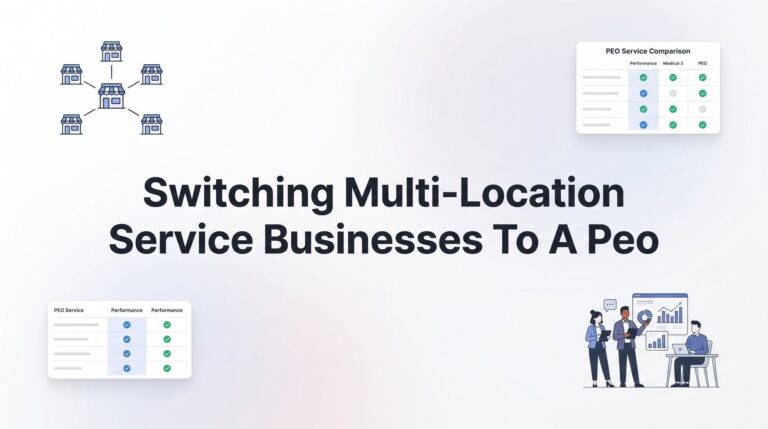
Switching a multi-location service business to a PEO requires a fundamentally different approach than single-location transitions, especially when managing field crews, multi-state payroll, and separate benefit structures across branches. This guide walks HVAC companies, roofing contractors, plumbing franchises, and similar businesses through a structured transition process designed to keep operations running without the chaos.
Switching ecommerce businesses to a PEO requires careful sequencing to avoid payroll disruptions during peak seasons, multi-state compliance gaps, and workforce transition risks unique to ecommerce operations. This step-by-step guide covers the full migration process, from evaluating PEO providers to managing seasonal workforce complexity and getting your team transitioned without operational disruption.
Switching cybersecurity firms to a PEO can consolidate complex HR, compliance, and benefits administration without disrupting your specialized team — but the transition requires careful planning around employment restructuring, sensitive data migration, and government contract requirements unique to the industry.
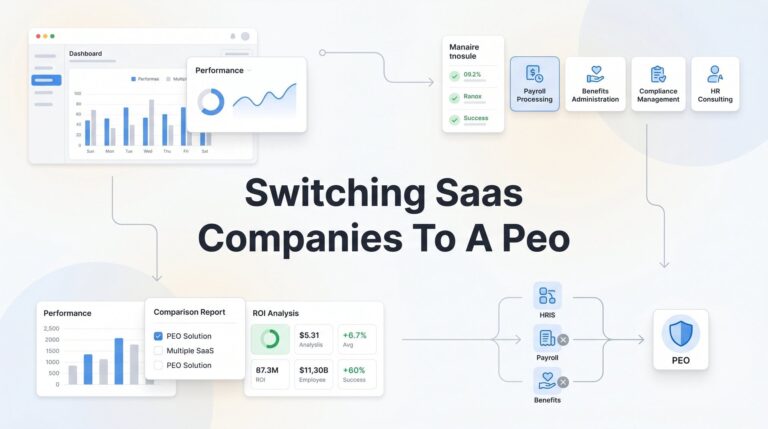
Switching SaaS companies to a PEO requires more than signing a contract — it demands a structured transition process covering HR audits, provider evaluation, and employee communication to avoid compliance gaps and disruption. This guide walks through each practical step, tailored to the specific scaling challenges SaaS companies face as headcount and complexity grow.
Switching tech startups to a PEO between 15 and 50 employees can free up significant operational bandwidth and reduce HR costs, but the transition requires careful planning to avoid payroll disruptions, compliance gaps, and employee confusion. This guide walks through the practical steps to make the switch without derailing your startup’s day-to-day operations.
