

If you own or run a gym, boutique studio or small fitness chain, your payroll looks different from an office’s. You have part-time instructors on class-by-class schedules, trainers whose 1099 status may not hold up, front-desk staff who turn over quickly, and physical work that makes workers’ comp a real line item. This list is for owners and HR leads deciding whether a PEO, or something lighter, fits that setup.
We looked at each option for fit with small, hourly, high-turnover service businesses: how pricing works, how workers’ comp is handled, benefits for part-time staff, onboarding support, and whether the product is a true PEO or an alternative. Details on pricing, minimums and eligibility change, so confirm each one with the vendor in writing before you decide.
Quick Comparison of the Providers
- PEO Metrics: best for gym owners comparing several PEO quotes; pricing on request via the website; the only entry here that compares multiple PEOs independently rather than selling one.
- Justworks: best for boutique studios with a small team; see website for pricing; a self-service, software-first PEO experience.
- Gusto: best for single-location studios not ready for a PEO; see website for pricing; a payroll route with no co-employment.
- TriNet: best for growing multi-location operators; quote-based; industry-oriented programs (verify fitness eligibility).
- Insperity: best for gym chains with turnover and employee relations needs; quote-based; a dedicated HR representative model.
- ADP TotalSource: best for multi-site operators needing timekeeping tied to a PEO; quote-based; connection to the ADP timekeeping ecosystem.
- Paychex PEO: best for studios already on Paychex payroll; quote-based; a natural upgrade path from Paychex payroll.
- Vensure HR: best for small gyms wanting a lower-touch PEO; quote-based; plans aimed at small employers (verify current details).
1. PEO Metrics
PEO Metrics is a PEO comparison and consulting service, and it is not itself a PEO. It doesn’t run payroll or enter into a co-employment relationship with your staff. Its job is to help you compare PEO providers side by side, with metrics and pricing analysis, before you sign anything.
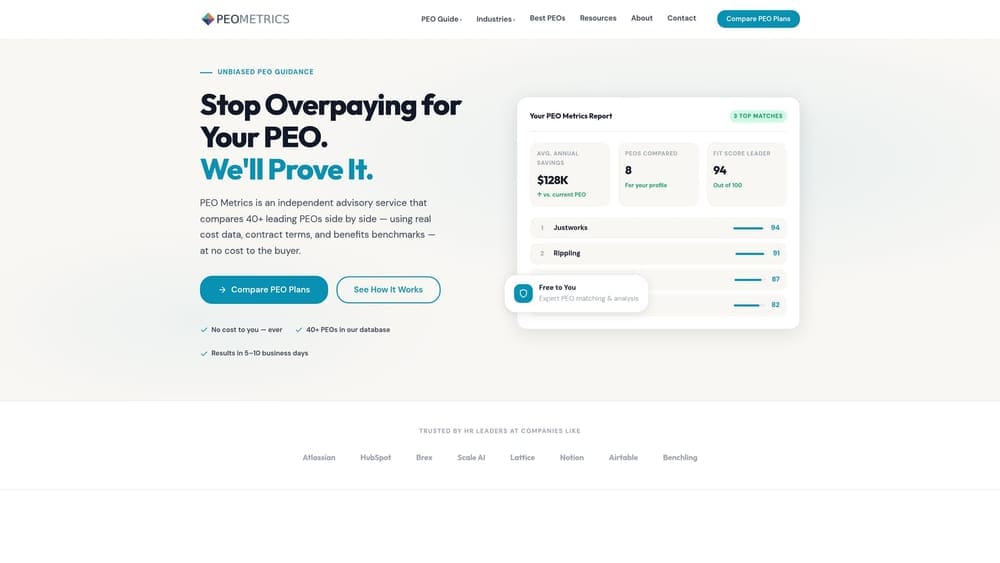
That matters for fitness businesses because a PEO is not automatically cheaper, and not every PEO accepts every fitness business. Some carriers treat trainers and group-class instructors as higher-risk classes, which can change eligibility and workers’ comp pricing. Seeing several providers’ terms next to each other is how you find out whether a quoted price is competitive or padded.
- Side-by-side provider comparison, so you can weigh fees, services and contract terms on the same footing.
- Pricing analysis that shows what you’d pay and what is bundled into it.
- Detailed metrics across providers, so the decision isn’t based on a sales deck.
- Consultative guidance on provider selection, including whether a PEO is the right model at all.
Because it is an advisory service, integrations don’t apply. Setup is a conversation about your headcount, locations, roles and current costs, and the owner or HR lead typically handles it in one or two sessions.
The limits are plain. PEO Metrics doesn’t provide payroll, benefits or workers’ comp, so you still need a provider to do the work. It may also receive vendor placement fees from providers, so weigh its guidance with that in mind and ask how comparisons are built. Pricing is listed on the website rather than published in this article.
Best for: Gym owners who want to compare several PEO quotes before choosing.
2. Justworks
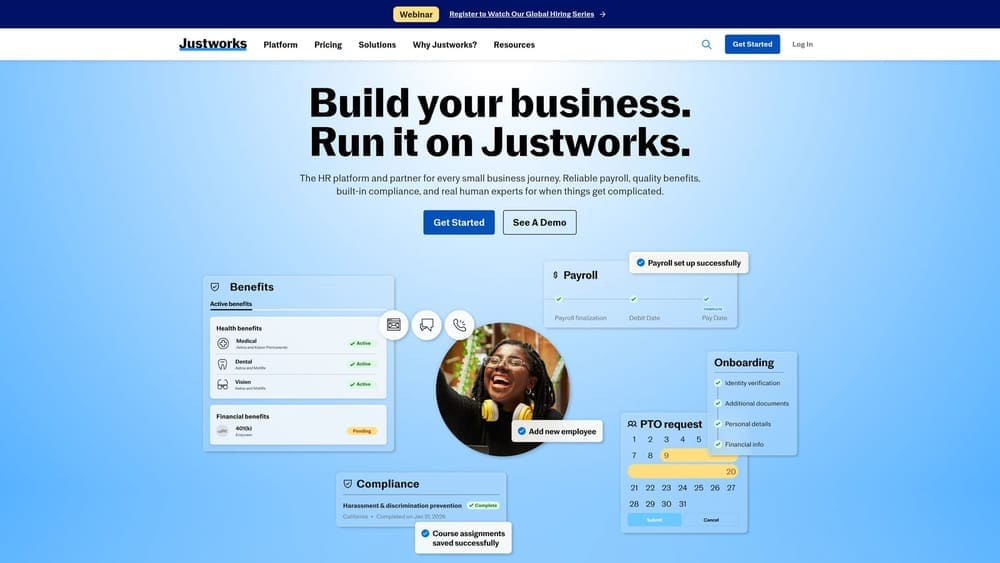
Justworks is a PEO built for small businesses, with a software-led experience. Employees and owners handle most tasks through the platform instead of calling an assigned rep, which suits a studio with a small team and no dedicated HR person.
What it offers
- Payroll that runs through the same platform where you onboard staff, so new instructors and desk hires aren’t entered twice.
- Benefits administration under the PEO’s plans, which can give a small team access to coverage it might struggle to buy alone.
- HR support for common questions such as scheduling, pay and policy.
- Compliance assistance, which is useful when you’re managing multiple pay situations in a small shop.
Fit and limits
The self-service approach is its distinguishing trait on this list. It works well when the owner is comfortable with software and wants minimal back-and-forth. It works less well if you expect a person to walk you through employee disputes or injury claims.
Before you commit, verify state availability and whether the PEO’s workers’ comp coverage fits higher-risk fitness roles such as personal trainers and coaches. Confirm integrations on the official site, including scheduling and time-tracking tools your studio already uses. Pricing details are on the website, and costs generally move with headcount and the benefits you choose.
Best for: Boutique studios with a small team.
3. Gusto
Gusto is payroll and HR software, and it appears here as a non-PEO alternative. There is no co-employment: you remain the employer of record for compliance, and you carry your own workers’ comp policy. For many single-location studios, that is a legitimate and cheaper starting point.
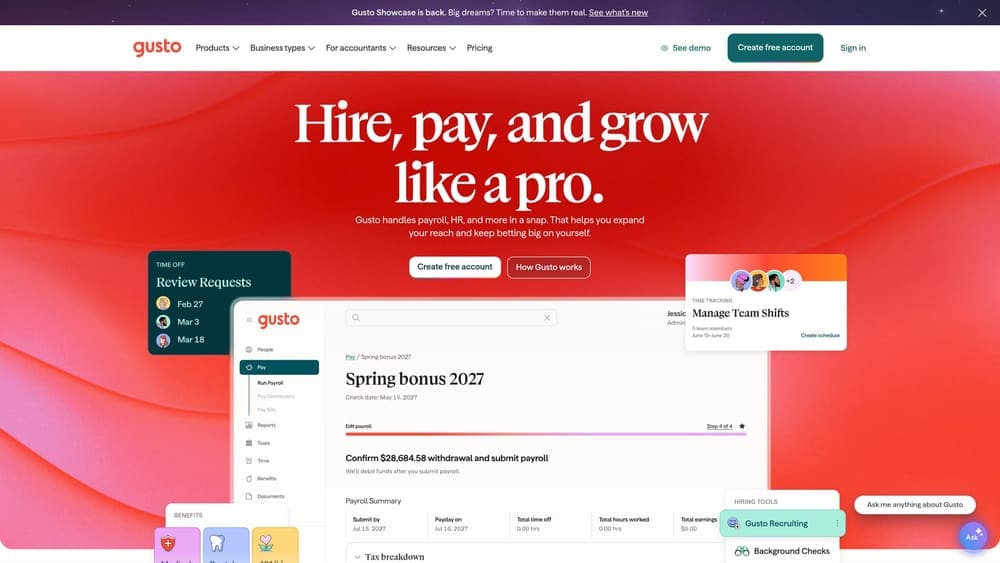
What Gusto does well compared with the others on this list is lower commitment. You can run payroll, onboard staff and offer benefits without joining a PEO’s master plans or signing a co-employment agreement. If your needs change, moving away is typically less disruptive than leaving a PEO.
- Payroll that handles hourly staff, tips-style adjustments and multiple pay rates, depending on plan.
- Digital onboarding, so a new front-desk hire completes forms before the first shift.
- Benefits administration, where you buy and manage plans for your own group.
- Time tracking, available on some plans (verify which), for shift-based schedules.
The trade-off is responsibility. You arrange and manage your own workers’ comp, and you own the 1099 versus W-2 decision for each instructor. Software can collect the right forms but won’t tell you whether a trainer is legally a contractor. Gusto also won’t give you the pooled purchasing power a PEO can offer on benefits.
Confirm integrations on the official site. Setup is usually quick and the owner or an office manager can run it. See the website for current plan pricing, which typically scales with plan tier and number of people paid.
Best for: Single-location studios not yet ready for a PEO.
4. TriNet
TriNet is a national PEO that offers industry-focused programs. For a growing fitness operator, the appeal is a larger provider with dedicated risk and compliance resources and the ability to scale across locations.
Its distinguishing angle on this list is the industry orientation, but you should not assume a fitness business qualifies. Ask directly whether gyms, studios and personal training operations are eligible, and under which program.
- Payroll across multiple locations, which cuts the juggling when each site has its own schedule.
- Benefits that part-time and full-time staff may be offered under PEO plans (confirm eligibility rules for part-timers).
- Risk and compliance support, relevant where injuries and classification questions arise.
- HR advisory for hiring, discipline and termination questions.
Pricing is quote-based, and the quote can depend on headcount, industry class, location and the benefits you choose. Expect possible eligibility thresholds, so a very small studio may not be a fit. Verify integrations on the official site, and plan for a longer implementation than a software-only tool, with the owner or HR lead working through enrollment and data transfer.
Best for: Growing multi-location operators.
5. Insperity
Insperity is a full-service PEO built around a dedicated HR representative model. What sets it apart here is the hands-on advisory: a person you can call when a trainer dispute, a no-show pattern or a termination needs handling properly.
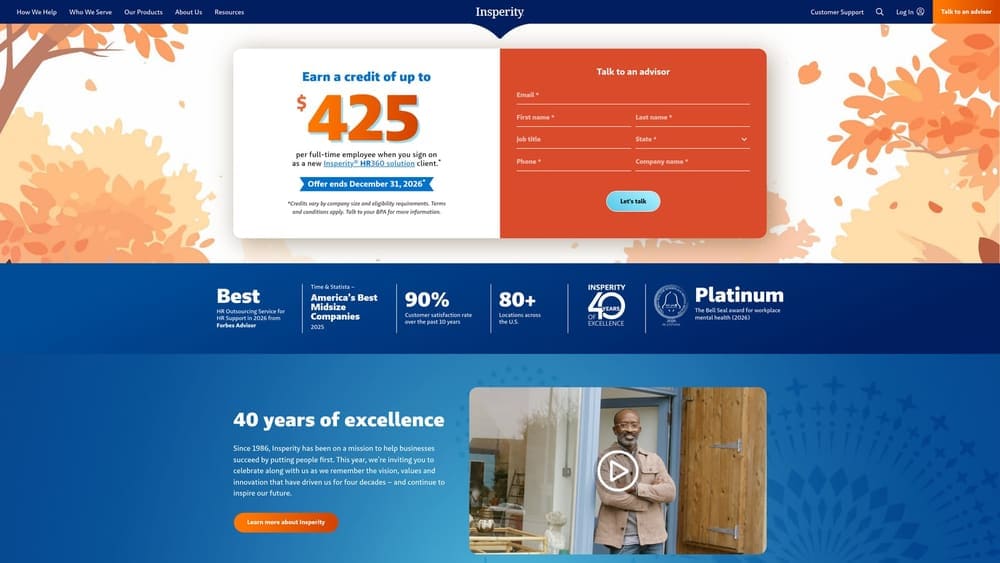
That matters in fitness, where turnover is routine and a poorly documented exit can turn into a claim. If you don’t have in-house HR, having an advisor involved in employee relations is the main value.
Capabilities
- Payroll processing for hourly and salaried staff across sites.
- Benefits programs, with plan rules for part-time employees to confirm before enrolling.
- HR advisory on performance, discipline and terminations, to document decisions consistently.
- Compliance support for wage, hour and employment-law questions.
Where it may not fit
The service model can suit larger groups better than a single studio, so verify minimums and whether your headcount qualifies. Pricing is quote-based and typically reflects the number of employees, the services bundled and your risk profile. Confirm integrations on the official site, and ask about contract length and exit terms, since a fuller service usually comes with a more involved implementation.
Best for: Gym chains with turnover and employee relations needs.
6. ADP TotalSource
ADP TotalSource is ADP’s PEO, and it’s separate from ADP’s payroll-only products. Make sure the quote you’re reviewing is for the PEO, because the same company sells services with very different obligations.
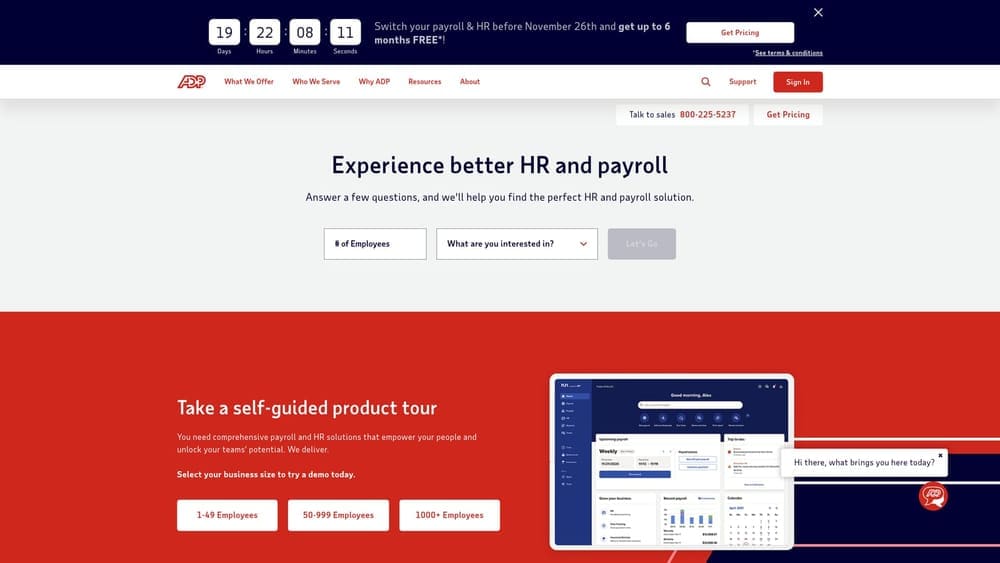
Its standout on this list is the tie-in with ADP timekeeping, which helps if you schedule shift-based staff such as front-desk teams, childcare attendants or class instructors across several sites. Hours captured in the time system can feed payroll directly.
- Payroll built for hourly workforces with varied shifts.
- Benefits offered through the PEO, with part-time eligibility to be confirmed in writing.
- Time and attendance tools (verify what is included in the PEO offering).
- Compliance support to help manage wage and hour rules across locations.
Pricing is quote-based and depends on headcount, locations, services and risk class. It may suit larger businesses, so verify minimums. Integrations center on the ADP ecosystem, which is an advantage if you adopt it fully and a constraint if your studio relies on other scheduling or membership software. Check how data moves between systems before signing.
Best for: Multi-site operators needing timekeeping integrated with PEO.
7. Paychex PEO
Paychex PEO is Paychex’s co-employment offering, sold alongside its payroll and HR services. The distinguishing point is the upgrade path: if you already run payroll with Paychex, moving to its PEO can mean keeping a familiar vendor and some existing data.
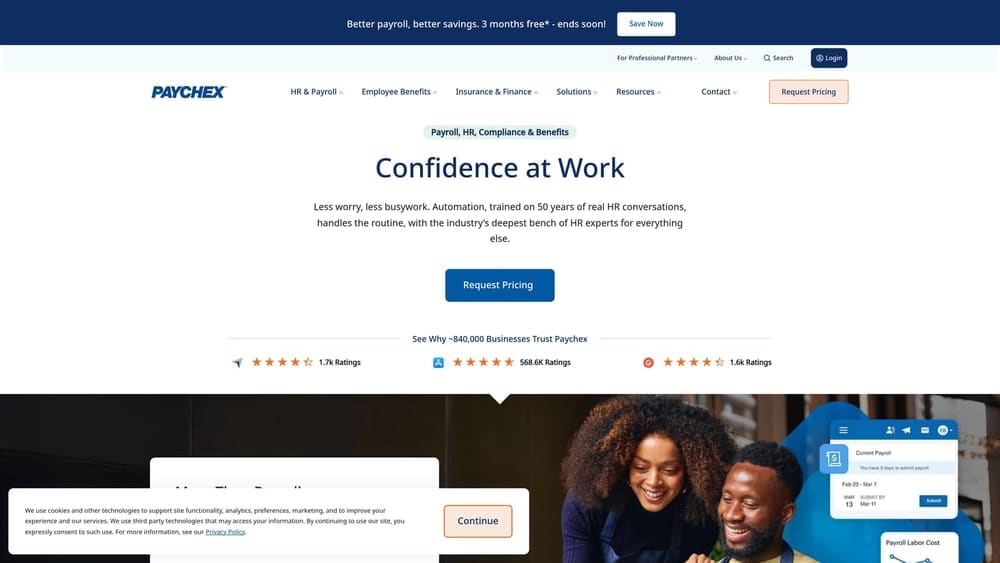
That convenience has a cost to check. Moving from payroll to a PEO changes the legal relationship, because the PEO becomes a co-employer for certain purposes. Treat it as a new contract, not a plan upgrade, and read the terms accordingly.
- Payroll that continues from your current setup, reducing migration work.
- Benefits under the PEO’s plans, with part-time rules to confirm.
- HR support for hiring, policies and employee questions.
- Workers’ comp support (verify exactly what is included and how claims are handled).
Pricing is quote-based and typically shifts with headcount, services and risk class. Verify size thresholds, since smaller studios may or may not qualify. Integrations are mainly with Paychex products, so confirm compatibility with your scheduling and membership tools. The owner or office manager usually coordinates onboarding with a Paychex representative.
Best for: Studios already on Paychex payroll.
8. Vensure HR
Vensure HR is a PEO serving small and mid-sized businesses. Confirm its current brand and offering on the official site, since PEO companies change names and structures through acquisitions, and the entity named in your contract is the one that matters.
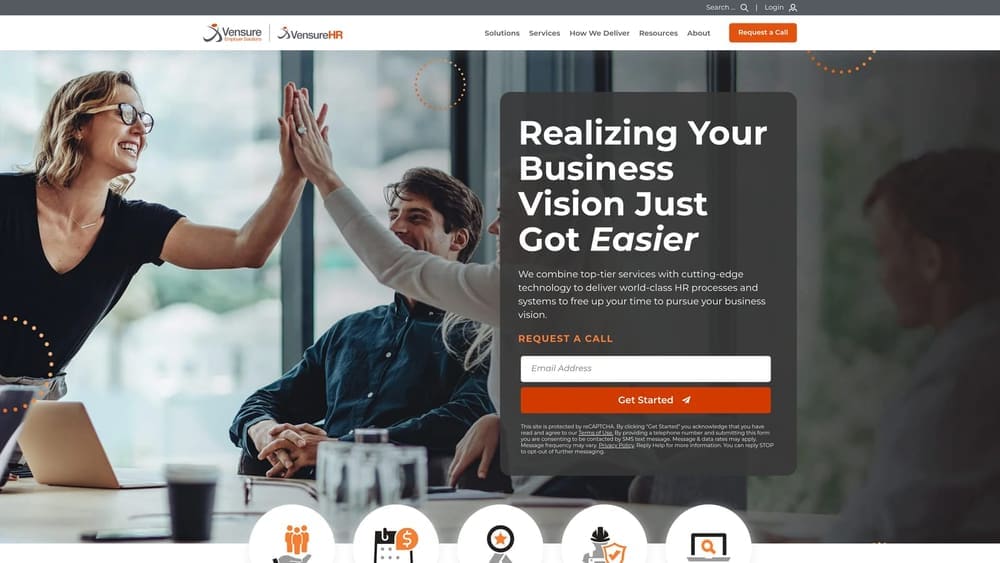
Its potential advantage on this list is flexibility for small employers. A gym with a modest team may prefer a lower-touch arrangement rather than a heavily service-driven one, and some smaller PEOs build plans around that.
- Payroll for hourly and salaried staff.
- Benefits administration, with part-time eligibility to be confirmed.
- HR support for routine employment questions.
- Compliance help for filings and policy basics.
Pricing is quote-based and will depend on headcount, benefits chosen and risk class. Verify minimums, plan flexibility and any recent brand changes before you proceed. Confirm integrations on the official site. The limitation of a lower-touch model is less hands-on support, so if you expect a rep to guide you through disputes or claims, ask what’s included. Compare it directly against at least one more provider.
Best for: Small gyms wanting a lower-touch PEO.
Matching the Option to Your Gym or Studio
A single-location studio with a handful of employees should compare payroll software such as Gusto against a PEO before assuming co-employment is worth it. A PEO doesn’t always save money, and not every PEO accepts every fitness business. If you’re a growing multi-site operator, request several quotes. For a side-by-side view, [LINK CHECK: PEO comparison hub] and [LINK CHECK: PEO cost guide] are the natural next reads once confirmed.
Whichever route you take, get these in writing:
- How workers’ comp is priced and handled for trainers, instructors and desk staff.
- Which part-time employees qualify for benefits.
- Minimum headcount or fee requirements.
- Contract length, renewal and exit terms.
PEO Metrics may receive vendor placement fees, so use its comparisons as one input and check terms with each provider directly. This article is informational and is not legal, tax or benefits advice, and details here may change, so confirm them with each vendor.
Before you sign that PEO renewal, make sure you’re not leaving money on the table.
Many businesses unknowingly overpay because of bundled fees, hidden administrative markups, and contracts designed to limit flexibility. We give you a clear, side-by-side breakdown of pricing, services, and contract terms, so you can see exactly what you’re paying for and choose the option that truly fits your business.
