

This list is for founders and first HR hires at tech startups who are deciding whether a PEO makes sense and, if so, which one. Think engineers in several states, equity-heavy offers, and a team too small to justify a full HR department.
The providers are compared on startup fit, technology, benefits access, pricing transparency, and contract terms. Each profile relies on the provider’s own published information as of October 2026. Pricing, minimums, state availability, and product names change, so confirm them with each vendor before you decide.
Quick Comparison of Startup PEO Options
- PEO Metrics: founders who want to benchmark PEO quotes before signing; pricing on its website; the only entry here that compares multiple PEOs side by side rather than selling one.
- Justworks: lean teams that want a low-admin setup; pricing on its website; a self-serve experience built around small employers.
- TriNet: tech startups that want an industry-specialized PEO; quote-based; packaged plans positioned for technology companies.
- Insperity: startups that want hands-on HR guidance; quote-based; a dedicated HR representative as part of its service model.
- Rippling: startups that want HR and IT in one system; pricing on its website; HR data tied to app and device provisioning.
- Gusto: early teams that need payroll first; pricing on its website; a startup-friendly payroll product with a wide app ecosystem.
- Paychex PEO: startups planning fast headcount growth; quote-based; national scale and a wide service range.
- Vensure Employer Services: small startups collecting extra quotes; quote-based; small-employer plans that should be checked against official materials.
1. PEO Metrics
PEO Metrics is a PEO comparison and consulting service, and it is not a PEO. It doesn’t run payroll, sell benefits, or enter a co-employment relationship with your company. Its job is to help you compare providers side by side, with detailed metrics and pricing analysis, before you commit to one. We list it first because it’s our own product, and we’d rather you weigh it with its limits in view.
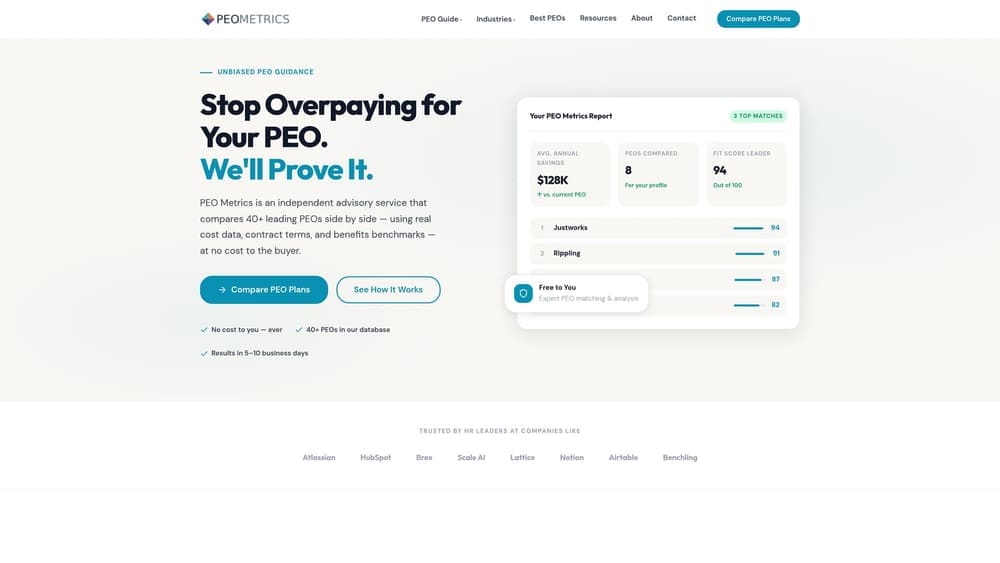
A PEO is a co-employment arrangement: the PEO becomes a co-employer for payroll, tax filings, benefits, and compliance, and typically offers benefits through a master plan. That differs from an ASO, which provides HR services without co-employment, from an EOR, which becomes the employer of record for workers in a specific location, and from payroll-only software. Quotes for these services are hard to compare because fees are bundled differently, which is the problem this service addresses.
- Side-by-side comparison puts several PEOs next to each other so you can see differences in services and terms.
- Pricing analysis helps you see what sits behind a per-employee quote, rather than treating that fee as the full cost.
- Detailed provider metrics give you more data points than a sales deck.
- Shortlist and selection guidance helps you narrow the field based on your headcount, states, and benefits goals.
There’s no software to implement, so integrations don’t apply. Setup is a conversation, and the founder or HR lead typically runs it.
The limits are plain. PEO Metrics won’t deliver payroll or benefits, so you still need a provider at the end. It may also receive vendor placement fees, so you should factor that in when you weigh any recommendation. It suits you less if you’ve already decided on a provider and only need to sign.
For pricing, see the PEO Metrics website for current details on how engagements work.
Best for: Founders who want to benchmark PEO quotes before signing.
3. TriNet
TriNet is an established PEO that offers industry-focused plans, including for technology companies. Its main draw for a startup is positioning: instead of a generic package, you start from a plan framed around tech employers.
Here’s what that looks like in practice.
- PEO services cover co-employment, payroll tax filing, and compliance, so you aren’t stitching together separate vendors.
- Benefits access lets a small team offer health and related coverage through a larger pooled arrangement.
- Payroll is bundled in, which matters when engineers sit in different states.
- HR advisory gives you a place to take employee relations questions without a full-time HR hire.
- Industry-specific plans package services for tech employers, which can shorten the process of working out what you need.
Integrations aren’t confirmed here, so verify the current list on TriNet’s site, especially for the accounting, HRIS, and equity management tools you already use. Setup typically involves an implementation process with the provider, and the person who owns people operations at your company, whether founder or first HR hire, will usually run it afterward.
The caution is contractual. Fees and contract terms need careful review, and for startups worried about lock-in that means reading the term length, termination notice, and any renewal language before signing. Pricing is quote-based, so you won’t get a reliable number without a conversation, and what drives the quote is typically headcount, location, and the benefits plans you choose. Packaged plans also mean less room to build exactly what you want, so a startup with unusual benefits needs to ask what can be adjusted.
Best for: Tech startups wanting an industry-specialized PEO.
2. Justworks
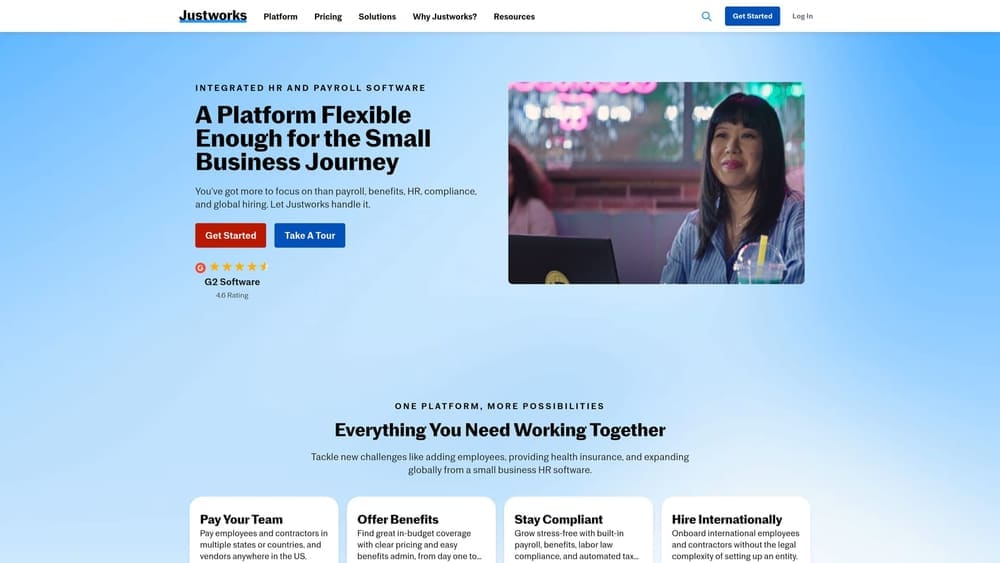
Justworks is a PEO built around small and growing employers, with a modern, self-serve platform. Its distinguishing trait among the providers here is the simplicity of the experience: it’s designed so a small team can handle payroll, benefits enrollment, and HR tasks without a dedicated administrator.
What you get
- A PEO bundled with payroll, so one system handles pay runs and employer tax filings.
- Benefits administration, which gives employees a single place to enroll and review coverage.
- Compliance support, so a founder doesn’t have to track every state’s employment rules alone.
- An employee self-service app, which lets people check pay and benefits without emailing you.
Where it may not fit
The tradeoff of a simple, standardized product is less customization. A startup with complex benefits needs, or one that wants highly tailored plan design, should verify how much flexibility is available. A team that expects a dedicated HR advisor on call should also check the support model against what it expects.
Integrations aren’t confirmed here, so check Justworks’ site for current connections with accounting and other tools. Setup effort is meant to be light, and in most startups the founder, office manager, or first HR hire runs it day to day.
Pricing details are published on Justworks’ website. Cost typically moves with headcount and the plan you choose, and this article doesn’t state a figure, so confirm the current rate directly. As with any PEO, ask what contract commitment applies.
Best for: Lean startups wanting an easy, low-admin setup.
4. Insperity
Insperity is a full-service PEO whose model centers on dedicated HR support. Where some providers aim to remove the human from the process, Insperity’s pitch is the opposite: a named representative who learns your business and can advise on people issues.
That makes it worth a look if your first HR hire is a generalist who would benefit from backup. Terminations, performance problems, and policy questions come up fast in a growing company, and having an advisor to call has value that a self-serve portal doesn’t replace.
- A dedicated HR representative gives you a consistent contact for employee relations and policy questions.
- Payroll is included, which covers pay runs and tax filings across the states where you employ people.
- Benefits access offers coverage through the PEO’s arrangement instead of a plan you’d buy alone.
- Compliance support helps you keep up with employment rules as you hire in new locations.
The service model is the main limitation. It may be more than a very small or remote-first team needs, and you should verify any minimums before getting far into the process. If your team is five people who want to run everything from a phone, paying for a high-touch model may not pay off.
Integrations aren’t confirmed here, so check Insperity’s site for current options with the HRIS, accounting, and applicant tracking tools you use. Setup involves onboarding with the provider, and day-to-day ownership usually sits with whoever manages people operations, working alongside the assigned representative.
Pricing is quote-based. What moves it is typically headcount, location, and benefits selections, and the quote should spell out what is bundled versus billed separately. Ask about contract term and exit conditions too.
Best for: Startups that want hands-on HR guidance.
5. Rippling
Rippling is an integrated platform that combines HR, payroll, IT, and a PEO offering. The idea that sets it apart is that employee records drive everything else: hire someone, and the same data can set up payroll, benefits, and the apps and devices they’ll use.
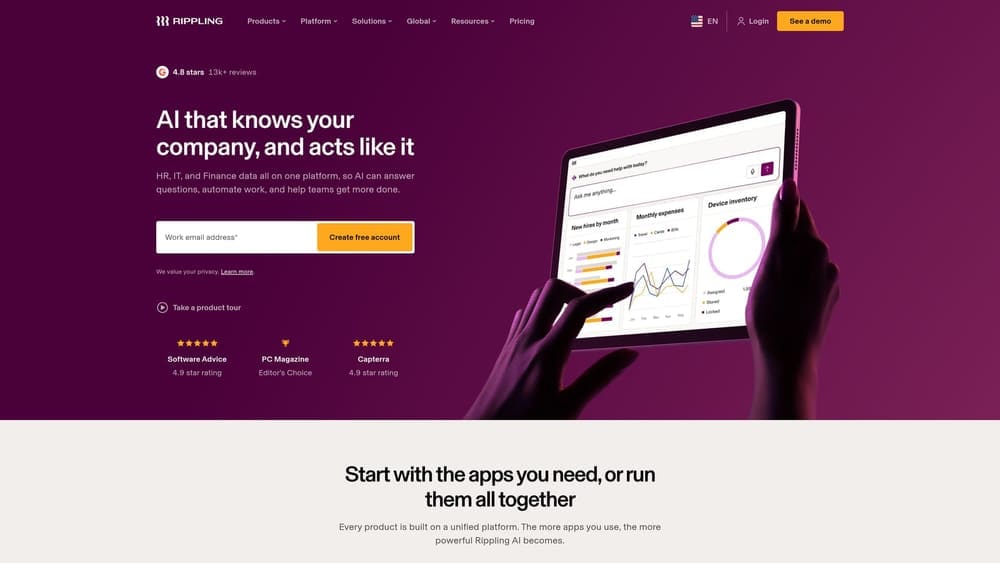
For a tech startup, that IT angle is the draw. Onboarding an engineer usually means a laptop, accounts across several tools, and permissions that need to be removed on departure. Tying that to HR data can reduce manual work for a small ops team.
- A PEO offering lets you add co-employment and master-plan benefits on the same platform.
- An HRIS holds employee records in one place instead of across spreadsheets and separate tools.
- Payroll runs from the same employee data, which cuts re-entry when people change roles or locations.
- Device and app management helps provision and remove access for new hires and leavers.
The limitations are about scope. A broad platform may be excessive for a tiny team that just wants payroll and benefits, and you may end up paying attention to modules you don’t use. PEO availability should be verified, including which states and employer profiles are eligible, before you build a plan around it.
Integrations aren’t confirmed here, so check Rippling’s site for current connections with your accounting, equity, and engineering tools. Setup is likely heavier than a pure PEO because you’re configuring more of the company’s systems, and it typically involves both whoever runs people operations and whoever owns IT.
Pricing details are on Rippling’s website. Cost typically depends on which modules you choose and how many employees you have, so build your quote around what you’ll actually use.
Best for: Startups wanting HR and IT in one system.
6. Gusto
Gusto is a payroll and HR platform popular with startups, and it needs a clear label here: payroll-only plans are not a PEO. Without co-employment, you remain the sole employer for payroll tax and compliance purposes, and you don’t get access to a PEO’s master benefits plan. Verify whether Gusto currently offers any PEO option, and on what terms, before treating it as one.
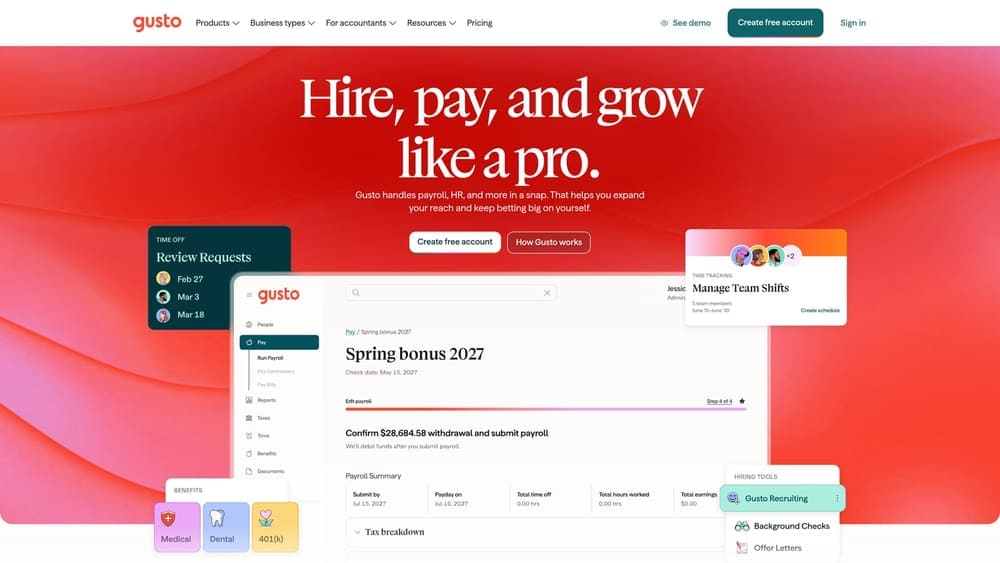
That distinction matters because many founders assume payroll software and a PEO are interchangeable. They aren’t. A payroll platform handles pay runs and filings, but it doesn’t take on the employer-of-record responsibilities a PEO does.
- Payroll covers pay runs and tax filings, which is often the first thing an early team needs.
- Benefits administration helps you set up and manage coverage you buy yourself.
- Onboarding tools collect new-hire paperwork so the first week isn’t a pile of PDFs.
- Hiring tools support posting roles and bringing candidates into the same system.
Gusto’s strength is a startup-friendly payroll product with a wide app ecosystem, which includes accounting and other apps. Verify the current integration list on its site for the tools you use. Setup is light, and a founder or office manager usually runs it.
The limitation is the gap above: no co-employment and no master-plan benefits on payroll-only plans. A startup that wants pooled benefits purchasing or shared compliance responsibility should look at a true PEO instead, or verify any PEO option Gusto offers.
Pricing is published on Gusto’s website and typically depends on the plan tier and number of employees. Confirm current rates there.
Best for: Early teams that need payroll first and may not need a PEO yet.
7. Paychex PEO
Paychex is a national provider with payroll, HR, and PEO services. Its distinguishing feature among the options here is scale: it serves employers of many sizes, which can matter if you expect your headcount to climb quickly and don’t want to switch providers as you grow.
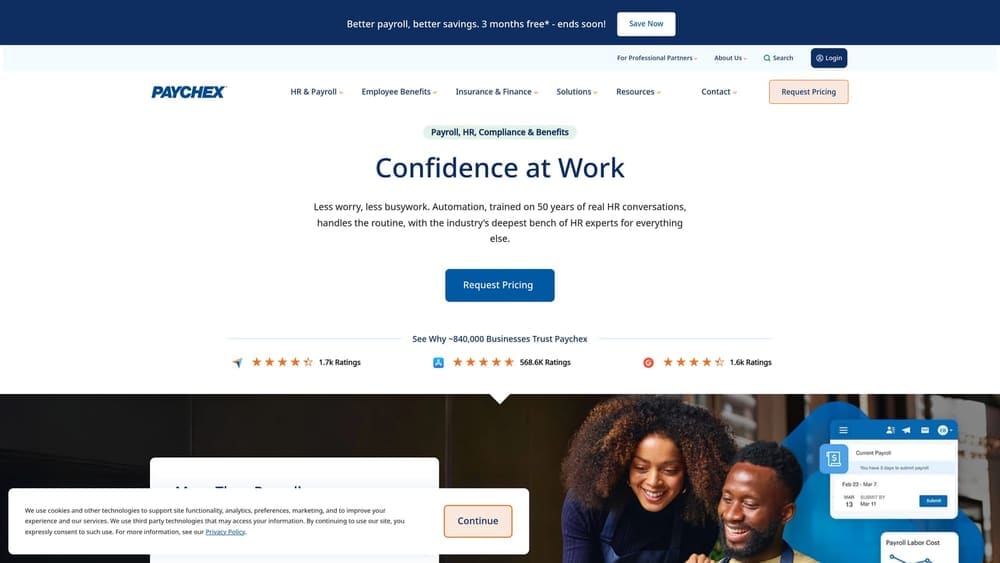
It’s also the least tech-specific entry in this group. That isn’t a flaw so much as a design choice, since the offering is built for a broad customer base instead of one industry.
- PEO services provide co-employment, compliance support, and shared employer responsibilities.
- Payroll is part of the bundle, covering pay runs and tax filings for multistate teams.
- Benefits access offers coverage through the PEO arrangement, which matters for hiring.
- HR support gives you someone to ask when employee questions come up.
The limitation is fit. If you want features aimed at engineering teams, equity-era benefits expectations, or tech-specific workflows, check whether Paychex offers them, because the plan doesn’t confirm that it does. Ask how the service works for a team under a few dozen people and whether the service model changes as you grow.
Integrations aren’t confirmed here, so verify the current list on Paychex’s site, especially for accounting and HRIS tools. Setup typically involves onboarding with the provider, and day-to-day work usually falls to your people operations lead or finance contact.
Pricing is quote-based. What moves it is typically headcount, location, and benefits selections, and the quote should clarify what’s included versus billed separately. Because you’re planning for growth, ask how pricing changes as you add employees and what the exit terms look like.
Best for: Startups planning rapid headcount growth.
8. Vensure Employer Services
Vensure Employer Services is a PEO and HR outsourcing provider. Verify its current brands and corporate structure before you engage, because the company operates under multiple names and the entity you sign with matters for your contract.
It is the entry on this list with the least confirmed detail for tech startups, so treat it as a quote to collect rather than a front-runner. Its positioning is flexible plans for small employers, which should be checked against official materials instead of assumed.
- PEO services provide co-employment for payroll tax, benefits, and compliance.
- Payroll is included, so pay runs and filings sit with one provider.
- Benefits access offers coverage through a pooled arrangement a tiny team couldn’t get alone.
- Compliance support helps a small team keep up with employment rules.
The limitation is uncertainty. Tech-specific features and terms are unconfirmed here, so you’ll need to ask directly about technology integrations, equity-related payroll handling, and multistate coverage. Also confirm which legal entity provides the service, and read the agreement for term length and termination conditions before signing.
Integrations aren’t confirmed here, so check Vensure’s site and ask the sales team for the current list. Setup typically involves onboarding with the provider, and day-to-day ownership usually falls to the founder or first HR hire.
Pricing is quote-based. What moves it is typically headcount, location, and the benefits you choose. Because many founders worry about overpaying, comparing a Vensure quote against two or three others is the sensible way to use it.
Best for: Small startups comparing additional quotes.
Matching a Provider to Your Startup’s Situation
If you haven’t picked a provider yet, start with comparison. PEO Metrics is built for that step, and it’s a comparison service rather than a PEO. It may receive vendor placement fees, so weigh its guidance with that in mind.
After that, the choice usually turns on how much help you want:
- Simple, self-serve: Justworks, if a small team wants low admin.
- Tech-industry focus: TriNet, for packaged plans aimed at technology employers.
- High-touch support: Insperity, if you want a dedicated HR representative.
- All-in-one platform: Rippling, if you want HR and IT in one system.
- Payroll only: Gusto, if you need payroll first and don’t need co-employment yet.
Paychex fits teams planning fast growth, and Vensure is a reasonable extra quote for a small team. Pricing, minimums, state availability, and contract terms change, so confirm current details with each vendor before you sign anything. This article is informational, not legal, tax, or benefits advice.
Before you sign that PEO renewal, make sure you’re not leaving money on the table.
Many businesses unknowingly overpay because of bundled fees, hidden administrative markups, and contracts designed to limit flexibility. We give you a clear, side-by-side breakdown of pricing, services, and contract terms, so you can see exactly what you’re paying for and choose the option that truly fits your business.
