
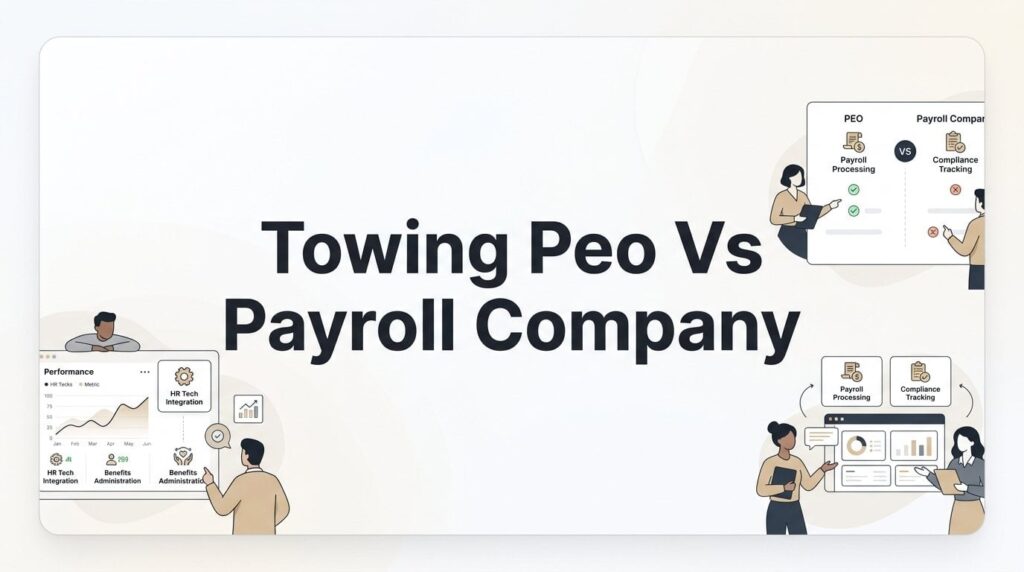
If you run a towing operation, you already know the HR and insurance headaches that come with the territory. High workers’ comp rates, driver turnover, DOT compliance obligations, and the constant pressure to keep labor costs from eating your margins. At some point, most towing company owners end up asking the same question: should we use a PEO, or just stick with a payroll company?
They sound similar. They’re not. The distinction matters a lot more in towing than it does in most industries, because workers’ comp exposure, class code structure, and DOT compliance requirements change the calculus significantly. If you want a full breakdown of what a PEO actually is before diving into this comparison, the foundational PEO guide on this site covers the structural basics.
What this page focuses on is the specific tools worth using to research your options before you sign anything — whether that’s a PEO contract or a payroll service agreement. Here are the resources that can genuinely help.
1. PEO Metrics
Best for: Towing companies that want unbiased, side-by-side PEO comparisons without getting handed to a sales team
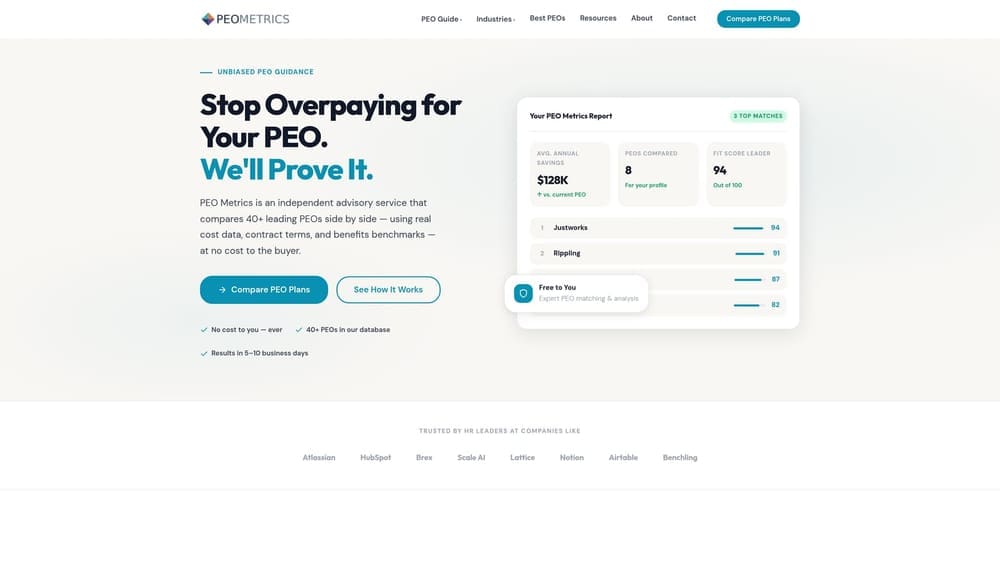
PEO Metrics is an independent PEO comparison platform that gives business owners detailed, side-by-side analysis of PEO providers — including pricing structures, workers’ comp handling, and contract terms — without being affiliated with any PEO.
Where This Tool Shines
For towing companies, the workers’ comp component of a PEO arrangement isn’t a side benefit — it’s often the primary financial driver for even considering one. PEO Metrics is built around that kind of cost-level analysis. You can see how different providers structure their workers’ comp programs, what fees are bundled versus itemized, and where you might be overpaying before you’ve committed to anything.
The platform is genuinely independent. It doesn’t earn referral fees from PEO providers, which changes the nature of the guidance you get. Most PEO matching services have a financial incentive to close a deal. PEO Metrics doesn’t. That matters when you’re evaluating a multi-year contract that touches your payroll, benefits, and insurance simultaneously.
Key Features
Side-by-Side Provider Comparisons: Detailed breakdowns of PEO providers across pricing, service scope, and contract structure — not just a list of names.
Workers’ Comp Cost Analysis: Specifically relevant for high-risk trades like towing, where the workers’ comp piece can make or break the financial case for a PEO.
Fee Structure Transparency: Helps identify whether you’re looking at a percentage-of-payroll model or a flat PEPM structure, and what that means for your actual cost at different driver wage levels.
Contract Term Review: Surfaces contract conditions and exit terms that often get buried in vendor agreements — useful before you sign anything.
No Affiliation with Providers: The platform isn’t compensated by PEOs for referrals, so the analysis isn’t shaped by which provider pays the highest commission.
Best For
Towing operations that have already decided they want to evaluate PEOs seriously and need real data to compare options — not a shortlist of vendors who paid to be on it. Particularly useful for owners who’ve been auto-renewing a PEO contract and want to know if they’re still getting fair value.
Pricing
Free comparison service. No cost to use the platform or access provider comparisons.
2. PEOcompare
Best for: Business owners who want multiple PEO options surfaced quickly without doing the initial outreach themselves
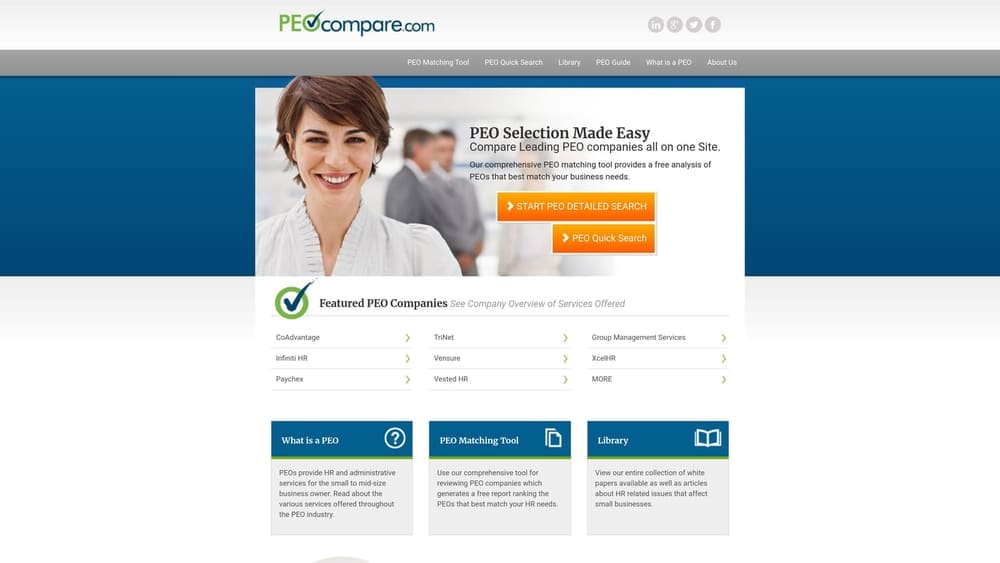
PEOcompare is a broker-style PEO matching service that aggregates provider options and helps businesses shortlist PEO candidates based on their profile and operational needs.
Where This Tool Shines
If you’re early in the process and just want to understand what’s out there, PEOcompare does the initial legwork of surfacing multiple providers. You fill out a profile, and the platform matches you with PEO options and handles the initial outreach on your behalf. For a towing company owner who doesn’t have time to cold-call five different PEOs, that’s a real time saver.
The honest caveat is that PEOcompare operates on a referral model. Providers pay to be matched. That doesn’t mean the matches are bad, but it does mean the platform’s incentive is to facilitate a transaction rather than to help you decide whether a PEO is even the right move. If you’re still working out whether a PEO makes financial sense for your fleet size and comp exposure, you’ll want additional context beyond what a matching service provides.
Key Features
Broker-Style Provider Matching: Surfaces multiple PEO options based on your company profile, reducing the time spent on initial vendor research.
Pricing Range Visibility: Gives you a general sense of what different providers charge before you enter formal sales conversations.
Outreach Handling: Manages initial contact with PEOs on your behalf, so you’re not fielding cold calls from five sales reps simultaneously.
Multi-Provider Shortlisting: Useful for companies that want to run a competitive process rather than evaluating a single provider in isolation.
Best For
Towing companies that have already decided to move toward a PEO and want to quickly generate a shortlist of options. Less useful for owners who are still deciding whether a PEO makes sense at all, or who want to understand the cost tradeoffs in depth before talking to vendors.
Pricing
Free to use. Revenue is referral-based, meaning PEO providers compensate the platform when a match results in a signed agreement.
3. HR Guide
Best for: First-time PEO evaluators who need foundational context on co-employment and HR structure before comparing vendors
HR Guide is an HR reference resource that provides explanatory content on PEO structures, co-employment, and HR fundamentals — useful for building baseline knowledge before you start evaluating specific vendors.
Where This Tool Shines
If you’re new to the PEO conversation, some of the terminology can be disorienting. Co-employment, FEIN pooling, shared employer liability — these concepts matter when you’re reading a PEO contract, and it helps to understand them before you’re sitting across from a sales rep. HR Guide provides that kind of reference material in a straightforward format.
It’s worth being clear about what this resource is and isn’t. HR Guide is an educational reference, not a comparison or matching tool. It won’t tell you which PEO is right for your towing company, and it doesn’t go deep on towing-specific issues like class code structure or DOT compliance. But if you’re building foundational understanding of how PEOs work structurally, it’s a reasonable starting point.
Key Features
PEO and Co-Employment Explainers: Clear explanations of how co-employment works and what it means for employer liability — useful before you sign anything.
HR Policy Reference Material: Covers HR compliance topics beyond PEO, including employment law basics and policy frameworks.
Broad Topic Coverage: Useful as a reference library for HR questions that come up outside the PEO evaluation process.
No Vendor Affiliation: Content is informational rather than promotional, which keeps the framing neutral.
Best For
Business owners who are new to PEO structures and want to build enough foundational knowledge to ask better questions during vendor evaluations. Not a replacement for towing-specific guidance on workers’ comp or DOT compliance.
Pricing
Free resource. No account required to access reference content.
What the Payroll Company vs. PEO Decision Actually Comes Down To in Towing
Before you use any of these tools, it helps to be clear on the structural difference between a payroll company and a PEO — because in towing, that difference is more financially significant than it is in most industries.
A payroll company processes wages, handles tax filings, and may offer basic HR software. That’s it. It doesn’t assume co-employment, doesn’t provide workers’ comp coverage, and doesn’t touch your compliance obligations. If you’re running a small fleet with manageable comp exposure and a stable workforce, a payroll company may be all you need.
A PEO enters a co-employment relationship. Your employees are pooled under the PEO’s FEIN for workers’ comp and benefits purposes. For towing companies, this is where the math either works or it doesn’t. The primary towing class code (NCCI 8393 — automobile towing) carries a higher base rate than most service trades. If your current comp policy is expensive, or if you’re sitting in the assigned risk pool, a PEO with a strong risk pool may be able to access better rates than you can on the open market. That’s a real potential financial benefit — not a guaranteed one, but worth modeling.
A few things to watch for that are specific to towing. First, DOT compliance is a real operational concern for towing companies with commercial vehicles. Driver qualification files, drug and alcohol testing programs, hours-of-service requirements — PEOs vary significantly in whether they support any of this. Payroll companies don’t touch it at all. If DOT compliance support matters to your operation, that needs to be a direct question in any PEO evaluation. For more detail on how workers’ comp programs are structured under a PEO arrangement, the towing PEO workers’ comp guide on this site goes deeper.
Second, independent contractor classification is a recurring compliance risk in towing, particularly for owner-operators who subcontract dispatch work. A PEO does not resolve misclassification risk. This is a common misconception. If you have workers who should legally be classified as employees but are being paid as 1099 contractors, a PEO doesn’t fix that exposure — it just doesn’t touch it.
Third, fleet size matters. If you’re running fewer than 10 employees, the cost structure of most PEOs is hard to justify unless workers’ comp savings are substantial. Operations with 15 or more employees are more likely to see a net cost benefit. The towing PEO pricing breakdown covers how to model this for your specific headcount and payroll.
Making the Right Call for Your Operation
Here’s a quick way to think about which direction makes sense depending on where you are right now.
Stick with a payroll company if: You have a small, stable team, your workers’ comp situation is manageable, and you’re not dealing with significant HR compliance complexity. The cost savings from a PEO won’t outweigh the administrative overhead and fees.
Seriously evaluate a PEO if: You’re paying high workers’ comp rates, you’re in the assigned risk pool, you have meaningful driver turnover that creates constant onboarding burden, or you need more structured HR compliance support. The larger your payroll, the more the math can shift in a PEO’s favor.
Do your homework before signing anything if: You’re already with a PEO and haven’t benchmarked your costs recently. Fee structures drift, and contracts don’t always get renegotiated automatically. Many towing companies overpay not because they made a bad initial choice, but because they stopped comparing.
The tools above — particularly PEO Metrics for unbiased cost comparison, PEOcompare for initial shortlisting, and HR Guide for foundational context — give you different pieces of that research process. Use them in combination rather than relying on any single source.
Don’t auto-renew. Make an informed, confident decision.
Before you sign that PEO renewal, make sure you’re not leaving money on the table.
Many businesses unknowingly overpay because of bundled fees, hidden administrative markups, and contracts designed to limit flexibility. We give you a clear, side-by-side breakdown of pricing, services, and contract terms—so you can see exactly what you’re paying for and choose the option that truly fits your business.
