

Trucking payroll is not like most payroll. Your drivers may be paid by the mile, by the load, or on a per-diem structure that shifts week to week. A single driver running a route from Texas through Tennessee and into Ohio can create employer tax obligations in multiple states before the week is out. And your workers’ comp class codes, whether you’re running long-haul, local delivery, or a mix, carry rates that most payroll vendors have never had to think about.
When fleet owners start looking for help, two options come up most often: a Professional Employer Organization (PEO) or a standalone payroll company. They sound similar. They are not. Picking the wrong one based on price alone can leave you underinsured, out of compliance in states you didn’t know you had nexus in, or locked into a contract that costs more than it saves.
This guide covers the leading PEO and payroll options for trucking companies, explains what each one actually covers, and gives you a plain-language framework for deciding which model fits your fleet. If you’re not sure yet what a PEO actually is, the foundational definition page at PEO Metrics is a good starting point before you read further.
1. PEO Metrics
Best for: Trucking companies that want an unbiased side-by-side comparison before committing to any PEO
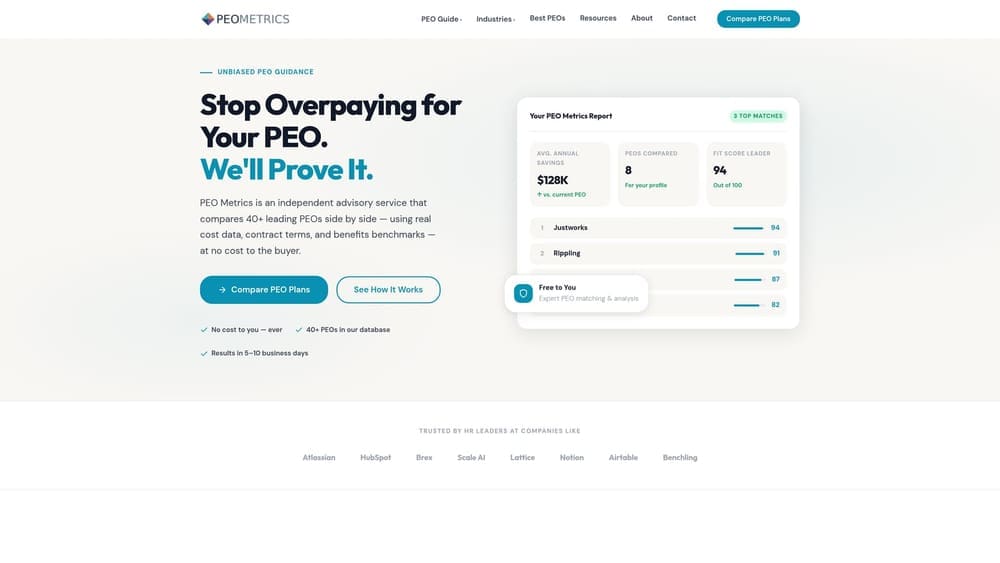
PEO Metrics is an independent advisory service that compares 40+ PEOs on pricing, contract terms, and benefits, at no cost to the buyer. It is not a PEO itself and does not sell HR services. It works exclusively for the company doing the buying.
Where This Tool Shines
For trucking companies, the PEO market is genuinely hard to navigate. Vendors quote differently, bundle workers’ comp differently, and structure admin fees in ways that make apples-to-apples comparison nearly impossible without a third party pulling the data together. PEO Metrics does exactly that: you describe your fleet, your states, your headcount, and your current comp situation, and you get a structured comparison across 40+ PEOs built on a 12-dimension methodology.
The workers’ comp angle matters here specifically. High-hazard class codes like those used for long-haul trucking carry elevated base rates, and your experience modification rate can push that cost significantly higher or lower. A PEO that pools risk across its client base can change your effective comp cost in ways a payroll company simply cannot. PEO Metrics covers class code analysis as part of its comparison work, which is directly relevant to carriers evaluating whether a PEO’s bundled comp arrangement actually saves money. You can also explore how workers’ comp class code restructuring under a PEO works before you start comparing quotes.
Key Features
12-Dimension Methodology: Comparisons cover cost, contract terms, benefits quality, workers’ comp structure, HR support depth, and more, not just headline price.
40+ PEOs Tracked: The database includes large national PEOs and mid-market specialists, so you see options that fit a 20-driver fleet and options that fit a 400-driver fleet.
$2.1B in PEO Spend Benchmarked: Across 850+ companies matched since 2019, which means the pricing benchmarks reflect real market rates, not vendor-supplied estimates.
Workers’ Comp Class Code Analysis: Relevant for trucking specifically, where class codes and mod rates are a primary cost driver in any PEO evaluation.
Fast Turnaround: The intake takes about eight minutes. Reports come back in 5-10 business days.
Best For
Any trucking company actively evaluating a PEO, renewing an existing PEO contract, or unsure whether a PEO or a payroll company is the right fit. Particularly valuable for fleets with high workers’ comp mod rates, multi-state operations, or anyone who has received a PEO quote and wants to know whether it’s a fair price.
Pricing
Free to the buyer. PEO Metrics is compensated by PEOs when a match is made, but the comparison itself is independent and the buyer pays nothing.
2. ADP TotalSource
Best for: Larger carriers that need national PEO infrastructure and can absorb a premium price point
ADP TotalSource is one of the largest PEOs in the United States, with a national footprint built to handle multi-state payroll, benefits administration, and workers’ comp under a full co-employment structure.
Where This Tool Shines
ADP TotalSource’s scale is its primary advantage. For a carrier running drivers across 10 or 15 states, the multi-state tax registration and filing infrastructure is genuinely built out in a way that smaller PEOs sometimes are not. Pay-as-you-go workers’ comp is available in most states, which matters for fleets with seasonal headcount swings, since it ties comp premiums to actual payroll rather than an annual estimate that requires reconciliation.
The integration with ADP’s broader HR and payroll technology stack can also reduce friction if you are already using ADP tools elsewhere in your business. That said, ADP TotalSource is generally priced at the higher end of the PEO market, and smaller fleets often find that they are paying for service infrastructure they do not fully use. Dedicated service teams are typically reserved for larger accounts, so a 30-driver fleet may not get the same attention as a 300-driver account.
Key Features
Multi-State Tax Filing: Full employer tax registration and filing across states, which is critical for drivers creating nexus in multiple states.
Pay-As-You-Go Workers’ Comp: Available in most states, tying premiums to actual payroll rather than a lump annual estimate.
Large-Group Benefits Access: Health, dental, and vision through ADP’s purchasing pool, which can meaningfully improve benefits quality for smaller fleets.
Integrated HR Technology: Connects to ADP’s broader platform for time tracking, onboarding, and workforce management.
Dedicated Service Teams: Available for larger accounts; smaller clients may be routed to shared service queues.
Best For
Mid-to-large carriers with 100+ drivers, multi-state operations, and the budget to support a premium PEO. Fleets that are already inside the ADP ecosystem will find the integration straightforward.
Pricing
Custom quote only. No published rate. Generally positioned at the higher end of the PEO market. Use a comparison service before accepting the first quote.
3. Insperity
Best for: Mid-size fleets that want dedicated HR specialist support and strong compliance depth
Insperity is a full-service PEO known for assigning dedicated HR specialists to each client account rather than routing every question through a shared service center.
Where This Tool Shines
The dedicated HR specialist model is genuinely different from how most PEOs operate. For a trucking company where the person managing HR is also managing dispatch, having a named contact who knows your account and your workforce is worth more than a generic 1-800 line. Insperity’s compliance support for multi-state workforces is substantive, covering state tax registration and ongoing filing in states where your drivers create employer obligations.
On workers’ comp, Insperity bundles coverage into its PEO arrangement. For carriers with an elevated mod rate, joining a PEO’s pooled risk structure can lower effective comp costs compared to purchasing coverage independently in the admitted market. That said, Insperity has minimum headcount thresholds, so very small fleets may not qualify, and pricing is custom, which makes it harder to benchmark without a third-party comparison. One honest limitation: Insperity’s platform is built for general employer populations, and trucking-specific features like mileage-based pay or per-diem structures may require some configuration work.
Key Features
Dedicated HR Specialists: Named HR contacts assigned per account, not shared service queues.
Multi-State Compliance Support: Covers state tax registration and ongoing filing across multiple states.
Bundled Workers’ Comp: Included in the PEO arrangement; pooled risk structure can benefit high-mod-rate employers.
Employee Handbook and Policy Development: Useful for carriers that have grown quickly and need HR documentation to match.
Group Benefits Access: Health, dental, and vision through Insperity’s purchasing arrangement.
Best For
Mid-size carriers with 50 to several hundred drivers who want real HR support, not just payroll processing. Particularly strong for companies that have outgrown informal HR management and need structure without hiring a full HR team.
Pricing
Custom quote only. Minimum headcount thresholds apply. No published rate. Verify eligibility and pricing directly or through a comparison service.
4. Rippling
Best for: Fleets that want a modular, technology-first platform and need flexibility to add or remove HR functions
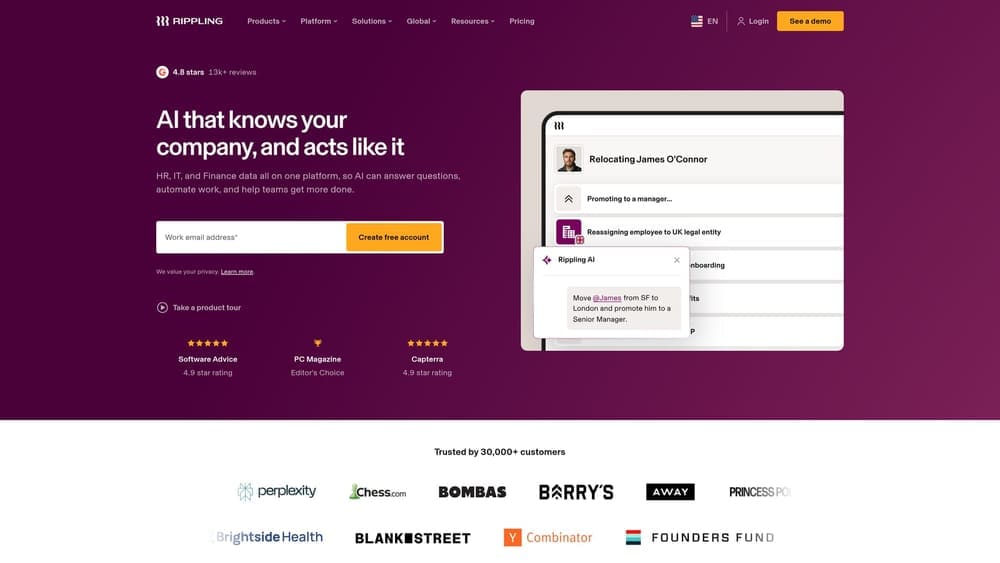
Rippling is a modular HR and payroll platform that lets employers build their own HR tech stack, adding payroll, benefits, time tracking, and IT management independently rather than buying a bundled package.
Where This Tool Shines
Rippling’s modularity is its defining feature. If you need payroll and time tracking but not benefits administration, you pay for what you use. For trucking companies with high turnover, the onboarding workflows are fast and can be configured for driver-specific requirements, including custom pay types that accommodate mileage-based and load-based compensation structures. The interface is modern and the integration library is broad, which matters if you are already using dispatch software or ELD systems that need to connect to payroll.
A few things to understand clearly before evaluating Rippling in a PEO context: Rippling offers an Employer of Record (EOR) product for multi-state hiring, but this is not the same as traditional co-employment through a PEO. The risk pooling and workers’ comp bundling that make PEOs attractive for high-hazard industries are not part of Rippling’s core model. If your primary reason for considering a PEO is workers’ comp cost reduction, Rippling is solving a different problem. It is a strong payroll and HR technology platform, but it is not a substitute for a co-employment arrangement when comp rates are the driver.
Key Features
Modular Architecture: Add payroll, HR, benefits, IT management, or time tracking independently; pay only for what you use.
Custom Pay Types: Can accommodate mileage-based, load-based, and per-diem pay structures.
Fast Onboarding Workflows: Designed for speed, which helps in high-turnover environments where new drivers need to be set up quickly.
EOR Option: Employer of Record product for multi-state hiring; note this differs from traditional PEO co-employment.
Broad Integration Library: Connects to third-party time-tracking systems, dispatch tools, and other business software.
Best For
Tech-forward fleets that want a flexible payroll and HR platform and are less focused on workers’ comp pooling or co-employment benefits. Works well for companies that want to manage HR technology on their own terms without being locked into a bundled PEO structure.
Pricing
Starts around $8 per employee per month for core payroll; additional modules priced separately. Verify current pricing at rippling.com, as module pricing changes.
5. TriNet
Best for: Small to mid-size fleets that prioritize access to competitive health benefits under a co-employment structure
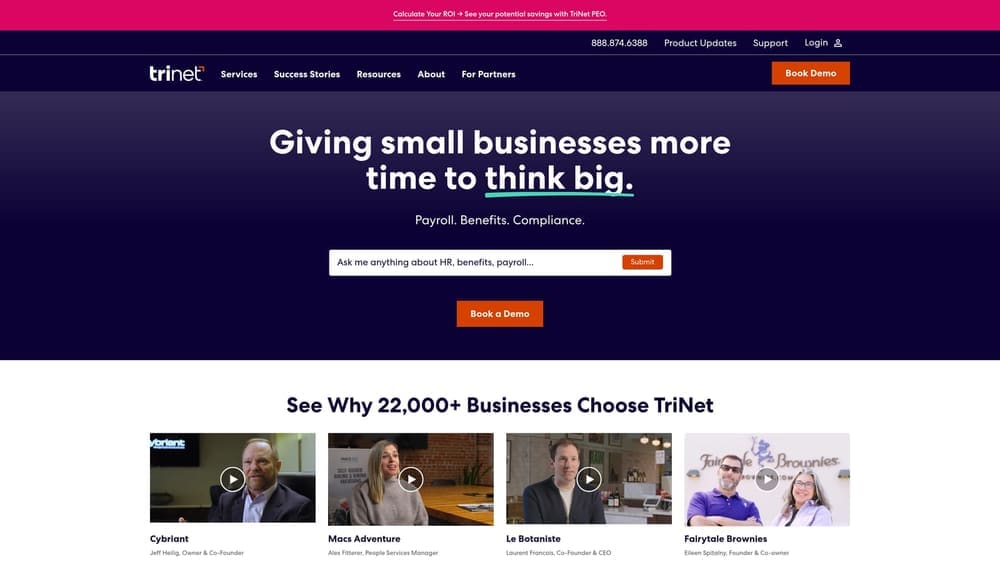
TriNet is a PEO that bundles HR, payroll, and benefits administration under co-employment, with particular strength in giving smaller employers access to large-group health benefits they could not access on their own.
Where This Tool Shines
TriNet’s benefits purchasing power is real. For a fleet where attracting and retaining drivers is a constant challenge, offering health coverage that competes with what a 500-person company can offer is a genuine recruiting tool. The full co-employment structure handles multi-state payroll and tax filing, which covers the state nexus problem that comes with routes crossing state lines.
The honest limitation for trucking specifically: TriNet built its reputation in professional services and technology companies. Its trucking-specific workers’ comp expertise is thinner than PEOs that have concentrated in transportation or high-hazard industries. If your workers’ comp situation is complex, whether that means a high mod rate, mixed class codes across shop mechanics and road drivers, or a history of claims, you should ask detailed questions about how TriNet handles your specific codes before committing. The industry-specific HR packages TriNet offers are generally oriented toward white-collar verticals.
Key Features
Large-Group Health Benefits: Access to competitive health, dental, and vision through TriNet’s purchasing pool.
Full Co-Employment PEO Structure: Multi-state payroll and tax filing included.
HR and Compliance Support: Guidance included in the service model, though depth varies by account size.
Employee Self-Service Platform: Online portal for pay stubs, benefits enrollment, and HR document access.
Industry-Specific Packages: Available for select verticals; trucking is not a primary focus vertical.
Best For
Smaller fleets where benefits access is the primary driver for considering a PEO, and workers’ comp complexity is relatively straightforward. Less suited for carriers with high mod rates or complex class code situations.
Pricing
Custom quote based on headcount and benefits elections. No published rate. Pricing varies significantly based on the benefits package selected.
6. Justworks
Best for: Small fleets that want co-employment benefits with transparent, predictable pricing and no long-term contracts
Justworks is a PEO with published flat-rate pricing and a straightforward platform designed for small to mid-size employers that want co-employment benefits without complex contract negotiations.
Where This Tool Shines
Justworks’ transparency is its clearest differentiator. Published per-employee-per-month pricing means you can model your actual cost before you ever talk to a sales rep. Month-to-month options reduce the contract risk that makes some trucking companies hesitant to commit to a PEO. For a small fleet that is trying a co-employment arrangement for the first time, the lower barrier to entry matters.
That said, Justworks was built for small professional employers, not high-hazard industries. Workers’ comp under the Justworks co-employment arrangement may not offer the same pooling advantages for carriers with elevated class codes that a PEO specializing in transportation or construction can provide. The platform handles standard payroll cleanly, but mileage-based and per-diem pay structures may require more manual configuration than platforms built with trucking in mind. If your fleet is small, stable, and your comp situation is relatively clean, Justworks is worth evaluating. If workers’ comp cost reduction is your primary goal, compare carefully before assuming the co-employment structure here solves that problem.
Key Features
Published Flat-Rate Pricing: No hidden fees; you know your cost per employee before signing.
Month-to-Month Options: No long-term contract required, which reduces commitment risk for first-time PEO buyers.
Full Co-Employment PEO: Payroll, benefits, and compliance support bundled under co-employment.
24/7 Support Access: Around-the-clock support for HR and payroll questions.
Straightforward Onboarding: Designed for simplicity; suited to small fleets without dedicated HR staff.
Best For
Small fleets under 50 drivers, single-state or limited multi-state operations, and companies where the primary goal is cleaner payroll and basic benefits access rather than workers’ comp cost reduction.
Pricing
Publicly listed pricing starting around $59 per employee per month for the basic plan. Verify current tiers at justworks.com, as pricing tiers are updated periodically.
7. Gusto
Best for: Small fleets that need clean payroll processing with custom pay types and do not need co-employment
Gusto is a payroll and HR software platform, not a PEO. It handles custom pay structures including mileage, per diem, and load-based pay, with automated tax filing and a clean interface built for small business owners managing payroll themselves.
Where This Tool Shines
Gusto handles the payroll complexity that catches many small fleet owners off guard: custom pay types, contractor and W-2 employee payroll in the same platform, and automated federal, state, and local tax filing. For a small carrier running a mix of owner-operators (1099) and company drivers (W-2), the ability to manage both in one place without paying for separate systems is genuinely useful.
The critical distinction is what Gusto does not do. It is not a co-employment arrangement. You remain the employer of record for all purposes, including workers’ comp. Gusto does not pool your risk with other employers, does not negotiate benefits at group scale, and does not carry your workers’ comp policy. Benefits administration is available as an add-on, but you are purchasing coverage as a standalone employer. For a small fleet with a clean comp history and a single-state operation, this is often fine and will cost less than a PEO. For a carrier with a high mod rate or drivers creating multi-state nexus, Gusto solves the payroll problem but leaves the comp and compliance problems untouched.
Key Features
Custom Pay Types: Handles mileage, per diem, and load-based pay alongside standard hourly and salaried payroll.
Automated Tax Filing: Federal, state, and local payroll tax filing handled automatically.
Contractor and W-2 Payroll: Both in the same platform, useful for fleets using owner-operators alongside company drivers.
Benefits Add-On: Benefits administration available but not bundled co-employment; you purchase as a standalone employer.
Transparent Pricing: Published rates with no long-term contracts.
Best For
Small single-state fleets with clean comp histories, fleets running a mix of contractors and employees, and owner-operators who need professional payroll without the overhead of a PEO.
Pricing
Starts at $46 per month plus $6 per employee per month for the Simple plan. Verify current pricing at gusto.com.
8. Paychex Flex
Best for: Mid-size carriers that need a full-featured payroll platform with complex pay structure support and optional HR add-ons
Paychex Flex is a payroll and HR platform from Paychex that handles complex pay structures and multi-state payroll, with workers’ comp insurance and HR modules available as separate add-ons rather than bundled co-employment.
Where This Tool Shines
Paychex Flex handles the pay structure complexity that trucking requires: mileage-based compensation, per-diem pay, and load-based structures can all be configured. Multi-state payroll tax filing with state registration support addresses the nexus problem for carriers running routes across state lines. For mid-size carriers that have outgrown simple payroll software but are not ready for or interested in co-employment, Paychex Flex occupies a useful middle ground.
The workers’ comp option deserves a clear explanation. Paychex Flex offers workers’ comp insurance as a separate add-on through its insurance partnerships. This is not the same as PEO co-employment, where your workers’ comp is bundled into the employer arrangement and your risk is pooled with other employers. With Paychex Flex, you remain the standalone employer purchasing a standalone policy. If your mod rate is high, this structure does not change that; you are still rated on your own experience. The platform also offers dedicated payroll specialist support for mid-size accounts, which is a real differentiator over fully self-service tools.
Key Features
Complex Pay Structure Support: Handles mileage, per diem, and load-based compensation alongside standard pay types.
Multi-State Payroll Tax Filing: With state registration support for carriers operating across state lines.
Workers’ Comp Add-On: Insurance available as a separate add-on; not co-employment bundled, and your mod rate remains your own.
HR Modules: Onboarding, time tracking, and compliance documentation available as optional additions.
Dedicated Payroll Specialist Support: Available for mid-size accounts; more hands-on than purely self-service platforms.
Best For
Mid-size carriers with 50 to 300 drivers that need serious payroll infrastructure and multi-state support but prefer to remain the employer of record and purchase workers’ comp independently. Also useful for carriers that want to add HR modules incrementally as the business grows.
Pricing
Custom quote based on headcount and selected modules. No published base rate. Request a quote directly or compare through a third-party service.
Which Option Actually Fits Your Fleet
The PEO-vs-payroll decision for trucking companies comes down to three things: your workers’ comp mod rate, your state footprint, and whether you have anyone in-house managing HR.
If your mod rate is elevated, your drivers cross state lines regularly, and you are handling HR yourself, a PEO is almost always the better financial decision once you account for everything you are actually buying. The workers’ comp pooling alone can offset a meaningful portion of the admin fee. The multi-state tax infrastructure is included rather than something you have to build and maintain. And the HR support means you are not personally managing onboarding paperwork for every driver who comes and goes.
If you run a small, stable, single-state fleet with a clean comp history, a payroll company like Gusto or Paychex Flex may be all you need, and it will cost less. You keep control, you stay the employer of record, and you pay for payroll processing rather than a bundled service arrangement.
One thing that applies regardless of which direction you go: do not assume a PEO or payroll company covers FMCSA compliance. Drug testing programs, hours-of-service recordkeeping, and driver qualification files are federal DOT obligations that sit with you as the motor carrier. Ask any vendor directly what they handle and what they do not. The answer will tell you a lot about whether they understand your industry.
If you’re weighing a PEO, the quote you receive from any single vendor reflects their pricing model, not the market. Pricing in this space varies widely based on your class codes, headcount, benefit elections, and which PEO you happen to call first. For logistics and transportation companies specifically, the PEO strategy for logistics companies is worth reading before you start collecting quotes.
PEO Metrics has benchmarked over $2.1B in PEO spend across 850+ companies since 2019, tracking 40+ PEOs on a 12-dimension methodology that includes workers’ comp structure, contract terms, and real pricing. The comparison is free to buyers and takes about eight minutes to start.
Don’t auto-renew. Make an informed, confident decision.
Before you sign that PEO renewal, make sure you’re not leaving money on the table.
Many businesses unknowingly overpay because of bundled fees, hidden administrative markups, and contracts designed to limit flexibility. We give you a clear, side-by-side breakdown of pricing, services, and contract terms—so you can see exactly what you’re paying for and choose the option that truly fits your business.
