
Water damage restoration is one of those trades where the HR headaches hit differently. You’re not running a predictable 9-to-5 operation with stable headcount. You’re managing crews that triple overnight after a major storm, dealing with workers’ comp classifications that insurers will happily dispute, and staying compliant with OSHA standards for mold remediation and confined-space entry — all while fielding emergency calls at 2 AM.
The question most restoration owners eventually land on isn’t whether they need payroll and HR help. It’s what kind of help actually fits. A full PEO co-employment arrangement? A standalone payroll platform? A hybrid that scales with your crew size? The answer depends on your headcount, your risk profile, and how much liability you want to share with a third party.
This list covers the best PEO and payroll solutions for water damage restoration businesses — evaluated through the lens of what actually matters in this trade: workers’ comp for high-risk classifications, flexibility during surge periods, and compliance with trade-specific regulations.
1. PEO Metrics
Best for: Restoration businesses that want to compare PEO providers before committing to one.
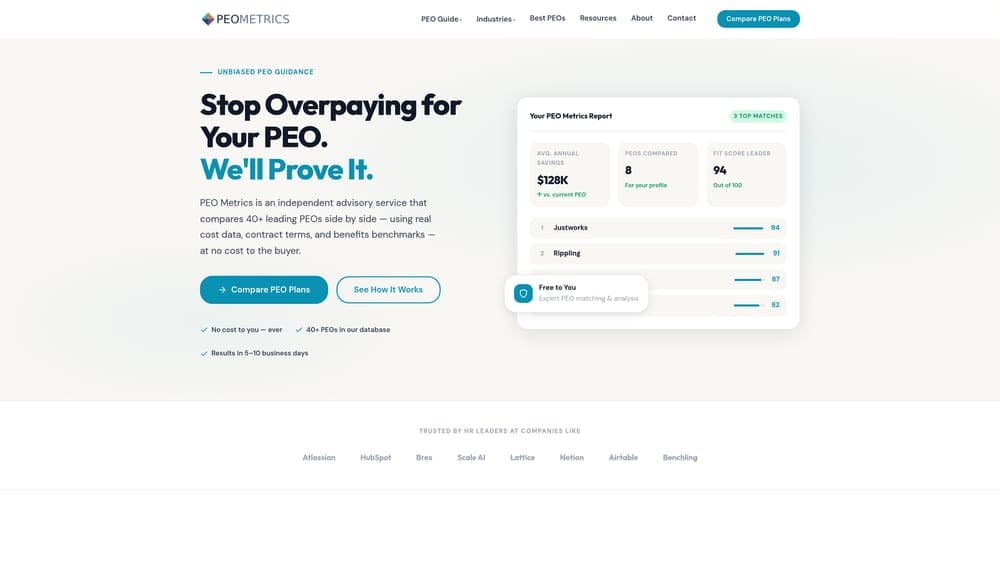
PEO Metrics is an unbiased comparison platform that helps water damage restoration businesses evaluate PEO providers side-by-side using detailed pricing data and service metrics — without being tied to any single provider.
Where This Tool Shines
Most restoration companies don’t know what they’re actually paying for inside a PEO contract. Bundled fees, administrative markups, and auto-renewal clauses are common. PEO Metrics gives you a structured way to cut through that noise before you sign anything.
The platform is particularly useful for restoration businesses because the comparison is tailored to your industry and headcount — not generic small business benchmarks. If you’re evaluating PEOs specifically for workers’ comp leverage or multi-state compliance, that context matters a lot in how providers stack up.
Key Features
Side-by-Side PEO Comparisons: Evaluate multiple providers against each other with detailed pricing breakdowns and service scope — not just marketing summaries.
Industry and Headcount Filtering: Comparisons are tailored to your specific business type and crew size, so you’re not comparing enterprise-level pricing to a 12-person restoration shop.
Unbiased Analysis: PEO Metrics isn’t affiliated with any single PEO provider, which means the guidance isn’t shaped by referral incentives or commission structures.
High-Risk Trade Positioning: The platform helps identify which PEO structures work best for businesses in elevated-risk classifications — relevant for restoration companies navigating complex workers’ comp scenarios.
Pricing Transparency Support: Surfaces hidden fees and contract terms that are easy to miss when you’re evaluating providers on your own.
Best For
Restoration companies that are currently on a PEO and suspect they’re overpaying, or businesses actively shopping for their first PEO and want a structured way to compare options without relying on each provider’s own sales pitch. Especially useful for owners who’ve never gone through a PEO evaluation before.
Pricing
Contact for details. PEO Metrics is a comparison and consulting service, not a PEO provider itself — so pricing is separate from whatever PEO you ultimately select.
2. Insperity
Best for: Mid-size restoration companies with complex workers’ comp needs and a need for full HR infrastructure.
Insperity is a full-service PEO with strong risk management and safety program support, built for businesses that need more than just payroll processing.
Where This Tool Shines
Insperity’s strength is depth. For restoration companies dealing with high-risk workers’ comp classifications — mold remediation, structural drying, emergency water extraction — having a PEO that actively supports safety programs and OSHA compliance is more than a convenience. It’s a real cost lever over time.
The HR infrastructure is comprehensive. You’re getting employee relations support, performance management tools, and benefits access that a smaller restoration company couldn’t negotiate independently. For companies in the 20-100 employee range that are growing fast and outpacing their current HR setup, Insperity fits well.
Key Features
Workers’ Comp Administration: Includes claims management and safety program support designed to reduce frequency and severity of claims over time.
Full HR Support: Employee relations, performance management, and HR consulting are included — not just payroll and benefits.
Fortune 500-Level Benefits Access: Group buying power for health, dental, vision, and retirement plans that small restoration businesses can’t access independently.
OSHA and Employment Law Compliance: Ongoing compliance monitoring with support for multi-state operations.
Dedicated HR Team: You get assigned HR professionals rather than a generic support queue.
Best For
Restoration companies with 20 or more employees that are dealing with recurring workers’ comp headaches, want enterprise-level HR support, and are ready to enter a co-employment relationship in exchange for those benefits.
Pricing
Custom pricing based on headcount and services. Generally suited for companies with 20 to 5,000 employees. Expect pricing to reflect the depth of service included.
3. Paychex PEO (Oasis)
Best for: Restoration businesses that want to start with payroll and scale into full PEO co-employment over time.
Paychex PEO, operating through its Oasis platform, gives restoration companies a flexible path — start where you are and add services as your headcount and complexity grow.
Where This Tool Shines
The scalability is the differentiator here. A lot of restoration companies start small, grow fast after a few big storm seasons, and then realize their payroll setup can’t keep up. Paychex lets you grow within the same ecosystem rather than switching platforms mid-stride.
The pay-as-you-go workers’ comp option is worth calling out specifically. For restoration businesses with seasonal headcount swings, paying workers’ comp premiums based on actual payroll each period — rather than a large upfront estimate — helps with cash flow during slower months.
Key Features
Scalable Service Model: Move from standalone payroll to full PEO co-employment without switching platforms or rebuilding your HR setup.
Pay-As-You-Go Workers’ Comp: Premiums calculated on actual payroll each period, reducing overpayment and improving cash flow predictability.
Integrated Payroll and Tax Filing: Automated federal, state, and local tax compliance built into the platform.
Dedicated HR Professional: Each account gets an assigned HR contact rather than routing through a general support line.
HR and Benefits Integration: Full benefits administration available when you move to the PEO tier.
Best For
Small to mid-size restoration companies that aren’t ready for full co-employment yet but want a platform that can grow with them. Also a good fit for businesses that prioritize cash flow flexibility on workers’ comp premiums.
Pricing
Custom pricing. Payroll-only tiers start lower; PEO pricing is based on headcount and risk profile. Contact Paychex for a quote specific to your business.
4. ADP TotalSource
Best for: Larger restoration operations that need enterprise-grade HR, compliance, and risk management in one integrated system.
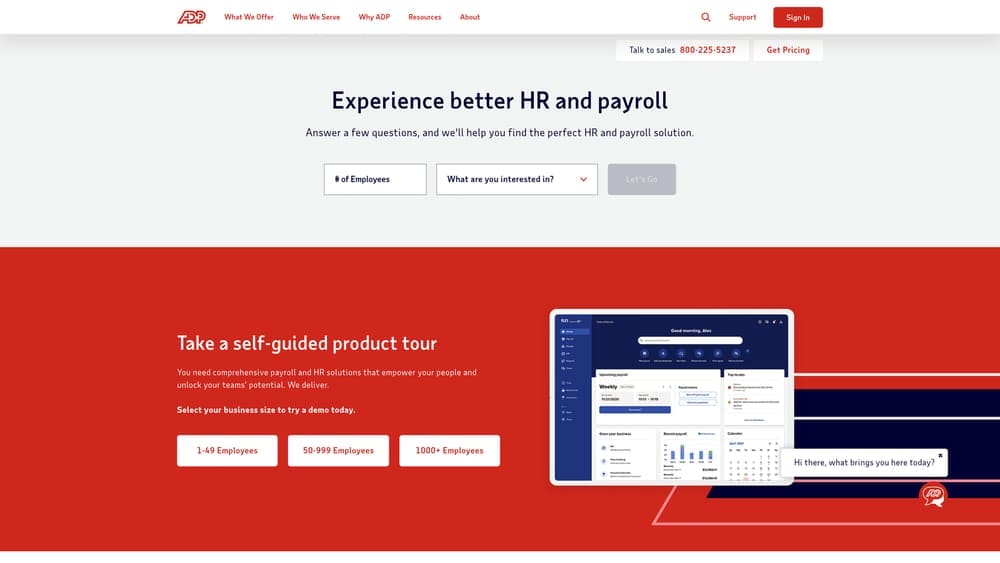
ADP TotalSource is ADP’s full-service PEO offering, built for companies that have outgrown lighter-weight HR platforms and need deep integration across payroll, benefits, compliance, and workers’ comp.
Where This Tool Shines
ADP TotalSource’s strength is breadth and brand stability. For restoration companies operating across multiple states — common if you’re chasing storm work in different regions — the multi-state compliance infrastructure is a real advantage. Employment law varies significantly by state, and managing that manually across a mobile workforce is a compliance risk most operators don’t fully appreciate until something goes wrong.
The reporting and analytics capabilities are more robust than most PEO competitors at this tier. If you’re managing a larger operation and need visibility into labor costs, claims trends, and benefits utilization, the data tools here are genuinely useful.
Key Features
Multi-State Compliance Support: Built-in regulatory monitoring across all states where you have employees — important for restoration companies that follow storm patterns.
Workers’ Comp and Claims Management: Integrated claims handling with risk management support included in the PEO relationship.
Robust Reporting and Analytics: Detailed labor cost reporting, benefits utilization data, and compliance dashboards.
Full Benefits Administration: Access to large-group health, dental, vision, and retirement plan options.
HR and Payroll Integration: Single platform for payroll processing, tax filing, and HR management.
Best For
Restoration companies with 50 or more employees, particularly those operating across multiple states or managing large seasonal surge workforces. Best suited for operators who want a well-established PEO with deep infrastructure.
Pricing
Custom pricing. Generally positioned for companies with 50 or more employees. Contact ADP directly for pricing based on your headcount and state footprint.
5. Gusto
Best for: Small restoration shops that need clean payroll processing without entering a co-employment relationship.
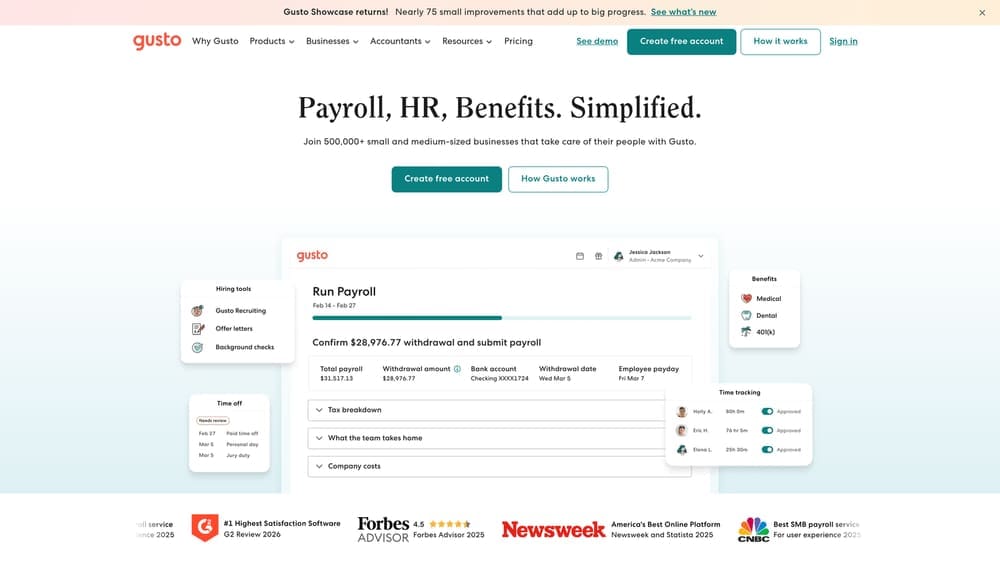
Gusto is a modern payroll platform built for small businesses — straightforward, user-friendly, and focused on getting payroll right without the overhead of a full PEO structure.
Where This Tool Shines
Gusto is the right tool when you don’t need co-employment and just want payroll handled cleanly. For a restoration company with a small, stable crew — say, five to fifteen people — the complexity of a PEO relationship may not be justified. Gusto handles tax filing, direct deposit, and basic HR without requiring you to share employment liability with a third party.
The contractor payment support is worth noting for restoration work specifically. Many smaller restoration operations rely on a mix of W-2 employees and 1099 subcontractors. Gusto handles both in one place, which simplifies end-of-year tax prep considerably.
Key Features
Automated Payroll and Tax Filing: Federal, state, and local taxes handled automatically each pay period.
Employee Self-Service Portal: Employees can access pay stubs, W-2s, and onboarding documents without going through you.
Basic Benefits Administration: Health, dental, and 401(k) options available, though at smaller-group rates than a PEO would offer.
Contractor Payment Support: Pay 1099 subcontractors through the same platform as W-2 employees, with automatic 1099 generation at year-end.
Simple Onboarding Workflows: Digital onboarding for new hires, including document collection and I-9 management.
Best For
Small restoration businesses with fewer than 20 employees that want clean, reliable payroll without co-employment complexity. Also a good fit for owner-operators who handle most HR informally and just need the compliance basics covered.
Pricing
Starts at $40 per month base plus $6 per month per employee on the Simple plan. Higher tiers with additional HR features are available at increased cost.
6. TriNet
Best for: Restoration companies that need industry-specific HR and workers’ comp support with vertical expertise.
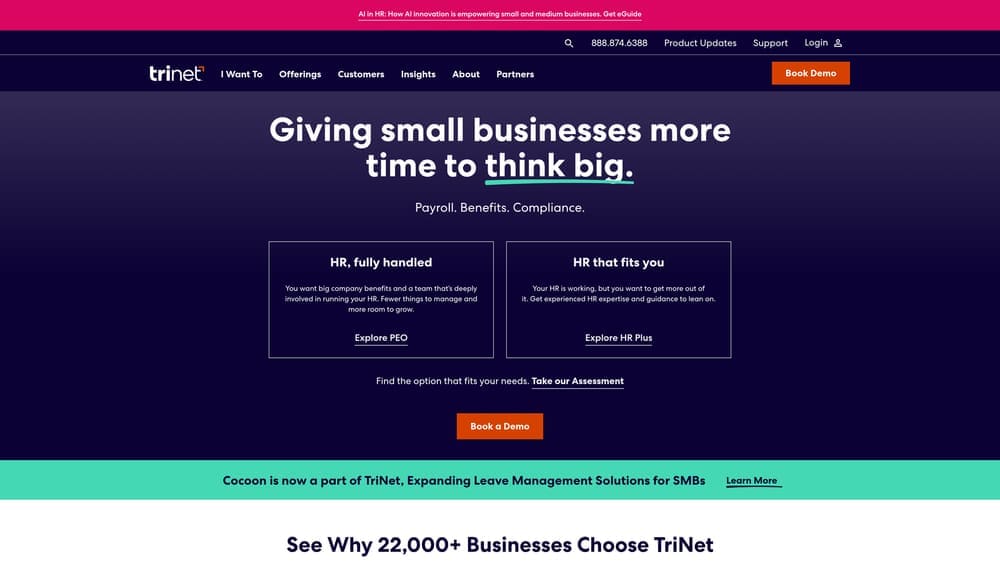
TriNet is a PEO with a track record of building industry-tailored service bundles, making it a strong option for restoration businesses navigating complex workers’ comp classifications and trade-specific compliance requirements.
Where This Tool Shines
TriNet’s industry-vertical approach means the HR and risk management support is shaped around the realities of your trade — not a generic small business template. For restoration companies dealing with NCCI workers’ comp codes that carry high experience modification rates, having a PEO that understands high-risk trade classifications is meaningful. It affects how claims are managed and how your risk profile is positioned over time.
Multi-state compliance is another area where TriNet performs well. If your crews cross state lines chasing storm work — which is common in the restoration industry — TriNet’s compliance infrastructure handles the regulatory variation without requiring you to track it manually.
Key Features
Industry-Tailored HR Bundles: Service packages shaped around specific industry needs rather than one-size-fits-all HR support.
Workers’ Comp for High-Risk Classifications: Experience managing complex trade classifications, including elevated-risk restoration work.
Large-Group Benefits Access: Health, dental, vision, and retirement plans at group rates your business couldn’t access independently.
Multi-State Compliance Support: Built-in monitoring for employment law changes across states where you operate.
HR Advisory Services: Access to HR professionals for employee relations, compliance questions, and HR strategy.
Best For
Restoration companies with 10 or more employees that operate across multiple states, deal with complex workers’ comp classifications, and want a PEO that understands trade-specific risk rather than treating every industry the same.
Pricing
Custom pricing based on industry, headcount, and services selected. Contact TriNet for a quote tailored to your restoration operation.
7. Rippling
Best for: Restoration companies that want a modular, tech-forward platform they can build out as their needs evolve.
Rippling is a modular HR and payroll platform that lets you start with what you need and add services over time — including a PEO option — all within a single connected system.
Where This Tool Shines
Rippling’s architecture is different from traditional PEOs. You’re not buying a bundled service package — you’re building a stack. Start with payroll, add benefits administration, layer in PEO co-employment if you decide you need it later. For restoration companies that are growing and don’t want to switch platforms every time their needs change, that modularity has real practical value.
The automated onboarding and offboarding workflows are particularly relevant for restoration work. When you’re bringing on five new crew members after a major weather event, streamlined digital onboarding — document collection, payroll setup, equipment provisioning — saves meaningful time during what’s already a high-pressure period.
Key Features
Modular Service Architecture: Add payroll, benefits, PEO co-employment, or IT management as your needs grow — without rebuilding in a new system.
Automated Onboarding and Offboarding: Digital workflows that handle new hire setup and employee exits efficiently, useful during surge periods.
Multi-State Payroll and Compliance: Built-in support for state-level payroll tax and employment law variation.
Strong Integration Ecosystem: Connects with a wide range of third-party tools your business may already use.
PEO Option Available: Full co-employment available as an add-on for businesses that decide they need it.
Best For
Tech-comfortable restoration companies that want flexibility and don’t want to be locked into a fixed service bundle. Particularly useful for businesses that are scaling and want a platform that grows with them rather than requiring a platform switch at each growth stage.
Pricing
Core platform starts at $8 per month per employee. PEO pricing is custom and separate. Contact Rippling for a quote that reflects your specific service selections.
Picking the Right Fit for Your Crew Size and Risk Profile
The PEO vs. payroll decision for a water damage restoration company really comes down to two things: how much workers’ comp complexity you’re carrying, and how much HR infrastructure you actually need.
If you’re a smaller operation with a stable crew and manageable risk exposure, a platform like Gusto handles the compliance basics cleanly without the overhead of co-employment. You keep full control of your HR policies, and you’re not paying for services you don’t use.
If workers’ comp is a recurring headache — and in restoration, it often is — that’s where a PEO starts to make financial sense. The group workers’ comp rates a PEO can negotiate, combined with active claims management, can offset the cost of the relationship fairly quickly. Insperity and TriNet both bring meaningful depth here, particularly for businesses dealing with high-risk NCCI classifications.
For companies that aren’t sure which direction to go, that’s exactly where PEO Metrics is useful. Before you commit to a co-employment relationship or renew a contract you’ve been on for years, it’s worth running a structured comparison. Bundled fees and hidden markups are common in PEO contracts, and most business owners don’t catch them without a side-by-side breakdown.
Rippling and Paychex are solid middle-ground options for companies that want to start lean and scale into more services over time. ADP TotalSource fits best once you’re past 50 employees and need enterprise-level compliance infrastructure.
The restoration industry’s surge-driven nature, high-risk classifications, and multi-state workforce patterns make this decision more consequential than it is for most small businesses. Getting it right matters. Don’t auto-renew. Make an informed, confident decision.
