
Kitchen hood cleaning looks straightforward from the outside. In practice, you’re running crews into commercial kitchens at midnight, dealing with grease, chemical degreasers, elevated work, and fire suppression systems. The workers’ comp class codes for this kind of work are expensive. Turnover is real. And if you’re still managing payroll, benefits, and compliance in-house, you’re spending time and money that could go elsewhere.
A PEO can genuinely help with all of that — but the key word is “can.” Not every PEO is built for a field-service operation with hazardous conditions, variable crew sizes, and clients who call at 2am. Picking the wrong provider means overpaying on workers’ comp, dealing with headcount minimums you can’t meet, or signing a contract with fees buried in the fine print.
The tools below are designed to help you compare PEO options with actual data before you commit. This is a short list by design — only three tools made the cut based on what’s actually useful for a hood cleaning business owner trying to make a real decision.
1. PEO Metrics
Best for: Hood cleaning operators who want real pricing data and side-by-side provider comparisons without the sales pitch.
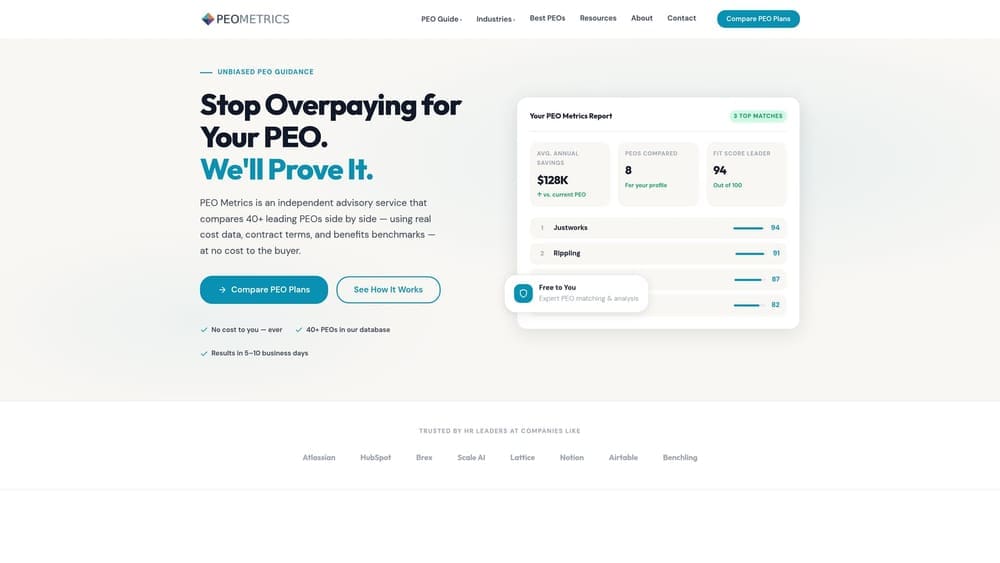
PEO Metrics is a comparison service built around unbiased, data-driven guidance for businesses evaluating PEO providers.
Where This Tool Shines
Most PEO comparison experiences start with a sales call. PEO Metrics is built to short-circuit that process by giving you actual pricing data, contract structure details, and provider comparisons before anyone has a chance to spin the numbers. For a hood cleaning company, that matters more than it might for a typical office business.
The platform is specifically designed to surface the factors that hit high-risk, field-service operations hardest. Workers’ comp class code handling is one of the biggest cost variables in a PEO arrangement for this industry — and it’s often glossed over in generic comparison tools. PEO Metrics goes deeper on that, which is exactly what you need when your crews are working at height with chemical exposure in commercial kitchen environments.
Key Features
Side-by-Side Provider Comparisons: Compare multiple PEO providers on actual pricing metrics, not just feature lists or marketing language.
Workers’ Comp Class Code Depth: Surfaces how different PEOs handle high-hazard class code classification — a genuine cost differentiator for hood cleaning companies.
Unbiased Guidance: No PEO provider affiliation, which means the recommendations aren’t shaped by referral fees or preferred partnerships.
Cost Savings Identification: Helps flag overpriced arrangements, bundled fee structures, and administrative markups that are easy to miss in a standard contract review.
Plain-Language Interface: Built for business owners, not HR specialists — you don’t need to know what PEPM means to get useful information out of it.
Best For
Hood cleaning business owners who are actively evaluating PEO providers and want to avoid overpaying. Particularly useful if you’re approaching a renewal and want to know whether your current arrangement is competitive, or if you’re shopping for the first time and don’t know what fair pricing looks like in a high-risk trade.
Pricing
Free to use. No cost to run comparisons or access provider data.
2. PEOcompare
Best for: Getting a broad view of the PEO market before you start narrowing down specific providers.
PEOcompare is a web-based platform that aggregates PEO providers and lets businesses filter and compare options across a range of criteria.

Where This Tool Shines
If you’re early in the process and you’re not sure which PEO providers are even worth talking to, PEOcompare gives you a starting point. The directory is broad, and the filtering interface makes it reasonably easy to narrow down providers based on your situation without needing to call anyone first.
For a hood cleaning company, the value here is mostly in the discovery phase. You can get a lay of the land — which providers operate in your region, which ones serve small field-service businesses, and which ones might be worth a deeper look. It’s less granular than a purpose-built comparison tool, but it’s a reasonable first step before you get into the specifics of pricing and contract terms.
Key Features
Aggregated Provider Directory: Covers a wide range of PEO providers in one place, reducing the legwork of finding who’s even in the market.
Filtering Options: Lets you narrow providers based on business size, industry, and other criteria to surface more relevant options.
Side-by-Side Comparison Interface: Basic comparison functionality that lets you look at providers next to each other.
Accessible for Non-HR Audiences: The interface doesn’t assume deep HR knowledge, which fits the typical hood cleaning business owner profile.
Best For
Business owners in the early research phase who want a broad market overview before committing to a deeper evaluation. Less useful if you’re already past the discovery stage and need specific pricing data or contract analysis for high-risk trades.
Pricing
Free to use.
3. HR Guide
Best for: Hood cleaning operators who are still building foundational understanding of what a PEO is and how it works before comparing specific providers.
HR Guide is an HR information resource that covers PEO-related topics alongside broader employment and compliance guidance.

Where This Tool Shines
Not every hood cleaning business owner walks into this process knowing what a PEO actually does, how co-employment works, or what questions to ask a provider. HR Guide fills that gap. It’s primarily an educational resource, not a comparison engine — but for someone who’s never worked with a PEO before, that education matters before you start evaluating pricing.
The compliance and employment law coverage is genuinely useful for a trade with real regulatory exposure. Understanding how PEOs handle OSHA compliance support, workers’ comp administration, and employment liability before you talk to a provider helps you ask better questions and spot weaker offerings when you see them.
Key Features
PEO Basics and Structure: Covers what a PEO is, how co-employment works, and what services are typically included — useful for owners who are new to this.
Employment Law and Compliance Guidance: Covers compliance topics relevant to small businesses, including areas that overlap with OSHA and field-service operations.
Small Business Resource Library: Broad HR content that can help you understand the landscape before you start making provider-specific decisions.
Foundational Framework: Helps you build enough context to evaluate what PEO providers are actually offering versus what sounds good in a sales call.
Best For
Hood cleaning operators who are in the education phase — not yet ready to compare providers, but trying to understand whether a PEO is the right move and what to look for when they get there. Less useful once you’re ready to evaluate specific pricing and contract terms.
Pricing
Free resource.
Which Tool Makes Sense for Your Situation
The honest answer is that these three tools serve different stages of the same decision. They’re not interchangeable, and the right starting point depends on where you are in the process.
If you’re new to PEOs and still trying to figure out whether one makes sense for a hood cleaning operation — the crew size, the workers’ comp exposure, the scheduling complexity — start with HR Guide. Get grounded in the basics before you start comparing providers.
If you know you want a PEO but you’re not sure which providers are even worth evaluating, PEOcompare gives you a reasonable starting point for discovery. It’s broad rather than deep, but it gets you a market overview without a sales call.
If you’re ready to actually compare providers with real pricing data — or you’re sitting on a renewal and want to know if you’re overpaying — PEO Metrics is where you should spend your time. The workers’ comp class code depth and unbiased structure matter more for a high-risk trade like hood cleaning than they would for a typical office business. The cost difference between a well-structured PEO arrangement and a poorly structured one can be significant when your crews are doing hazardous field work.
Before you sign that PEO renewal, make sure you’re not leaving money on the table. Many businesses unknowingly overpay because of bundled fees, hidden administrative markups, and contracts designed to limit flexibility. PEO Metrics gives you a clear, side-by-side breakdown of pricing, services, and contract terms so you can see exactly what you’re paying for and choose the option that actually fits your business. Don’t auto-renew. Make an informed, confident decision.
