
If you run a dumpster rental operation, you’re probably not spending much time thinking about HR structure — until something forces you to. Workers’ comp claims spike. A driver gets hurt on a job site. You’re trying to add routes and suddenly payroll is a mess. That’s usually when the question comes up: do you need a PEO, or is a payroll company enough?
They sound similar. They’re not. A payroll company handles the mechanics of paying your people. A PEO goes further — it takes on co-employment, bundles your workers into a larger risk pool, and handles compliance, benefits, and HR administration under one roof.
For dumpster rental companies specifically, the distinction matters more than most owners realize. Your workforce is physical, your injury exposure is real, and your insurance costs can make or break margins. Here are the top tools and resources to help you make this call with confidence.
1. PEO Metrics
Best for: Business owners who want unbiased, data-driven PEO comparisons before signing anything
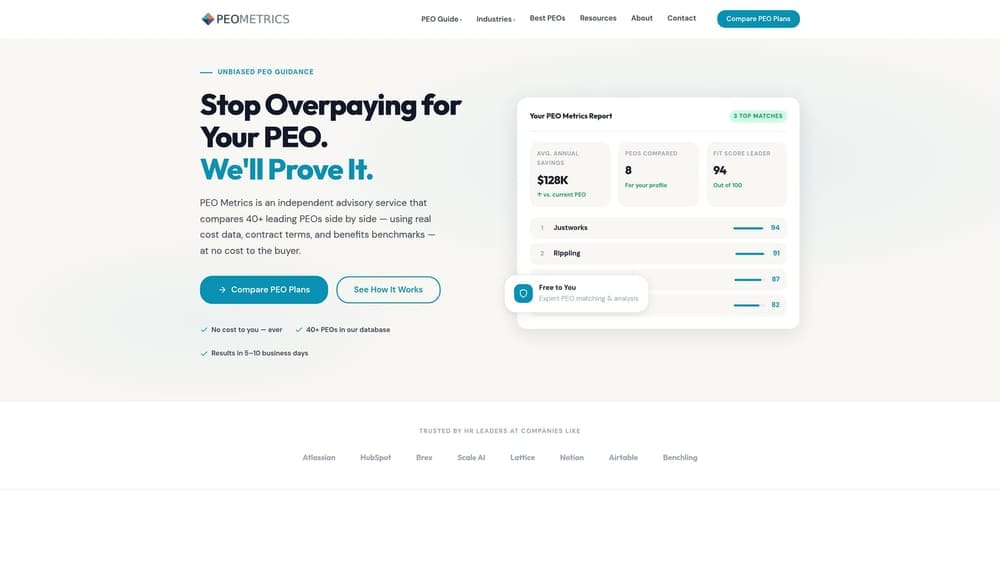
PEO Metrics is an independent comparison platform that helps business owners evaluate PEO providers side-by-side using real pricing data and detailed metrics — without the sales pressure that typically comes with broker-driven processes.
Where This Tool Shines
For dumpster rental owners, the core question isn’t just “should I use a PEO?” — it’s “will this PEO actually save me money given my workforce classification?” Drivers operating heavy equipment and workers doing physical loading and unloading fall into high-risk workers’ comp categories. Some PEO providers markup their workers’ comp pricing significantly for these classifications, which can flip the math entirely.
PEO Metrics lets you see through that. Instead of taking a provider’s word for it, you can compare what multiple PEOs are actually charging for your specific situation — administrative fees, workers’ comp rates, and benefit costs included. That’s the kind of transparency that’s genuinely hard to find elsewhere in this space.
Key Features
Side-by-Side Provider Comparisons: Compare multiple PEO providers on pricing, services, and contract terms in one view rather than managing separate vendor conversations.
Pricing Transparency: Surfaces the actual cost structure of each provider, including how they price for high-risk worker classifications common in dumpster rental and hauling operations.
Unbiased Guidance: Not affiliated with any single PEO provider, which means the platform has no financial incentive to steer you toward a particular option.
Cost vs. Savings Analysis: Helps you evaluate whether a PEO’s bundled cost actually beats what you’d pay going direct with a payroll company and separate insurance.
Switching Support: Useful whether you’re evaluating a PEO for the first time or considering switching providers at renewal.
Best For
Dumpster rental business owners with more than a handful of employees who want to make a financially grounded decision about PEO adoption. Especially valuable for operations where workers’ comp costs are a meaningful line item and pricing transparency matters.
Pricing
Free to use. PEO Metrics operates as a comparison service with no cost to the business owner evaluating providers.
2. PEOcompare
Best for: Getting initial quotes from multiple PEO providers quickly without going through individual sales cycles
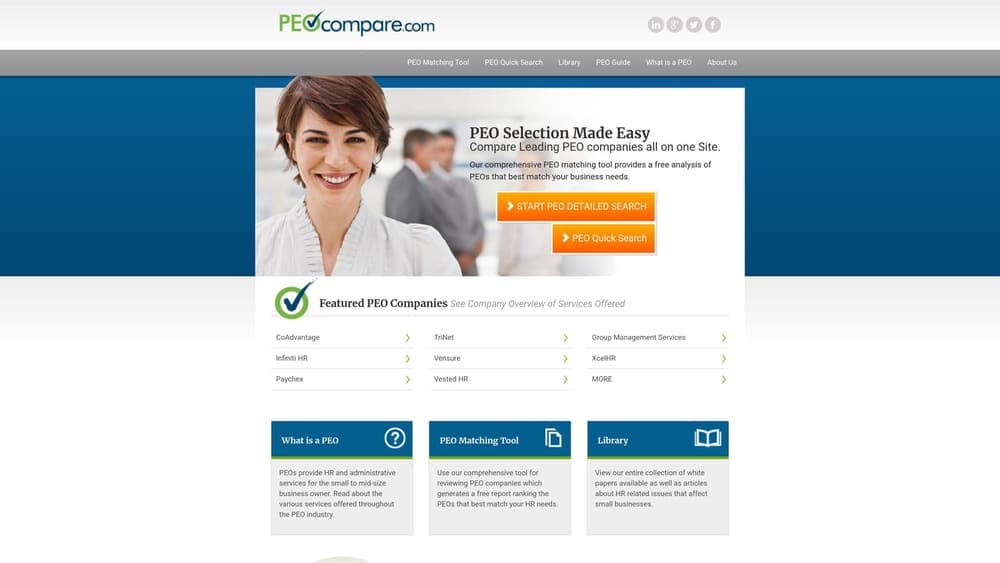
PEOcompare is a multi-quote aggregator that lets business owners submit one request and receive responses from multiple PEO providers, giving a broad view of what’s available in the market.
Where This Tool Shines
If you’re early in the research process and want to understand what the PEO market actually looks like for your business, PEOcompare is a reasonable starting point. Rather than reaching out to five or six providers individually and sitting through separate sales calls, you can get a sense of the landscape from a single submission.
The limitation worth knowing: aggregator platforms like this generate revenue through provider referrals, which means the quotes you receive may skew toward providers in their network rather than the full market. It’s a useful first step, but it works best when paired with a more granular comparison tool for the deeper analysis.
Key Features
Multi-Quote Submission: One request generates outreach from multiple PEO providers, reducing the time spent on initial vendor contact.
Broad Provider Coverage: Connects you with a range of PEO options for initial market research rather than a single curated recommendation.
Time Efficiency: Cuts down the legwork of identifying which providers are even worth talking to before you’ve done any vetting.
No Vendor Lock-In: Receiving quotes doesn’t obligate you to move forward with any provider — useful for early-stage exploration.
Best For
Business owners in the early stages of PEO evaluation who want a quick overview of available providers before committing time to deeper due diligence. Works well as a first step, not a final one.
Pricing
Free to use. Revenue is generated through referral relationships with PEO providers in the network.
3. HR Guide
Best for: Building foundational knowledge about PEOs, payroll companies, and employment law before entering vendor conversations
HR Guide is an educational HR resource covering employment law, workforce management, and HR administration topics — including plain-language explanations of how PEOs and payroll companies actually differ operationally.

Where This Tool Shines
Most dumpster rental owners aren’t HR professionals. If you’re walking into conversations with PEO sales reps without a baseline understanding of what co-employment means, what a master workers’ comp policy is, or how employer-of-record liability actually works, you’re at a real disadvantage. HR Guide helps close that gap.
It’s not a comparison tool and it won’t tell you which provider to choose. What it does well is give you the vocabulary and conceptual grounding to ask better questions. For an owner who’s never seriously evaluated a PEO before, spending an hour on HR Guide before your first vendor call is genuinely worthwhile.
Key Features
PEO vs. Payroll Explanations: Clear, non-technical breakdowns of how PEOs and payroll companies differ in structure, liability, and scope of services.
Employment Law Coverage: Covers HR compliance fundamentals relevant to small business owners, including topics like OSHA obligations and state-specific employment requirements.
No Vendor Affiliation: Editorial resource with no financial ties to PEO providers or payroll companies, which keeps the content relatively objective.
Accessible Language: Written for business owners and HR generalists, not lawyers or HR specialists — practical for operators without a dedicated HR team.
Best For
Dumpster rental owners who are early in their research and want to understand the fundamentals before engaging with vendors. Also useful for any small business owner who’s been handed a PEO contract and wants to understand what they’re actually signing.
Pricing
Free educational resource. No subscription or account required.
Which Option Actually Makes Sense for Your Operation
For most dumpster rental businesses with more than a handful of employees, the PEO vs. payroll question isn’t really a toss-up. It’s a risk management decision.
Payroll companies are transactional. They process checks and file taxes. A PEO takes on co-employment liability, pools your workers into a larger insurance group, and gives you access to benefits that would otherwise be out of reach for a small operation. For a crew of drivers doing physical work on job sites every day, that distinction is material.
That said, PEOs aren’t free, and not every provider prices fairly for blue-collar workforces. Some actually cost more than they save once you factor in their markup on workers’ comp — especially for high-risk classifications common in waste and hauling. Without comparing providers properly, you can end up in a contract that costs more than going direct with a payroll company and separate insurance.
There’s also the seasonal workforce consideration. If your operation scales up in spring and summer and pulls back in winter, some PEO contracts include minimum headcount commitments or annual terms that create friction. A payroll-only setup avoids that entirely. It’s a real tradeoff worth thinking through before you commit.
Use PEO Metrics to run a proper side-by-side comparison with real pricing data. Check PEOcompare for a quick multi-quote view across available providers. And if you’re still building foundational knowledge before you talk to any vendor, HR Guide gives you a grounded starting point without any sales agenda attached.
The wrong choice here isn’t catastrophic — but the right one can meaningfully reduce what you’re paying for insurance and HR overhead. Take the time to compare properly before you commit to anything.
Don’t auto-renew. Make an informed, confident decision.
Before you sign that PEO renewal, make sure you’re not leaving money on the table.
Many businesses unknowingly overpay because of bundled fees, hidden administrative markups, and contracts designed to limit flexibility. We give you a clear, side-by-side breakdown of pricing, services, and contract terms—so you can see exactly what you’re paying for and choose the option that truly fits your business.
