
If you run a waste management operation, you already know the HR picture is messier than most industries. High workers’ comp exposure, DOT compliance for CDL drivers, OSHA obligations around hazardous materials, and a workforce that spans laborers, route supervisors, and admin staff — sometimes across multiple states. The question of whether to use a PEO or a payroll company isn’t academic for you. It has real cost and risk implications.
This guide isn’t going to give you the generic “it depends” answer. Waste management has specific characteristics that shift the calculus in ways that don’t apply to a retail shop or a marketing agency. Here’s a practical breakdown of the tools and resources that can help you think through this decision clearly.
1. PEO Metrics
Best for: Waste management businesses evaluating whether a PEO is worth it and comparing providers side-by-side before committing.
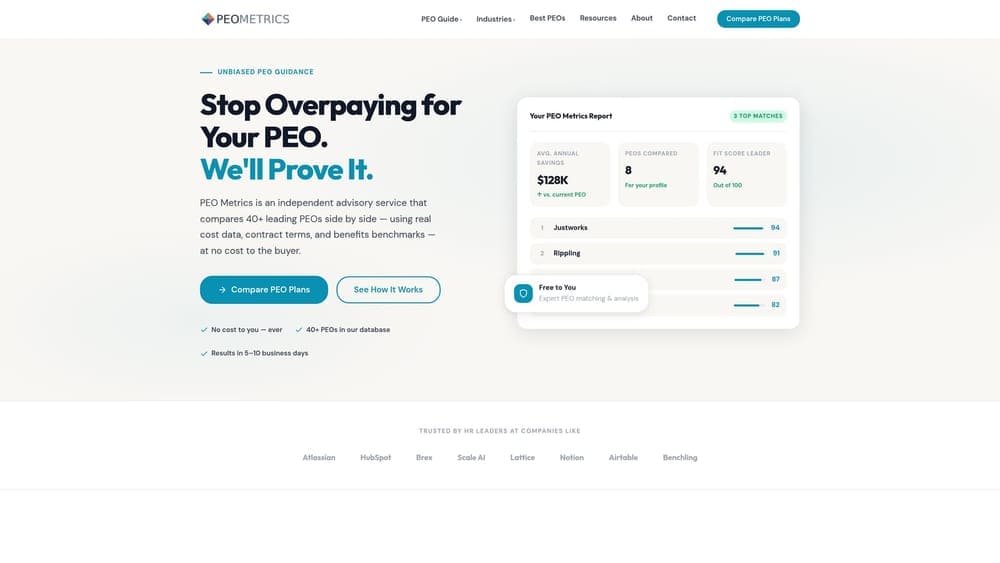
PEO Metrics is an unbiased PEO comparison platform that gives waste management businesses actual pricing data and detailed provider metrics — so you can evaluate the PEO vs. payroll decision with real numbers instead of sales pitches.
Where This Tool Shines
The core problem with evaluating PEOs in a high-hazard industry like waste management is that most comparison resources are either generic or tied to specific providers with a financial interest in your decision. PEO Metrics sits outside that dynamic. It’s designed to surface what PEOs actually charge, how they handle workers’ comp for elevated risk classes, and what their contract terms look like — the details that matter most when your workers’ comp class codes are running at rates far above the national average.
For waste management operators specifically, knowing which PEOs have real experience with high-hazard industries is worth a lot. Not every PEO will even take on refuse collection or transfer station operations. PEO Metrics helps you identify which providers are actually equipped to handle your risk profile, rather than wasting time in conversations with PEOs that will ultimately pass on your business or price you out.
Key Features
Side-by-side provider comparisons: Compare PEO pricing, benefits packages, workers’ comp handling, and contract terms in one place rather than managing separate sales conversations with each provider.
Pricing transparency: Surfaces actual cost structures so you can see administrative fees, per-employee charges, and bundled vs. unbundled pricing before you’re deep into a sales process.
High-hazard industry filtering: Helps identify which PEOs have experience with elevated risk class codes like those common in waste management and refuse collection.
Unbiased positioning: Not affiliated with any single PEO provider, which matters when you’re trying to get an honest read on whether a PEO even makes sense for your situation versus a standalone payroll setup.
Contract and benefit detail: Goes beyond surface-level comparisons to include the terms and metrics that affect long-term cost and flexibility.
Best For
Waste management operators in the 15 to 150 employee range who are seriously evaluating a PEO for the first time, reconsidering an existing PEO relationship, or trying to understand whether their current setup is actually competitive on cost. Also useful for multi-state hauling operations where provider capabilities vary significantly by geography.
Pricing
Free comparison service. No cost to use the platform and no obligation attached to the comparison process.
2. Peocompare
Best for: Businesses that want to be matched with PEO providers based on their specific workforce profile and company size.
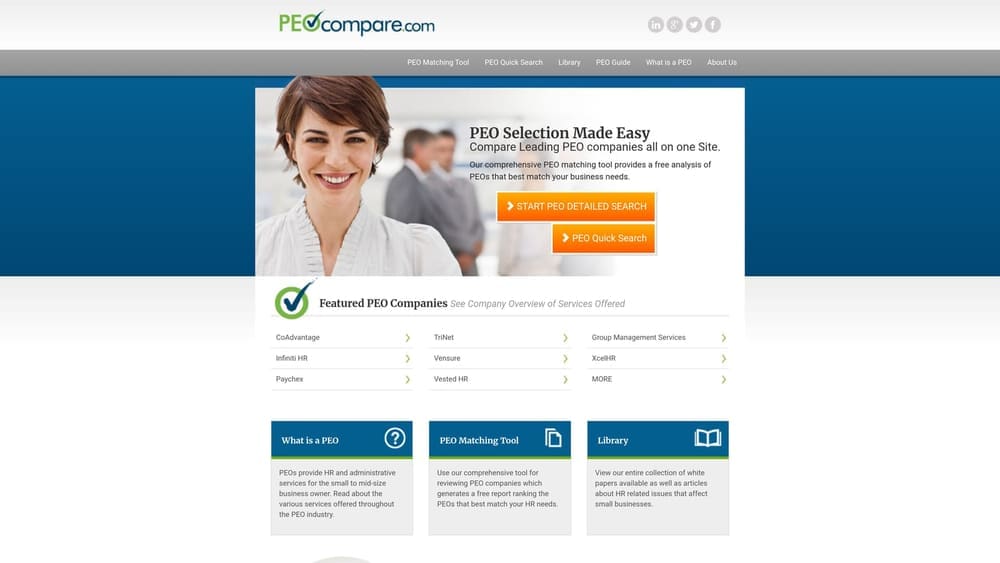
Peocompare is a PEO matching and comparison tool that connects businesses with providers based on their specific needs, industry, and headcount.
Where This Tool Shines
Peocompare functions more as a matching service than a deep analytics platform. You provide information about your business — size, industry, location, current HR setup — and it connects you with PEO providers that fit your profile. For waste management operators who aren’t sure where to start, this kind of guided intake can narrow the field quickly without requiring you to already know which PEOs serve high-hazard industries.
The limitation worth noting is that matching tools like this are most useful early in the evaluation process. They get you into conversations, but they don’t necessarily give you the pricing depth or contract detail you’d need to actually compare offers side-by-side. Think of it as a starting point rather than a decision-support tool.
Key Features
Industry and size-based matching: Filters PEO options based on your workforce profile and business characteristics rather than showing you a generic provider list.
Provider comparison functionality: Offers some ability to view and compare matched providers, though depth varies.
Selection process guidance: Provides some structure around the PEO evaluation process for buyers who are new to it.
Best For
Waste management businesses that are early in their PEO research and want help identifying which providers are even worth talking to, rather than starting from a cold search. Less useful if you’re already in active negotiations and need granular pricing comparisons.
Pricing
Free to use.
3. HR Guide
Best for: HR teams and business owners who want reference material on compliance basics, PEO considerations, and workforce management concepts before making a decision.
HR Guide is an HR information and resource platform that covers a broad range of HR topics, including PEO considerations, compliance fundamentals, and workforce management guidance.
Where This Tool Shines
HR Guide isn’t a comparison or matching tool — it’s a reference resource. Where it adds value for waste management operators is in building foundational understanding before you start evaluating specific PEO or payroll providers. If you’re trying to get your HR team or an office manager up to speed on what a PEO actually does, how co-employment works, or what compliance obligations look like in general terms, HR Guide offers accessible explanations without requiring you to sit through a vendor demo.
For waste management specifically, the compliance landscape is legitimately complex. OSHA, DOT, and in some cases EPA requirements layer on top of standard employment law. HR Guide’s general compliance reference material can help you frame the right questions before you engage with a PEO or payroll provider — even if it won’t give you waste-management-specific regulatory depth.
Key Features
HR policy and compliance reference material: Covers a wide range of employment law and HR compliance topics in plain language, useful for teams without a dedicated HR specialist.
PEO vs. in-house HR guidance: Provides conceptual framing around the PEO decision, including what businesses typically gain and give up with co-employment.
General HR resource library: Broad coverage of workforce management topics accessible without registration or cost.
Best For
HR teams or business owners who want background knowledge before entering vendor conversations. Most useful as a research starting point rather than a tool for active provider evaluation or pricing comparison.
Pricing
Free resource access.
Which Direction Actually Makes Sense for Your Operation
The honest answer is that the PEO vs. payroll decision in waste management comes down to a few specific factors: your workers’ comp loss history, your headcount, and how much regulatory complexity you’re actually carrying.
If you’re running a smaller operation — under 20 employees — the overhead of a PEO is harder to justify unless your workers’ comp costs are genuinely painful. Refuse collection and waste handling carry elevated NCCI class codes, and if your experience modification rate is high, a PEO’s pooled workers’ comp arrangement might deliver real savings. If your loss history is clean, the math gets murkier.
Mid-size operators in the 20 to 100 employee range are typically where PEO value becomes clearer. You’ve got enough payroll volume to make the per-employee fee reasonable, enough compliance exposure to benefit from HR infrastructure, and enough workers’ comp spend to care about how risk is priced. The Bureau of Labor Statistics has consistently documented that refuse and recyclable material collectors face among the higher occupational injury rates across all industries — that’s not a minor footnote. It’s the central cost driver in this decision.
A payroll company handles processing, tax filing, and basic compliance reporting. That’s genuinely useful, but it doesn’t touch OSHA recordkeeping, DOT driver compliance, or workers’ comp management. If those are real operational concerns for you, a payroll-only setup leaves gaps that don’t close themselves.
Before you commit to either path — or before you auto-renew a contract you haven’t seriously evaluated in years — it’s worth knowing what the actual market looks like. Don’t auto-renew. Make an informed, confident decision.
Before you sign that PEO renewal, make sure you’re not leaving money on the table.
Many businesses unknowingly overpay because of bundled fees, hidden administrative markups, and contracts designed to limit flexibility. We give you a clear, side-by-side breakdown of pricing, services, and contract terms—so you can see exactly what you’re paying for and choose the option that truly fits your business.
